
Dagmar Schönleber
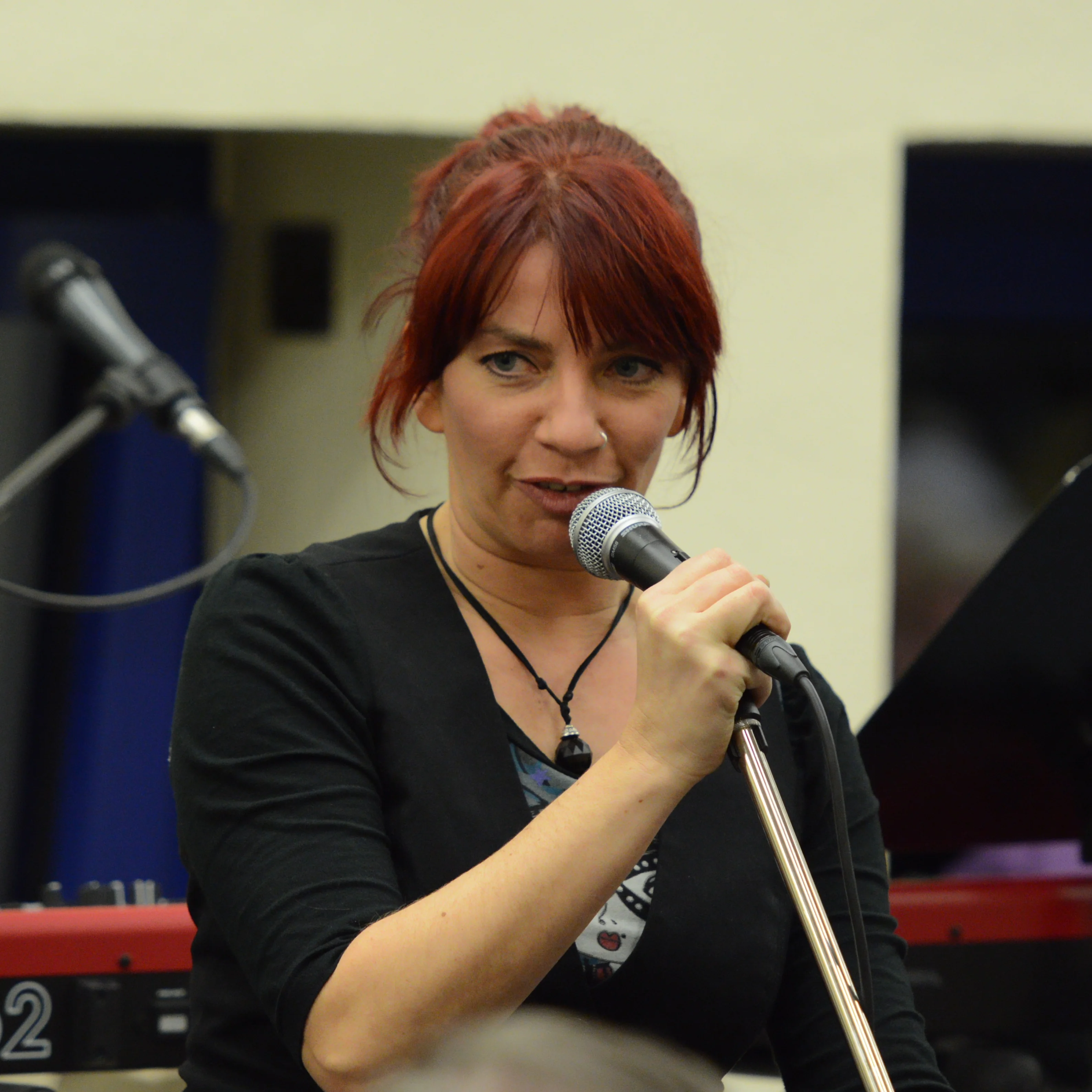
Image from Wikipedia
Image from Wikipedia
Dagmar Schönleber: Cabaret, Songwriting, and Smart Comedy with Attitude
An artist between wit, resistance, and warm bite
Dagmar Schönleber, born on December 22, 1973, in Lemgo, is one of the most independent voices in the German cabaret and comedy scene. As a comedic performer, cabaret artist, freelance writer, and songwriter, she combines sharp observation with musical stage presence and a distinctive mix of intelligence, silliness, and attitude. Her artistic profile thrives on language, timing, and a keen sense of societal friction points. ([de.wikipedia.org](https://de.wikipedia.org/wiki/Dagmar_Sch%C3%B6nleber))
From East Westphalia to the Stage: The Biographical Entry
The path to the stage did not begin as a calculated career step, but as a result of coincidences, curiosity, and a drive to write. After graduating from high school in 1993 and obtaining a degree in social work from KFH Cologne in 1999, she made her first public appearance in May 2001 at Café Storch in Cologne. Later, she recounted in an interview that a lost bet led her to public readings, which gradually evolved into a stage career. This origin from everyday life, observation, and immediate experience continues to shape her tone to this day. ([de.wikipedia.org](https://de.wikipedia.org/wiki/Dagmar_Sch%C3%B6nleber))
Early on, Schönleber sought not only the stand-up format but also the connection between text, music, and cabaret. She won various poetry slams, toured with solo programs, attended the Cologne Comedy School, and became visible nationwide in formats like NightWash, readings, and mixed shows. Regular performances at the First Cologne Living Room Theater and venues like Quatsch Comedy Club or Schmidt Theater demonstrate how consistently she positioned herself between the literary stage and entertainment culture. ([de.wikipedia.org](https://de.wikipedia.org/wiki/Dagmar_Sch%C3%B6nleber))
Breakthrough with Profile: Cabaret as Precise Analysis of the Present
Dagmar Schönleber represents cabaret that doesn’t lecture but sharpens. Her website describes her as an artist with “heart and attitude,” emphasizing her optimistic view on the small moments of rescue in everyday life. In the press, this connection of sharpness and charm is highlighted: when she gets angry, she becomes particularly strong, and when she performs with casual ease, her critique gains momentum. This results in a form of cabaret that combines social relevance with audience closeness. ([dagmarschoenleber.de](https://dagmarschoenleber.de/))
An important part of her stage identity is the role of “Fräulein Schochz” in the WDR show “Stratmanns,” where she was regularly seen alongside Gregor Mönter. Deutschlandfunk describes Schönleber as an artist who reads and sings, writes short stories about subcultures and childhood experiences, and also addresses the theme of aging as an author. This shifts the boundaries between cabaret, literature, and songwriting into a distinct, recognizable format. ([de.wikipedia.org](https://de.wikipedia.org/wiki/Dagmar_Sch%C3%B6nleber))
Awards, Formats, and Collaboration
Institutionally, Schönleber solidified her position early on. In 2003 she received the Bielefeld Cabaret Prize, and in 2005 the Kabarett/Comedy Nachwuchs Kleinkunstpreis Obernburger Mühlstein. Since 2014, she has been performing alongside Anika Auweiler at the Cologne Cabaret Klüngelpütz in the year-end revue “Der Sack ist zu.” In 2018, she founded the Sisters of Comedy GbR with Carmela de Feo and Patrizia Moresco, a nationwide network and action project against sexism and violence against women. ([de.wikipedia.org](https://de.wikipedia.org/wiki/Dagmar_Sch%C3%B6nleber))
These projects show that Schönleber functions not only as a solo artist but also as a team player and cultural organizer. In particular, the Sisters of Comedy send a clear message for female presence in the German-speaking humor landscape and combine entertainment with social and political responsibility. In 2022, she was also awarded the Audience Prize Spezialist 2021 and 2022, confirming her relevance in direct audience feedback. ([de.wikipedia.org](https://de.wikipedia.org/wiki/Dagmar_Sch%C3%B6nleber))
Literature, Text Work, and Poetic Everyday Observation
Besides the stage, Dagmar Schönleber is also an established author. Her publications include “Nackt im Bus – Melancholy Urban Stories,” “Just Because You Sleep in the Garage Doesn't Make You a Porsche,” and “40 Fever.” Additionally, she has contributed to anthologies, such as the volume “Sonic Ballroom – The Story of the Best Music Club in the World.” These titles demonstrate how much her writing is characterized by wit, environmental observation, and a slightly melancholic urban poetics. ([de.wikipedia.org](https://de.wikipedia.org/wiki/Dagmar_Sch%C3%B6nleber))
Deutschlandfunk also describes her reading and music show “Rock'n Read,” in which texts and songs intertwine. This form fits an artist who does not separate literature from music but sees both as stage mediums. Her short stories about childhood, subcultures, and aging expand the profile of a cabaret artist who not only delivers punchlines but also condenses lived reality. ([deutschlandfunk.de](https://www.deutschlandfunk.de/die-kabarettistin-dagmar-schoenleber-lesen-labern-lieder-100.html))
Musical Development and Discography
Schönleber's discography is slim but clearly oriented towards its own aesthetic. According to Wikipedia, “Schönes Leben” was released in 2004, “Zwei wie ich” in 2007, and “Gutes Mädchen – böse Lieder” in 2012. Additionally, her website describes the album “Dagmar und der Organismus” as the first album; it discusses LoFi indie punk pop between reggae and techno, characterizing the project as consciously not humorous, but also not overly serious. Thus, a musical side or parallel universe to her cabaret programs is created. ([de.wikipedia.org](https://de.wikipedia.org/wiki/Dagmar_Sch%C3%B6nleber))
Particularly fascinating is the connection of songwriting and arrangement. The website states that Schönleber collaborates with Christian Hostert on “Dagmar und der Organismus,” with songs ranging from LoFi garage pop to reggae and techno to ballads. Even in her current program “Endlich 50! So jung brechen wir nicht mehr zusammen!” there's talk of words and music of all kinds. This shows: Music is not a decorative element for Schönleber, but part of the dramatic architecture of her stage. ([dagmarschoenleber.de](https://dagmarschoenleber.de/))
Current Projects and Artistic Presence
On her official website, “Endlich 50! So jung brechen wir nicht mehr zusammen!” is prominently listed as the current program. The description connects mid-life, self-assertion, and humor into a revue about dignity, everyday life, and a second puberty. Several dates are scheduled in 2026 in Cologne, Hanau, Mannheim, Ostfildern-Nellingen, Gaggenau, and Wiesbaden, emphasizing the artist's ongoing live presence. ([dagmarschoenleber.de](https://dagmarschoenleber.de/))
Furthermore, “Dagmar und der Organismus” remains a visible musical project that presents old and new songs in a different light. The website speaks of a high dance factor and a mix of Ideal and Mambo Kurt, implying a conscious friction between irony, pop, and live energy. That her current contents encompass not only the stage program but also books, CDs, and press materials shows a professional, long-term artistic strategy. ([dagmarschoenleber.de](https://dagmarschoenleber.de/))
Critical Reception and Cultural Influence
The press reads Schönleber's work as a cabaret diagnosis of the present with clear language. A cultural critique piece highlights that she convinces with punchlines rather than lectures, and despite all her biting humor, she develops a strong audience connection. Her ability to dissect popular themes and language material with analytical sharpness, without losing entertainment value, is particularly praised. This makes her an artist who remains credible in the tension between entertainment and attitude. ([kultur-kritik.net](https://www.kultur-kritik.net/2018/06/02/dagmar-sch%C3%B6nleber-respekt-mit-zuckowski/))
Deutschlandfunk characterizes her as a figure between opposites, between tea drinker and rocker, between closeness to everyday life and subcultural energy. This forms the basis of her cultural influence: she brings female cabaret, literary storytelling, and musical self-empowerment into a style that does not lean on trends but creates its own spaces. In a scene that often demands clear classifications, Schönleber remains consciously multifaceted. ([deutschlandfunk.de](https://www.deutschlandfunk.de/die-kabarettistin-dagmar-schoenleber-lesen-labern-lieder-100.html))
Conclusion: A Voice That Endures
Dagmar Schönleber is exciting because she does not juxtapose cabaret, music, and literature, but interlinks them. Her career speaks of independence, precise observation, and a stage persona that appears both funny and intelligent while being pleasantly unpredictable. Those searching for German-language cabaret beyond the ordinary will find an artist with profile, musical imagination, and genuine audience closeness here. Those who experience her live will receive not only punchlines but an evening filled with attitude, temperament, and lasting impact. ([dagmarschoenleber.de](https://dagmarschoenleber.de/))
Official Channels of Dagmar Schönleber:
- Instagram: https://www.instagram.com/dagmar_schoenleber/
- Facebook: https://www.facebook.com/dagmarschoenleber
- YouTube: https://www.youtube.com/channel/UC_jn_3mBEo16DMAHMCTRNuw
- Spotify: No official profile found
- TikTok: No official profile found