
Dalibor Marković
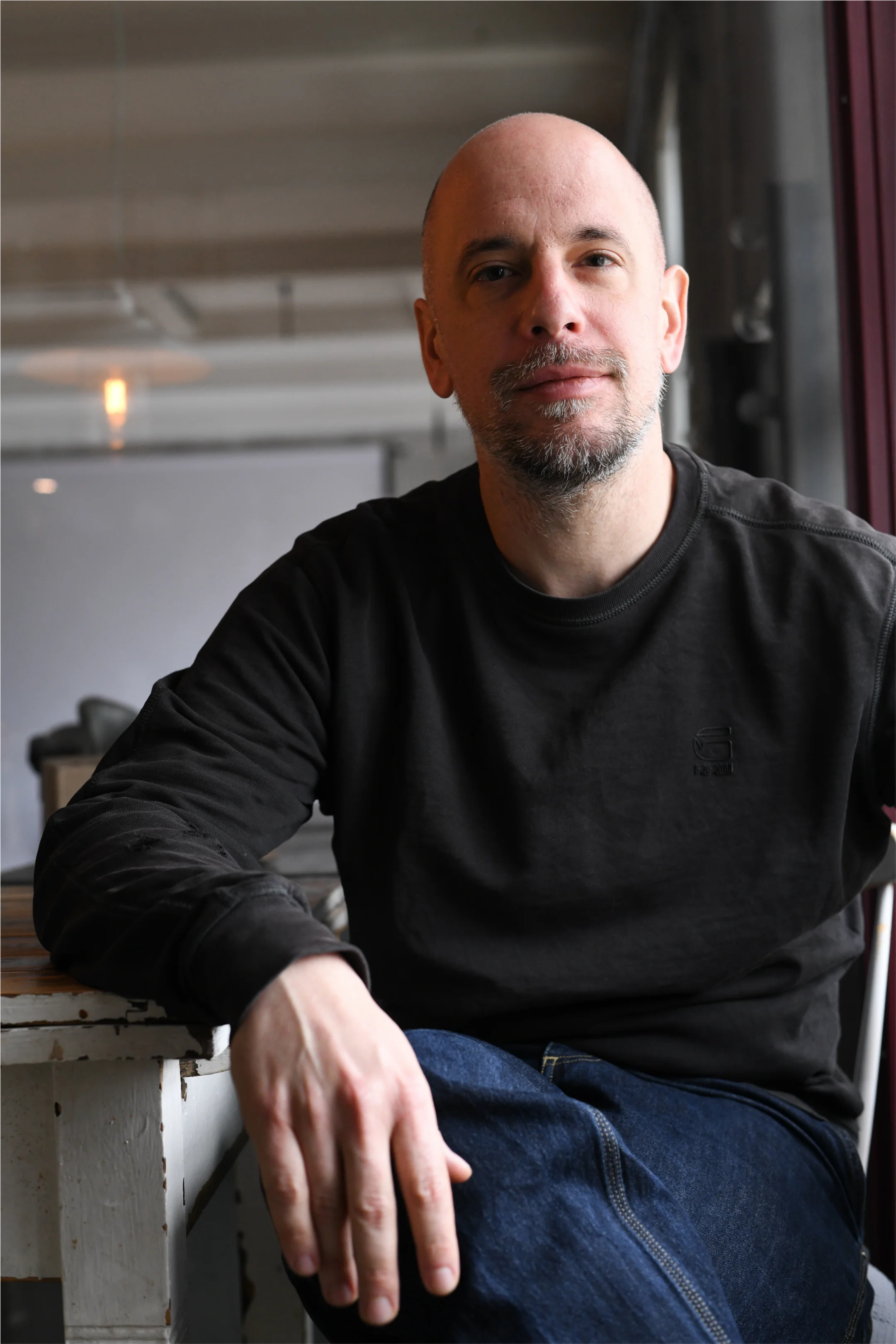
Image from Wikipedia
Image from Wikipedia
Dalibor Marković – Beatboxing, Spoken Word and Literature with a Rhythmic Pulse
An Artist Between Voice, Language and Stage
Dalibor Marković, born in 1975 in Frankfurt am Main, is one of the most distinctive German-speaking voices at the intersection of literature, performance, and music. As an author, poet, beatboxer, and spoken word artist, he merges linguistic art with physical rhythm, creating a stage presence that reaches far beyond the traditional literary scene. His work represents a music career in a broader sense: not as a pop or rock trajectory, but as a consistent art of presentation, beat, and linguistic condensation. (de.wikipedia.org)
To understand Dalibor Marković, one must view him as a performer, storyteller, and sound artist all at once. His artistic roots lie in music; as a beatboxer, he shapes rhythms with his mouth, making them part of his poetry. This gives rise to the unique tension found in his work: the voice becomes an instrument, the text gains a groove, and the language acquires a musical physicality that resonates directly on stage. (de.wikipedia.org)
Biography: Frankfurt, Languages, Movements
Marković was born in Frankfurt am Main and still lives there today. At the same time, his publisher describes him as an artist with a second base in Mexico City, where a large part of his debut novel was also created. This biographical movement between Frankfurt and Mexico City shapes his work just as much as his Croatian roots and his interest in language, identity, and cultural translation. (voland-quist.de)
For nearly twenty years, Marković has been performing spoken word poetry on German and international stages. His early grounding in music, later turn to literature, and ongoing work in performance shape a profile that cannot be reduced to a single genre. His biography shows the evolution of an artist who sees spoken word not as a complimentary form but as an independent art form. (voland-quist.de)
Start of Career and Breakthrough in Spoken Word
In the German-speaking spoken word context, Marković is considered by his publisher to be one of the important representatives of this scene. He has emerged with beatboxing, poetry, and performance, looking from the outset for the connection between language and identity. This very connection lends cultural depth to his artistic profile: the texts do not stand alone but are charged in a performative space where sound, emphasis, and breath become part of the composition. (voland-quist.de)
A pivotal milestone was winning the German-speaking team competition of the Poetry Slam championship in 2014 in Dresden together with Dominique Macri as Team Scheller. This success marks not only a competition victory but also the recognition of his stage work within a vibrant slam and performance culture. Since then, Marković has appeared as an artist whose presentation technique, rhythmic precision, and linguistic imagination reinforce each other. (de.wikipedia.org)
Works, Books and Literary Handwriting
His published works include the novel Pappel. The Story of a Drifter from 2021, the poetry collection Und Sie schreiben auf Deutsch? from 2016, as well as earlier poetry volumes such as Bühnenstücke, Band 1, Bühnenstick: 1, and Schulwege. These publications indicate a development from stage poetry towards a broader literary form without losing the performative core. Especially Und Sie schreiben auf Deutsch? makes clear how closely rhythm, language, and self-questioning are interwoven in Marković’s work. (de.wikipedia.org)
The publisher Voland & Quist describes his novel Pappel as a grand narrative about time, history, and identity. The story begins in 1883 and follows a character whose life is connected to that of Franz Kafka, spanning 150 years of European history. The fact that Marković developed part of the novel in Mexico City underscores his transnational perspective and passion for literary breadth. (voland-quist.de)
Musical Development: Beatbox as an Artistic Tool
Marković's musical development is not a conventional discography of a chart artist, but rather a performative sound biography. Beatboxing forms the foundation of his performances and serves as a rhythmic sonar with which he structures texts, sets accents, and opens linguistic spaces. In the fusion of mouth rhythm, presentation, and poetry, a form emerges that navigates between concert, reading, and live composition. (voland-quist.de)
The projects of recent years also demonstrate this musical openness. On his website, Marković documents performances with harpists, bands, and dance, for instance, as part of Slam Symphony in Göttingen, in collaboration with Daphné Milio, or during the premiere of und immer weiter zurück with Kristina Veit. Such formats expand his stage art towards interdisciplinary performance and turn spoken word into an aesthetic event with an ensemble character. (daliborpoesie.com)
Current Projects and Releases 2024/2025
On his official website, Marković lists for 2024 among other things the Joachim Herz Foundation Prize, the curation and moderation of the international poetry festival poetryontheroad in Bremen, as well as Slam Symphony in Göttingen. These stations demonstrate how strongly he is anchored not only as a performer, but also as a curator and mediator in the cultural scene. His role thus extends from artistic practice to the programmatic design of literature and poetry formats. (daliborpoesie.com)
The recent publishing and website context further refers to Pappel and to media resonance regarding this debut novel. Especially highlighted are reviews that describe the book as profound, absurd, and narratively exuberant. For Marković, this means: literary success is not separate from the stage but is fueled by the same artistic energy that characterizes his live performances. (daliborpoesie.com)
Discography and Sound Collaboration
In the realm of published music, the album Dalibor Marković i Mirko Kodić (Kola) from 1988 is available on Spotify; other titles like Kola (Zlatna Harmonika Jugoslavije) and Vlaska Kola indicate a repertoire related to Kolo and folk music. The search results also reveal individual pieces like Bigreničko Kolo, Vlaska Setnja, Draganovo Kolo, and Daliborov Merak. These traces suggest a musical line that works with traditionally shaped forms and fits into a broader Southeast European sound landscape. (open.spotify.com)
The classification is essential: Marković's main profile remains spoken word and literature, yet the available music data show that his name is also present in a musical release world. This dual positioning makes his artistic identity particularly intriguing. Between poetic performance and traditionally musical releases, an unusual and culturally multifaceted overall picture emerges. (open.spotify.com)
Critical Reception and Cultural Influence
The press repeatedly highlights Marković's originality in combining beatboxing and poetry. The international literature festival in Berlin describes him as a sound poet and lyricist who investigates the connection between language and identity alongside beatboxing. Voland & Quist names him one of the key representatives of German-speaking spoken word poetry; thus, his influence on the scene is clearly marked. (voland-quist.de)
Several enthusiastic press reviews exist regarding the reception of Pappel. WDR5, FluxFM, Westzeit, and nordbayern.de praise the narrative power, absurd humor, and linguistic density of the novel. This response strengthens Marković's authority not only as a stage artist but also as a literary voice with narrative sensitivity and stylistic independence. (daliborpoesie.com)
Official Channels of Dalibor Marković:
- Instagram: https://www.instagram.com/dalibor1markovic/
- Facebook: https://www.facebook.com/dalibor1markovic
- YouTube: no official profile found
- Spotify: https://open.spotify.com/artist/5g7YAYsO65BDlbhbJtTmcy
- TikTok: no official profile found
Conclusion: Why Dalibor Marković Remains So Fascinating
Dalibor Marković captivates as an artist because he blurs boundaries: between literature and music, between presentation and composition, between local roots and international movement. His artistic evolution shows how beatboxing, spoken word, and novel writing create an independent, highly precise handwriting. Those who experience him do not just hear texts, but a performative form of literature that pulses, breathes, and lingers in memory. (voland-quist.de)
This art form unfolds its full power particularly live. Marković connects voice, rhythm, and language with a stage presence that feels both approachable and confident. Anyone seeking literature as a vibrant, musical, and culturally open experience should definitely see Dalibor Marković perform live. (voland-quist.de)
Sources:
- Wikipedia: Dalibor Marković
- Voland & Quist – Dalibor Marković
- Voland & Quist – Pappel. The Story of a Drifter
- Voland & Quist – Und Sie schreiben auf Deutsch?
- daliborpoesie.com – official website
- SLAMPOOL – Dalibor Marković
- Wikidata – Dalibor Marković
- Spotify – Dalibor Markovic
- Instagram – dalibor1markovic
- Facebook – dalibor1markovic