
Dora Pejačević
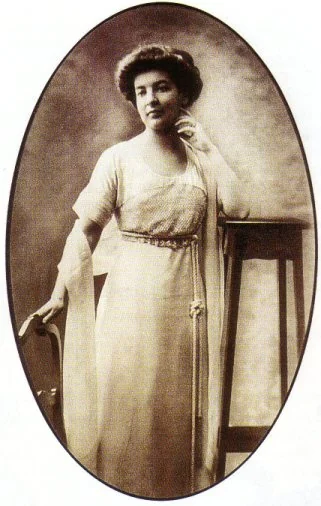
Image from Wikipedia
Image from Wikipedia
Dora Pejačević – Sound Art between Late Romanticism, Awakening, and Modernity
An extraordinary composer from the heart of Europe
Dora Pejačević is considered one of the most fascinating figures in Central European music history. Born in Budapest in 1885, the composer, pianist, and violinist grew up in Slavonia and later lived in Dresden and Munich. Her work combines aristocratic education with artistic radicality, making her a key figure in Croatian music around 1900. ([mic.hr](https://mic.hr/dora-pejacevic/?utm_source=openai))
Her name is associated with a music career that, despite a short life, was marked by extraordinary productivity. Pejačević created around 50 to nearly 60 works and has left behind a discography and reception that has significantly grown, especially in recent decades. Particularly her art songs, chamber music, piano miniatures, and orchestral works have earned her the reputation of a stylistically independent composer. ([info.hazu.hr](https://www.info.hazu.hr/wp-content/uploads/2024/06/HAZU-E-Glasnik-18_19.pdf?utm_source=openai))
Biographical beginnings between nobility and musical ambition
Pejačević came from a prominent Croatian-Hungarian noble family; her father was the Croatian Ban Teodor Pejačević, and her mother was Lilla Vay de Vaya. From an early age, she received musical training and developed an artistic ambition that went far beyond the expectations of an aristocratic lady. The family's support for her education abroad marked the transition from private musical practice to a serious compositional career. ([mic.hr](https://mic.hr/dora-pejacevic/?utm_source=openai))
Her early formation in Našice and her education in Budapest, Dresden, and Munich shaped her musical thinking. From this international training emerged a style that not only absorbed European currents but translated them into a unique, Croatian-grounded musical language. It is precisely this connection of origin and cosmopolitan education that explains why Pejačević became rooted locally while remaining relevant far beyond Croatia. ([mic.hr](https://mic.hr/dora-pejacevic/?utm_source=openai))
The breakthrough: a voice for orchestral song and modern forms
In the music history of Croatia, Dora Pejačević is regarded as a pioneer of new genres. She belongs to the first female composers who introduced orchestral song into Croatian music, and her Symphony in F-sharp minor is regarded by scholars as the first modern symphony in Croatian music. In doing so, she shifted the aesthetic standards of an entire era and opened Croatian music to larger forms and more sophisticated sound architectures. ([en.wikipedia.org](https://en.wikipedia.org/wiki/Dora_Peja%C4%8Devi%C4%87?utm_source=openai))
Her early works are still clearly marked by Romanticism, with lyrical melodic arcs, singable lines, and a keen sense of emotional dramaturgy. Later, her musical language became denser and approached expressionistic and modernist tendencies. This development is not only of stylistic historical interest but also gives her musical career an internal tension that continues to impress today. ([en.wikipedia.org](https://en.wikipedia.org/wiki/Dora_Peja%C4%8Devi%C4%87?utm_source=openai))
Time of war, caregiving, and artistic deepening
The First World War marked a deep turning point in Pejačević's life and work. During this time, she worked as a nurse in her home region, when wounded soldiers were brought to Našice. This experience is reflected in her later works, which increasingly reflected nihilism, loneliness, death, and the senselessness of war. ([en.wikipedia.org](https://en.wikipedia.org/wiki/Dora_Peja%C4%8Devi%C4%87?utm_source=openai))
It is precisely this biographical shift that is central to understanding her music. From her courtly and late Romantic beginnings emerged a compositional language that gained psychological depth and existential sharpness. In timbre, harmony, and form, an artist emerges who translates personal experience into aesthetic intensity. ([en.wikipedia.org](https://en.wikipedia.org/wiki/Dora_Peja%C4%8Devi%C4%87?utm_source=openai))
Works, genres, and compositional signature
The oeuvre of Dora Pejačević includes miniatures for piano and voice, chamber music, symphonic works, a piano concerto, and extensive vocal music. Scholars particularly highlight the diversity of her work: from lyrical individual pieces to sonatas, trios, quartets, and quintets to large orchestral works. This range not only demonstrates formal sovereignty but also a pronounced sense of musical proportions and dramatic development. ([info.hazu.hr](https://www.info.hazu.hr/wp-content/uploads/2024/06/HAZU-E-Glasnik-18_19.pdf?utm_source=openai))
Her treatment of the voice is particularly impressive. Pejačević approached singing not as a decorative surface but as a carrier of soulful and poetic meaning. In her songs and orchestral songs, text interpretation, harmonic color, and delicate, often shimmering instrumentation merge into a distinctive expression. ([croatia.org](https://www.croatia.org/crown/articles/10972/1/Dora-Pejacevic-1885-1923-the-first-internationally-known-Croatian-woman-composer.html?utm_source=openai))
Style: between Late Romanticism, Impressionism, and Expressionism
Stylistically, Dora Pejačević stands at the intersection of several eras. Her music is rooted in Late Romanticism but incorporates impressionistic harmonies, expressionistic means, and modern orchestral colors. Thus, she belongs to those female composers whose work not only reflects but actively shapes the transitions of the turn of the century. ([enciklopedija.cc](https://enciklopedija.cc/index.php/Dora_Peja%C4%8Devi%C4%87?utm_source=openai))
Her particular mastery is evident in instrumentation: she thinks in layers, contrasts, and breathing soundscapes. Even in smaller forms, there is a significant inner movement, while the larger genres possess remarkable architectural clarity. This is where the lasting impact of her music lies, which is increasingly present today in concert halls and on recordings. ([audite.de](https://audite.de/media/file/00/40/10/digibooklet-dora-peja-evi-.pdf?utm_source=openai))
Reception, rediscovery, and contemporary significance
During her lifetime, Pejačević achieved recognition primarily in the European music scene, and Arnold Schönberg reportedly praised her solo song composition in 1916 and supported a public performance. After her early death, her work fell into the background for a long time but was made visible again through music research, editions, and new recordings. The rediscovery of female composers from the 19th and early 20th centuries has particularly strengthened her profile internationally. ([croatia.org](https://croatia.org/crown/content_images/2019/sandra/lujzina_kosarica.pdf?utm_source=openai))
In Croatia, 2023 marked the 100th anniversary of her death with a comprehensive memorial year, featuring festivals, symposiums, concerts, and exhibitions. The Zagreb music scene, the Croatian Academy, the Croatian Music Institute, and other institutions honored her legacy with a broad program, including new recordings and sheet music editions. These activities indicate that Pejačević is not only historically relevant but is also understood as a vibrant reference of Croatian culture. ([info.hazu.hr](https://www.info.hazu.hr/wp-content/uploads/2024/06/HAZU-E-Glasnik-18_19.pdf?utm_source=openai))
Current publications and continued presence
Even in recent times, Dora Pejačević remains present in the recording market. Search results include releases and collections of piano and chamber music, including more recent entries in MusicBrainz and Spotify, as well as a highlighted CD reference in 2024 related to Zagreb's music scene. This ongoing reissue is a strong signal that her work has entered the repertoire of international performers. ([musicbrainz.org](https://musicbrainz.org/artist/41c4bb47-6c21-4754-ba75-e8bf554f7359?utm_source=openai))
Today's attention to her music is based not on nostalgia but on quality. Pejačević offers a body of work that appeals to lovers of Late Romanticism, chamber music, and sonically sensitive symphonics alike. It is precisely the blend of poetic elegance, harmonic sophistication, and emotional directness that makes her so exciting for a modern audience. ([allmusic.com](https://www.allmusic.com/artist/dora-pejaevi-mn0001661895?utm_source=openai))
Conclusion: Why Dora Pejačević still electrifies today
Dora Pejačević is captivating because she created a concentrated, highly individual oeuvre in a short lifespan that shines between tradition and modernity. Her music connects depth with a sense of form, aristocratic heritage with artistic independence, and regional grounding with European expansiveness. Those who listen to her works encounter a composer of extraordinary stage presence in symphonic thinking and enduring emotional power. ([en.wikipedia.org](https://en.wikipedia.org/wiki/Dora_Peja%C4%8Devi%C4%87?utm_source=openai))
For this reason alone, engaging with her recordings and performances is worthwhile. Dora Pejačević is not a peripheral figure but a central voice in Croatian and Central European music history. Her works deserve to be experienced live time and again, as they unfold their full sonic magic in concert. ([lisinski.hr](https://www.lisinski.hr/hr/novosti/novi-cd-dore-pejacevic-ili-bez-nota-nema-izvedbe/?utm_source=openai))
Official channels of Dora Pejačević:
- Instagram: no official profile found
- Facebook: no official profile found
- YouTube: no official profile found
- Spotify: no official profile found
- TikTok: no official profile found
Sources:
- Wikipedia – Dora Pejačević
- Hrvatska enciklopedija – Pejačević, Dora
- MIC.hr – Dora Pejačević
- Croatian Academy of Sciences and Arts – The Year of Dora Pejačević
- Concert Hall Vatroslav Lisinski – New CD of Dora Pejačević
- BBC Symphony Orchestra – Dora Pejačević Program Brochure
- Spotify – Dora Pejačević
- MusicBrainz – Dora Pejačević