
Esther Vilar
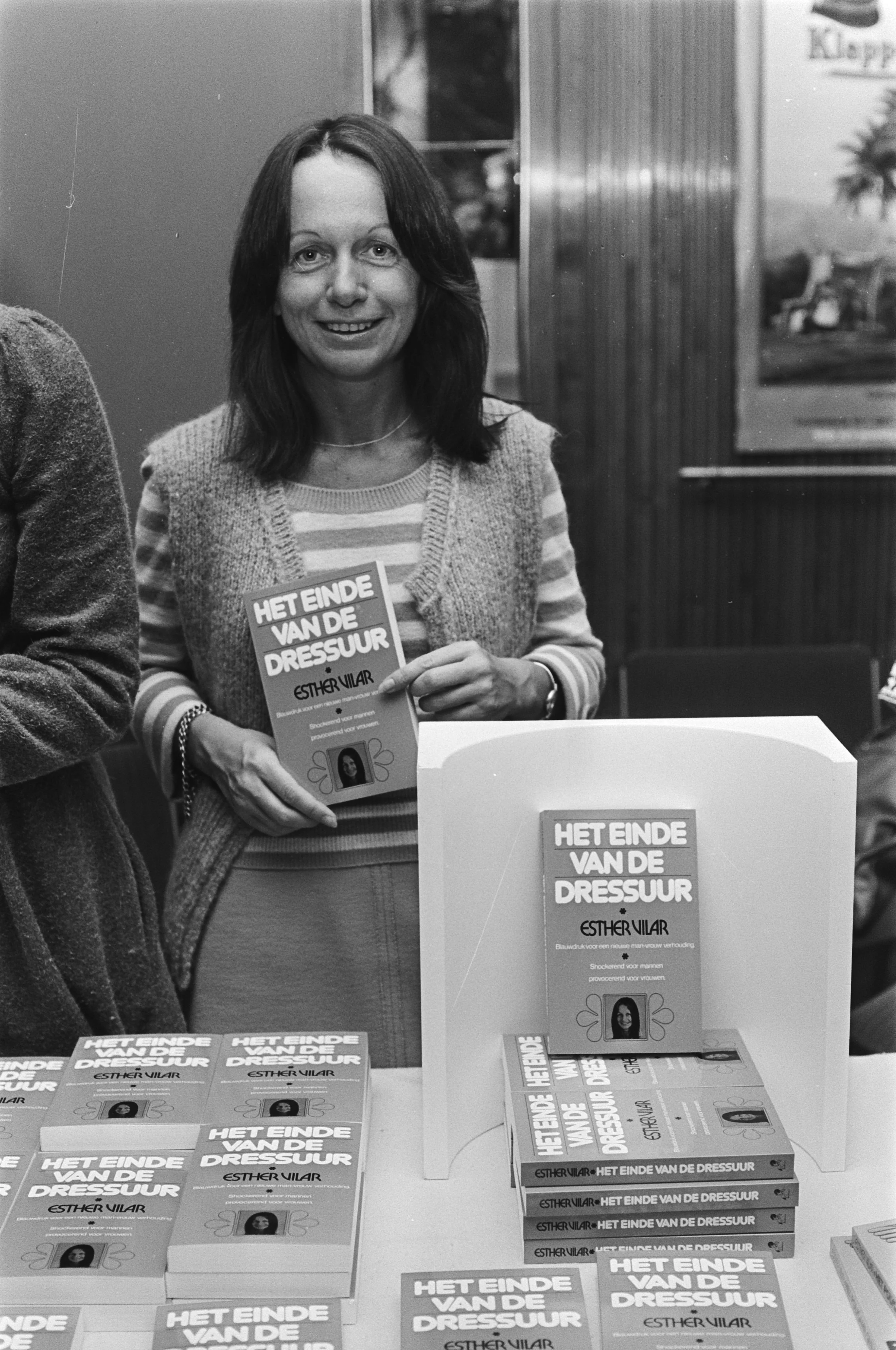
Image from Wikipedia
Image from Wikipedia
Esther Vilar: The Provocative Voice That Shaped Debates
An Author Who Electrified the Public with a Single Book
Esther Margareta Vilar, born on September 16, 1935, as Esther Margareta Katzen in Buenos Aires, is one of those literary figures whose name is inseparably linked with controversy, escalation, and public friction. She became well-known in the 1970s with her book The Manipulated Man, which suddenly thrust her into the center of a heated societal debate and made her a bestselling author. Her biography tells not just of a writer, but of an intellectual who challenged, provoked, and polarized the audience with her theses. ([www1.wdr.de](https://www1.wdr.de/stichtag/stichtag-esther-vilar-100.html?utm_source=openai))
From Buenos Aires to Europe: Background, Education, and Intellectual Influence
Vilar grew up in Argentina and later moved to West Germany, where she furthered her education in the fields of medicine, psychology, and sociology. This interdisciplinary education continues to shape her work today, as her texts combine observation, analysis, and polemic sharpness with a keen sense of societal mechanisms. A core aspect of her authorial identity lies therein: Vilar does not argue exclusively in literary terms, but with the self-understanding of a thinker who dissects social role models and breaks them down into their components. ([fr.wikipedia.org](https://fr.wikipedia.org/wiki/Esther_Vilar?utm_source=openai))
The Breakthrough: “The Manipulated Man” as a Cultural Sensation
The real breakthrough came in 1971 with The Manipulated Man. The book presented a provocative counter-position amidst the rising women's movement, claiming that it is not women, but men who are suppressed by societal role mechanisms. This thesis made the work famously notorious: It was widely discussed, harshly attacked, and simultaneously perceived by millions. Even decades later, the publisher describes the book as a classic that continues to stir up an emotionally charged topic today. ([www1.wdr.de](https://www1.wdr.de/stichtag/stichtag-esther-vilar-100.html?utm_source=openai))
The public explosiveness was not only fueled by the theses themselves but also by Vilar's media presence. She appeared on television formats, engaged in public debates, and entered confrontations that shaped both her persona and her books. Particularly memorable was the television duel with Alice Schwarzer, which is regarded as one of the sharpest feminist disputes in the Federal Republic. With this, Vilar became not just the author of a book but a figure at the cultural conflict center of her time. ([www1.wdr.de](https://www1.wdr.de/stichtag/stichtag-esther-vilar-100.html?utm_source=openai))
Controversies as Part of Artistic Identity
Esther Vilar early embodied a kind of intellectual stage presence that has remained rare in the German-speaking debate culture. Reactions to her texts ranged from enthusiasm to strict rejection and even massive personal hostility; in later reflections, she spoke of threats that followed her publications. This escalation illustrates the power her work unleashed: Vilar did not write for quiet approval but for an audience that was forced to take a stand. ([en.wikipedia.org](https://en.wikipedia.org/wiki/Esther_Vilar?utm_source=openai))
After The Manipulated Man, she continued her confrontational line. The End of Conditioning was published in 1977, furthering the debate on gender roles, this time even more sharply focused on ideological fronts. Later texts like The 25-Hour Week, The Alluring Glow of Stupidity, and The Horrors of Paradise show an author who never let societal certainties rest and repeatedly attacked them in new ways. ([giordano-bruno-stiftung.de](https://www.giordano-bruno-stiftung.de/sites/gbs/files/gbs_bruno2025_web.pdf?utm_source=openai))
Bibliography Instead of Discography: The Work as an Intellectual Long-Playing Record
Even though Esther Vilar is not a musician and therefore does not have a discography in the strict sense, her work reads like a series of striking publications with a distinctive handwriting. The Manipulated Man remains the most well-known and still most frequently quoted publication, complemented by thematically related writings that deal with work, leisure, morality, religion, and societal adaptation. The publisher continues to offer the work in updated editions and audiobook formats, underscoring her enduring presence in the German-language book market. ([dtv.de](https://www.dtv.de/buch/der-dressierte-mann.-das-polygame-gesch-das-ende-der-dressur?utm_source=openai))
Especially interesting is the formal variety: Vilar wrote essays, polemical pamphlets, dramas, and journalistic texts. The play Speer from 1998, for example, expands her spectrum toward dramatic fiction and historical character portrayal. Thus, the portrait of an author emerges whose artistic development unfolds not linearly but in thematic lines of attack. ([en.wikipedia.org](https://en.wikipedia.org/wiki/Esther_Vilar?utm_source=openai))
Style and Language: Polemic with an Analytical Core
Vilar’s style is direct, analytical, and intentionally confrontational. Her texts utilize sharpness, counterclaims, and the strategic break with consensus formulas, thereby generating enormous public friction. This mix of intellectual construction and polemic energy makes her writings easily identifiable and culturally historically interesting to this day. ([dtv.de](https://www.dtv.de/buch/der-dressierte-mann.-das-polygame-gesch-das-ende-der-dressur?utm_source=openai))
In effect, her language recalls a pointed stage language: clearly set, without prevarication, with maximum attention on the conflict in the sentence. The publisher explicitly describes the intervention as “vigorously biting” and emphasizes her enduring ability to initiate debates. This is precisely where her historical significance derives: Vilar is less an author of pleasant sounds than of sharpness, less an advocate of harmonious tones than a master of intellectual provocation. ([dtv.de](https://www.dtv.de/buch/der-dressierte-mann.-das-polygame-gesch-das-ende-der-dressur?utm_source=openai))
Cultural Influence and Reception: Between Bestseller and Counter-Narrative
The cultural impact of Esther Vilar is not exhausted by sales figures or media notoriety. Her influence primarily lies in making visible a debate that extended far beyond her own work: role models, power dynamics, female and male socialization, and the mechanics of public outrage. The fact that her books are still in print, offered as audiobooks, and included in publishers' programs points to an enduring relevance in the historical cultural canon. ([dtv.de](https://www.dtv.de/buch/der-dressierte-mann.-das-polygame-gesch-das-ende-der-dressur?utm_source=openai))
Contemporary and later reception remained divided. On the one hand, Vilar was read as a courageous out-of-the-box thinker attacking thought prohibitions; on the other hand, she was seen as an author whose sharpness reproduces new stereotypes. This very ambivalence makes her position so fascinating: Esther Vilar is not a convenient classic figure but an author around whom ideological questions can still be sharpened today. ([www1.wdr.de](https://www1.wdr.de/stichtag/stichtag-esther-vilar-100.html?utm_source=openai))
Current Presence: Rediscovered Texts and Ongoing Readership
Even without new major publications in 2024 and 2025, Esther Vilar remains present in the literary circulation. The publisher continues to offer The Manipulated Man in current product and audiobook editions, ensuring her visibility in bookselling and contemporary catalogs. Thus, she remains part of an ongoing discourse in which classics do not stagnate in a museum, but are read, heard, and judged again. ([dtv.de](https://www.dtv.de/media/ea/58/46/1682499081/DAV-Vorschau_Klassiker_H2023_DS.pdf?utm_source=openai))
Conclusion: Why Esther Vilar Remains Fascinating Today
Esther Vilar remains intriguing because she viewed literature as a battleground and wrote her texts with intellectual rigor against the tide. Her biography combines background, education, public controversy, and journalistic decisiveness into an exceptionally sharply outlined author portrait. Anyone who wants to understand how a polemic becomes a cultural event will find in Vilar a paradigmatic example. ([www1.wdr.de](https://www1.wdr.de/stichtag/stichtag-esther-vilar-100.html?utm_source=openai))
It is precisely for this reason that reading her books remains worthwhile today: not as a nostalgic retrospective but as an invitation to engage with language, role models, and public debate. Esther Vilar writes against comfort, and therein lies her enduring power. Those who read or listen to her texts encounter an author who cannot be consumed casually but must be seriously discussed. ([dtv.de](https://www.dtv.de/media/ea/58/46/1682499081/DAV-Vorschau_Klassiker_H2023_DS.pdf?utm_source=openai))
Official Channels of Esther Vilar:
- Instagram: No official profile found
- Facebook: No official profile found
- YouTube: No official profile found
- Spotify: No official profile found
- TikTok: No official profile found