
Fatoni
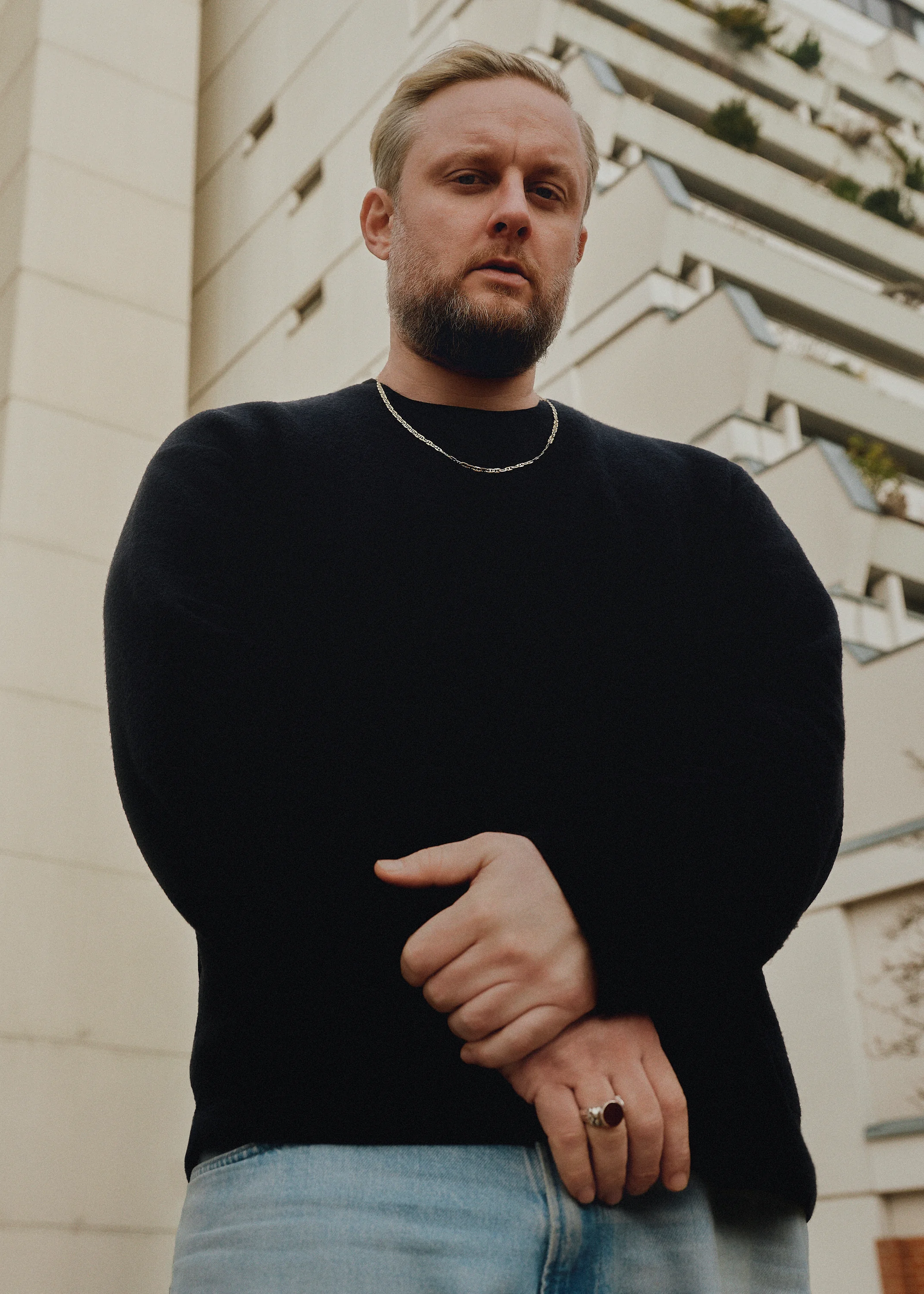
Image from Wikipedia
Image from Wikipedia
Fatoni – the clever storyteller of German rap between irony, self-criticism, and pop sensibility
A German rapper with an acting background, sharp pen, and a distinctive view of the present
Fatoni, born Anton Schneider on December 8, 1984, in Munich, is one of the most distinctive voices in German rap. His artistic profile combines wit, self-irony, and social observation with a clear background in stage and acting experience. This very mix makes him an artist who does not merely write songs but crafts entire roles, moods, and perspectives. ([de.wikipedia.org](https://de.wikipedia.org/wiki/Fatoni))
His music career began early, with hip-hop as a formative impulse he discovered as a teenager in the late 1990s. Parallel to this, his training as an actor developed into a second artistic pillar that adds depth to his performance and stage presence to this day. Fatoni never comes across as one-dimensional: he is a rapper, performer, storyteller, and observer all in one. ([de.wikipedia.org](https://de.wikipedia.org/wiki/Fatoni))
From Munich to the scene: early years, training, and first artistic steps
Anton Schneider grew up in Munich, switched schools multiple times, and initially began vocational training as a child care worker after the 10th grade. He later attended the Otto Falckenberg School of Performing Arts in Munich, graduating from 2009 to 2013. This dual pathway in his biography – social experience on one side, acting technique on the other – shapes his art to this day. ([de.wikipedia.org](https://de.wikipedia.org/wiki/Fatoni))
From an early age, he showed an interest in language, roles, and staging. The later rapper Fatoni was already writing his own lyrics as a teenager and approached hip-hop not only as a listener but as an aspiring author. This developed into a style that relies less on mere pose and more on precise punchlines, strong characters, and a pronounced sense of dramaturgy. ([de.wikipedia.org](https://de.wikipedia.org/wiki/Fatoni))
Creme Fresh, Moop Mama, and the long path to a solo voice
In 2000, Fatoni co-founded the band Creme Fresh alongside Keno and Bustla. Until the group's dissolution in 2011, they released four albums and an EP; until 2010, Fatoni was also part of Moop Mama with the band members. These years were not merely a precursor but a foundation: Fatoni learned collective working, timing, live energy, and the interplay with various musical contexts there. ([de.wikipedia.org](https://de.wikipedia.org/wiki/Fatoni))
After the end of these formations, he consistently pursued solo paths. In 2011, his first solo album, Solang früher alles besser war, was released, followed by Nocebo with Edgar Wasser in 2013. Even at this stage, it became evident that Fatoni understands German rap not as a rigid zone but as an open narrative system where humor, skepticism, and self-reflection coexist equally. ([de.wikipedia.org](https://de.wikipedia.org/wiki/Fatoni))
Breakthrough with "Yo, Picasso" and Dexter's signature
Fatoni celebrated his real breakthrough in 2015 with the album Yo, Picasso, created together with producer Dexter. The album received positive reviews, entered the German album charts at number 23, and reached number 2 on the hip-hop charts. With this work, Fatoni firmly established himself as a voice that stands out in the scene because he thinks about rap in an intellectual, comedic, and emotional way simultaneously. ([de.wikipedia.org](https://de.wikipedia.org/wiki/Fatoni))
The success of Yo, Picasso lies not only in the numbers but in the character of the album itself. Fatoni combines pointed observations, literary lines, and a laconic delivery that consciously sets itself apart from simple patterns. Media praised the unusual approach, and the collaboration with Dexter became a staple reference point in his discography. ([de.wikipedia.org](https://de.wikipedia.org/wiki/Fatoni))
Between tour life and collaborations: Fatoni as a sought-after feature guest
After his breakthrough, tours followed as an opening act for Fettes Brot, Beatsteaks, Alligatoah, Antilopen Gang, Casper, and Deichkind, among others. Meanwhile, Fatoni also developed as a solo tour artist who fills the live space not merely as a performer but with ironic presence and narrative pressure. This concert experience enhanced his reputation as someone who masters both stage and text equally. ([de.wikipedia.org](https://de.wikipedia.org/wiki/Fatoni))
As a feature guest, he was well-connected and worked with Max Herre, Grossstadtgeflüster, Die Höchste Eisenbahn, Lakmann, Maeckes, Juse Ju, Moop Mama, and Betterov. This versatility highlights Fatoni's significance in the German music landscape: he is not just a pure rap insider, but a boundary crosser between rap, pop, indie, and performance art. ([de.wikipedia.org](https://de.wikipedia.org/wiki/Fatoni))
Discography as artistic development: from mixtapes to chart success
Fatoni's discography clearly outlines a development from group rap to a fully formed solo voice. After Die Zeit heilt alle Hypes and the C’MON! EP, increasingly defined chapters followed with Im Modus, Alle Liebe nachträglich with Mine, Andorra, Delirium with Edgar Wasser, Wunderbare Welt, and BAWRS. Chart placements range from number 23 with Yo, Picasso to number 4 with Delirium and number 6 with BAWRS. ([de.wikipedia.org](https://de.wikipedia.org/wiki/Fatoni))
Notably, Fatoni consistently utilizes collaborations as an artistic format. Alle Liebe nachträglich with Mine was nominated for the Pop Culture Prize in 2018, Delirium combined rap with analytical sharpness, and BAWRS, with Edgar Wasser and Juse Ju, was released in 2025 as the first joint album of the three. This illustrates Fatoni as an artist who sees collaboration not as a side project but as a driving force of his aesthetic development. ([de.wikipedia.org](https://de.wikipedia.org/wiki/Fatoni))
Style, language, and sound: why Fatoni stands out in German rap
Fatoni's style is heavily characterized by wordplay, irony, and self-observation. He works with double meanings, cultural critique, and a sense of rhythm that is often as important as the punchline itself. His lyrics often resemble precise miniatures: scenes from everyday life, small crises, urban observations, and melancholic self-diagnoses merge into a dense rap narrative. ([hiphop.de](https://hiphop.de/magazin/hintergrund/ueber-selbst-kritik-gute-wortspiele-14-lines-aus-neuen-fatoni-album-319863))
Musically, he moves in the tension field of boom bap, pop appeal, indie influences, and reduced, often very pointed production. The collaboration with Dexter, in particular, embodies a clear, dry sound in which Fatoni's voice and his wordplay remain at the forefront. His rap is less about overloaded staging and more about arrangement, timing, and the art of conveying a whole attitude with few words. ([de.wikipedia.org](https://de.wikipedia.org/wiki/Fatoni))
"Andorra", self-criticism, and the view of the scene
With Andorra, Fatoni sharpened his perspective significantly in 2019. The album entered the German charts at number 9 and was interpreted in the music press as a work intertwining scene criticism, personal insecurity, and wit. The tone is particularly striking: Fatoni examines himself, the rap world, and the zeitgeist with an unusually candid harshness. ([de.wikipedia.org](https://de.wikipedia.org/wiki/Fatoni))
The reception highlighted how precisely Fatoni formulates his self-criticism and how skillfully he translates societal tensions into songs. Whether addressing issues of stance, ironic self-exposure, or the contradiction between ambition and everyday life, Fatoni uses rap as a space for thought. It is precisely in this that his authority lies: he delivers not mere slogans but an artistic analysis in rhyme form. ([hiphop.de](https://hiphop.de/magazin/hintergrund/ueber-selbst-kritik-gute-wortspiele-14-lines-aus-neuen-fatoni-album-319863))
Also a prominent figure as an actor and host
Fatoni's career extends far beyond music. After his acting studies, he appeared at the Munich Kammerspiele and the City Theater Klagenfurt, followed by engagements at the Augsburg Theater. In the film and television sector, he appeared in Tatort, Normaloland, Fett und Fett, Home Sweet Home: Where Evil Dwells, and in 2026 in the Netflix comedy series Kacken an der Havel. ([de.wikipedia.org](https://de.wikipedia.org/wiki/Fatoni))
Additionally, he has done hosting and voice work, such as with the show Die Fatoni Show on PULS from 2015 to 2023, as well as voicing audiobooks and radio plays. This versatility strengthens his artistic identity: Fatoni is not just a rapper but a media artist who masterfully navigates language across several formats. This breadth explains why his music career appears both stable and dynamic. ([de.wikipedia.org](https://de.wikipedia.org/wiki/Fatoni))
Current projects and a new phase in 2026
In 2025, Fatoni, together with Edgar Wasser and Juse Ju, released the album BAWRS. The next phase is already on the horizon for 2026: His Linktree page announces the album DRAMA ENDET NIE with a release date of July 3, 2026, including a single, pre-order options, and tour information. Additionally, KKT booking material has announced an extensive SNEAK PEEK TOUR for March 2026, during which Fatoni plans to present new material and a best-of collection. ([linktr.ee](https://linktr.ee/fatoni))
The soundtrack for Kacken an der Havel also demonstrates that Fatoni will remain present in 2026, not only musically but also in the audiovisual realm. Public communication hints at new songs, grand live plans, and a phase in which his artistic development will expand once more. For fans of well-crafted German rap and for listeners with a sense of irony, emotion, and character, this is particularly exciting moment. ([linktr.ee](https://linktr.ee/fatoni))
Cultural influence: why Fatoni remains important
Fatoni has established himself in German rap as a voice that does not pit humor against attitude. His cultural influence lies precisely in this balance: he shows that rap does not only have to function aggressively, loudly, or maximalistically but can also be intelligent, self-reflexive, and literary. In doing so, he has opened up a niche for many listeners that now extends well beyond the original scene. ([de.wikipedia.org](https://de.wikipedia.org/wiki/Fatoni))
As an artist between stage, studio, acting, and hosting, Fatoni embodies a modern form of pop authorship. He stands for precise lyrics, strong live shows, and a music career that continually renews itself without losing its signature. This is what makes him captivating: Fatoni remains idiosyncratic, relevant, and particularly impressive live. Experiencing him on stage means witnessing rap as intelligently staged contemporary art. ([kkt.berlin](https://kkt.berlin/wp-content/uploads/2024/09/2025-07-22-fatoni-sneak-peek-tour.pdf))
Conclusion: Fatoni between sensitivity, flow, and full live energy
Fatoni is one of the most interesting German rap artists of his generation because he combines wit, depth, and pop awareness with rare consistency. His discography tells of development, his lyrics of observational skill, and his stage presence of experience. Those who love rap that aspires to be not only loud but also intelligent will find in Fatoni an artist with a real profile. ([de.wikipedia.org](https://de.wikipedia.org/wiki/Fatoni))
With new projects, an announced tour, and an expanding body of work between music and acting, he remains highly relevant in 2026. Those who experience Fatoni live encounter not just songs but an attitude: precise, ironic, human, and full of energy. That is his particular strength. ([linktr.ee](https://linktr.ee/fatoni))
Official channels of Fatoni:
- Instagram: https://www.instagram.com/fatoniyo/
- Facebook: https://www.facebook.com/Fatonimusik/
- YouTube: https://www.youtube.com/fatoniyo
- Spotify: https://open.spotify.com/artist/4riceIF5JCEKaSIwwLqIYt?si=G7DEiKujTmC5PgHuGu4L2A
- TikTok: https://www.tiktok.com/@fatoniyo
Sources:
Upcoming Events
FUNFACTS - Host: FATONI in Munich
Munich gets an evening full of timing, beats, and dry laughs: FATONI hosts FUNFACTS in the Blackbox. 26.05.2026, 19:00. #Comedy
Fatoni – DRAMA ENDET NIE TOUR 2026
Don't miss Fatoni live in Erlangen on September 4, 2026 at the E-Werk. An evening full of hip hop and energy!
Fatoni – DRAMA ENDET NIE TOUR 2026 in Erlangen
Fatoni thrills on September 4, 2026, at E-Werk Erlangen with the DRAMA ENDET NIE TOUR. Don't miss this hip-hop highlight!
Fatoni – DRAMA ENDET NIE TOUR 2026
Don't miss Fatoni at his energy-filled show in Erlangen. On September 4 at E-Werk!
Fatoni – DRAMA ENDET NIE TOUR 2026
Experience Fatoni with his captivating stage performance at E-Werk Erlangen. Secure your tickets now!
Fatoni - DRAMA ENDET NIE TOUR 2026
Join us as Fatoni stops in Erlangen with his tour. An evening full of hip-hop, humor, and attitude awaits you!
Fatoni – DRAMA ENDET NIE TOUR 2026
Experience an exciting Hip-Hop concert with Fatoni at E-Werk Erlangen. Be there and enjoy an evening full of energy and music.
Fatoni – DRAMA ENDET NIE TOUR 2026
Join us as Fatoni rocks E-Werk Erlangen on September 6, 2026. An evening full of energetic hip-hop rhythms awaits you.