
Götz Widmann
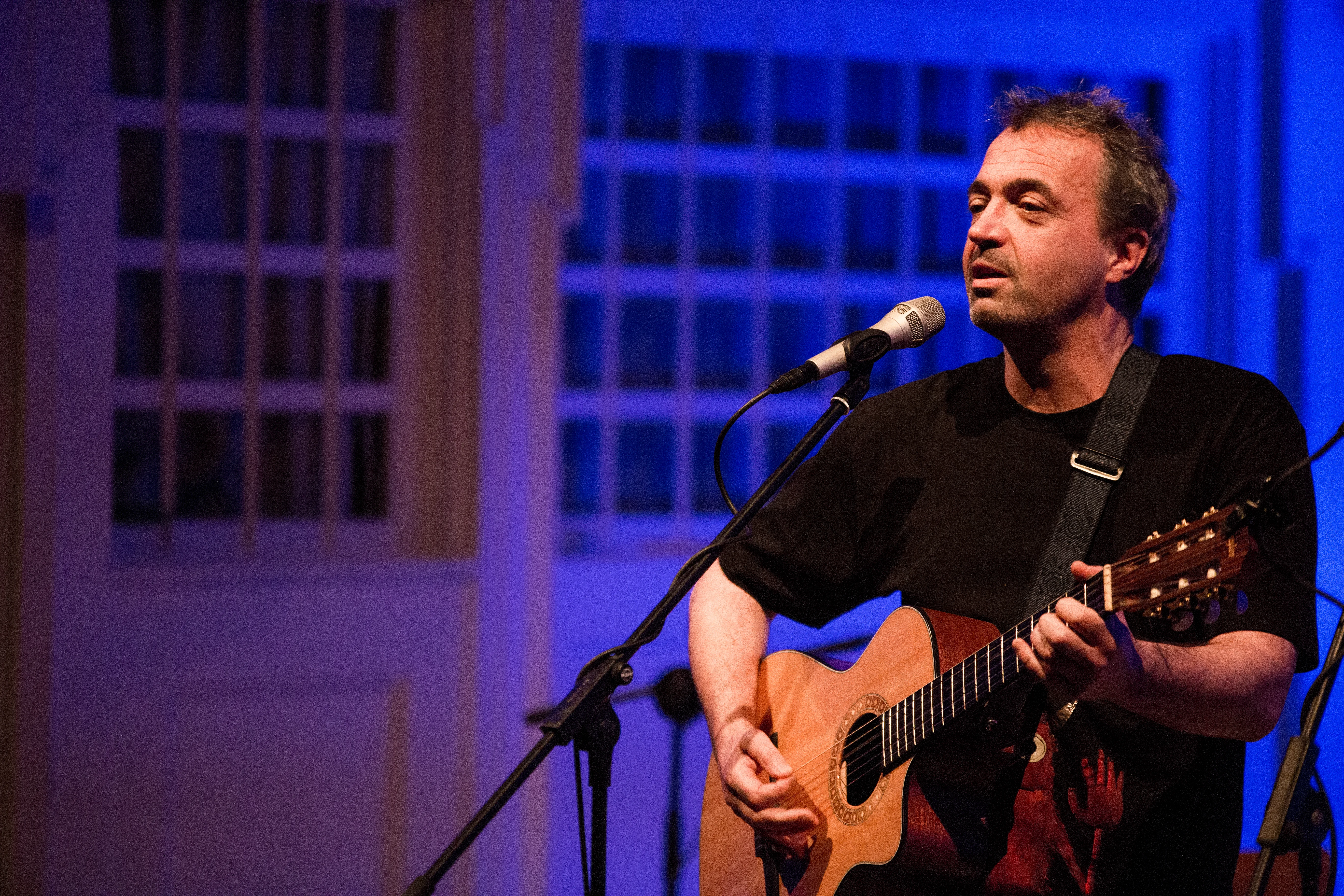
Image from Wikipedia
Image from Wikipedia
Götz Widmann – the singer-songwriter between laconicism, hunger for life, and radical love for humanity
A German song poet who became a cult figure with wit, impact, and authenticity
Götz Widmann is one of the most distinctive voices in the German singer-songwriter scene. Born on November 23, 1965, in Bad Brückenau, raised in Heidelberg, and later long based in Bonn, he developed a music career from personal observation, societal friction, and an unmistakably direct language that goes far beyond classical chanson. His songs revolve around everyday life, politics, sexuality, alcohol, and hashish, yet behind the provocative surface lies a keen insight into human weaknesses, yearnings, and the desire for freedom. ([de.wikipedia.org](https://de.wikipedia.org/wiki/G%C3%B6tz_Widmann))
From study to stage: the early years of an unusual songwriter
After high school, Widmann began studying history and German studies, but soon switched to business administration, which he completed. His artistic beginnings did not come from an academic career but from storytelling, writing, and performing: in Heidelberg, around 1990, he found his first musical platform at the Tater-Theater, where he gained attention as a business student and ultimately as a musical partner for stage works. From this phase emerged an early signature characterized by shamelessness, wordplay, and an unmistakable tendency toward nonconformity. ([de.wikipedia.org](https://de.wikipedia.org/wiki/G%C3%B6tz_Widmann))
The decisive step came in 1993 with the singer-songwriter duo Joint Venture alongside Martin "Kleinti" Simon. The project intentionally set a counterpoint to the venerable 1970s singer-songwriter tradition: more punkish, coarse, substance-loving, and at the same time highly precise in its approach to language and audience. Wikipedia describes this style as formative for the younger singer-songwriter generation; the music press also highlights that Widmann and Simon saw themselves as "moderate punks of the modern age." This mixture of defiance, humor, and attitude became the foundation of his artistic biography. ([de.wikipedia.org](https://de.wikipedia.org/wiki/G%C3%B6tz_Widmann))
Joint Venture: Cult status through friction, irony, and subversion
Between 1993 and 2000, Joint Venture shaped an entire scene. The albums "Dinger," "Augen zu," "Unanständige Lieder," "Ich brauch’ Personal," and "Extremliedermaching" mark a discography that shifted the tone of German-speaking political and non-political protest songs. Instead of moral heaviness, the duo offered a cheeky, physical, often absurd perspective on society and contemporary life. This very attitude made them attractive to a younger audience that did not want to confuse authenticity with seriousness. ([de.wikipedia.org](https://de.wikipedia.org/wiki/G%C3%B6tz_Widmann))
On June 5, 2000, Martin Simon passed away, marking the end of Joint Venture. For Widmann, this did not mean retreat but the opening of a new chapter as a solo artist. In retrospect, this shows a central motif of his career: loss does not become a pose, but a driving force for new writing. The release of the eleven-and-a-half-hour audiobook "Joint Venture – The Whole Story" in 2024 underscores how strongly this shared era continues to resonate today. ([de.wikipedia.org](https://de.wikipedia.org/wiki/G%C3%B6tz_Widmann))
Solo with attitude: the journey from crowd favorite to established name
Since the end of 2000, Widmann has been working as a solo artist. In the early days of his solo career, he supported well-known bands like The Busters or J.B.O. and gradually established himself with an independent stage presence. His concerts are almost always solo, usually with an acoustic guitar and without a fixed setlist; this spontaneity shapes the evening character of his shows. The mix of old and new songs changes daily, making his live performances particularly immediate. ([de.wikipedia.org](https://de.wikipedia.org/wiki/G%C3%B6tz_Widmann))
His solo albums include "Götz Widmann," "Zeit," "Habt euch lieb," "Ahoi," "Krieg und Frieden," "Sittenstrolch," "Tohuwabohu," and most recently "Blütenduft" from 2024. Live releases and DVDs are also part of his discography, including "Harmlos" and "Live." Notably, "Habt euch lieb" was partially recorded with a full band, while later productions regularly included guest musicians without abandoning the core aesthetics of the solo performance. ([de.wikipedia.org](https://de.wikipedia.org/wiki/G%C3%B6tz_Widmann))
The new chapter 2024/2025: Blütenduft, audiobook, and tour life
Currently, Widmann remains in a phase of intensive work. On his official website, "Blütenduft" is listed as the new album; at the same time, the tour schedule indicates numerous dates in Germany, Switzerland, and Austria for 2026/2027. In early spring 2024, he announced the tour under the title "Blütenduft," expressly referencing new material and a fresh artistic phase. This shows: Widmann is not a retro act but continues to work on his repertoire and his stage narrative. ([goetzwidmann.de](https://goetzwidmann.de/?utm_source=openai))
Additionally, the audiobook about the Joint Venture years, which was released in 2024, revisits his early history in narrative depth. Widmann's website also announces further content around music, songbooks, and live recordings. The official site even describes a project with over 200 live recordings, further underscoring his status as a restless live artist. ([goetzwidmann.de](https://goetzwidmann.de/?utm_source=openai))
Style, themes, and musical development
Widmann's style combines singer-songwriter tradition with punk attitude, satire, and direct emotionality. He works with sharp wit, social observation, and a language that never hides behind academic distance. The themes are explicit yet universal: love, desire, intoxication, politics, self-irony, and the search for autonomy. This thematic range makes his music interesting for an audience that seeks not just entertainment but also challenge. ([de.wikipedia.org](https://de.wikipedia.org/wiki/G%C3%B6tz_Widmann))
His songs are described by platforms and media as irreverently humorous, radically loving humanity, and anti-dogmatic. Spotify summarizes his art as a blend of winking malice and a call for independent thinking; Rockpalast emphasizes that Widmann continues to tour regularly through Germany, Switzerland, and Austria. In this combination of directness, empathy, and resistance against dullness lies his particular authority within German songwriting. ([open.spotify.com](https://open.spotify.com/artist/6VptBj8FGwldnfkvDQE8VU?utm_source=openai))
Discography and artistic reach
With 20 albums by spring 2025, Widmann has produced a remarkable body of work that can clearly be divided into two eras: Joint Venture and Solo. The collaborative phase provided the foundation, while the solo period sharpened his personal signature. His releases show consistent work on form, timing, and stage impact; they also document a rare continuity in the German-speaking singer-songwriter genre. ([de.wikipedia.org](https://de.wikipedia.org/wiki/G%C3%B6tz_Widmann))
The official website and Wiki discography confirm that Widmann has released not only studio albums but also several live formats, a double CD, a triple LP, and video productions. This variety is not just a catalog but part of his aesthetic strategy: Widmann thinks of songs as events, not merely as recordings. Therefore, his work functions equally well in the studio, on stage, and in narrative retrospections. ([de.wikipedia.org](https://de.wikipedia.org/wiki/G%C3%B6tz_Widmann))
Cultural influence and resonance
Widmann's influence on younger singer-songwriters lies primarily in his easing of the genre. He has shown that social relevance does not necessarily have to be accompanied by seriousness and pathos. Instead, he uses humor as a means of insight, provocation as a shift in perspective, and live performance as an immediate form of communication. In doing so, he aligns himself with the tradition of German-speaking songwriting but shifts this tradition into a present that sounds rougher, more direct, and self-ironic. ([de.wikipedia.org](https://de.wikipedia.org/wiki/G%C3%B6tz_Widmann))
His current touring activity also shows that Widmann's stage presence continues to resonate. The many dates starting in autumn 2026 indicate a vibrant fan base both regionally and nationally. His concerts remain a place where cultural experience, musical density, and direct engagement connect in a special way. ([goetzwidmann.de](https://goetzwidmann.de/?utm_source=openai))
Conclusion: Why Götz Widmann fascinates to this day
Götz Widmann is exciting because he has liberated German songwriting from reverence without losing its seriousness. He writes songs that can laugh, provoke, comfort, and contradict, and he presents them with a stage presence that creates closeness rather than distance. Those who experience him live encounter not a museum chanson evening, but an open, unpredictable, and very human music night. That is where his greatness lies. ([de.wikipedia.org](https://de.wikipedia.org/wiki/Götz_Widmann))
Anyone looking for German song culture with attitude, humor, and soul should experience Götz Widmann live. His concerts are not a routine but a lived music career in the present: spontaneous, approachable, clever, and full of energy. ([goetzwidmann.de](https://goetzwidmann.de/?utm_source=openai))
Official channels of Götz Widmann:
- Instagram: No official profile found
- Facebook: No official profile found
- YouTube: No official profile found
- Spotify: https://open.spotify.com/artist/6VptBj8FGwldnfkvDQE8VU
- TikTok: No official profile found
Sources:
- GöTZ WiDMANN – Official Website
- GöTZ WiDMANN – 30 Years Joint Venture Tour
- GöTZ WiDMANN – 30 Years Joint Venture: The Tour Continues.
- Wikipedia – Götz Widmann
- WDR Rockpalast – Götz Widmann
- laut.de – Götz Widmann
- Music-Info-Net – Portrait: Götz Widmann
- Spotify – Götz Widmann
- Wikipedia: Image and text source