
Golda Meir
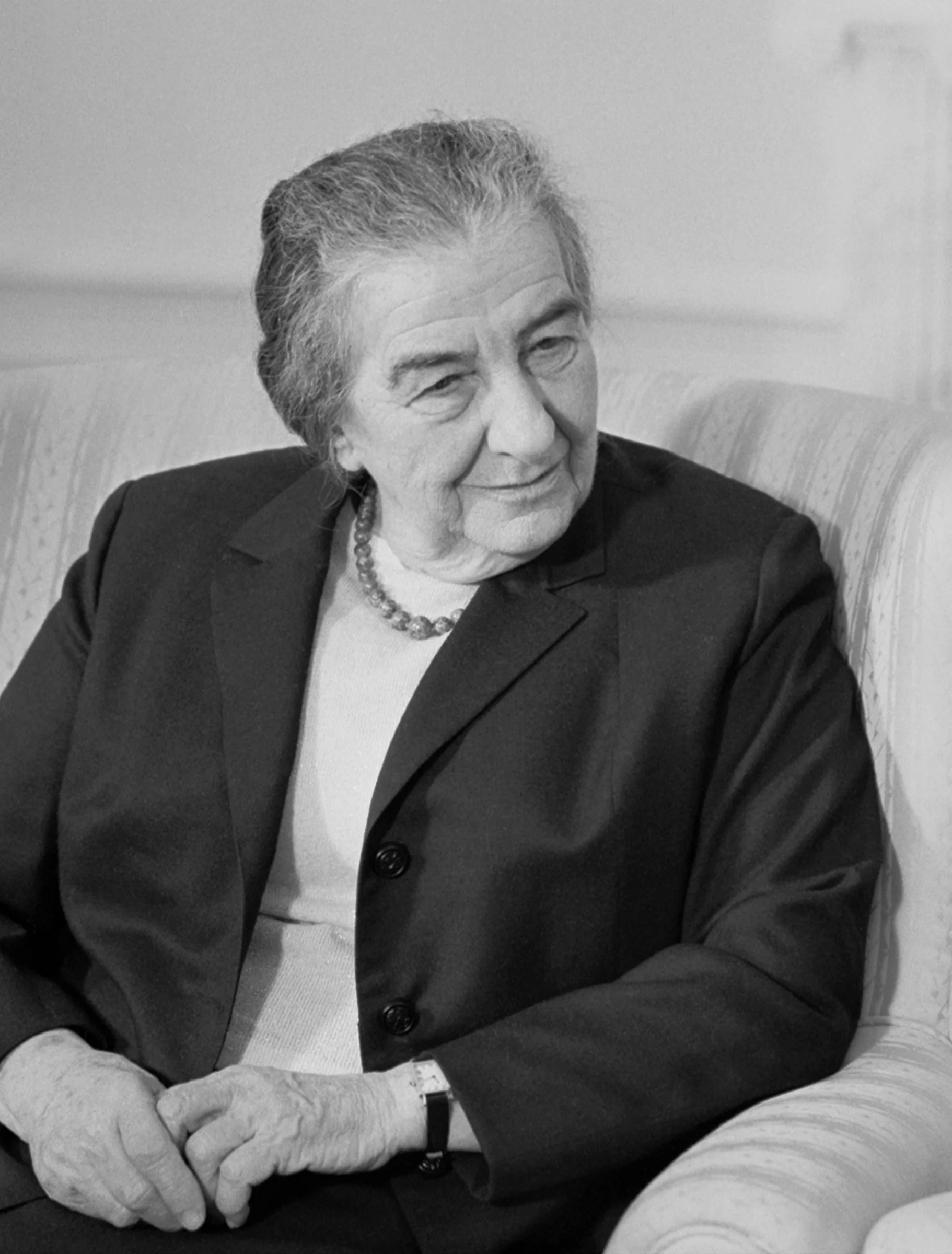
Image from Wikipedia
Image from Wikipedia
Golda Meir: The Uncompromising Architect of Israel and One of the Most Influential Stateswomen of the 20th Century
A Political Biography Between Origins, Convictions, and Historical Responsibility
Golda Meir is one of the most influential politicians of modern times. Born in 1898 in Kiev and raised in the conditions of migration, uncertainty, and Jewish self-assertion, she became a central figure in the establishment of the State of Israel. As Foreign Minister and later as Prime Minister, she shaped an era in which political determination, diplomatic toughness, and institutional development were inseparably linked. ([de.wikipedia.org](https://de.wikipedia.org/wiki/Golda_Meir?utm_source=openai))
Her public impact was based on a clear, sober style: Golda Meir rarely spoke ornamentally but always with authority. This was where her historical greatness lay. She represented a political self-understanding that arose from experience, conviction, and resilience in crises, not from rhetoric or staging. ([whoswho.de](https://whoswho.de/bio/golda-meir.html?utm_source=openai))
Early Years: From Kiev to Milwaukee to Palestine
Golda Meir was born as Golda Moisejewna Mabowitsch and emigrated to the United States with her family in 1906; later she lived in Milwaukee before moving to the British Mandate of Palestine in 1921 with her husband Morris Meyerson. This biographical movement between Eastern Europe, America, and Zionism shaped her political thinking early on. The experience of emigration and minority existence became the underlying tone of her life. ([de.wikipedia.org](https://de.wikipedia.org/wiki/Golda_Meir?utm_source=openai))
Even at a young age, she combined practical everyday life with ideological clarity. From the perspective of the labor movement and the left-Zionist milieu, she developed a political style that emphasized organization, discipline, and collective responsibility. This foundation would later support her career in the party, administration, and government. ([de.wikipedia.org](https://de.wikipedia.org/wiki/Golda_Meir?utm_source=openai))
The Political Breakthrough: Union, Jewish Agency, and Statehood
Her rise began not with a single spectacular event but through continuous work in the establishment of Jewish self-governance. Meir became an important representative of the Jewish Agency and played a significant role in the years leading up to the founding of the State of Israel. In this phase, she distinguished herself as a negotiator, organizer, and fundraiser with extraordinary influence. ([dewiki.de](https://dewiki.de/Lexikon/Golda_Meir?utm_source=openai))
Her role in 1948, around the founding of the state, was particularly formative. Sources describe her as one of the key figures in this historical moment, establishing diplomatic contacts and securing the political reality of the new state. Thus, she represented not only ideology but concrete power and constructive work. ([jewishvirtuallibrary.org](https://jewishvirtuallibrary.org/golda-meir?utm_source=openai))
Foreign Minister: Diplomacy as a Tough School of Statecraft
From 1956 to 1966, Golda Meir served as Israel's Foreign Minister. In this role, she became the international voice of a young state struggling for recognition, security, and political stability. Her demeanor was direct, factual, and strongly characterized by a sense of statehood. ([de.wikipedia.org](https://de.wikipedia.org/wiki/Golda_Meir?utm_source=openai))
The foreign policy of those years demanded clarity in an environment of permanent tensions. Meir represented Israel during a phase in which the young nation had to solidify its position in the world. Her diplomatic style was less about charm and more about reliability and strategic consistency. ([myjewishlearning.com](https://www.myjewishlearning.com/article/golda-meir/?utm_source=openai))
Prime Minister: Power, Crisis, and Historical Burden
In 1969, Golda Meir became Israel's Prime Minister, making her the first woman to lead the state. Her tenure fell within an extremely politically charged period, marked by security issues, regional conflicts, and the profound impact of the Yom Kippur War. She governed at a time when political decisions had immediate historical consequences. ([de.wikipedia.org](https://de.wikipedia.org/wiki/Golda_Meir?utm_source=openai))
Her leadership remains a topic of controversy today, particularly due to the events surrounding the Yom Kippur War. However, it is undisputed that Meir became a symbolic figure for a generation of women worldwide: not as an exception but as proof that female leadership in world politics is permanently possible. ([time.com](https://time.com/5793561/golda-meir-100-women-of-the-year/?utm_source=openai))
Political Style and Public Perception
Golda Meir embodied a rare type of political authority: direct, unvarnished, and historically grounded. Her impact was based on credibility, not staging. For this reason, she is frequently remembered in politics as "strong," yet also as uncompromising and tough on issues. ([whoswho.de](https://whoswho.de/bio/golda-meir.html?utm_source=openai))
Her closeness to Jewish tradition was combined with a secular mindset that attributed a special historical mission to the State of Israel. This connection of tradition, pragmatism, and political determination gave her thinking a distinctive profile. For historians, she remains a key figure in the context of state formation, nation-building, and modern power politics. ([de.wikipedia.org](https://de.wikipedia.org/wiki/Golda_Meir?utm_source=openai))
Reception, Legacy, and Cultural Memory
Golda Meir’s legacy extends far beyond the history of Israel. She became a focal point for debates on female leadership, national self-assertion, and political responsibility in times of crisis. Her biography has been widely referenced, reinterpreted repeatedly in books, films, and historical representations. ([de.wikipedia.org](https://de.wikipedia.org/wiki/Golda_Meir_%28Fernsehfilm%29?utm_source=openai))
It is particularly striking how strongly her figure remains present in cultural formats to this day. From cinematic portraits to documentary series, she is portrayed as a character who not only experienced the 20th century but also shaped it. Thus, Golda Meir remains a name that connects political history, memory culture, and international perception. ([de.wikipedia.org](https://de.wikipedia.org/wiki/Golda_Meir_%28Fernsehfilm%29?utm_source=openai))
Conclusion: Why Golda Meir Continues to Fascinate
Golda Meir is fascinating because she embodies the rare combination of historical consistency, political toughness, and symbolic power. Her life story tells of migration, state-building, and power in an era when personal conviction directly influenced world history. Those who engage with her encounter a politician whose influence extends far beyond her term in office. ([de.wikipedia.org](https://de.wikipedia.org/wiki/Golda_Meir?utm_source=openai))
To understand Golda Meir is to encounter a figure who did not merely comment on history but actively shaped it. For this reason, her legacy remains captivating: as an example of political determination, as a symbol of female leadership, and as a key figure in the establishment of the Israeli state. A live experience does not exist, but her speeches, memories, and historical roles invite us to continually rediscover this extraordinary biography. ([encyclopedia.com](https://www.encyclopedia.com/religion/encyclopedias-almanacs-transcripts-and-maps/meir-myerson-nee-mabovitch-golda?utm_source=openai))
Official Channels of Golda Meir:
- Instagram: No official profile found
- Facebook: No official profile found
- YouTube: No official profile found
- Spotify: No official profile found
- TikTok: No official profile found