
Hannes Wader
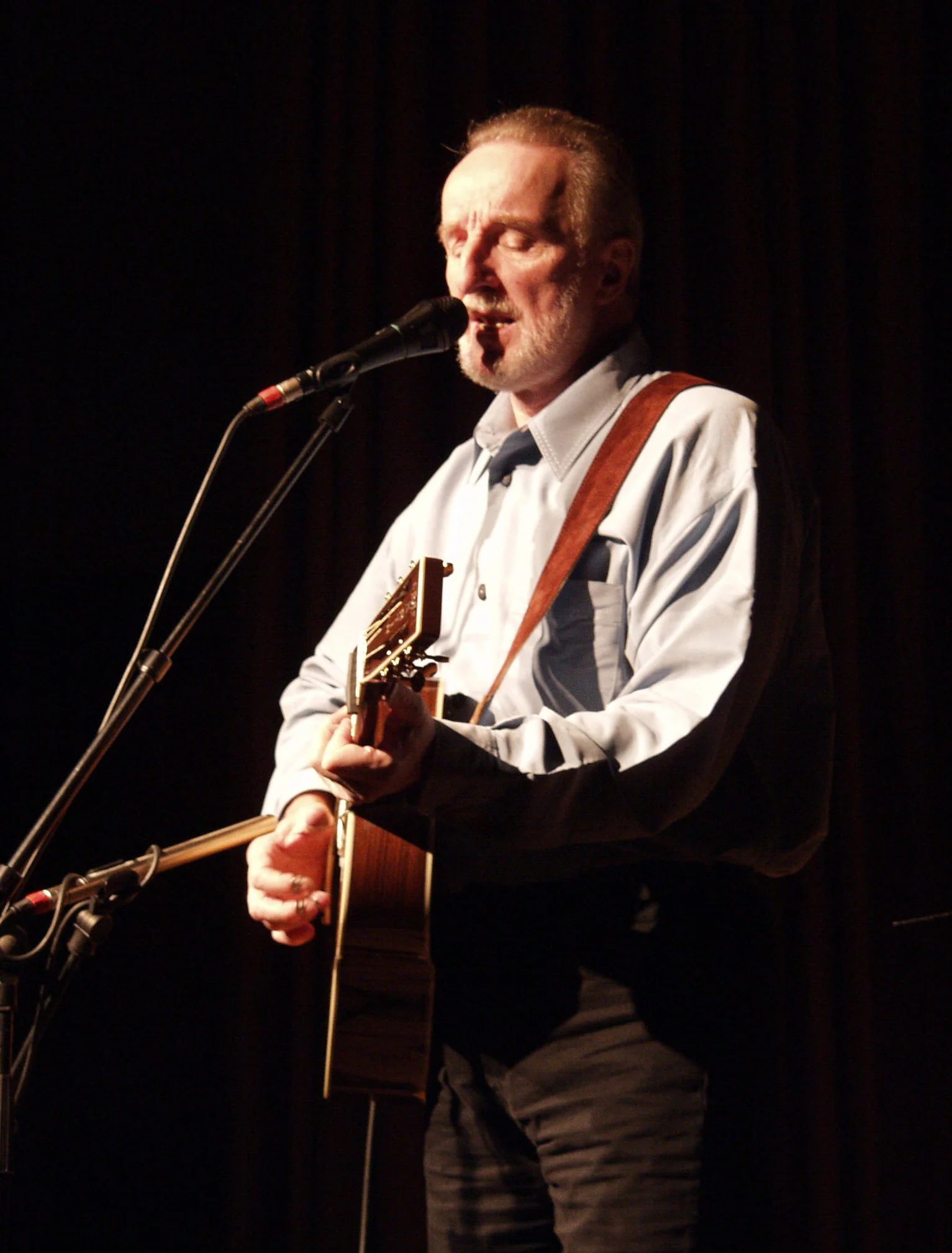
Image from Wikipedia
Image from Wikipedia
Hannes Wader: The Great Storyteller of German Song between Chanson, Protest, and Poetry
A Singer-Songwriter Who Shaped German Music History
Hannes Wader, born as Hans Eckard Wader on June 23, 1942, in Gadderbaum near Bielefeld, is one of the most influential voices in the German singer-songwriter and chanson genre. His musical career did not begin as a straightforward ascent, but rather as an artistic journey between graphic studies, the folk movement, and the desire to make the German language singable, poetic, and politically charged. Early on, he combined autobiographical lyrics, social observation, and a clear, melodic compositional style to create a distinctive profile. ([de.wikipedia.org](https://de.wikipedia.org/wiki/Hannes_Wader))
Wader initially gained recognition as a socially critical chansonnier, whose voice resonated particularly within the student movement and the left-alternative scene. Later, he expanded his repertoire far beyond protest songs, turning to traditional German and Low German folk music, workers' songs, and adaptations of poets like Eichendorff, Bellman, and Schubert. This stylistic breadth continues to make him a distinctive figure today: politically engaged, literarily educated, and deeply connected to the folk song tradition. ([de.wikipedia.org](https://de.wikipedia.org/wiki/Hannes_Wader?utm_source=openai))
Biography: From a Young Man from Bielefeld to a Defining Singer-Songwriter
Wader grew up as the son of a farm laborer and initially began an apprenticeship as a decorator before turning to graphic studies. This early connection between craftsmanship, design, and language explains much of his later art: his songs are precisely constructed, rich in imagery, and rhythmically clear. He received his first artistic influence in his father's mandolin orchestra, in student bands, and through performances with accordion accompaniment at regional festivals. ([rottendorf-stiftung.de](https://www.rottendorf-stiftung.de/wp-content/uploads/2025/09/05-Broschuere-11-Farben-Niederdeutsch-2025-Aug-20.pdf?utm_source=openai))
The decisive breakthrough came in 1966 at the Chanson Folklore International festival at Burg Waldeck. There, he performed in the West German folk scene that also shaped the careers of Reinhard Mey, Schobert and Black, and Ingo Insterburg. This performance suddenly established Wader as a prominent figure in the singer-songwriter scene, and he began performing in halls before thousands of people. ([de.wikipedia.org](https://de.wikipedia.org/wiki/Hannes_Wader))
His first album Hannes Wader singt was released in 1969 and marked the beginning of a long, productive discography. The record label and audiences quickly recognized the uniqueness of his lyrical language, which not only made German lyrics viable but also endowed them with a new emotional and literary depth. By the time of 7 Lieder and subsequent releases, Wader had developed into an artist whose work transcended a single zeitgeist. ([universal-music.de](https://www.universal-music.de/hannes-wader/biografie))
Career and Political Profile: Protest, Stance, and Friction
In the 1970s, Hannes Wader became a defining voice of the left-alternative scene through provocative lyrics. His political stance was not a decorative addition but rather an integral part of his artistic identity: he performed at political events, sang in struck workplaces, and was engaged in the peace movement. In 1977, he joined the DKP, switched to the label pläne, and responded to the media boycott with a stance that prioritized artistic independence over convenience. ([hanneswader.de](https://www.hanneswader.de/kurzbiographie.html))
This phase produced a series of significant albums, including Wieder unterwegs, Es ist an der Zeit, Nicht nur ich allein, Daß nichts bleibt, wie es war, and Glut am Horizont. Workers' songs, socialist anthems, and political ballads became central components of his repertoire. This contributed to his music career gaining an unusual breadth: Wader was simultaneously agitative, poetic, and musically controlled. ([hanneswader.de](https://www.hanneswader.de/kurzbiographie.html))
With the political transformation of the late 1980s and early 1990s, his artistic focus also shifted. After leaving the DKP in 1991, the direct political emphasis lessened, while the work on literary and traditional song forms gained prominence. The dedicated agitator became a mature interpreter, retaining political experience but translating it into a broader cultural reflection. ([hanneswader.de](https://www.hanneswader.de/kurzbiographie.html))
Musical Evolution: From Brassens and Dylan to German Song Art
Among Wader's early influences were Georges Brassens and Bob Dylan. From both, he took neither mere stylistic gestures nor simple imitation, but rather an approach: viewing the song as a form worthy of literary regard, where language, morality, and melody converge. This led to his own compositional style, often incorporating autobiographical elements, a sharp eye for everyday language, and a preference for clear melodic arcs. ([de.wikipedia.org](https://de.wikipedia.org/wiki/Hannes_Wader?utm_source=openai))
His approach to tradition is particularly noteworthy. Wader made folk songs relevant again, even though this repertoire was politically charged and culturally contentious in the 1970s. With Plattdeutsche Lieder, Hannes Wader singt Volkslieder, and Hannes Wader singt Shanties, he demonstrated that regional and historical song forms can sound lively and contemporary rather than being merely preserved in a museum. ([de.wikipedia.org](https://de.wikipedia.org/wiki/Hannes_Wader))
His later works with settings of Bellman, Schubert, and Eichendorff underscore his literary ambition. Wader worked not only as a singer but also as an interpreter, arranger, and mediator between epochs. Thus, an artistic development emerged that transitioned from political song practice to an almost classicist attitude, without losing its emotional core. ([hanneswader.de](https://www.hanneswader.de/kurzbiographie.html))
Discography: Important Albums, Songs, and Late Highlights
Among the most important albums besides the debut Hannes Wader singt are 7 Lieder, Der Rattenfänger, Plattdeutsche Lieder, Volkssänger, Kleines Testament, and Arbeiterlieder. In the 1980s, further pivotal releases followed, such as Wieder unterwegs, Es ist an der Zeit, Dass nichts bleibt wie es war, Glut am Horizont, and Liebeslieder. This discography not only traces a career but also tells the story of an artist who continually reorganized his themes. ([hanneswader.de](https://www.hanneswader.de/werke.html))
His songs Heute hier, morgen dort, Es ist an der Zeit, and Gut wieder hier zu sein are particularly well-known. These songs have left a deep imprint on cultural memory as they encapsulate feelings of life, transience, and new beginnings in just a few lines. Some of his settings have even become folk songs themselves and appear in relevant publications like Mundorgel. ([de.wikipedia.org](https://de.wikipedia.org/wiki/Hannes_Wader))
The live phase also remained significant. In 2002, a concert with Reinhard Mey and Konstantin Wecker in Bielefeld was held for Wader's 60th birthday, later released as a bestselling double-CD. In 2010, Wecker & Wader – Kein Ende in Sicht lingered in the charts for weeks, and the documentary Wader Wecker Vater Land received the audience award at the Munich Film Festival. Later, further important works like Sing, Poetenweg, and Noch hier highlighted his late sovereignty. ([hanneswader.de](https://www.hanneswader.de/assets/echo2013-lebenswerk-hannes-wader.pdf))
Style, Voice, and Cultural Influence
Hannes Wader's style is characterized by an extraordinary balance of clarity and depth. His voice carries no effects but rather authority through experience; his arrangements prioritize comprehensibility, ensuring that the lyrics never disappear behind the music. Consequently, even a political song does not come across as merely superficial but rather as a carefully constructed piece of cultural history. ([de.wikipedia.org](https://de.wikipedia.org/wiki/Hannes_Wader))
As a cultural influencer, Wader's impact is immeasurable. He helped to legitimize the German language in the chanson and singer-songwriter genre and assisted in liberating folk songs, workers' songs, and literary adaptations from ideological constraints. His career demonstrates how an artist can remain relevant over decades through consistency, repertoire awareness, and stage presence. ([de.wikipedia.org](https://de.wikipedia.org/wiki/Hannes_Wader))
His colleagues also point to his significance. Collaborative projects with Reinhard Mey, Konstantin Wecker, and Allan Taylor document how highly Wader was respected as a singer, interpreter, and partner in both the German-speaking and international folk scenes. His work thus moves between political song, literary art song, and popular repertoire while never losing his unique voice. ([hanneswader.de](https://www.hanneswader.de/kurzbiographie.html))
Current Projects and Late Releases
In his later work, Wader remained productive and present. The official works page lists not only older releases but also newer titles such as Sing (2015), Macht’s gut (2018), Poetenweg (2021), and Noch hier (2022). The website documents that his artistic development did not stagnate in nostalgia but continued into the present. ([hanneswader.de](https://www.hanneswader.de/werke.html))
It is particularly striking that Wader did not define his career through constant media self-promotion, but rather through continuous work on the song. Official information speaks of concerts, live recordings, and literary programs that solidify his position as an experienced, mature singer-songwriter. This ensures that he remains a reference figure for all who take the German song seriously as an art form. ([hanneswader.de](https://www.hanneswader.de/aktuelles.html))
Conclusion: Why Hannes Wader Continues to Fascinate Today
Hannes Wader is compelling because he combines political song, poetic depth, and musical discipline in a way that remains rare in the German music landscape. His biography tells of stance, change, and perseverance; his discography reflects artistic consistency, and his influence marks the sustainable renewal of the singer-songwriter genre. Anyone wanting to understand how language, melody, and contemporary history can merge into a single work will find a key chapter of German music history in Hannes Wader. ([de.wikipedia.org](https://de.wikipedia.org/wiki/Hannes_Wader))
His songs do not just resonate with the past but echo lived present experiences. For this reason, every encounter with his work—whether on record, in the archives, or live in concert—is worthwhile: Hannes Wader remains an artist whose stage is always a place of cultural memory and human truth. ([de.wikipedia.org](https://de.wikipedia.org/wiki/Hannes_Wader?utm_source=openai))
Official Channels of Hannes Wader:
- Instagram: No official profile found
- Facebook: No official profile found
- YouTube: No official profile found
- Spotify: https://open.spotify.com/artist/1ePGBuJM1znQUYt4qpgUdW
- TikTok: No official profile found