
Harry Houdini
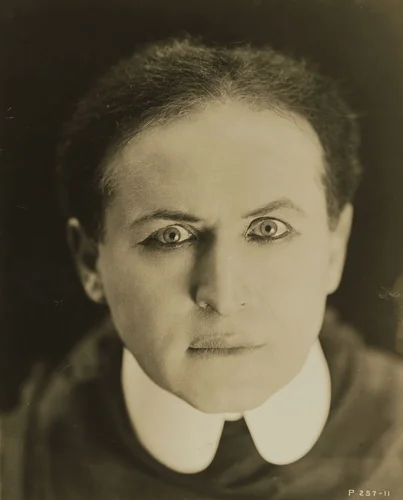
Image from Wikipedia
Image from Wikipedia
Harry Houdini: The Immortal Master of Escapology and Stage Magic
A Century Phenomenon Between Illusion, Physical Art, and Global Stage Presence
Harry Houdini is one of the defining show figures of the 20th century. Born as Erik Weisz in Budapest and later known in the USA as Ehrich Weiss, he transformed himself into the most famous escapologist of his time with immense ambition, disciplined physical mastery, and an unerring sense for staging. His name is still synonymous with spectacular escape artistry, high-risk live performance, and a form of stage presence that extends far beyond magic. ([pbs.org](https://www.pbs.org/wgbh/americanexperience/features/houdini-biography/?utm_source=openai))
From Budapest to America: The Early Years of a Boundary-Pusher
Houdini was born in 1874 in Budapest; his family emigrated to the United States in 1878 and settled in Wisconsin. Early on, he worked in simple forms of entertainment such as dime museums, sideshows, and circuses—those areas of show business where talent, endurance, and audience connection had to prove themselves first. These formative years shaped the artist who would later redefine the rules of mass entertainment. ([cdn.history.com](https://cdn.history.com/sites/2/2015/07/Houdini_Classroom_Guide_FIN.pdf?utm_source=openai))
The stage name "Harry Houdini" was created as a tribute to the French magician Jean Eugène Robert-Houdin. With this name change, Houdini not only marked a sign of admiration but also took a programmatic step: he consciously staged himself as a modern showman who intertwined tradition and innovation. His career began not with a simple name change, but with a clear brand building that later made him a globally recognizable myth. ([history.com](https://www.history.com/articles/10-things-you-may-not-know-about-harry-houdini?utm_source=openai))
The Breakthrough: Handcuffs, Prisons, and the Birth of the "Handcuff King"
Houdini experienced his major breakthrough in the late 1890s when he made the escape from handcuffs and restraints the central signature of his program. His high-profile escapes from police stations and prisons were particularly effective, attracting not only press attention but also solidifying his reputation as an unbeatable performer. From this phase emerged the legendary title "King of Handcuffs," which continues to define his career today. ([pbs.org](https://www.pbs.org/wgbh/americanexperience/features/houdini-biography/?utm_source=openai))
A significant part of his success lay in the combination of physical performance, precise preparation, and dramatic storytelling. Houdini focused on tension, risk, and the illusion of immediate danger, making each performance feel like a one-time event. His stage art therefore functioned not only as trickery but as a psychologically calculated live drama with maximum impact on the audience. ([smithsonianmag.com](https://www.smithsonianmag.com/smithsonian-institution/harry-houdini-ingenious-innovator-didnt-want-anybody-know-180961078/?utm_source=openai))
International Career and Spectacular Live Productions
Starting in 1900, Houdini toured internationally and gained immense attention in both Europe and the USA. He was particularly celebrated in Europe; reports highlighted that his performances in several cities became sensations and generated sold-out houses through word of mouth and press coverage. This international phase made him an early global entertainment star with exceptional reach. ([history.com](https://www.history.com/this-day-in-history/october-31/houdini-is-dead?utm_source=openai))
Over time, his shows became increasingly risky and theatrical. His most famous acts included the water tank, the straitjacket, escapes from sealed boxes, and underwater scenarios, in which he tested the limits of what was considered possible. Houdini thus staged not just a magic show but a spectacular experiment on control, body, and perception. ([cdn.history.com](https://cdn.history.com/sites/2/2015/07/Houdini_Classroom_Guide_FIN.pdf?utm_source=openai))
Style, Technique, and the Art of Self-Staging
Houdini's style was based on a rare mix of athletic discipline, meticulous planning, and sharp marketing. Contemporary sources describe him as a showman who carefully prepared his performances and relied on precision rather than solely on mystique. This resulted in an artistic profile situated between vaudeville, sensational culture, and modern media strategy. ([smithsonianmag.com](https://www.smithsonianmag.com/smithsonian-institution/october-31-1926-death-proves-inescapable-for-even-houdini-122032841/?utm_source=openai))
Beyond the stage, Houdini also emerged as a multifaceted figure. Smithsonian describes him not only as a magician but also as an actor, aviation pioneer, amateur historian, and businessman. This range underscores that his life's work extended beyond individual tricks and possesses an exceptional depth in the development of popular entertainment. ([smithsonianmag.com](https://www.smithsonianmag.com/smithsonian-institution/harry-houdini-ingenious-innovator-didnt-want-anybody-know-180961078/?utm_source=openai))
Film, Public Image, and the Expansion of His Myth
Houdini also ventured into the film business, producing several silent films in Hollywood, although these did not achieve lasting commercial success. This endeavor illustrates his early awareness of new media and the possibility of transferring stage spectacles into other formats. In this sense, he was ahead of his time, as he intuitively understood the logic of today's cross-media productions. ([smithsonianmag.com](https://www.smithsonianmag.com/arts-culture/houdini-revealed-151494397/?utm_source=openai))
The public perception of him was further shaped by his engagement with spiritualism and supposedly supernatural practices. Houdini fought against fraudulent mediums and critically examined séances, which bolstered his reputation as a rational enlightener. At the same time, the fascination with his life remained unbroken, as he masterfully maintained the tension between revelation and mystery. ([smithsonianmag.com](https://www.smithsonianmag.com/history/for-harry-houdini-seances-and-spiritualism-were-just-an-illusion-180978944/?utm_source=openai))
Later Years, Death, and Lasting Cultural Impact
Houdini died in 1926 in Detroit from the effects of a perforated appendix and resulting peritonitis. His death ended a career that fascinated millions over decades and profoundly shaped the image of the unbeatable entertainer. Because his life was so strongly narrated in terms of control, risk, and overcoming, his end became a part of the legend. ([history.com](https://www.history.com/this-day-in-history/october-31/houdini-is-dead?utm_source=openai))
His influence extends to the present day. In cultural history, Houdini represents the transformation of vaudeville into a modern spectacle, the merging of artistry, PR, and pop myth. His name has become synonymous with liberation, boundary-pushing, and a form of live performance that still sets standards. ([smithsonianmag.com](https://www.smithsonianmag.com/smithsonian-institution/harry-houdini-ingenious-innovator-didnt-want-anybody-know-180961078/?utm_source=openai))
Conclusion: Why Harry Houdini Still Electrifies Today
Harry Houdini fascinates because he was more than a magician: he was a master of staging, an inventor of suspense, and a pioneer of modern theatrical impact. His career tells a story of rise, control, risk, and the power to lead the audience to the edge of what is conceivable. Anyone who examines his story understands why Houdini continues to be regarded as one of the strongest legends in entertainment culture. ([smithsonianmag.com](https://www.smithsonianmag.com/smithsonian-institution/harry-houdini-ingenious-innovator-didnt-want-anybody-know-180961078/?utm_source=openai))
Those who experienced him live would have witnessed an exceptional act that uniquely combined technique, physical artistry, and dramatic showmanship. Therein lies his enduring allure: Houdini remains a symbol of the grand, irresistible moment on stage. ([smithsonianmag.com](https://www.smithsonianmag.com/smithsonian-institution/harry-houdini-ingenious-innovator-didnt-want-anybody-know-180961078/?utm_source=openai))
Official Channels of Harry Houdini:
- Instagram: No official profile found
- Facebook: No official profile found
- YouTube: No official profile found
- Spotify: No official profile found
- TikTok: No official profile found
Sources:
- PBS - Harry Houdini (1874-1926) | American Experience
- HISTORY - 10 Things You May Not Know About Harry Houdini
- HISTORY - Celebrated magician Harry Houdini dies
- Smithsonian Magazine - Houdini Revealed
- Smithsonian Magazine - Escape Artist Harry Houdini Was an Ingenious Inventor, He Just Didn't Want Anybody to Know
- Smithsonian Magazine - For Harry Houdini, Séances and Spiritualism Were Just an Illusion
- Wikipedia - Harry Houdini