
Isabel Kreitz
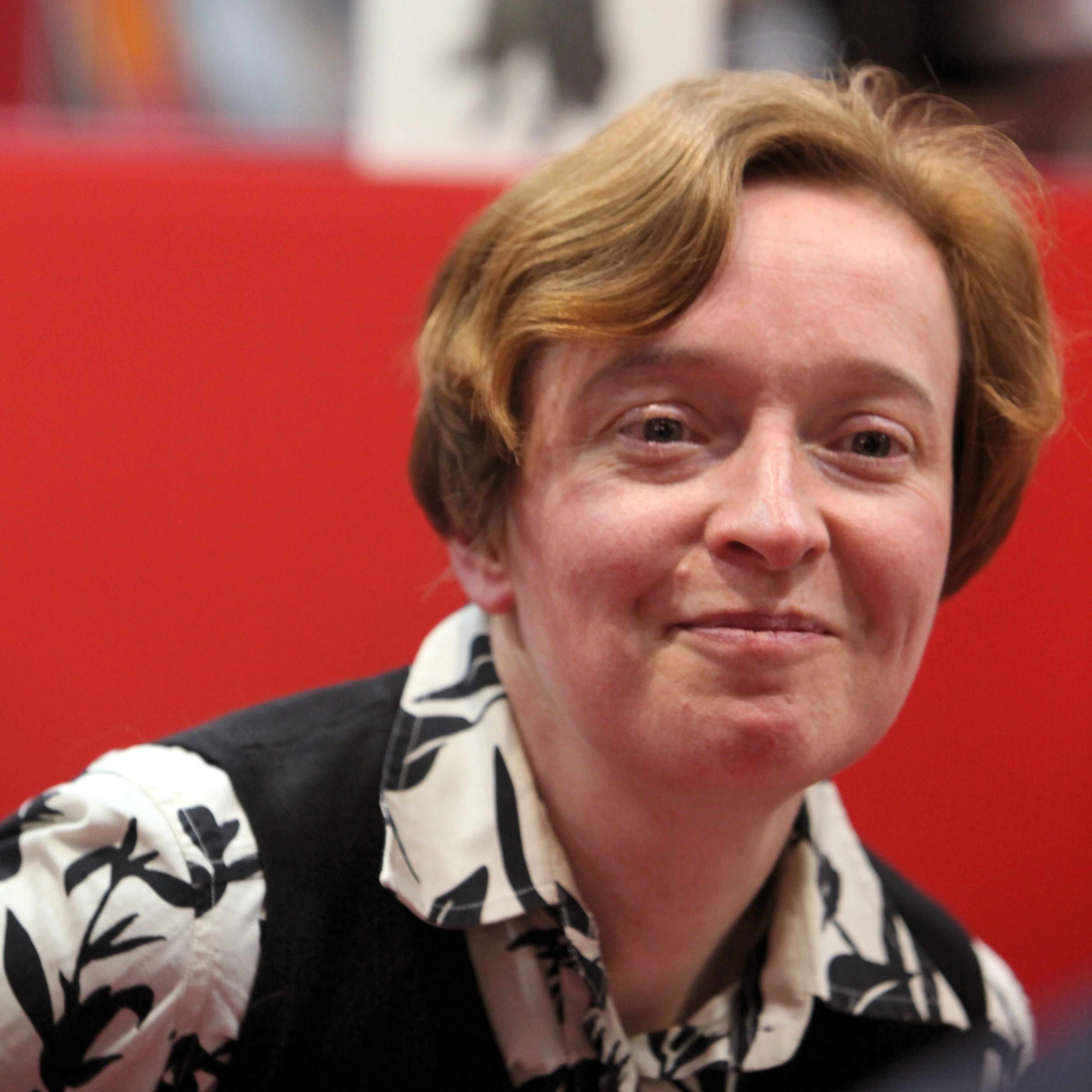
Image from Wikipedia
Image from Wikipedia
Isabel Kreitz: The Great Storyteller of the German Graphic Novel
Between Research, Memory, and Precise Imagery
Isabel Kreitz, born in 1967 in Hamburg, is one of the most prominent German comic artists and graphic novel authors. Her works combine historical accuracy with a compelling visual language that makes characters, timelines, and societal tensions visible with remarkable clarity. Those who read her books encounter not mere illustrations, but a distinctive narrative style with high artistic authority. ([en.wikipedia.org](https://en.wikipedia.org/wiki/Isabel_Kreitz?utm_source=openai))
Early Influences: Hamburg, Design, and the View Across the Atlantic
Trained at the University of Applied Sciences for Design in Hamburg and with a semester at the Parsons School in New York, Kreitz learned early on how closely form and content interact in the comic medium. Her exposure to professional graphic novel practice in New York shaped her understanding of dramaturgy, composition, and page architecture. This experience is reflected later in works that go far beyond the classic comic album and fulfill the aspirations of literary graphic novels. ([en.wikipedia.org](https://en.wikipedia.org/wiki/Isabel_Kreitz?utm_source=openai))
Since 1994, she has been publishing cartoons, comics, and graphic novels and has established herself in an industry where sophisticated German-language comics have long remained a niche. For this reason, her career feels like a consistent artistic statement: not a trend production, but a body of work based on research, patience, and narrative precision. Kreitz represents a form of comic culture that does not simplify historical material, but condenses and makes it readable. ([en.wikipedia.org](https://en.wikipedia.org/wiki/Isabel_Kreitz?utm_source=openai))
The Breakthrough with Historical Impact: "Die Sache mit Sorge"
The major breakthrough came in 2008 with the graphic novel Die Sache mit Sorge, later published internationally as Stalin's Spy in Tokyo. The book about the spy Richard Sorge became a key work in her oeuvre because it combines political history with a noir-like suspense structure and a strictly controlled black-and-white aesthetic. Kreitz not only tells an espionage story but also delves into ideological upheavals, camouflage, and the blind spots of history. ([en.wikipedia.org](https://en.wikipedia.org/wiki/Isabel_Kreitz?utm_source=openai))
The reception of this work permanently anchored her name in the German comic landscape. Reprodukt reissued the book in 2024 and describes it as a modern classic of German comics; the artist herself emphasizes on her website that the first graphic novel remains the most important milestone of her current re-releases. This return to an early success illustrates how sustainable Kreitz’s choice of material and visual language remain to this day. ([reprodukt.com](https://reprodukt.com/blogs/veranstaltungen/newlstter-juli-2024?utm_source=openai))
Big Themes, Strong Characters: From "Haarmann" to "Deutschland. Ein Bilderbuch"
With Haarmann and Deutschland. Ein Bilderbuch, Kreitz expanded her spectrum. Haarmann, developed in collaboration with Peer Meter, plunges deeply into the abysses of the Weimar era, working with atmospheric density, strict dramaturgy, and historical accuracy. Deutschland. Ein Bilderbuch, in turn, assigns nearly every year of the Federal Republic to a significant event and shows how collective memory can be organized visually. ([en.wikipedia.org](https://en.wikipedia.org/wiki/Isabel_Kreitz?utm_source=openai))
Both works make visible what makes Kreitz so special: she tells not abstractly about history, but about people within history. Her characters are never mere carriers of facts but psychologically nuanced figures closely related to their circumstances. This gives her comics a rare tension between documentary obligation and literary condensation. ([en.wikipedia.org](https://en.wikipedia.org/wiki/Isabel_Kreitz?utm_source=openai))
Current Projects: "Die letzte Einstellung" and Return to the Larger Form
In 2025, her latest graphic novel Die letzte Einstellung was published by Reprodukt, after eight years of work. The work is set in post-war Germany and looks behind the scenes of film production in difficult times; Reprodukt categorizes it as a story about inner emigration, artists under dictatorship, and the repercussions of the "Third Reich." Kreitz's return after a long break with such an ambitious project underscores her rank as a storyteller with long endurance. ([isakreitz.de](https://isakreitz.de/?utm_source=openai))
Reprodukt also announced in 2025 that Kreitz is working on a new major comic novel and that older works like Die Entdeckung der Currywurst and Die Sache mit Sorge are being reissued during this phase. On her official website, she also mentions the 2024 reissue of Die Sache mit Sorge and the return of her classic Die Entdeckung der Currywurst. This connects her current production and work preservation into a coherent overall picture of her career. ([reprodukt.com](https://reprodukt.com/blogs/veranstaltungen/zwischen-den-jahren-interviews-iv-isabel-kreitz?utm_source=openai))
Comic Discography: Catalogue as Artistic Chronicle
Although Isabel Kreitz does not present a discography in the musical sense, her catalogue reads like the chronicle of a consistent authorial career. Her central publications include Die Sache mit Sorge – Stalins Spion in Tokio (2008), Haarmann (2010), Deutschland. Ein Bilderbuch (2011), Emil und die Detektive (2012), Rohrkrepierer – Eine Jugend auf St. Pauli (2015), Das doppelte Lottchen (2016), Minzi Monster in der Schule (2018), and now Die letzte Einstellung (2025). These titles show an enormous range between historical analysis, literary adaptation, and autobiographically colored social studies. ([en.wikipedia.org](https://en.wikipedia.org/wiki/Isabel_Kreitz?utm_source=openai))
Particularly interesting is the balance between original material and adaptation. Kreitz transfers works by Erich Kästner or Uwe Timm into a visual narrative that respects the tone of the original while developing its own rhythm. That is where her strength lies: she does not just illustrate, but composes scenes, moods, and transitions in such a way that literature becomes an independent visual work. ([en.wikipedia.org](https://en.wikipedia.org/wiki/Isabel_Kreitz?utm_source=openai))
Style and Signature: Precision Instead of Effect
Kreitz’s style is characterized by clarity, observation, and controlled tension. Her drawings focus on precise depiction of environments, a sparse yet expressive line work, and a visual dramaturgy that credibly represents historical spaces. Her official website describes her work as storytelling "with fine lines and precise observation" teetering between illusion and reality – a fitting formula for her entire oeuvre. ([isakreitz.de](https://isakreitz.de/?utm_source=openai))
Content-wise, she prefers stories where society, politics, and private life intersect. Be it an espionage case, a serial killer, film production, or post-war Germany: Kreitz is interested in times of upheaval, moral gray areas, and the question of how history becomes visible in faces, interiors, and gestures. This concentration on atmosphere gives her graphic novels high aesthetic recognizability. ([en.wikipedia.org](https://en.wikipedia.org/wiki/Isabel_Kreitz?utm_source=openai))
Awards, Recognition, and Cultural Impact
Isabel Kreitz has received numerous awards, making her one of the most honored voices in German-language comics. Her most important honors include the German Comic Prize, the Max and Moritz Prize, the Wilhelm Busch Prize, and the e.o.plauen Prize. The fact that she is described in professional texts as one of the most noted German artists in the field of comic and graphic novel points to her lasting cultural relevance. ([en.wikipedia.org](https://en.wikipedia.org/wiki/Isabel_Kreitz?utm_source=openai))
Her influence extends beyond the medium itself. Kreitz has helped establish the graphic novel in the German-speaking world as a serious literary form, particularly where historical research, photojournalism, and narrative art intersect. Especially young readers, as well as a culturally interested audience, find in her books an approach to German history that feels neither didactic nor distant. ([en.wikipedia.org](https://en.wikipedia.org/wiki/Isabel_Kreitz?utm_source=openai))
Conclusion: Why Isabel Kreitz Remains So Exciting
Isabel Kreitz is exciting because she does not manage history but translates it into moving, dense, and highly precise images. Her works unite research, dramaturgical control, and an uncompromising view of the ambiguities of German history. Those who love strong graphic novels will find in her an artist who takes the medium increasingly seriously with each new release and expands it. ([isakreitz.de](https://isakreitz.de/?utm_source=openai))
Particularly the current phase with Die letzte Einstellung shows how lively and relevant her storytelling remains. Isabel Kreitz represents artistic depth, historical sensitivity, and a sovereign visual language that lingers long after. Anyone interested in sophisticated comics and narrative condensation should discover her books – and follow each new presentation of her work attentively. ([isakreitz.de](https://isakreitz.de/?utm_source=openai))
Official Channels of Isabel Kreitz:
- Instagram: no official profile found
- Facebook: no official profile found
- YouTube: no official profile found
- Spotify: no official profile found
- TikTok: no official profile found
Sources:
- Isabel Kreitz – Official Website
- Isabel Kreitz – Contact
- Isabel Kreitz – Graphic Novels, Comics, and Illustrations
- Carlsen – Isabel Kreitz
- Reprodukt – Publisher
- Reprodukt – Newsletter May 2025
- Reprodukt – Preview Spring 2025
- Reprodukt – Between-the-Years Interviews IV: Isabel Kreitz
- Wikipedia: Isabel Kreitz
Upcoming Events
Isabel Kreitz – The Pen is My Sixth Finger
Experience the fascinating works of renowned comic artist Isabel Kreitz at Kunstmuseum Erlangen.
Defending Democracy: Comics, Graphic Novels, and Political Cartoons by International Artists
Political comics, graphic novels, and cartoons in Erlangen: A powerful exhibition about democracy, freedom, and human rights. Admission free. #DefendingDemocracy