
Leineweber
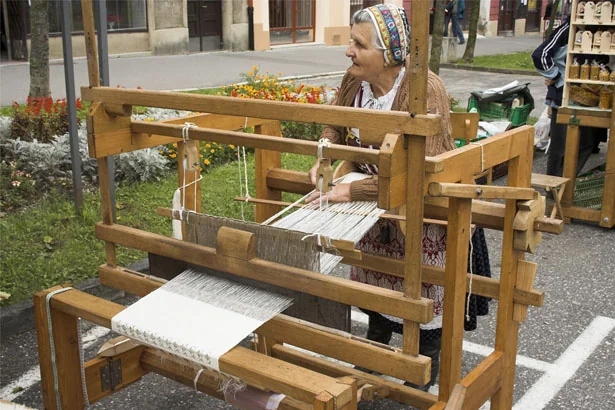
Image from Wikipedia
Image from Wikipedia
Leineweber: The Historical Craft of Linen Between Tradition, Technique, and Cultural History
A Look at a Profession that Shaped Fabrics, Cities, and Societies
The Leineweber, also known as the linen weaver, historically referred to the weaver of linen, that is, fabric made from linen yarn spun from flax fibers. For centuries, this craft was one of the fundamental forms of production in everyday culture and was often a side profession for farmers, especially in rural areas. Observing the history of the Leineweber reveals not just a trade but a piece of social, economic, and cultural history. ([de.wikipedia.org](https://de.wikipedia.org/wiki/Leineweber))
Historical Significance and Craft Foundations
Linen weaving originated on hand looms in plain weave and provided a robust, versatile fabric for clothing, households, and trade. The material basis was flax, from which linen yarn was produced; thus, the Leineweber stood at the intersection of agriculture, textile production, and regional supply. This connection makes the craft particularly fascinating to this day: it showcases how closely raw material extraction and textile processing were intertwined in pre-modern societies. ([de.wikipedia.org](https://de.wikipedia.org/wiki/Leineweber))
Social Status in the Middle Ages and Early Modern Period
In the Middle Ages and up to the Early Modern period, the profession of the Leineweber was considered "dishonorable" compared to silk weavers or cloth makers, and thus deemed an undignified trade. In urban class societies, children from Leineweber families were often excluded from joining other guilds, making social mobility difficult and creating a heavily stratified occupational world. It wasn't until the mid-16th century that imperial laws from 1548 and 1577 introduced more mobility into this order. ([de.wikipedia.org](https://de.wikipedia.org/wiki/Leineweber))
Regional Centers and Economic Development
Among the historical centers of linen weaving was the Ravensberger Land in the northeast of North Rhine-Westphalia. There, from the 17th century onwards, farmers began to cultivate flax on their fields instead of grain and processed it at home into linen. The linen trade promoted the prosperity of entire regions and gave cities like Bielefeld such a lasting identity that the city remains linked with linen weaving to this day. ([de.wikipedia.org](https://de.wikipedia.org/wiki/Leineweber))
Collapse of the Home Industry and Transition to Industrialization
Around 1830, the linen craft in East Westphalia fell into a severe crisis as machine production of woven fabrics gained momentum in Ireland, England, and Belgium. This fundamentally shifted textile value creation: what had previously occurred in agricultural and artisanal structures was transferred to industrial factories. The founding of the Ravensberger Spinnerei in Bielefeld in the 1850s marked this upheaval and the transition to a new textile economy. ([de.wikipedia.org](https://de.wikipedia.org/wiki/Leineweber))
Leineweber as a Cultural Symbol
Today, the Leineweber not only represents an ancient craft but also cultural memory. In Bielefeld, the Leineweber monument commemorates the region's textile past, and the annual Leineweber market keeps the historical significance alive. The designation of the regional train line RB 82 as "The Leineweber" illustrates how strongly the term has been integrated into the regional identity. ([de.wikipedia.org](https://de.wikipedia.org/wiki/Leineweber))
Craft, Language, and Diversity of Terms
The term Leineweber carries multiple layers in terms of its linguistic history. Besides the spelling Leinweber, the older term Züchner also appears, referring to the historical diversity of the craft. Such terms are more than mere words: they preserve occupational realities, social hierarchies, and regional traditions within the language itself. ([de.wikipedia.org](https://de.wikipedia.org/wiki/Leineweber))
Why the Leineweber Remains Relevant Today
The Leineweber exemplifies the connection between manual labor, regional economy, and social order. Anyone interested in textile history, pre-modern working worlds, or the history of craftsmanship will find a particularly multilayered topic here. Particularly in the contrast between rural home production and industrial mechanization, it becomes evident how deeply textile work has shaped European history. ([de.wikipedia.org](https://de.wikipedia.org/wiki/Leineweber))
Conclusion: The Leineweber is intriguing because it is not only a profession but also a historical key motif. Its history reflects social exclusion, regional identity, technical development, and economic change. Those wishing to experience textile cultural history live should intentionally explore the traces of linen weaving in the historical centers and monuments. ([de.wikipedia.org](https://de.wikipedia.org/wiki/Leineweber))
Official Channels of Leineweber:
- Instagram: no official profile found
- Facebook: no official profile found
- YouTube: no official profile found
- Spotify: no official profile found
- TikTok: no official profile found