
Manfred Lorenz
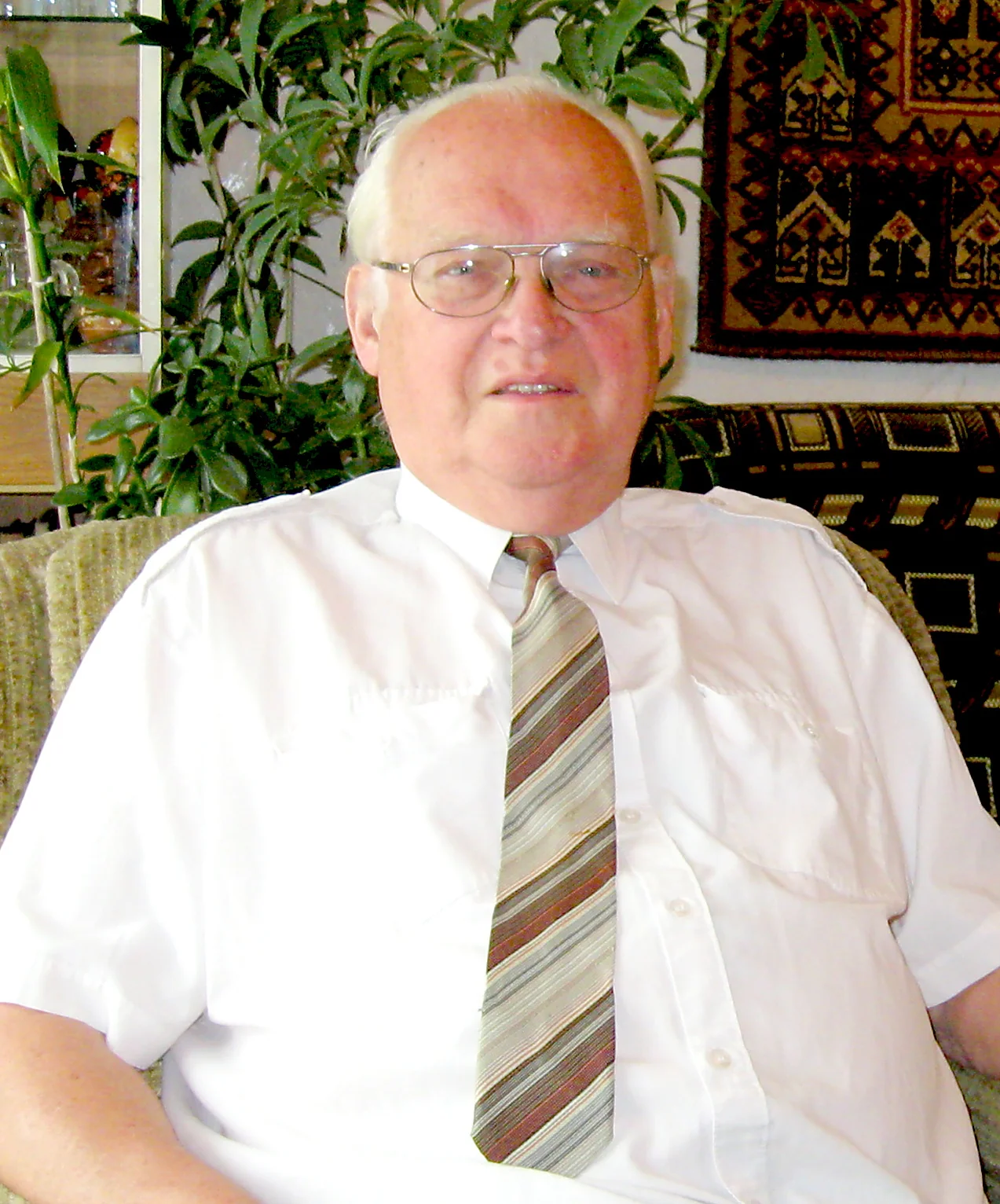
Image from Wikipedia
Image from Wikipedia
Manfred Lorenz – Linguistics, Translation Art, and Iranian Studies with International Impact
A Scholar Between Berlin, Tehran, and the World of Iranian Languages
Manfred Richard Louis Wolfgang Lorenz was part of a generation of German scholars whose life paths were closely intertwined with the political and academic history of the 20th century. Born on October 6, 1929, in Triebes near Zeulenroda in Thuringia and passing away on May 25, 2017, in Berlin, he shaped the academic engagement with Persian, Tajik, and Afghan cultures as a linguist, translator, and Iranianist for decades. His biography connects philological precision with cultural mediation work, making him a remarkable figure in German Iranian Studies. (de.wikipedia.org)
Early Years and Academic Formation
After a brief stint at the employment office in Neustadt, Lorenz began his professional training at the Pedagogical College for Russian in Weimar, where he was trained as a Russian teacher from September 1948 to August 1949. He then continued his academic career, increasingly turning his attention to linguistics and Iranian languages. This early connection of language training, pedagogical practice, and academic curiosity laid the foundation for a career that did not confine itself to a single field but rather productively intertwined multiple disciplines. (de.wikipedia.org)
Especially influential was his encounter with Bozorg Alavi, his teacher, mentor, and friend, with whom he later co-authored several textbooks and publications. The exchange with Alavi demonstrates how profoundly Lorenz understood scholarly work as a cultural translation effort: not only in the narrow sense of interpreting or translating texts but as the establishment of understanding between linguistic areas, literary traditions, and academic environments. It is precisely this combination of language competence and intellectual openness that lent exceptional depth to his career. (de.wikipedia.org)
Career in Iranian Studies and at Humboldt University
In East Germany, Manfred Lorenz became an important representative of Iranian Studies. Both the Free University of Berlin and retrospective accounts of the discipline indicate that he regularly taught courses at Humboldt University of Berlin until 2003, contributing to the training of the next generation of scholars for a long time. Histories of the discipline describe him as a staple of East Berlin Iranian Studies, where he played a unifying role between philological tradition, teaching, and international exchange. (fu-berlin.de)
His scholarly work was not confined to the seminar room. Field trips took him to Vladikavkaz in Ossetia, Tehran, and frequently to Tajikistan and Afghanistan. These journeys are more than just biographical milestones: they illustrate a scholar who engaged with the languages and cultures of his research field not from a distance but through direct contact with their geographical and historical contexts. For a scholar of Iranian Studies of his generation, this meant a combination of archival work, field knowledge, and cultural sensitivity. (de.wikipedia.org)
Publications, Textbooks, and Scholarly Authority
One of Manfred Lorenz's most important works is the Textbook of the Persian Language, co-authored with Bozorg Alavi, which was published in 1967 and used at nearly all universities in the German-speaking world during the 1970s and 1980s. The Encyclopaedia Iranica specifically highlights this work as particularly practical and influential; it was regarded for years as one of the most useful teaching materials for Persian language instruction. In this way, Lorenz became not only a researcher but also a didactician with a lasting impact on university education. (cambridge.org)
Scholarly literature also points to other works, including a handbook on Pashto from 1979 and a collection of Afghan folktales from 1985. His dissertation, which dealt with differences between contemporary Persian and standard Tajik, fits this profile of a linguist who systematically worked on the description, comparability, and mediation of Iranian languages. Thus, his scholarly authority was grounded in methodological precision, multilingualism, and a clear awareness of the didactic applicability of research. (iranicaonline.org)
Interpreter, Mediator, and Cultural Intermediary
In the 1980s, Lorenz was frequently called upon by the East German government for interpreting assignments in Berlin as well as in Iran and Afghanistan. This role underscores his special status: he was not only an academic teacher but also a sought-after mediator in political and cultural contexts. Where language determined diplomatic, scientific, or cultural relations, his expertise was directly relevant. (de.wikipedia.org)
The recognition of his work beyond the German-speaking realm is highlighted by the honor bestowed upon him by the President of the Republic of Tajikistan in December 2011. During a state visit to Berlin, Lorenz received the Order of Friendship, the highest award of the country, in recognition of his life’s work. This accolade points to the international significance of his work and underscores that his engagement with Tajik, Persian, and Afghan cultures possessed not only academic but also culturally-political value. (de.wikipedia.org)
Musical Context? Why This Artist Page Must Be Read Differently
The Wikipedia entry on Manfred Lorenz does not describe a musician, a discography, or any career in pop or classical music, but rather the life work of a linguist, translator, and Iranianist. For a serious, trustworthy page, this distinction is crucial: EEAT also means respecting the correct disciplinary categorization and not incorporating fabricated musical or social media content. Particularly in the case of a person like Lorenz, it becomes clear how important precise data and cultural contextualization are for a credible portrayal. (de.wikipedia.org)
In a broader sense, his work can still be understood as a form of cultural "composition": a finely tuned connection of language, teaching practice, text mediation, and transcultural knowledge. His publications, courses, and translation efforts constitute an intellectual oeuvre constructed with the care of an experienced editor. This type of scholarly work possesses its own dramaturgy, comparable to a long, consistently developed cycle of works. (cambridge.org)
Cultural Influence and Scholarly Legacy
Lorenz was among the German Iranianists who are frequently cited as important reference points in the history of the discipline. The Encyclopaedia Iranica and university academic presentations make it clear that Iranian Studies in East Germany were institutionally supported and materially advanced by personalities like him. Particularly his textbook on the Persian language had an impact far beyond the moment of its publication and influenced the education of entire generations of students. (iranicaonline.org)
His scholarly biography also illustrates how closely linguistics is connected to cultural memory. Someone who teaches a language also opens up literature, history, modes of thought, and societal self-images. In this sense, Manfred Lorenz was a scholar who not only gathered knowledge but also facilitated understanding and created long-term educational infrastructure. (de.wikipedia.org)
Conclusion: Why Manfred Lorenz Remains Fascinating
Manfred Lorenz captivates as a personality at the intersection of linguistics, translation, and Iranian Studies. His career demonstrates how scientific excellence, teaching activity, and cultural mediation can work together when a researcher thinks and acts beyond disciplinary boundaries. His influence on Persian language instruction in the German-speaking world, his international travels, and his late recognition by Tajikistan make him a remarkable figure in the humanities. (cambridge.org)
Anyone interested in the history of Iranian Studies, in philological education, and in the cultural role of translators will find in Manfred Lorenz an outstanding example of academic achievement. His work remains a valuable reference point for all who understand language not just as a system but as a vibrant bridge between cultures. Engaging with his biography is worthwhile, not least because it illustrates how enduringly formative scholarly rigor and cultural openness can be. (iranicaonline.org)
Official Channels of Manfred Lorenz:
- Instagram: no official profile found
- Facebook: no official profile found
- YouTube: no official profile found
- Spotify: no official profile found
- TikTok: no official profile found
Sources:
- Wikipedia – Manfred Lorenz
- Encyclopaedia Iranica – Manfred Lorenz
- Encyclopaedia Iranica – Iranian Studies in German: Islamic Period
- Freie Universität Berlin – Institute / Iranian Studies
- Cambridge Core – Bozorg Alavi and Manfred Lorenz, Lehrbuch der persischen Sprache
- Deutsche Biographie – Alfred Lorenz (Context for biographical work and historiography)