
Markus (Evangelist)
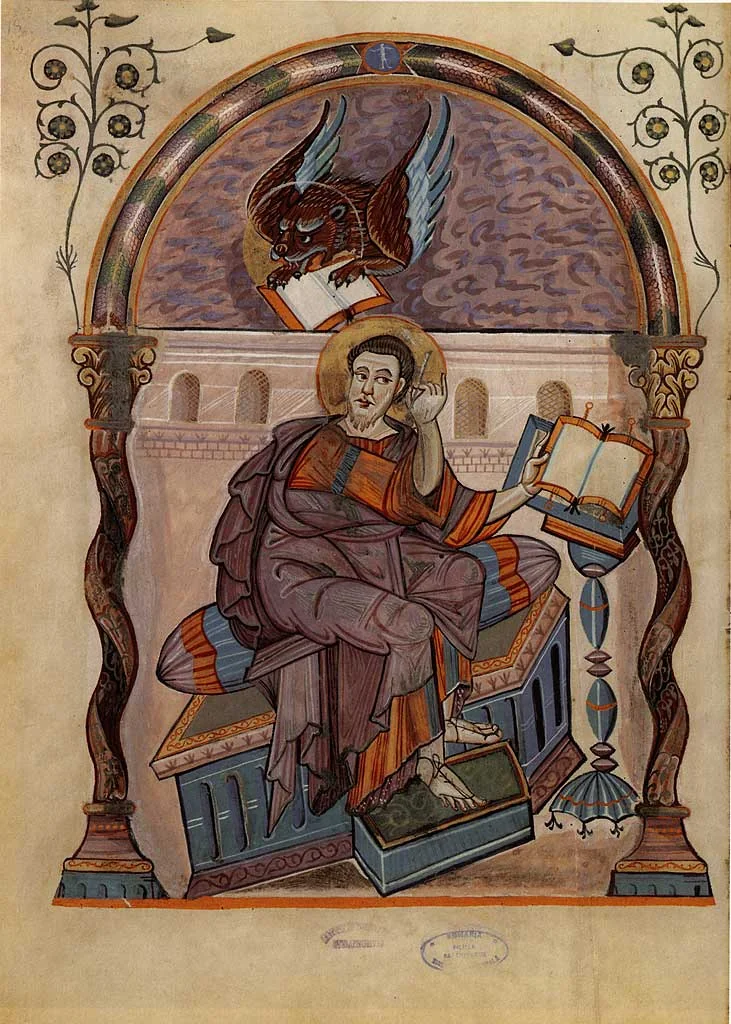
Image from Wikipedia
Image from Wikipedia
Markus (Evangelist) – The Anonymous Author of the Oldest Gospel and His Enduring Narrative Power
An Evangelist Between Tradition, Anonymity, and Spiritual Authority
Markus is the name that ancient church tradition assigned to the author of what is likely the oldest gospel. The Evangelist does not mention his name in the text itself; therefore, the attribution "Markus" is a church convention rather than a verified self-designation of the author. The name Marcus is not Jewish but Roman, which further leaves the historical classification open. As a visual and iconographic identifier, the Markus lion symbolizes his historical impact within Christian culture. ([de.wikipedia.org](https://de.wikipedia.org/wiki/Markus_%28Evangelist%29?utm_source=openai))
Biography and Tradition: What Can Be Said About Markus
The Ancient Church Tradition as Biographical Basis
The biography of Markus does not emerge from a clear life story but rather from the combination of various early Christian sources. Ancient church tradition links him to the New Testament, particularly the Acts of the Apostles, and to statements from the Church Fathers Papias, Eusebius of Caesarea, Jerome, and Epiphanius. In this tradition, Markus is understood as a figure closely associated with apostolic proclamation. At the same time, the historical person behind the name remains disputed in research because the gospel is transmitted anonymously. ([de.wikipedia.org](https://de.wikipedia.org/wiki/Markus_%28Evangelist%29?utm_source=openai))
The Name That Does Not Necessarily Explain the Person
When scholarly literature refers to the author of the gospel as "Markus," it is a scientific and ecclesiastical designation. This naming does not automatically imply that every ancient church biography of Markus can be adopted unaltered. It is this tension between tradition and textual criticism that makes Markus one of the most fascinating figures in the history of early Christianity. The gospel itself remains anonymous, while later tradition assigns him a clear profile. ([de.wikipedia.org](https://de.wikipedia.org/wiki/Markus_%28Evangelist%29?utm_source=openai))
The Symbolic Power of the Markus Lion
The Markus lion is the classic symbol of the Evangelist Markus. In Christian iconography, it represents authority, proclamation, and the particular status of the Gospel of Mark among the four gospels. This attribute remains present in Venetian representations and ecclesiastical iconography to this day. Thus, Markus acts not only as the author of the text but also as a symbolic figure with strong cultural impact. ([de.wikipedia.org](https://de.wikipedia.org/wiki/Markusl%C3%B6we?utm_source=openai))
The Gospel of Mark: The Core of His Literary Work
The Earliest Gospel and Its Theological Concentration
The Gospel of Mark is widely regarded in research as the earliest of the canonical gospels. It narrates the ministry of Jesus from the baptism by John the Baptist to the death, burial, and discovery of the empty tomb. The text is structured in a dense, direct narrative style, focusing on the Passion of Jesus as its theological emphasis. In this way, Markus assumed a key role in the development of Christian literature and preaching. ([en.wikipedia.org](https://en.wikipedia.org/wiki/Gospel_of_Mark?utm_source=openai))
Narrative Technique, Composition, and Spiritual Dramaturgy
Research describes the Gospel of Mark as a carefully composed work made from oral and possibly written sources. Miracle stories, parables, debates, and Passion narratives are woven into a cohesive narrative. This structure endows the text with immense dramatic tension and makes it one of the most formative writings in Christian tradition. Particularly the emphasis on the cross and discipleship gives the gospel its enduring intensity today. ([bible.usccb.org](https://bible.usccb.org/bible/mark/0?utm_source=openai))
Markus in the Tension Between Tradition and Historical Criticism
Church traditions associate Markus with Peter and with an early testimony of Christian faith, while modern biblical scholarship leaves authorship open. Some older traditions regard him as the interpreter of Peter or a close companion of the apostolic proclamation. Other voices emphasize that the text is anonymous and that the attribution to Markus is a retrospective classification. This dual perspective – traditional authority and historical openness – makes Markus a fascinating figure in the history of religion. ([en.wikipedia.org](https://en.wikipedia.org/wiki/Mark_the_Evangelist?utm_source=openai))
Musical and Cultural Reception in a Broader Sense
A Text That Has Been "Performed" for Centuries
Although Markus is not a musician in the contemporary sense, his work has a remarkable performance history in liturgy, preaching, and art. The Gospel of Mark has been read, sung, interpreted, and visually staged for centuries. Particularly the Passion narrative has shaped Christian culture and influenced piety, church art, and theological interpretations. In this sense, Markus acts like an author of immense cultural reach. ([bible.usccb.org](https://bible.usccb.org/bible/mark/0?utm_source=openai))
Venice, Iconography, and Sacred Presence
The Markus lion linked the Evangelist with the city of Venice, becoming a central symbol of power and identity there. Such associations demonstrate how closely religious symbolism and the history of cultural power are intertwined. Therefore, Markus represents not only a biblical text but also a lasting image of European culture. His presence ranges from manuscripts and altars to city symbols and liturgical artworks. ([de.wikipedia.org](https://de.wikipedia.org/wiki/Markusl%C3%B6we?utm_source=openai))
Current Projects and Publications
No Modern Publications, But Lasting Relevance
For Markus (Evangelist), there are no current music projects, albums, or new publications in the modern sense. The lasting relevance of his name arises from the ongoing reception of the Gospel of Mark in theology, biblical studies, and liturgy. For this reason, Markus remains a figure of high cultural significance, although his "discography" consists solely of a canonical foundational text. In a broader sense, his enduring publication is the gospel itself. ([de.wikipedia.org](https://de.wikipedia.org/wiki/Markus_%28Evangelist%29?utm_source=openai))
Discography, Achievements, and Critical Reception
The Only Work: The Gospel According to Mark
There is no classical discography in the musical sense. The central written legacy is the Gospel According to Mark, which holds a prominent position in the history of Christian texts as the oldest gospel. Its "success record" is not shown in charts but in centuries of liturgical presence, theological impact, and cultural repetition. As a narrative text, it has significantly influenced later gospel literature. ([en.wikipedia.org](https://en.wikipedia.org/wiki/Gospel_of_Mark?utm_source=openai))
Critical Reception and Scientific Classification
The scholarly reception is marked by the insight that the gospel is anonymous and that the traditional attribution cannot be historically proven. At the same time, many researchers consider Markus to be the earliest Evangelist, whose text served as a source for Matthew and Luke. This dual position makes him a key figure between tradition and criticism. His authority lies less in biographical certainty than in the formation of a whole genre. ([en.wikipedia.org](https://en.wikipedia.org/wiki/Gospel_of_Mark?utm_source=openai))
Voices of the Fans
As no verified official social media profiles for Markus (Evangelist) were found, this section is entirely omitted. There are no reliable fan comments or social media quotes that can be clearly and officially attributed. ([de.wikipedia.org](https://de.wikipedia.org/wiki/Markus_%28Evangelist%29?utm_source=openai))
Conclusion: Why Markus Remains Fascinating Today
Markus remains intriguing because he stands between tradition and research, between anonymity and authority, between text and symbol. His Gospel of Mark possesses the weight of a literarily compact, theologically focused foundational document that has significantly shaped the Christian narrative. Anyone who seeks to understand Markus encounters not only an ancient church figure but also a cultural cornerstone of remarkable influence. Those who wish to experience his impact live can still find it today in readings, liturgies, sermons, and the visually powerful tradition of the Markus lion. ([bible.usccb.org](https://bible.usccb.org/bible/mark/0?utm_source=openai))
Official Channels of Markus (Evangelist):
- Instagram: No official profile found
- Facebook: No official profile found
- YouTube: No official profile found
- Spotify: No official profile found
- TikTok: No official profile found