
Matthias Brodowy
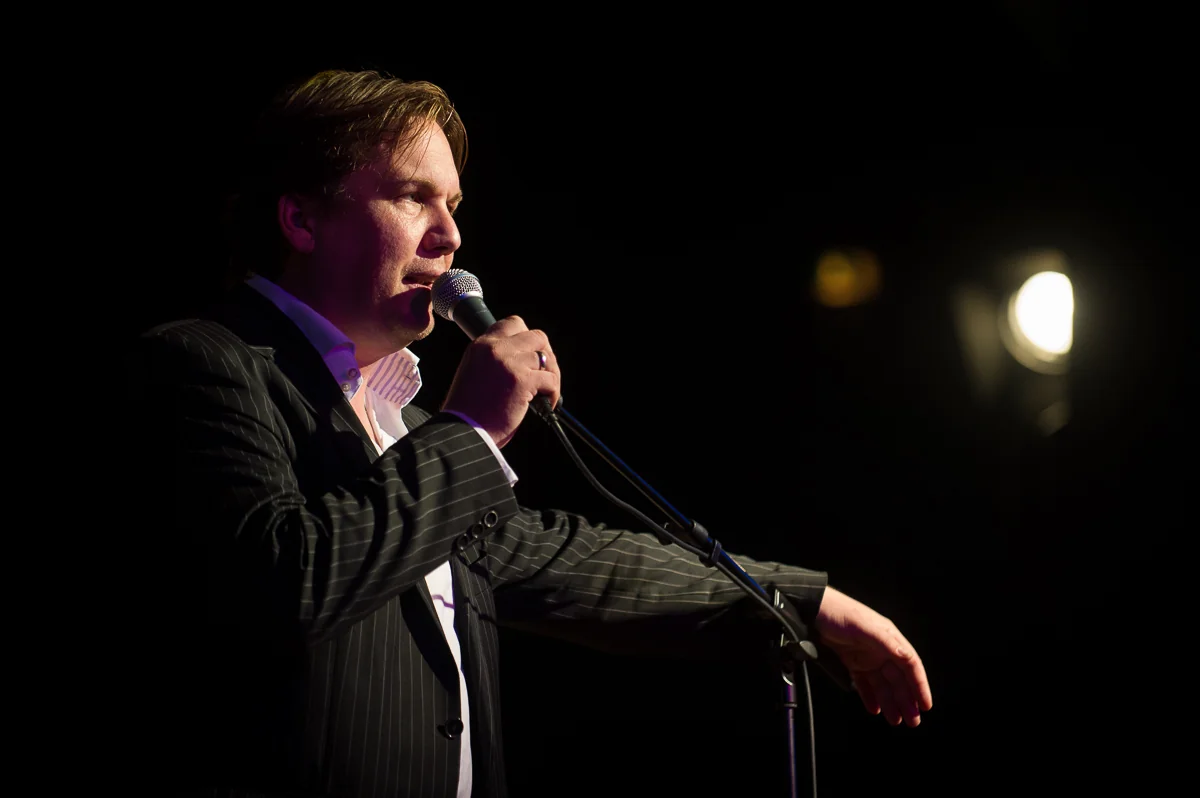
Image from Wikipedia
Image from Wikipedia
Matthias Brodowy – Musical Cabaret, Wordplay, and North German Stage Art
An Artist Between Cabaret, Chanson, and Piano-Driven Punchline Poetry
Matthias Brodowy is one of those stage artists who do not perceive cabaret as a number revue, but as a living form of music, language, and attitude. Born in 1972 in Braunschweig, the artist grew up in Wolfsburg and Hannover, trained as a church musician, and studied history as well as Catholic theology before the stage ultimately captivated him. Since 1997, he has been touring solo across the country and has established a firm place for himself in the German-speaking cultural scene with his blend of musical cabaret, chanson, moderation, and literary satire. ([de.wikipedia.org](https://de.wikipedia.org/wiki/Matthias_Brodowy))
Biographical Roots: From Hannover to the Professional Stage
Brodowy's artistic journey is closely tied to Hannover, where he attended school and early developed the connection between education, music, and public performance. From a young age, he gathered experience in the cabaret group Profilachticker, with whom he performed from 1989 to 1999. His first solo program was launched in 1997; in 1999, he embarked on his first Germany tour that made his name known beyond the regional scene. ([de.wikipedia.org](https://de.wikipedia.org/wiki/Matthias_Brodowy))
His biography reveals an unusually broad horizon: alongside his artistic work, he has a background in church music education, humanities studies, and a noticeable affinity for social issues. This blend continues to shape his stage persona to this day. Brodowy never comes across as merely an entertainer but as a precise storyteller who translates political, cultural, and personal observations into a musical space for thought. ([brodowy.de](https://www.brodowy.de/vita))
The Breakthrough: Awards, Recognition, and the Step to Brand Status
A decisive boost to his career came with the win of the "Das schwarze Schaf vom Niederrhein" award in 1999. This competition, presented by Hanns Dieter Hüsch, propelled him onto the professional stage and marked an early milestone in his musical career. Further accolades followed, including the Prix Pantheon, the radio-ffn-comedy-award, the Hessian Prize for Small Arts, and later the German Prize for Small Arts in 2013 in the chanson/song/music category. ([de.wikipedia.org](https://de.wikipedia.org/wiki/Matthias_Brodowy))
This sequence of awards is more than a mere list of trophies. It demonstrates how consistently Brodowy has built his artistic development: first the classic cabaret school, then the opening up to musical storytelling, and finally recognition as an artist who unites verbal art and composition in a distinctive style. Particularly, the German Prize for Small Arts highlighted that his stage is not merely made up of punchlines but consists of musical dramaturgy, tempo, and keen observation. ([de.wikipedia.org](https://de.wikipedia.org/wiki/Matthias_Brodowy))
Musical Development: Piano, Organ, Guitar, and the Art of Arrangement
Matthias Brodowy himself describes music as his great passion. He began learning piano at the age of nine and expanded his instrumental repertoire to include guitar, accordion, electric guitar, synthesizer, organ, drums, harmonica, zither, hammered dulcimer, handpan, ukulele, and saxophone. This diversity is not just a decorative detail but the foundation of his stage aesthetic: his programs thrive on arrangements, shifts in tone, and a musical fine motor skill that transforms cabaret into a concert with satirical emphasis. ([brodowy.de](https://www.brodowy.de/vita))
Particularly formative was the work on musical programs like In Begleitung, created in collaboration with Carsten Hormes and Wolfgang Stute, which was awarded the German Prize for Small Arts. The two-man band founded in 2009 with Carsten Hormes and the later addition of Wolfgang Stute also illustrate how Brodowy continuously complements his classic solo programs with ensemble work, sound colors, and musical dialogues. Here lies a core of his authority: he does not conceive cabaret merely as text, but as composition. ([brodowy.de](https://www.brodowy.de/vita))
Stage Career, Formats, and Current Projects
Over the years, Brodowy has developed a remarkable number of solo programs, including, among others, Schweigen Sie ein, ich fahre Wort, Offenbarung, Kopfsalat-Chaoskabarett, Gesellschaft mit beschränkter Haltung, Klappstuhl und ich!, Watt nu?, and most recently Sachen gibt’s, which premiered in 2025 at the Theater am Aegi in Hannover. This showcases a career that does not stagnate in repetition, but continuously works on themes, characters, and forms. ([de.wikipedia.org](https://de.wikipedia.org/wiki/Matthias_Brodowy))
Among his current projects are not only the new solo program but also book publications from recent years, including Klappstuhl und ich! from 2023 and the 2025 satirical narrative Erinnerungen, die noch nicht stattgefunden haben, sind umgehend nachzuholen. Brodowy's simultaneous work on stage, as an author, and as a musical conférencier makes him one of the most versatile representatives of German musical cabaret. Additionally, his regular appearances in formats and festivals further underscore this presence. ([brodowy.de](https://www.brodowy.de/vita))
Discography and Releases: Between Live Album and Music CD
The discography of Matthias Brodowy is closely intertwined with his stage programs and documents the evolution from cabaret-style live recordings to standalone music releases. Important CDs include Brodowy in Stücken, Stadt mit Keks, Landeanflug, mittendrin, Schwarz und weiß und doch kein Schach, Offenbarung, In Begleitung, Tausend Jahre wie ein Tag, Bis es Euch gefällt, and Kopfsalat. Particularly, In Begleitung marks a clear expansion of the repertoire with its focus on music. ([de.wikipedia.org](https://de.wikipedia.org/wiki/Matthias_Brodowy))
Even the releases listed on Spotify show how strongly individual titles from his repertoire resonate. Songs like "Stadt mit Keks," "Sieben," "Faul sein," or "10000 Schritte" exemplify his blend of catchy melody, linguistic punch, and satirical observation. The presence on Spotify also indicates a sustainable audience that follows Brodowy not only live but also in the streaming context. ([open.spotify.com](https://open.spotify.com/artist/73wekrRedSCtVXx0hyGEHa?utm_source=openai))
Style, Attitude, and Cultural Influence
Musically and thematically, Brodowy navigates between political cabaret, chanson, literary satire, and North German observations of everyday life. Deutschlandfunk described him as a fast-talker and word twister, an artist "between cookies and philosophy," and a master of "massively musical poetry." These descriptions accurately encapsulate his stage: he works with pace, precision, irony, and a musical timing that carries every detail. ([deutschlandfunk.de](https://www.deutschlandfunk.de/tohuwabohu-to-go-der-musikkabarettist-matthias-brodowy-100.html))
His cultural significance also lies in his attitude. In interviews and biographical texts, Brodowy emphasizes humanism, social responsibility, and a connection to the practice of volunteer work. He has hosted major formats like the WDR Cabaret Festival, performed on festival stages such as "Songs an einem Sommerabend," and participated in various theater and variety contexts. This made him a prominent voice in a scene where musical satire signifies not just entertainment, but also cultural orientation. ([de.wikipedia.org](https://de.wikipedia.org/wiki/Matthias_Brodowy))
Press Reviews and Public Perception
In the press, Matthias Brodowy is often described as a jack-of-all-trades, an artist with a broad profile and a clear signature. The Press Club Hannover called him a brand among cabaret artists, while other reports highlight his grounding, humility, and social consciousness. Particularly striking is the consistency of his artistic profile: Brodowy does not stand for short-term trends but for a connection of music, language, and social observation that has grown over years. ([presse-club-hannover.de](https://presse-club-hannover.de/matthias-brodowy-bericht))
His collaborations with colleagues like Detlef Wutschik, Carsten Hormes, and Wolfgang Stute also demonstrate that his work thrives on interaction and exchange. These projects extend the stage formula of solo cabaret with dialogue, musical interaction, and theatrical character work. This sustainability marks the core of his career: Brodowy builds not fleeting gags, but stage worlds that unfold both musically and narratively. ([brodowy.de](https://www.brodowy.de/vita))
Conclusion: An Artist with Voice, Attitude, and a Clear Artistic Profile
Matthias Brodowy is fascinating because he does not place cabaret, music, and literature alongside each other but connects them organically. His career spans from church music to solo performances to award-winning programs, book publications, and current premieres. Experiencing him live means witnessing an artist who uses language precisely, thinks music dramatically, and carries the evening with personality, experience, and a fine sense of rhythm. Seeing him live means experiencing one of the most distinctive representatives of German musical cabaret in full stage presence. ([brodowy.de](https://www.brodowy.de/vita))
Official Channels of Matthias Brodowy:
- Instagram: no official profile found
- Facebook: no official profile found
- YouTube: no official profile found
- Spotify: https://open.spotify.com/artist/73wekrRedSCtVXx0hyGEHa
- TikTok: no official profile found
Sources:
- Matthias Brodowy – official homepage
- Matthias Brodowy – Vita
- Wikipedia – Matthias Brodowy
- Deutschlandfunk – The Musical Cabaret Artist Matthias Brodowy
- Press Club Hannover – Cabaret Artist Matthias Brodowy
- Spotify – Matthias Brodowy
- spezial Club – Artist Portrait Matthias Brodowy
- Official homepage of Matthias Brodowy
- Wikipedia: Image and text source