
Rachel Ruysch
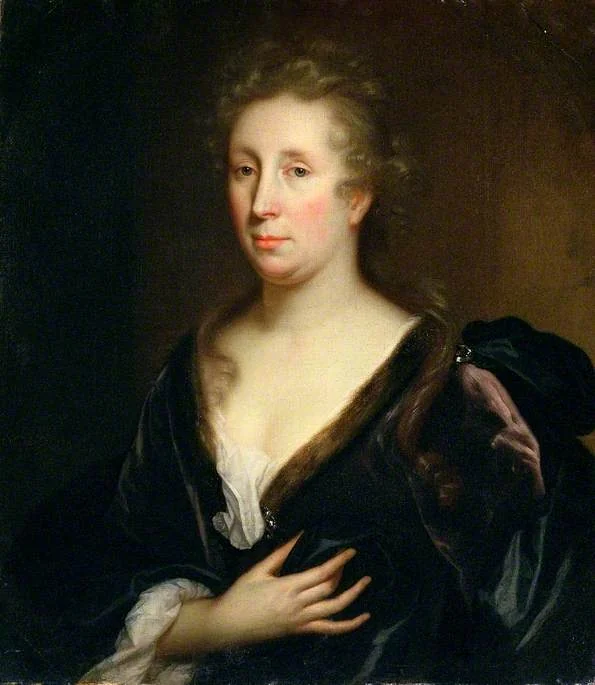
Image from Wikipedia
Image from Wikipedia
Rachel Ruysch – Master of Floral Baroque and Silent Drama
An artist of European stature between science, luxury, and painterly precision
Rachel Ruysch (1664–1750) is one of the great names in Dutch still life painting and is regarded as one of the most successful female artists of her time. During her lifetime, she built a reputation that reached far beyond Amsterdam; her flower pieces, insects, and fruits combined technical brilliance with rare narrative tension. Recent museum presentations have made this significance visible once more and have redefined Ruysch as an artist situated between art history, nature observation, and Baroque elegance. ([britannica.com](https://www.britannica.com/biography/Rachel-Ruysch?utm_source=openai))
Engaging with Rachel Ruysch reveals a painter who did not view still life as a decorative aside but as a precisely composed stage for seeing. Her paintings unfold in subtly graduated light conditions, with lush floral arrangements, fluttering insects, and almost scientific accuracy in detail. It is this connection between sensuality and observational skill that continues to make her artistic development fascinating to this day. ([ashmolean.web.ox.ac.uk](https://ashmolean.web.ox.ac.uk/a-forest-floor-still-life-of-flowers?utm_source=openai))
Biography: Origins, Education, and an Unusual Path to Art
Rachel Ruysch was born on June 3, 1664, in The Hague, growing up in an environment shaped by science and collecting culture. Her father, Frederik Ruysch, was an anatomist and botanist; in his home, she encountered plants, specimens, and natural history objects early on, significantly influencing her later visual vocabulary. This proximity to the natural sciences gave her painting a special credibility and explains why her floral still lifes are still considered visual studies of remarkable precision today. ([en.wikipedia.org](https://en.wikipedia.org/wiki/Frederik_Ruysch?utm_source=openai))
Her training under Willem van Aelst was exceptional for a woman of the 17th century and highlights her early stature in the art scene. Van Aelst was himself one of the renowned still life painters, and Ruysch adopted his discipline of composition, love for detail, and controlled dramaturgy of the subject but soon developed her own style. The Städel Museum describes her as one of the most sought-after still life painters of her time, demonstrating the high professional status of her work. ([en.wikipedia.org](https://en.wikipedia.org/wiki/Willem_van_Aelst?utm_source=openai))
Career Beginnings and Artistic Breakthrough
Ruysch's career unfolded in an art-loving yet fiercely competitive market. In the Netherlands of the Golden Age, floral still life was particularly sought after, and there she established a style that combined opulent floral splendor, dark backgrounds, and an almost theatrical light effect. Her paintings resonated with an affluent collector base without descending into mere representation, as they maintained a subtle sense of transience. ([britannica.com](https://www.britannica.com/biography/Rachel-Ruysch?utm_source=openai))
Contemporary art history emphasizes that Ruysch was already considered one of the most esteemed still life painters during her lifetime. The Rijksmuseum describes her as one of the most appreciated and successful painters of her genre, a reputation that was already conferred upon her during her life. This recognition is extraordinary as she asserted herself in a male-dominated art world while simultaneously balancing family and production. ([rijksmuseum.nl](https://www.rijksmuseum.nl/en/stories/dutch-masters/story/rachel-ruysch-10?utm_source=openai))
Style: Flowers, Insects, and the Art of the Moment
The distinctive charm of Rachel Ruysch's painting lies in her ability to blend the lush with the fragile. Her bouquets often appear as floating ensembles of roses, tulips, and other blooms, yet they are always accompanied by small life forms: butterflies, beetles, and other insects enliven the surface while also introducing the theme of transience. Consequently, the compositions never appear static; they breathe, tremble, and tell stories of growth, decay, and renewal. ([britannica.com](https://www.britannica.com/biography/Rachel-Ruysch?utm_source=openai))
Particularly significant is her finely orchestrated light direction. A dark, velvety background accentuates the colors of the flowers, while the objects often rest on a stone edge or a seemingly random placement, stabilizing and opening the pictorial space simultaneously. This interplay of structure and exuberance is typical of Baroque still life art, yet Ruysch infuses it with a clarity that makes her works appear modern even today. ([britannica.com](https://www.britannica.com/biography/Rachel-Ruysch?utm_source=openai))
Family, Public Life, and the Conditions of Female Artistic Production
Ruysch gave birth to ten children and nonetheless worked as a painter at the highest level for decades. This biographical reality makes her career significant from a cultural historical perspective, as it demonstrates how consistently she pursued an artistic career under conditions that were hardly favorable for women of her epoch. Her life exemplifies female professionalism in the Baroque period: personally heavily burdened, publicly remarkably successful. ([britannica.com](https://www.britannica.com/biography/Rachel-Ruysch?utm_source=openai))
The historical context further exacerbates this achievement. In Amsterdam, women were excluded from access to Latin schools, universities, and guilds, yet Ruysch found her way into a market that demanded the highest technical and aesthetic standards. This is precisely why her work possesses cultural historical significance today: it tells not only of flowers but also of self-assertion, talent, and professional discipline. ([theatlantic.com](https://www.theatlantic.com/magazine/archive/2025/09/rachel-ruysch-flower-paintings/683551/?utm_source=openai))
Works, Collections, and Late Recognition
An important testament to her reputation is the history of her still life with fruits, flowers, and insects from 1711, which has been part of the Uffizi Collection since 1753. Such pathways into international premier collections demonstrate how early Ruysch's work was appreciated beyond national borders. That her paintings are now displayed in significant museums underscores the sustainability of her artistic authority. ([britannica.com](https://www.britannica.com/biography/Rachel-Ruysch?utm_source=openai))
The current exhibition "Rachel Ruysch: Nature into Art" marks another highlight in her reception. It was organized jointly by the Alte Pinakothek, the Toledo Museum of Art, and the Museum of Fine Arts, Boston, and is regarded as the first major international reassessment of her oeuvre in a long time. This exhibition makes clear how closely art, nature observation, and intellectual curiosity are intertwined in her work. ([pinakothek.de](https://www.pinakothek.de/en/exhibition/nature-into-art?utm_source=openai))
Cultural Influence and Art Historical Significance
Rachel Ruysch profoundly shaped the history of floral still life. Her paintings became a reference point for a form of painting that understands beauty not as a static pose but as a vibrant process. In the present, her oeuvre resonates so strongly also because it mediates between botanical accuracy and emotional imagery, thus surprisingly directly addressing contemporary visual habits. ([sciencedirect.com](https://www.sciencedirect.com/science/article/pii/S0169534724003124?utm_source=openai))
Her influence is also reflected in the reevaluation by museums and scholars. The new exhibition situations, art historical essays, and interdisciplinary projects highlight how modern her method appears: precise nature observation, careful composition, and a knowledge of the symbolism of the ephemeral. Ruysch is thus not only a central figure in Dutch painting but also an artist whose work gains new interpretations in the present. ([pinakothek.de](https://www.pinakothek.de/en/exhibition/nature-into-art?utm_source=openai))
Conclusion: Why Rachel Ruysch Continues to Fascinate
Rachel Ruysch encompasses rare qualities: technical mastery, scientifically sharpened perception, and a visual language that combines Baroque opulence with quiet transience. Her career illustrates how an artist could achieve international recognition in the 17th and 18th centuries despite structural hurdles, and her paintings prove that still life can be much more than decorative art. Anyone viewing her works experiences painting as a concentrated gaze upon life itself. ([britannica.com](https://www.britannica.com/biography/Rachel-Ruysch?utm_source=openai))
For this reason, Rachel Ruysch remains compelling: she is a master of small wonders, floral dramas, and precise composition. Her art invites viewers to reread every detail and to see the beauty of the moment with historical depth. Experiencing her paintings in the museum means stepping into a world where nature, form, and transience merge into great art. ([pinakothek.de](https://www.pinakothek.de/en/exhibition/nature-into-art?utm_source=openai))
Official Channels of Rachel Ruysch:
- Instagram: No official profile found
- Facebook: No official profile found
- YouTube: No official profile found
- Spotify: No official profile found
- TikTok: No official profile found