
Sineb El Masrar
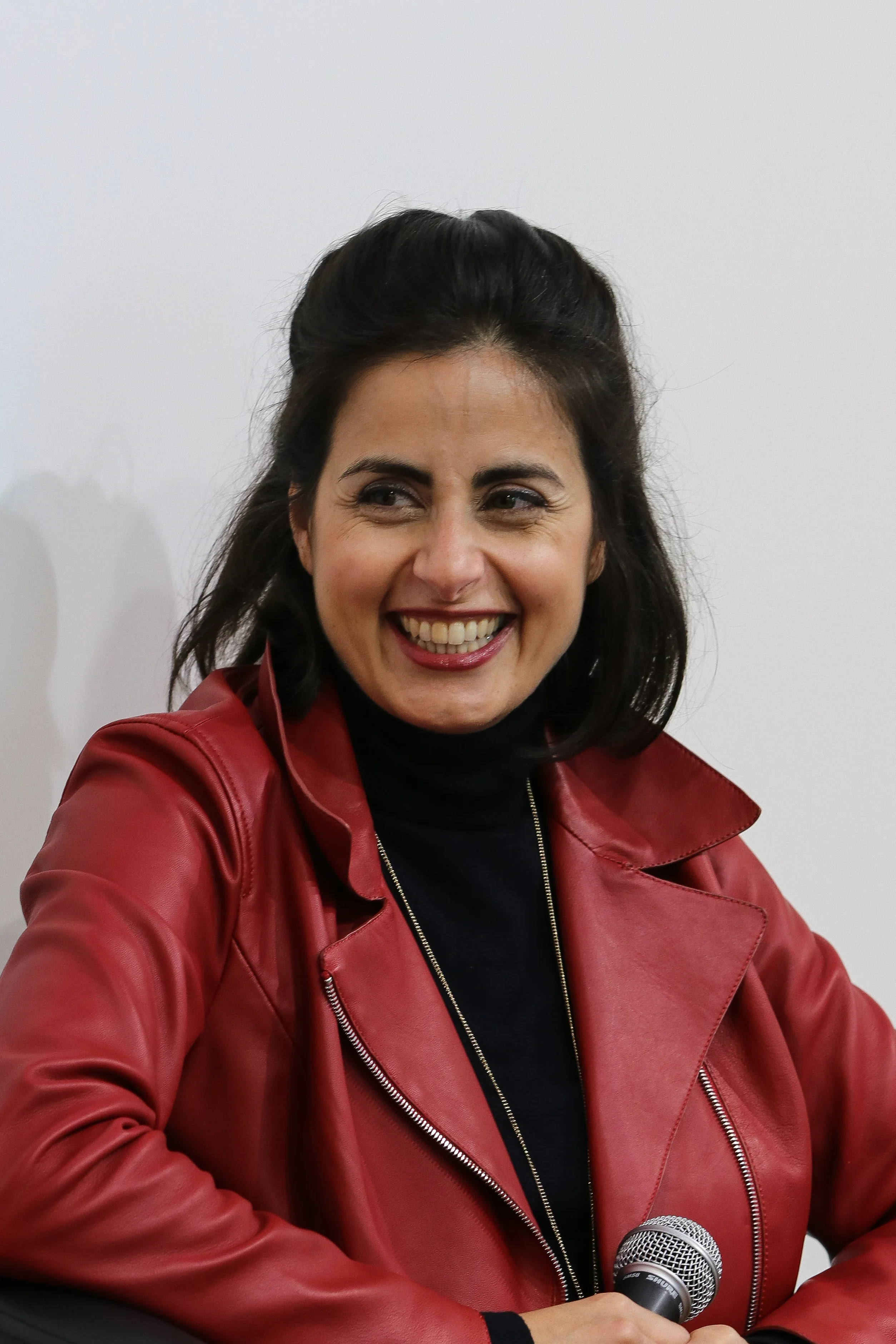
Image from Wikipedia
Image from Wikipedia
Sineb El Masrar – A Voice for Diversity, Feminism, and Societal Debate
An author, journalist, and playwright with a clear stance and literary impact
Sineb El Masrar, born in 1981 in Hanover, is one of the prominent voices in contemporary German literature and journalism. As an author, moderator, journalist, and playwright, she combines personal experience, societal analysis, and journalistic precision into a distinctive artistic signature. Her work revolves around migration, Islam, feminism, integration, media, and the question of how nuanced debates can remain possible in a polarized public sphere.
Her biography exemplifies a generation that does not oppose German and Moroccan influences but thinks productively in conjunction. El Masrar grew up in Hanover, initially studied economics, and later completed training or studies in the educational field. From this combination of everyday experience, educational background, and sociopolitical interest, she developed a public voice that resonates well beyond the realm of literature.
Biographical Roots: Hanover, Migration, and Early Influences
El Masrar comes from a Moroccan-German family history closely linked to labor migration and social mobility. Her father arrived in Germany from Tangier in the mid-1960s, followed by her mother in the late 1970s. This biographical constellation shapes her perspective on belonging, cultural translation, and how minorities are perceived in Germany.
She sensed early on that origin, religion, and societal attributions are interconnected in Germany. Portraits and interviews reveal how she perceives experiences of discrimination not only as personal affronts but as societal facts. It is precisely from this understanding that the analytical sharpness, which has characterized her texts for years, emerges.
The Journalistic Breakthrough: Gazelle and the Search for Representation
A significant milestone in El Masrar's career was the founding of the intercultural women's magazine Gazelle in June 2006. The project emerged from the desire to provide a publishing platform for women and girls with migration backgrounds. The fact that she built the magazine with limited resources, under economic pressure, and against skepticism underscores her entrepreneurial courage and perseverance.
Gazelle was more than just a magazine: it was a cultural-political statement. The editorial team addressed topics such as daily life in Germany, fashion, family, partnerships, religion, and identity—precisely the areas where representation often remains either clichéd or incomplete. In doing so, El Masrar created a space early on where perspectives that had long been underrepresented in the mainstream became visible.
Literary and Essayistic Development: From Debate Books to Sharp Contemporary Analysis
Her first book, Muslim Girls: Who We Are, How We Live, was published in 2010 and gained her broader recognition. The book marks the beginning of a series of journalistic works in which she describes Islamic realities in Germany with nuance and counters simplifying attributions. Here, her strength is evident: she does not argue abstractly but draws from observed realities of life.
With Emancipation in Islam, published in 2016, she deepened her engagement with religious practice, women's rights, and intra-Islamic debates. The book garnered public attention and political friction, as a passage had to be legally removed under pressure from an Islamist organization. This controversy underscores the relevance of her work: El Masrar not only writes about debates but often finds herself at their center.
In 2018, she followed up with Muslim Men: Who They Are, What They Want, a book that shifts attention to Muslim men and their clichéd images. Again, she works against simplistic perceptions and expands the discourse on social roles, images of masculinity, and societal expectations. Her texts gain analytical depth while maintaining direct readability.
Current Projects and Recent Publications: Contemporary Diagnoses with Political Sharpness
Her more recent titles include Are We All a Bit Alman? from 2023 and Heult leise, Habibis! from 2024. Both books address German identity, integration, polarization, and the political language of the present. While one title ironically illuminates the everyday gray areas of coexistence, the other focuses on the threat to democratic debates posed by continual outrage and simplification.
Particularly in 2024, El Masrar re-emerged as a public intellectual. In a taz talk, she discussed Heult leise, Habibis! and connected the book with a plea for a diversity of voices and reason in democracy. Such appearances demonstrate that her work extends beyond the book format, living on in readings, discussions, and media formats.
Her presence at events and literary discussions also attests to her continued relevance. In 2024 and 2025, she will be recognized in cultural contexts as an author who not only names societal tensions but articulates them in a precise, readable, and argumentative manner. Her ongoing journalistic work remains closely tied to contemporary debates.
Style and Thematic World: Between Analysis, Polemics, and Empathy
Sineb El Masrar's style is clear, accessible, and argumentatively sharp. She writes in a language that combines journalistic precision with essayistic tension. In doing so, she avoids pure abstraction and instead relies on concrete observation, social examples, and a calm yet firm tone.
Content-wise, her books revolve around Islam, feminism, migration, media images, belonging, and societal participation. She rejects simple oppositions and insists on differentiation where public debates tend to remain in black-and-white patterns. This attitude makes her texts interesting for readers who want to connect political objectivity with cultural sensitivity.
As a playwright and journalist, she expands her modes of expression beyond nonfiction. This gives her work a certain stage presence in a figurative sense: her thoughts are not only readable but also debatable, disputable, and performative. Thus, she belongs to those authors who actively shape the public space.
Cultural Influence: Representation, Islamic Debate, and Women's Assertion
El Masrar's cultural influence lies in the consistent visibility of life worlds that are often oversimplified in the German feuilleton. She works against stereotypes about Muslim women and men, migration and religiosity, integration and societal role models. Her texts have contributed to making the discourse on Muslim life in Germany more complex, but also more aware of conflicts.
Her engagement in the German Islam Conference from 2010 to 2013 underscores her role as a public mediator. She navigates between politics, media, and culture, introducing perspectives that are not merely representative but are also argumentatively founded. As such, her voice possesses authority well beyond literature.
Her work at the intersection of feminism and Islam has a lasting impact. El Masrar demonstrates that emancipation does not have to be played against religious identity but can indeed be thought from within it in many contexts. This perspective makes her an important figure in current debates about diversity, self-determination, and societal plurality.
Conclusion: Why Sineb El Masrar Remains Particularly Fascinating Today
Sineb El Masrar is an author who combines societal relevance with journalistic clarity. Her books and contributions are not quick reactions but carefully crafted interventions into key contemporary issues. Anyone interested in migration, Islam, feminism, and German debate culture will find in her a precise, disputable, and readable voice.
She remains intriguing as she does not persist in the mode of headlines but works long-term on the major themes of German society. Her texts open perspectives, provoke dissent, and invite nuanced engagement. Those who experience Sineb El Masrar live will encounter an author with conviction, presence, and intellectual clarity.
Official Channels of Sineb El Masrar:
- Instagram: No official profile found
- Facebook: No official profile found
- YouTube: No official profile found
- Spotify: No official profile found
- TikTok: No official profile found
Sources:
- Wikipedia – Sineb El Masrar
- Wikipedia (English) – Sineb El Masrar
- Goethe-Institut – Sineb El Masrar
- DIE ZEIT – Author Page Sineb El Masrar
- DIE ZEIT – Muslim Men: Preview
- taz – taz Talk with Sineb El Masrar
- Evangelical City Academy Munich – Interview on Muslim Men
- Deutschlandfunk Kultur – Magazine for Migrant Women
- neue musikzeitung – A Slightly Different Women's Magazine
- Wikipedia: Image and Text Source