Erlangen 1945/46 in the City Archive: History Between the End of the War and Democratic New Beginnings
Date and Time
Location
Price
About this Event
Mood
Venue Type
Erlangen 1945/46: Between the End of the War, New Beginnings, and Democratic Breakthrough
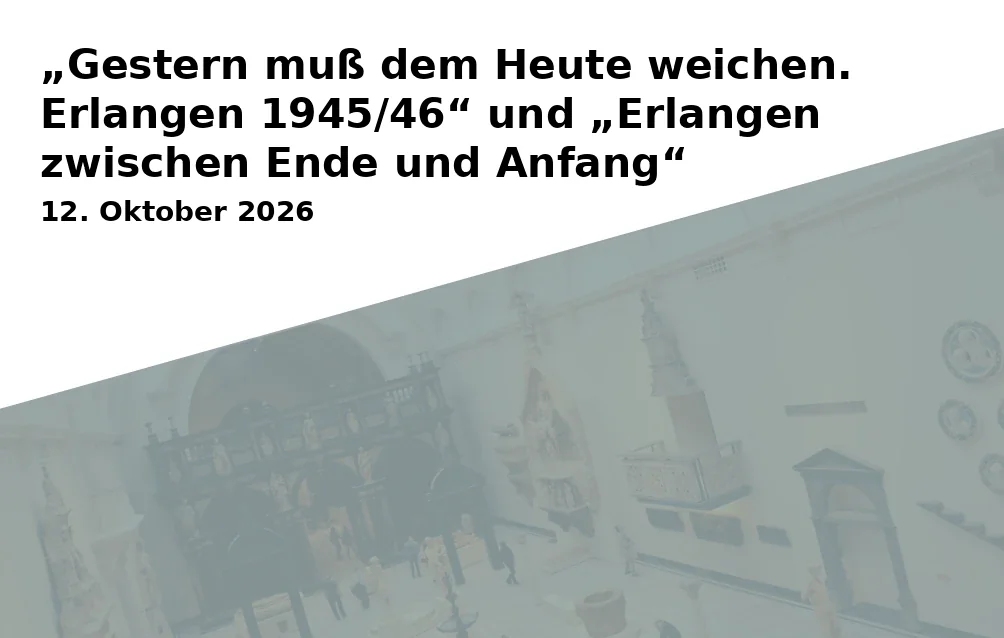
In the reading room of the Erlangen City Archive, two exhibitions provide insights into a crucial transitional period: the end of World War II, the reorganization of urban life, and the first free municipal election after 13 years of dictatorship. The presentations connect historical documents with a perspective on Erlangen developed by students between 1945 and 1946.
A City Between End and Beginning
On April 16, 1945, the war in Erlangen ended with the peaceful surrender of the city. Buildings and infrastructure remained largely intact, but political and social life faced profound change. The American military government, denazification measures, refugees, displacement, and accommodations shaped the post-war years just as much as the difficult supply situation for a growing population.
“Yesterday Must Give Way to Today.”
The poster exhibition developed by students of the Albert-Schweitzer-Gymnasium Erlangen in collaboration with the city archive focuses on specific areas of life. Topics such as the resumption of school operations, the first Bergkirchweih after the war, housing situations, and cooperation with the American military government make the historical upheaval tangible. The exhibition thus opens a personal access to local contemporary history and promotes cultural education through independent research and historical analysis of documents.
The First Free Municipal Election after the Nazi Regime
The archival exhibition “Erlangen Between End and Beginning. The Municipal Election in Erlangen on May 26, 1946” examines an election that extends far beyond local political issues. Confusing resident conditions, arrivals and departures, accommodations, and denazification procedures complicated the organization. In the mirror of this election, it becomes evident how foundational democratic participation at the local level is.
Historical Sources as Aesthetic Experience
Original archival materials, posters, and documentary materials create an intense exhibition atmosphere. The presentation invites visitors to understand political reorientation not abstractly but through the concrete experiences of the people of Erlangen. The analysis of historical sources connects factual knowledge with an immediate artistic experience of remembrance culture.
An Opening to Erlangen's Post-War History
The two exhibitions mark the beginning of a series of cabinet exhibitions planned until 2029 that will cover central stages of Erlangen's post-war period leading up to the founding of the Federal Republic of Germany in 1949. The city archive connects historical research, local memory, and museum education.
Conclusion: Experience Local Democracy History
Visitors can expect a compact, educational, and atmospherically impactful exhibition on the history of Erlangen. Those who want to understand how a city reorganizes after the end of dictatorship and regains democratic responsibility will find concrete sources and strong local perspectives here. A visit to the city archive enriches both the aesthetic experience and historical understanding.
Official Channels of the Erlangen City Archive:
- Instagram: no official profile found
- Facebook: no official profile found
- YouTube: no official profile found
- Website: no official profile found