Erlangen 1945/46 at the City Archive: History Between End and New Beginning
Date and Time
Location
Price
About this Event
Mood
Venue Type
Erlangen between the End of War, New Beginnings and Democratic Awakening
Two exhibitions at the Erlangen City Archive focus on the crucial months between the end of World War II and the first free local election on May 26, 1946. The presentations combine local culture of remembrance, historical sources, and cultural education into an impactful examination of Erlangen's post-war period.
A City in Transition
On April 16, 1945, the war ended in Erlangen with the unopposed surrender of the city. Buildings and infrastructure remained largely intact, but societal and political life faced profound change. The exhibitions show how Nazi structures were dismantled, administration and supply were reorganized, and relationships with the American military government were established.
Everyday Life Between School, Housing Shortage, and Bergkirchweih
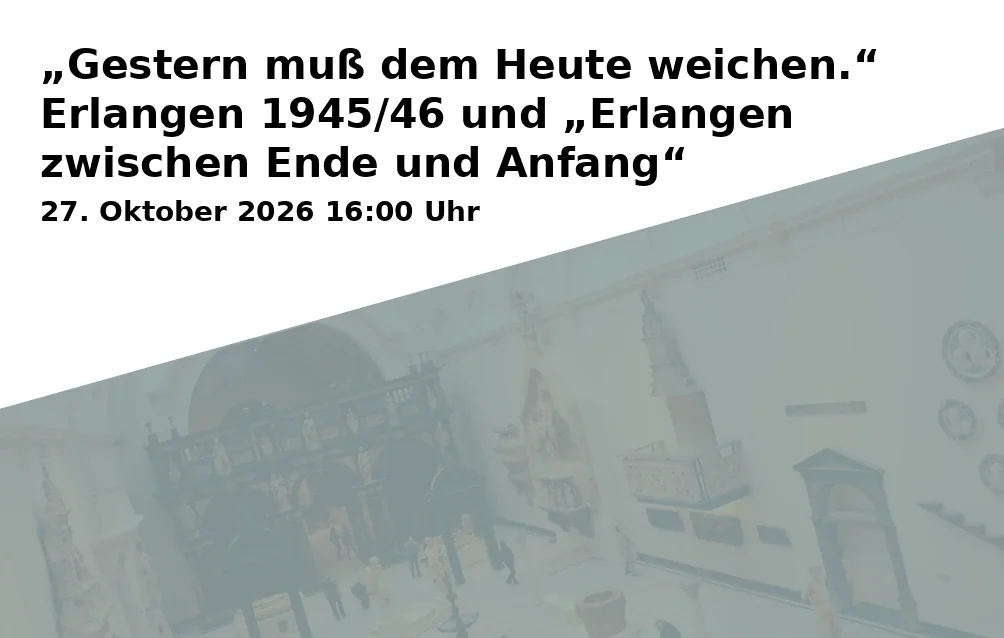
The poster exhibition "Yesterday Must Give Way to Today," created by students from the Albert Schweitzer Gymnasium in collaboration with the city archive, brings to life the concrete realities of 1945 and 1946. It highlights the resumption of school operations, the difficult housing situation, the first Bergkirchweih after the war, and collaboration with the American military government.
Textual images, photographs, posters, and historical documents create a concentrated exhibition atmosphere. The aesthetic experience here arises not from classical painting or sculpture, but from the immediate presence of archival evidence. Each source conveys a snapshot from a time when everyday life, politics, and personal futures were being reshaped.
The First Free Local Election After 13 Years of Dictatorship
The exhibition "Erlangen between End and Beginning. The Local Election in Erlangen on May 26, 1946" is dedicated to the first democratic local election after 13 years of Nazi rule. Relocations, resettlements, denazification measures, and the provision for a growing population shaped the circumstances.
This election emerges as a magnifying glass on democratic conditions. It makes visible that political participation does not begin in the polling station but relies on functioning institutions, reliable administration, and societal engagement. The curation connects political history with the realities of a city in transition.
Cultural Education with Contemporary Relevance
The city archive plans to exhibit an annual cabinet exhibition until 2029 on central stations of Erlangen's post-war history up to the founding of the Federal Republic of Germany in 1949. The kickoff provides historical orientation and invites reflection on the culture of remembrance, democratic responsibility, and the value of local history.
Conclusion: Experience History in Its Original Form
Visitors can expect a compact, knowledgeable, and atmospherically impactful exhibition about the end of the war, societal renewal, and democratic self-determination. The combination of archival display, student project, and local election history creates a sustainable artistic experience and an intense aesthetic encounter. Those wishing to understand Erlangen's history and reconsider the significance of democratic participation should visit this exhibition live at the city archive.
Official Channels of the Erlangen City Archive:
- Instagram: no official profile found
- Facebook: no official profile found
- YouTube: no official profile found
- Website: https://erlangen.de/aktuelles/2-ausstellungen-kriegsende-1945-in-erlangen-und-nun-