Erlangen 1945/46 at the City Archives: History Between End and New Beginning
Date and Time
Location
Price
About this Event
Mood
Venue Type
Erlangen between the End of War, New Beginning, and Democratic Awakening
Two exhibitions at the City Archives of Erlangen lead into the decisive months between the peaceful surrender of the city on April 16, 1945, and the first free municipal election on May 26, 1946. The presentations combine historical archives, local memory culture, and cultural education into an intense artistic experience of the post-war period in Erlangen.
Everyday Life After the War: School, Housing, and Bergkirchweih
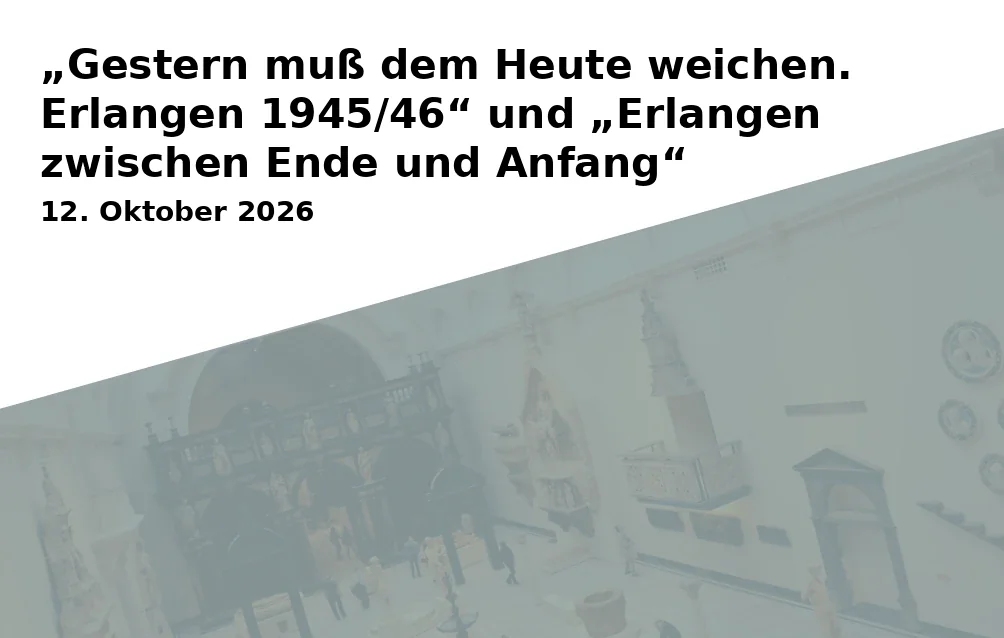
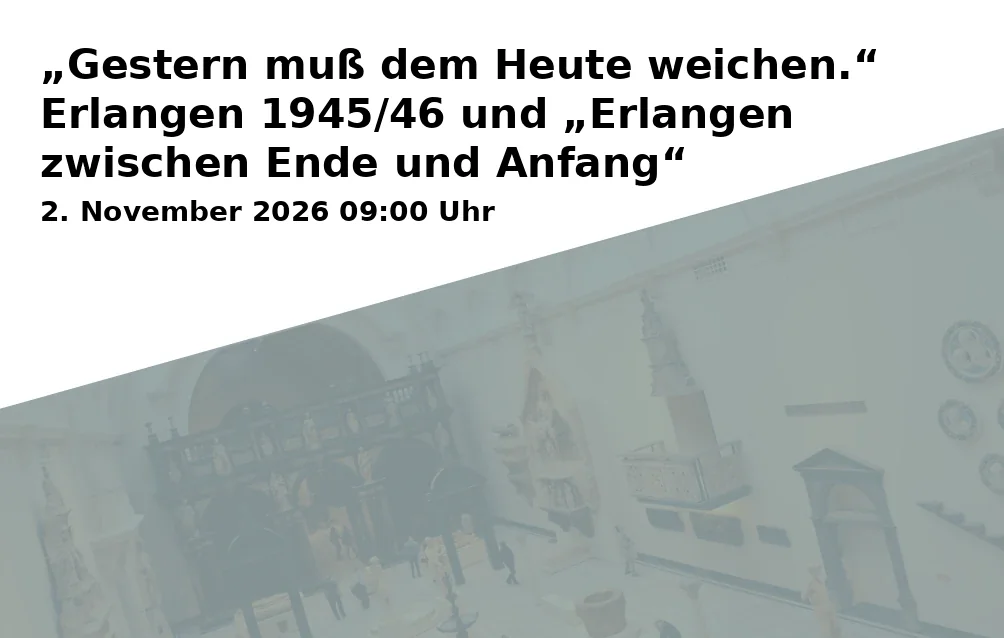
The exhibition "Yesterday Must Give Way to Today," developed by students of the Albert Schweitzer Gymnasium Erlangen in collaboration with the City Archives, focuses on specific living conditions in the years 1945 and 1946. The resumption of school operations, difficult housing situations, the first Bergkirchweih after the war, and cooperation with the American military government vividly illustrate the societal change.
Posters, historical materials, and documentary images create a concentrated exhibition atmosphere. The examination of works does not follow traditional painting or sculpture but centers on the aesthetic experience of archival evidence: texts, photographs, and documents make visible a city whose daily life was characterized by scarcity, restructuring, and cautious beginnings.
The First Free Municipal Election After 13 Years of Dictatorship
The second exhibition, "Erlangen between End and Beginning. The Municipal Election in Erlangen on May 26, 1946," focuses on the first democratic local election after 13 years of Nazi rule. The election took place under difficult conditions. Incomings and outgoings, relocations, denazification measures, and the supply of a growing population shaped the political and social framework.
The archival view shows democracy as a demanding process. Election materials and historical sources make it understandable how closely municipal self-determination was related to reliable administrative structures, social participation, and the reorganization of public life. Local history thus gains a political dimension that extends far beyond Erlangen.
Historical Sources as Immediate Testimonies
In the reading room of the City Archives, the poster exhibition meets the archival display. The curation directs attention to the tension between the end of a dictatorship and the arduous establishment of democratic order. Colors, shapes, and spatial effects recede behind the materiality of the sources: paper, writing, photography, and documentary transmission give the exhibition its particular sensual presence.
The presentations open access to the culture of remembrance, combining scientific research with personal proximity. Particularly, the perspective of young people makes cultural education perceivable as a vivid experiential space and invites critical inquiry into historical developments based on specific life situations.
Conclusion: Experience City History in Original
The double exhibition makes visible how Erlangen reorganized its everyday life, administration, and democratic culture after war and dictatorship. Visitors can expect an informed examination of local history with authentic sources, compelling everyday themes, and high societal relevance. Those who want to understand how the local democratic new beginning emerged should definitely visit this exhibition at the City Archives of Erlangen live.
Official Channels of the City Archives Erlangen:
- Instagram: no official profile found
- Facebook: no official profile found
- YouTube: no official profile found
- Website: no official profile found