Erlangen 1945/46 at the City Archive: History Between the End of War and a Democratic New Beginning
Date and Time
Location
Price
About this Event
Mood
Venue Type
Erlangen 1945/46: Between the End of War and a Democratic New Beginning
How does a city change when a war ends and democratic life has to be re-established? The two exhibitions at the Erlangen City Archive take you back to the immediate post-war period and illustrate how Erlangen coped with the transition to a new political, social, and economic order following its peaceful surrender on April 16, 1945.
Everyday Life After the Collapse
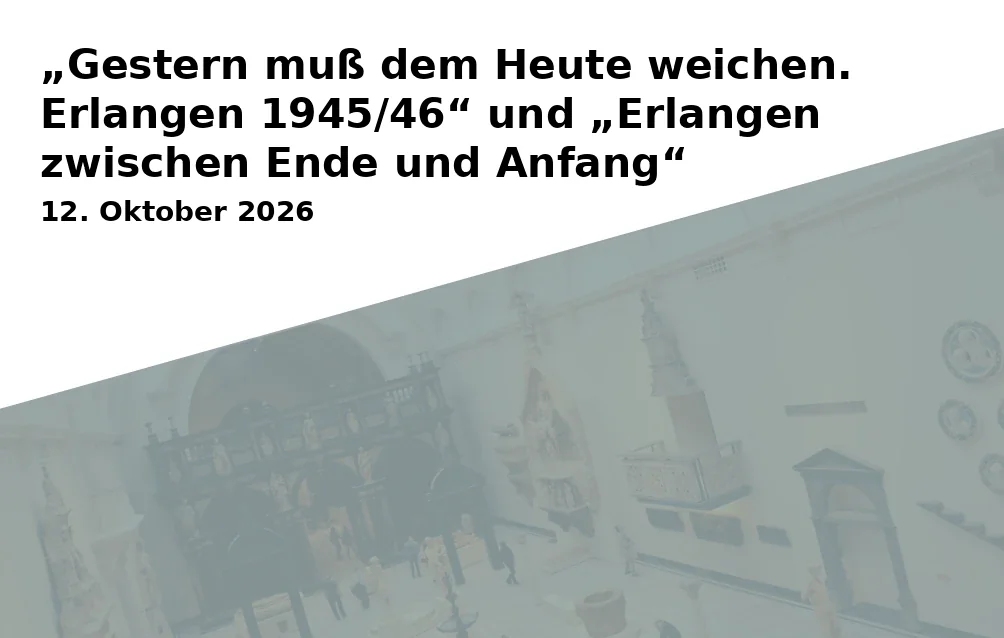
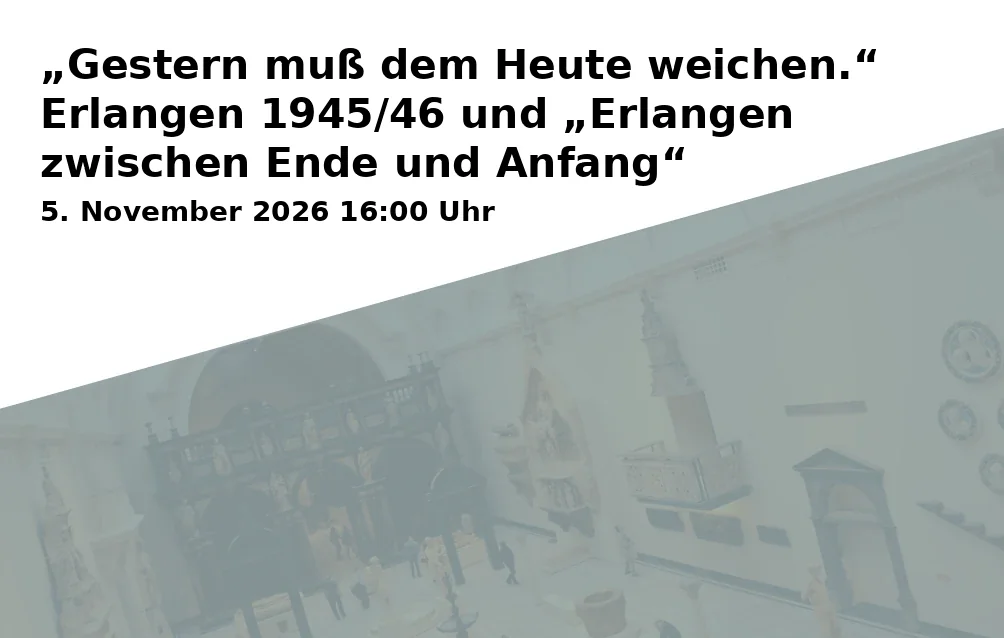
The exhibition "Yesterday Must Give Way to Today." Erlangen 1945/46 focuses on life in the city after the end of World War II. Key topics include the resumption of school operations, the first Bergkirchweih, the tense housing situation, and cooperation with the American military government. The presentation, developed by students from the Albert-Schweitzer-Gymnasium Erlangen in collaboration with the city archive, combines historical research with an illustrative perspective on everyday life.
Democracy as a Local Experience
The second exhibition, "Erlangen Between End and Beginning. The Municipal Election in Erlangen on May 26, 1946", is dedicated to the first free local election after 13 years of dictatorship. The election took place under difficult conditions: denazification, movements in and out, changing housing situations, and unclear resident dynamics shaped the circumstances. The archival exhibition shows that democratic elections are by no means a given at the local level but require social conditions, institutional reorganization, and political responsibility.
Historical Documents as Direct Artistic Experience
In the reading room of the city archive, a concentrated exhibition atmosphere unfolds. Posters, archival materials, and historical documents direct the viewer’s attention to the traces of a city in transition. The aesthetic experience arises not from painting or sculpture but from the materiality of the sources: written images, political documents, and visual memories connect personal life worlds with the great history of the 20th century.
Cultural Education and Critical Remembrance
The curation makes history an open process. Visitors confront questions of responsibility, belonging, political participation, and the rebuilding of public order. Thus, the exhibitions make a significant contribution to cultural education and historical democratic education. At the same time, they open a local access to the upheavals between Nazi rule, American occupation, and democratic new beginnings.
Admission and Visit
Both exhibitions can be seen until January 28, 2027, in the reading room of the Erlangen City Archive. Admission is free. Regular opening hours are Monday from 9 AM to 6 PM, Tuesday and Thursday from 9 AM to 4 PM, and Wednesday from 8 AM to 12 PM. Groups can be received by appointment.
Conclusion: Experience History on Site
The two exhibitions make Erlangen's post-war years comprehensible as a formative transitional period. Anyone interested in local history, culture of remembrance, political education, and the beginnings of democratic participation will experience a vivid artistic representation of historical documents here. A visit to the city archive combines knowledgeable exhibition design with immediate aesthetic experience and opens one’s view of how fragile yet shapeable democratic new beginnings are.
Official Channels of the Erlangen City Archive:
- Instagram: no official profile found
- Facebook: no official profile found
- YouTube: no official profile found
- Website: no official profile found