Erlangen 1945/46 at the City Archive: Between the End of War and Democratic New Beginning
Date and Time
Location
Price
About this Event
Mood
Venue Type
Erlangen Between the End of War and Democratic New Beginning
How does a city change when a dictatorship ends and democratic life begins anew? The two exhibitions at the City Archive Erlangen focus on the years 1945 and 1946 – a time between material hardship, political reorganization, and cautious new beginnings.
A City in Transition
On April 16, 1945, World War II ended in Erlangen with the peaceful surrender of the city. Buildings and infrastructure remained largely intact, but the social and political consequences of the war shaped daily life. The American occupying forces faced the task of dismantling the structures of the Nazi state and reorganizing administration, economy, and public life.
Everyday Life, Memory, and Cultural Education
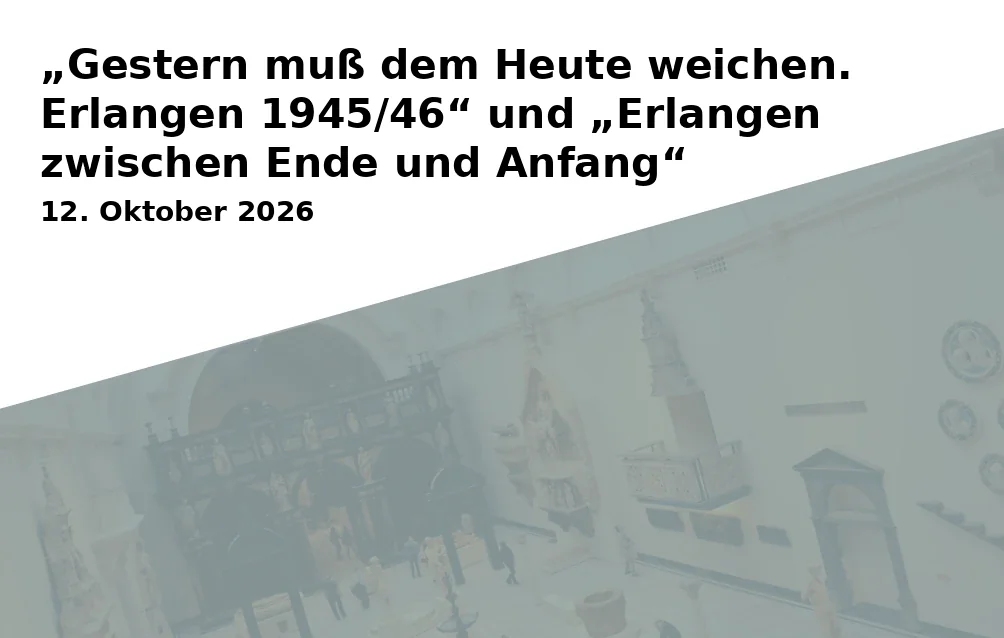
The exhibition "Yesterday Must Make Way for Today. Erlangen 1945/46" was created in collaboration with students from the Albert Schweitzer Gymnasium Erlangen. Its presentation highlights the resumption of school operations, the first Bergkirchweih after the war, the tense housing situation, and the collaboration with the American military government. Posters and historical topics connect personal life reality with local contemporary history.
The First Free Municipal Election After Nazi Rule
"Erlangen Between End and Beginning. The Municipal Election in Erlangen on May 26, 1946" focuses on the first democratic local election after 13 years of dictatorship. Arrivals and departures, relocation, denazification measures, and unclear resident relations complicated the political reorganization. The archival showcase presents the election as a magnifying glass for democratic conditions and makes visible that democratic participation also had to be historically achieved at the local level.
Work Observation in the Archive Room
In the reading room of the City Archive, a concentrated exhibition atmosphere unfolds. Documents, posters, and archival testimonies do not lead to a distant past, but directly into the questions of those transition years: How does trust emerge after a dictatorship? How is political responsibility redistributed? And what roles do schools, administration, and urban society play in the democratic new beginning?
Conclusion: History Becomes Experience on Site
The two cabinet exhibitions connect historical research, local memory culture, and cultural education. Visitors experience how closely everyday life, political order, and democratic development are intertwined. Those who want to understand Erlangen's post-war history and reflect on the conditions of democratic societies will find an immersive art experience of historical documentation at the City Archive. The visit opens an aesthetic experience with original sources and invites the discovery of urban history live.
Official Channels of City Archive Erlangen:
- Instagram: no official profile found
- Facebook: no official profile found
- YouTube: no official profile found
- Website: no official profile found