
Erlangen
Martin-Luther-Platz 1, 91054 Erlangen, Deutschland
Altstädter Dreifaltigkeitskirche | History & Services
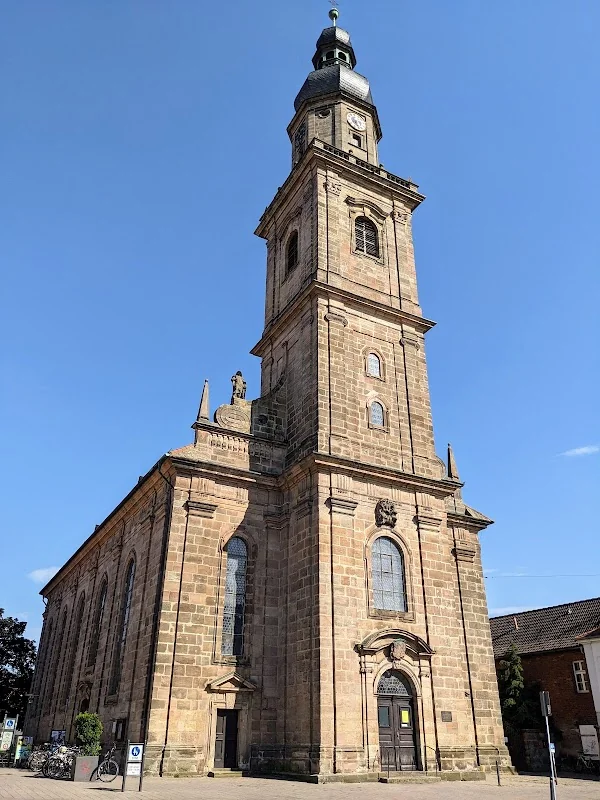
The Altstädter Dreifaltigkeitskirche in Erlangen is much more than a church building: it is a baroque landmark of the old town, a vibrant place of worship, and a house with an extraordinarily rich musical tradition. Those searching for Altstädter Dreifaltigkeitskirche Erlangen, Altstädter Church, opening hours, photos, or church music will find a church that connects history, urban significance, and current parish practice. The 55 m high tower sets a striking accent in the northern city center, while the current structure, as a hall building with a central pulpit altar and surrounding double galleries, belongs to the early examples of margravial church construction. At the same time, the church remains a place of prayer, music, and personal encounters in the midst of Erlangen. ([erlangen-altstadt-evangelisch.de](https://www.erlangen-altstadt-evangelisch.de/wp-content/uploads/2018/09/Kirchenf%C3%BChrer_Erlangen_Altstadt_web.pdf))
Particularly exciting is the connection between historical depth and lived present. The church was rebuilt after the devastating old town fire of 1706, consecrated in 1721, and later remodeled, renovated, and liturgically adapted several times. Today, visitors experience regular services, musical evening devotions, cantata services, and large choir performances. The building is as attractive for those searching for photos as it is for anyone interested in baroque architecture, margravial style, organs, or the history of the Protestant church in Erlangen. Therefore, those visiting the Altstädter Dreifaltigkeitskirche encounter a cultural monument with a strong parish life and a very clear profile. ([erlangen-altstadt-evangelisch.de](https://www.erlangen-altstadt-evangelisch.de/wp-content/uploads/2018/09/Kirchenf%C3%BChrer_Erlangen_Altstadt_web.pdf))
Services and Regular Events at the Dreifaltigkeitskirche
In the daily life of the parish, the service is clearly at the center. The Evangelical-Lutheran parish of Erlangen-Altstadt celebrates services in the Dreifaltigkeitskirche every Sunday of the year, with few exceptions, at 9:30 AM. Except during the summer holidays, another service with a shortened liturgy follows at 11:00 AM. On festive days and the third Sunday of the month, communion is also celebrated. These regular times make the church not only a monument but also a reliable place in the weekly rhythm of many people in Erlangen. Therefore, those searching for services at Altstädter Church or Altstädter Dreifaltigkeitskirche will find clear and lived structures here. ([erlangen-altstadt-evangelisch.de](https://www.erlangen-altstadt-evangelisch.de/gottesdienst/regelmaessigegottesdienste/))
Additionally, the parish culture includes musical and ecumenical formats. The parish describes a musical evening devotion on Fridays at 7:00 PM, which takes place outside of school holidays and is particularly designed during Advent and Lent. Special services are also held on the second holidays of Christmas, Easter, and Pentecost, which rotate between the Dreifaltigkeitskirche, the Hugenottenkirche, and the Catholic Herz-Jesu-Kirche. This also fits well with the profile of the house: The Altstädter Dreifaltigkeitskirche is not a silent backdrop but a place where liturgy, music, and ecumenical collaboration visibly come together. ([erlangen-altstadt-evangelisch.de](https://www.erlangen-altstadt-evangelisch.de/gottesdienst/familiengottesdienste/?utm_source=openai))
Those interested in baptism, marriage, and other life transitions quickly realize that the parish thinks far beyond Sunday services. The parish's website provides its own information on birth and baptism as well as marriage and other topics of faith and life. This shows how closely the church is connected to the everyday life of the parish. Confirmation also finds a firm place in the annual cycle here, and the Dreifaltigkeitskirche thus remains a place where personal life paths are accompanied. For search queries like altstädter church, dreifaltigkeitskirche erlangen, or altstädter dreifaltigkeitskirche erlangen, this mix of liturgical regularity and closeness to life is crucial. ([erlangen-altstadt-evangelisch.de](https://www.erlangen-altstadt-evangelisch.de/glaube-und-leben/geburt-und-taufe/?utm_source=openai))
History from the Predecessor Building to the Baroque New Construction
The history of the site goes back much further than the current building. The Altstädter Church had predecessors that developed at the same location over centuries and were expanded multiple times. The church guide PDF of the parish describes an older church that eventually received a third gallery due to lack of space and was equipped with a wooden vault and paintings. This predecessor building fell victim to the old town fire on August 14, 1706. For the parish, this initially meant a temporary location in the undamaged Martinskirche and a long phase of makeshift arrangements until the current church could be planned and built. ([erlangen-altstadt-evangelisch.de](https://www.erlangen-altstadt-evangelisch.de/wp-content/uploads/2018/09/Kirchenf%C3%BChrer_Erlangen_Altstadt_web.pdf))
The new construction began in 1709. According to the church guide, the foundation stone was laid on the highest command, and the first construction plan dates from 1710 by the master builder Wenzel Perner. Johann Georg Kannhäuser was also involved in the construction execution. The church was dimensioned larger than its predecessor to accommodate the growing congregation and the newly planned old town. The construction was not only a church restoration but also part of an urban planning concept. Erlangen developed as a baroque planned city, and the Altstädter Church was integrated into this system. This explains why it is architecturally so closely connected to the other inner-city churches of the city. ([erlangen-altstadt-evangelisch.de](https://www.erlangen-altstadt-evangelisch.de/wp-content/uploads/2018/09/Kirchenf%C3%BChrer_Erlangen_Altstadt_web.pdf))
The solemn consecration took place on March 2, 1721, in the presence of Margrave Georg Wilhelm and his wife Sophie Marie. The construction work continued afterward, including on the tower, whose plan was approved in 1724 and completed in 1726 with the so-called double welsche dome. The current building is thus the result of a longer, carefully organized reconstruction. Particularly interesting is that the church was conceived early on as a representative hall building: with a central pulpit altar, two gallery levels, and clear symmetry. This makes it an important example of margravial church construction of the early 18th century to this day. ([erlangen-altstadt-evangelisch.de](https://www.erlangen-altstadt-evangelisch.de/wp-content/uploads/2018/09/Kirchenf%C3%BChrer_Erlangen_Altstadt_web.pdf))
Later centuries also left significant traces. The current building stock essentially goes back to the renovation of 1745/46, which was necessary due to structural damage to the roof. Under the direction of city master mason Johann Wilhelm Stengel, the walls were secured and symmetrically redesigned in baroque style. In the 20th century, further changes followed: The choir area was used as a war memorial from 1920, the roof was newly covered in 1958, and a profound redesign of the interior took place in 1960/61 with a changed gallery, new organ placement, and new heating. Another interior renovation followed in 1986. The church is thus not only historically old but also historically alive and has been gently adapted to new uses multiple times. ([erlangen-altstadt-evangelisch.de](https://www.erlangen-altstadt-evangelisch.de/wp-content/uploads/2018/09/Kirchenf%C3%BChrer_Erlangen_Altstadt_web.pdf))
Church Music, Bach Choir, and the Great Organ
A central characteristic of the Altstädter Dreifaltigkeitskirche is its strong musical orientation. The Bach Association Erlangen was founded to promote church music in the Altstädter Dreifaltigkeitskirche. The association's website describes the church as a baroque church with over 800 seats, providing a magnificent setting for large oratorios, choral works of all eras, as well as organ and instrumental concerts. This is particularly relevant for search intentions around church music Erlangen Altstadt, Bach Choir Erlangen, or organ Altstädter Dreifaltigkeitskirche, as music here is not a side program but an essential part of the identity of the house. ([bachverein-erlangen.de](https://bachverein-erlangen.de/))
The Bach Choir Erlangen was founded in 1958 along with the establishment of the full-time church musician position at the Altstädter Church and initially bore the name Erlanger Dreifaltigkeitskantorei. Today, church music director Wieland Hofmann leads the choir, which has about 120 singers for many years. The choir gives an average of four concerts and 14 service music performances per year, including regular Bach cantata services. It participates in the Erlangen Bach Days and in the series for modern church music in Erlangen. Thus, the Dreifaltigkeitskirche is a place where liturgical practice, demanding choir work, and concert culture mutually reinforce each other. ([erlangen-altstadt-evangelisch.de](https://www.erlangen-altstadt-evangelisch.de/kirchenmusik/bachchor-erlangen/))
The church's instrumentarium is also exceptionally well documented. The original organ work came from Johann Christoph Wiegleb; it was already expanded in 1761 by the Nuremberg organ builder Georg Ludwig Krämer, increasing the prospect from five to today nine axes. After further modifications, a new organ from the Walcker company in Ludwigsburg was installed in 1961. The last revision took place in 1996 by Thomas Jann in Laberweinting. Today, a total of 48 registers are available on three manuals and a pedal. The organ prospect is green-blue marbled, richly decorated with gilded acanthus work, and features putti, angel figures, and coat-of-arms cartouches. Therefore, those searching for photos of the Altstädter Dreifaltigkeitskirche often encounter this impressive view of the organ and the choir area. ([erlangen-altstadt-evangelisch.de](https://www.erlangen-altstadt-evangelisch.de/wp-content/uploads/2018/09/Kirchenf%C3%BChrer_Erlangen_Altstadt_web.pdf))
The musical use of the space also explains the special effect of the interior. The central pulpit altar visually and acoustically concentrates liturgy and proclamation, the galleries give the hall building its clear structure, and the organ, together with the choir area, forms a center for concerts and service music. The church is thus used for both large spiritual works and smaller ensembles. The fact that the Bach Association explicitly mentions not only the Bach Choir but also Munich Bach Soloists, chamber organ, and harpsichord shows the stylistic range: from baroque and classical to modern church music. Thus, the Altstädter Dreifaltigkeitskirche remains a vibrant music venue that is perceived far beyond the borders of Erlangen. ([bachverein-erlangen.de](https://bachverein-erlangen.de/))
Opening Hours, Address, Directions, and Parking in Erlangen
For practical visits, the location of the church is very straightforward. The Altstädter Dreifaltigkeitskirche is located at Martin-Luther-Platz 1 in 91054 Erlangen. The church guide states opening hours from Tuesday to Sunday from 10:00 AM to 4:00 PM. Those wishing to visit the church specifically have clear daytime hours for a visit. Particularly convenient is the location in the heart of the old town, as further places in the city center can be easily connected on foot from there. For search queries like opening hours Altstädter Dreifaltigkeitskirche or directions Altstädter Church, this combination of address and visiting times provides the most important basic information. ([markgrafenkirchen-ansbach.de](https://www.markgrafenkirchen-ansbach.de/erlangen-altstaedter-dreifaltigkeitskirche))
Accessibility is further facilitated by the city center location. The city of Erlangen points out that parking spaces are available in the parking garages and underground garages around the city center at many times of the day and that from there, shops, restaurants, and cultural places within the free city center zone can be easily reached on foot or by bus. For visitors to the Altstädter Dreifaltigkeitskirche, this means: Those arriving by car should best orient themselves to the general parking options in the city center and plan the short walk to Martin-Luther-Platz. The church itself is located in the midst of the urban fabric and not in a secluded location. ([erlangen.de](https://erlangen.de/en/aktuelles/parken-in-erlangen?utm_source=openai))
Barrier-free information is also important for visitors. In an event entry, the Altstädter Dreifaltigkeitskirche is designated as wheelchair accessible; an induction loop for hearing aids and a disabled parking space are also mentioned. Such information is event-related, but it shows that the church also pays attention to accessibility for larger concert formats. Especially for a venue with over 800 seats, this is an important practical point. Therefore, anyone wishing to attend a larger performance or a special concert should always check the respective event notice in addition to the general opening hours. ([evangelische-termine.de](https://www.evangelische-termine.de/detail-bt?ID=7993391))
For public transport access, the central city location is also advantageous. Martin-Luther-Platz is a well-known destination in the urban network and is repeatedly mentioned as a central reference point in Erlangen. For visitors who are in the city center, the church can therefore be easily integrated into a city walk. Those planning a day in Erlangen can combine the visit to the Dreifaltigkeitskirche with other places like museums, squares, or other churches. This makes the location particularly interesting for cultural and city visitors who want to experience not just a single church but the historical center of Erlangen. ([erlangen.de](https://erlangen.de/en/aktuelles/parken-in-erlangen?utm_source=openai))
Photos, Architecture, and Special Details in the Interior
When people search for photos of the Altstädter Dreifaltigkeitskirche, they usually mean exactly those details that make this building so characteristic. The building is designed as a hall structure with a centrally arranged pulpit altar in the choir and surrounding double galleries on three sides. This clear structure creates a strong spatial order and makes the interior immediately recognizable in pictures. At the same time, the church is one of the early examples of margravial church construction of the 18th century and is therefore as exciting for architecture enthusiasts as it is for visitors who simply want to experience a special atmosphere. The 55 m high tower forms a striking accent on the outside, while symmetry, height, and the connection of altar and pulpit dominate the image inside. ([erlangen-altstadt-evangelisch.de](https://www.erlangen-altstadt-evangelisch.de/wp-content/uploads/2018/09/Kirchenf%C3%BChrer_Erlangen_Altstadt_web.pdf))
Particularly important for the impression of the interior is the pulpit altar. It was created according to designs by the Bayreuth court sculptor Elias Räntz by Johann Philipp Göbel. Above a wide base stand four Corinthian columns that support a curved entablature; the pulpit basket is surrounded by a carved curtain and is supported by a kneeling angel. Additionally, there are expressive figures of Peter and Paul, as well as symbolic elements like the Lamb of Christ and the symbols of the Trinity. Together with the octagonal baptismal font, which was donated in 1721 by Johann Benjamin Morgenroth, an interior emerges whose imagery is theologically clear and baroque rich at the same time. ([erlangen-altstadt-evangelisch.de](https://www.erlangen-altstadt-evangelisch.de/wp-content/uploads/2018/09/Kirchenf%C3%BChrer_Erlangen_Altstadt_web.pdf))
The late Gothic carved figures on the north side of the choir are also remarkable. Their origin is not definitively clarified; it is possible that they belonged to the furnishings of the church that burned down in 1632 and were therefore later preserved in honor. Today, five figures stand there, which were taken from predecessor buildings and were again placed in a visible position during the interior renovation in 1986. Such details make the church interesting for photo shoots: not only the overall view with the tower and square but also the view of the figures, the altar, the galleries, and the organ case. Therefore, anyone looking for visual impressiveness will find a great density of motifs in a small space. ([erlangen-altstadt-evangelisch.de](https://www.erlangen-altstadt-evangelisch.de/wp-content/uploads/2018/09/Kirchenf%C3%BChrer_Erlangen_Altstadt_web.pdf))
The history of the interior also shows that the church has been repeatedly adapted to new viewing habits. Colored window paintings were removed in the 1960s, the upper gallery was taken out, the lower one was raised, and enlarged for the new organ. In 1986, another renovation followed with benches along the walls and the current arrangement of the figures. This means that the house is not a frozen museum but a historical space that has been cared for, changed, and newly interpreted over generations. For search queries regarding photos, history, and special features, this mix of authenticity and change is crucial. ([erlangen-altstadt-evangelisch.de](https://www.erlangen-altstadt-evangelisch.de/wp-content/uploads/2018/09/Kirchenf%C3%BChrer_Erlangen_Altstadt_web.pdf))
The Altstädter Church in the Urban Landscape and Parish Life
The Altstädter Dreifaltigkeitskirche should not be viewed in isolation but as part of a larger ecclesiastical and urban context. The church guide describes it as a church on the southern edge of the old settlement on a ridge southeast of the confluence of the Regnitz and Schwabach rivers. At the same time, it becomes clear that it forms one of the three major inner-city churches in Erlangen, along with the Neustädter Kirche and the Hugenottenkirche. This trio is formative for the cityscape and makes clear why the Altstädter Church is such a frequently sought-after motif. ([erlangen-altstadt-evangelisch.de](https://www.erlangen-altstadt-evangelisch.de/wp-content/uploads/2018/09/Kirchenf%C3%BChrer_Erlangen_Altstadt_web.pdf))
In parish life, the church plays a central role as the main place for Sunday services, as a space for choir work, and as a venue for special celebrations in the church year. The parish explicitly names the Dreifaltigkeitskirche as one of its most important meeting points; in addition, there are other places such as the chapel in the Rathsberg retirement home, the Martinskirche, or the parish house. This shows that the church belongs to a network of spiritual and social places that together sustain the life of the parish. For those searching for Altstädter Church Erlangen or Dreifaltigkeitskirche Erlangen, not only the building itself is interesting but also the way it is embedded in the community. ([erlangen-altstadt-evangelisch.de](https://www.erlangen-altstadt-evangelisch.de/ueber-uns/kirchen/))
The life accompaniment by the parish also underscores this impression. Information on birth and baptism as well as marriage and confirmation shows that the Altstädter parish uses the church not only for Sunday services but also for formative life phases. Additionally, there are parish work, choir rehearsals, music events, and social projects like KALEB, which passes on aid goods through Ukrainian partners. All of this makes the Dreifaltigkeitskirche a place where history, present, and responsibility for the future converge. This mix explains why the location remains relevant for both locals and visitors and culture enthusiasts. ([erlangen-altstadt-evangelisch.de](https://www.erlangen-altstadt-evangelisch.de/glaube-und-leben/geburt-und-taufe/?utm_source=openai))
Therefore, those visiting the Altstädter Dreifaltigkeitskirche experience not only a baroque house of worship but a place with a clear identity: historical rebirth after the fire of 1706, margravial architecture, regular services, strong church music, and a good location in the heart of Erlangen. This combination makes the church equally attractive for photos, city walks, concert visits, and quiet visits. The search queries surrounding Altstädter Dreifaltigkeitskirche Erlangen, Altstädter Church, photos, services, opening hours, and organ life thus encounter a building that indeed fulfills all these expectations. ([erlangen-altstadt-evangelisch.de](https://www.erlangen-altstadt-evangelisch.de/wp-content/uploads/2018/09/Kirchenf%C3%BChrer_Erlangen_Altstadt_web.pdf))
Sources:
- Evangelical-Lutheran Parish Erlangen-Altstadt - Welcome
- Evangelical-Lutheran Parish Erlangen-Altstadt - Regular Services
- Church Guide Erlangen-Altstadt - Altstädter Dreifaltigkeitskirche and Martinskirche
- Bach Choir Erlangen - Welcome
- Bach Association Erlangen - Association for the Promotion of Church Music in the Altstädter Dreifaltigkeitskirche
- City of Erlangen - Parking in Erlangen
Show moreShow less
Altstädter Dreifaltigkeitskirche | History & Services
The Altstädter Dreifaltigkeitskirche in Erlangen is much more than a church building: it is a baroque landmark of the old town, a vibrant place of worship, and a house with an extraordinarily rich musical tradition. Those searching for Altstädter Dreifaltigkeitskirche Erlangen, Altstädter Church, opening hours, photos, or church music will find a church that connects history, urban significance, and current parish practice. The 55 m high tower sets a striking accent in the northern city center, while the current structure, as a hall building with a central pulpit altar and surrounding double galleries, belongs to the early examples of margravial church construction. At the same time, the church remains a place of prayer, music, and personal encounters in the midst of Erlangen. ([erlangen-altstadt-evangelisch.de](https://www.erlangen-altstadt-evangelisch.de/wp-content/uploads/2018/09/Kirchenf%C3%BChrer_Erlangen_Altstadt_web.pdf))
Particularly exciting is the connection between historical depth and lived present. The church was rebuilt after the devastating old town fire of 1706, consecrated in 1721, and later remodeled, renovated, and liturgically adapted several times. Today, visitors experience regular services, musical evening devotions, cantata services, and large choir performances. The building is as attractive for those searching for photos as it is for anyone interested in baroque architecture, margravial style, organs, or the history of the Protestant church in Erlangen. Therefore, those visiting the Altstädter Dreifaltigkeitskirche encounter a cultural monument with a strong parish life and a very clear profile. ([erlangen-altstadt-evangelisch.de](https://www.erlangen-altstadt-evangelisch.de/wp-content/uploads/2018/09/Kirchenf%C3%BChrer_Erlangen_Altstadt_web.pdf))
Services and Regular Events at the Dreifaltigkeitskirche
In the daily life of the parish, the service is clearly at the center. The Evangelical-Lutheran parish of Erlangen-Altstadt celebrates services in the Dreifaltigkeitskirche every Sunday of the year, with few exceptions, at 9:30 AM. Except during the summer holidays, another service with a shortened liturgy follows at 11:00 AM. On festive days and the third Sunday of the month, communion is also celebrated. These regular times make the church not only a monument but also a reliable place in the weekly rhythm of many people in Erlangen. Therefore, those searching for services at Altstädter Church or Altstädter Dreifaltigkeitskirche will find clear and lived structures here. ([erlangen-altstadt-evangelisch.de](https://www.erlangen-altstadt-evangelisch.de/gottesdienst/regelmaessigegottesdienste/))
Additionally, the parish culture includes musical and ecumenical formats. The parish describes a musical evening devotion on Fridays at 7:00 PM, which takes place outside of school holidays and is particularly designed during Advent and Lent. Special services are also held on the second holidays of Christmas, Easter, and Pentecost, which rotate between the Dreifaltigkeitskirche, the Hugenottenkirche, and the Catholic Herz-Jesu-Kirche. This also fits well with the profile of the house: The Altstädter Dreifaltigkeitskirche is not a silent backdrop but a place where liturgy, music, and ecumenical collaboration visibly come together. ([erlangen-altstadt-evangelisch.de](https://www.erlangen-altstadt-evangelisch.de/gottesdienst/familiengottesdienste/?utm_source=openai))
Those interested in baptism, marriage, and other life transitions quickly realize that the parish thinks far beyond Sunday services. The parish's website provides its own information on birth and baptism as well as marriage and other topics of faith and life. This shows how closely the church is connected to the everyday life of the parish. Confirmation also finds a firm place in the annual cycle here, and the Dreifaltigkeitskirche thus remains a place where personal life paths are accompanied. For search queries like altstädter church, dreifaltigkeitskirche erlangen, or altstädter dreifaltigkeitskirche erlangen, this mix of liturgical regularity and closeness to life is crucial. ([erlangen-altstadt-evangelisch.de](https://www.erlangen-altstadt-evangelisch.de/glaube-und-leben/geburt-und-taufe/?utm_source=openai))
History from the Predecessor Building to the Baroque New Construction
The history of the site goes back much further than the current building. The Altstädter Church had predecessors that developed at the same location over centuries and were expanded multiple times. The church guide PDF of the parish describes an older church that eventually received a third gallery due to lack of space and was equipped with a wooden vault and paintings. This predecessor building fell victim to the old town fire on August 14, 1706. For the parish, this initially meant a temporary location in the undamaged Martinskirche and a long phase of makeshift arrangements until the current church could be planned and built. ([erlangen-altstadt-evangelisch.de](https://www.erlangen-altstadt-evangelisch.de/wp-content/uploads/2018/09/Kirchenf%C3%BChrer_Erlangen_Altstadt_web.pdf))
The new construction began in 1709. According to the church guide, the foundation stone was laid on the highest command, and the first construction plan dates from 1710 by the master builder Wenzel Perner. Johann Georg Kannhäuser was also involved in the construction execution. The church was dimensioned larger than its predecessor to accommodate the growing congregation and the newly planned old town. The construction was not only a church restoration but also part of an urban planning concept. Erlangen developed as a baroque planned city, and the Altstädter Church was integrated into this system. This explains why it is architecturally so closely connected to the other inner-city churches of the city. ([erlangen-altstadt-evangelisch.de](https://www.erlangen-altstadt-evangelisch.de/wp-content/uploads/2018/09/Kirchenf%C3%BChrer_Erlangen_Altstadt_web.pdf))
The solemn consecration took place on March 2, 1721, in the presence of Margrave Georg Wilhelm and his wife Sophie Marie. The construction work continued afterward, including on the tower, whose plan was approved in 1724 and completed in 1726 with the so-called double welsche dome. The current building is thus the result of a longer, carefully organized reconstruction. Particularly interesting is that the church was conceived early on as a representative hall building: with a central pulpit altar, two gallery levels, and clear symmetry. This makes it an important example of margravial church construction of the early 18th century to this day. ([erlangen-altstadt-evangelisch.de](https://www.erlangen-altstadt-evangelisch.de/wp-content/uploads/2018/09/Kirchenf%C3%BChrer_Erlangen_Altstadt_web.pdf))
Later centuries also left significant traces. The current building stock essentially goes back to the renovation of 1745/46, which was necessary due to structural damage to the roof. Under the direction of city master mason Johann Wilhelm Stengel, the walls were secured and symmetrically redesigned in baroque style. In the 20th century, further changes followed: The choir area was used as a war memorial from 1920, the roof was newly covered in 1958, and a profound redesign of the interior took place in 1960/61 with a changed gallery, new organ placement, and new heating. Another interior renovation followed in 1986. The church is thus not only historically old but also historically alive and has been gently adapted to new uses multiple times. ([erlangen-altstadt-evangelisch.de](https://www.erlangen-altstadt-evangelisch.de/wp-content/uploads/2018/09/Kirchenf%C3%BChrer_Erlangen_Altstadt_web.pdf))
Church Music, Bach Choir, and the Great Organ
A central characteristic of the Altstädter Dreifaltigkeitskirche is its strong musical orientation. The Bach Association Erlangen was founded to promote church music in the Altstädter Dreifaltigkeitskirche. The association's website describes the church as a baroque church with over 800 seats, providing a magnificent setting for large oratorios, choral works of all eras, as well as organ and instrumental concerts. This is particularly relevant for search intentions around church music Erlangen Altstadt, Bach Choir Erlangen, or organ Altstädter Dreifaltigkeitskirche, as music here is not a side program but an essential part of the identity of the house. ([bachverein-erlangen.de](https://bachverein-erlangen.de/))
The Bach Choir Erlangen was founded in 1958 along with the establishment of the full-time church musician position at the Altstädter Church and initially bore the name Erlanger Dreifaltigkeitskantorei. Today, church music director Wieland Hofmann leads the choir, which has about 120 singers for many years. The choir gives an average of four concerts and 14 service music performances per year, including regular Bach cantata services. It participates in the Erlangen Bach Days and in the series for modern church music in Erlangen. Thus, the Dreifaltigkeitskirche is a place where liturgical practice, demanding choir work, and concert culture mutually reinforce each other. ([erlangen-altstadt-evangelisch.de](https://www.erlangen-altstadt-evangelisch.de/kirchenmusik/bachchor-erlangen/))
The church's instrumentarium is also exceptionally well documented. The original organ work came from Johann Christoph Wiegleb; it was already expanded in 1761 by the Nuremberg organ builder Georg Ludwig Krämer, increasing the prospect from five to today nine axes. After further modifications, a new organ from the Walcker company in Ludwigsburg was installed in 1961. The last revision took place in 1996 by Thomas Jann in Laberweinting. Today, a total of 48 registers are available on three manuals and a pedal. The organ prospect is green-blue marbled, richly decorated with gilded acanthus work, and features putti, angel figures, and coat-of-arms cartouches. Therefore, those searching for photos of the Altstädter Dreifaltigkeitskirche often encounter this impressive view of the organ and the choir area. ([erlangen-altstadt-evangelisch.de](https://www.erlangen-altstadt-evangelisch.de/wp-content/uploads/2018/09/Kirchenf%C3%BChrer_Erlangen_Altstadt_web.pdf))
The musical use of the space also explains the special effect of the interior. The central pulpit altar visually and acoustically concentrates liturgy and proclamation, the galleries give the hall building its clear structure, and the organ, together with the choir area, forms a center for concerts and service music. The church is thus used for both large spiritual works and smaller ensembles. The fact that the Bach Association explicitly mentions not only the Bach Choir but also Munich Bach Soloists, chamber organ, and harpsichord shows the stylistic range: from baroque and classical to modern church music. Thus, the Altstädter Dreifaltigkeitskirche remains a vibrant music venue that is perceived far beyond the borders of Erlangen. ([bachverein-erlangen.de](https://bachverein-erlangen.de/))
Opening Hours, Address, Directions, and Parking in Erlangen
For practical visits, the location of the church is very straightforward. The Altstädter Dreifaltigkeitskirche is located at Martin-Luther-Platz 1 in 91054 Erlangen. The church guide states opening hours from Tuesday to Sunday from 10:00 AM to 4:00 PM. Those wishing to visit the church specifically have clear daytime hours for a visit. Particularly convenient is the location in the heart of the old town, as further places in the city center can be easily connected on foot from there. For search queries like opening hours Altstädter Dreifaltigkeitskirche or directions Altstädter Church, this combination of address and visiting times provides the most important basic information. ([markgrafenkirchen-ansbach.de](https://www.markgrafenkirchen-ansbach.de/erlangen-altstaedter-dreifaltigkeitskirche))
Accessibility is further facilitated by the city center location. The city of Erlangen points out that parking spaces are available in the parking garages and underground garages around the city center at many times of the day and that from there, shops, restaurants, and cultural places within the free city center zone can be easily reached on foot or by bus. For visitors to the Altstädter Dreifaltigkeitskirche, this means: Those arriving by car should best orient themselves to the general parking options in the city center and plan the short walk to Martin-Luther-Platz. The church itself is located in the midst of the urban fabric and not in a secluded location. ([erlangen.de](https://erlangen.de/en/aktuelles/parken-in-erlangen?utm_source=openai))
Barrier-free information is also important for visitors. In an event entry, the Altstädter Dreifaltigkeitskirche is designated as wheelchair accessible; an induction loop for hearing aids and a disabled parking space are also mentioned. Such information is event-related, but it shows that the church also pays attention to accessibility for larger concert formats. Especially for a venue with over 800 seats, this is an important practical point. Therefore, anyone wishing to attend a larger performance or a special concert should always check the respective event notice in addition to the general opening hours. ([evangelische-termine.de](https://www.evangelische-termine.de/detail-bt?ID=7993391))
For public transport access, the central city location is also advantageous. Martin-Luther-Platz is a well-known destination in the urban network and is repeatedly mentioned as a central reference point in Erlangen. For visitors who are in the city center, the church can therefore be easily integrated into a city walk. Those planning a day in Erlangen can combine the visit to the Dreifaltigkeitskirche with other places like museums, squares, or other churches. This makes the location particularly interesting for cultural and city visitors who want to experience not just a single church but the historical center of Erlangen. ([erlangen.de](https://erlangen.de/en/aktuelles/parken-in-erlangen?utm_source=openai))
Photos, Architecture, and Special Details in the Interior
When people search for photos of the Altstädter Dreifaltigkeitskirche, they usually mean exactly those details that make this building so characteristic. The building is designed as a hall structure with a centrally arranged pulpit altar in the choir and surrounding double galleries on three sides. This clear structure creates a strong spatial order and makes the interior immediately recognizable in pictures. At the same time, the church is one of the early examples of margravial church construction of the 18th century and is therefore as exciting for architecture enthusiasts as it is for visitors who simply want to experience a special atmosphere. The 55 m high tower forms a striking accent on the outside, while symmetry, height, and the connection of altar and pulpit dominate the image inside. ([erlangen-altstadt-evangelisch.de](https://www.erlangen-altstadt-evangelisch.de/wp-content/uploads/2018/09/Kirchenf%C3%BChrer_Erlangen_Altstadt_web.pdf))
Particularly important for the impression of the interior is the pulpit altar. It was created according to designs by the Bayreuth court sculptor Elias Räntz by Johann Philipp Göbel. Above a wide base stand four Corinthian columns that support a curved entablature; the pulpit basket is surrounded by a carved curtain and is supported by a kneeling angel. Additionally, there are expressive figures of Peter and Paul, as well as symbolic elements like the Lamb of Christ and the symbols of the Trinity. Together with the octagonal baptismal font, which was donated in 1721 by Johann Benjamin Morgenroth, an interior emerges whose imagery is theologically clear and baroque rich at the same time. ([erlangen-altstadt-evangelisch.de](https://www.erlangen-altstadt-evangelisch.de/wp-content/uploads/2018/09/Kirchenf%C3%BChrer_Erlangen_Altstadt_web.pdf))
The late Gothic carved figures on the north side of the choir are also remarkable. Their origin is not definitively clarified; it is possible that they belonged to the furnishings of the church that burned down in 1632 and were therefore later preserved in honor. Today, five figures stand there, which were taken from predecessor buildings and were again placed in a visible position during the interior renovation in 1986. Such details make the church interesting for photo shoots: not only the overall view with the tower and square but also the view of the figures, the altar, the galleries, and the organ case. Therefore, anyone looking for visual impressiveness will find a great density of motifs in a small space. ([erlangen-altstadt-evangelisch.de](https://www.erlangen-altstadt-evangelisch.de/wp-content/uploads/2018/09/Kirchenf%C3%BChrer_Erlangen_Altstadt_web.pdf))
The history of the interior also shows that the church has been repeatedly adapted to new viewing habits. Colored window paintings were removed in the 1960s, the upper gallery was taken out, the lower one was raised, and enlarged for the new organ. In 1986, another renovation followed with benches along the walls and the current arrangement of the figures. This means that the house is not a frozen museum but a historical space that has been cared for, changed, and newly interpreted over generations. For search queries regarding photos, history, and special features, this mix of authenticity and change is crucial. ([erlangen-altstadt-evangelisch.de](https://www.erlangen-altstadt-evangelisch.de/wp-content/uploads/2018/09/Kirchenf%C3%BChrer_Erlangen_Altstadt_web.pdf))
The Altstädter Church in the Urban Landscape and Parish Life
The Altstädter Dreifaltigkeitskirche should not be viewed in isolation but as part of a larger ecclesiastical and urban context. The church guide describes it as a church on the southern edge of the old settlement on a ridge southeast of the confluence of the Regnitz and Schwabach rivers. At the same time, it becomes clear that it forms one of the three major inner-city churches in Erlangen, along with the Neustädter Kirche and the Hugenottenkirche. This trio is formative for the cityscape and makes clear why the Altstädter Church is such a frequently sought-after motif. ([erlangen-altstadt-evangelisch.de](https://www.erlangen-altstadt-evangelisch.de/wp-content/uploads/2018/09/Kirchenf%C3%BChrer_Erlangen_Altstadt_web.pdf))
In parish life, the church plays a central role as the main place for Sunday services, as a space for choir work, and as a venue for special celebrations in the church year. The parish explicitly names the Dreifaltigkeitskirche as one of its most important meeting points; in addition, there are other places such as the chapel in the Rathsberg retirement home, the Martinskirche, or the parish house. This shows that the church belongs to a network of spiritual and social places that together sustain the life of the parish. For those searching for Altstädter Church Erlangen or Dreifaltigkeitskirche Erlangen, not only the building itself is interesting but also the way it is embedded in the community. ([erlangen-altstadt-evangelisch.de](https://www.erlangen-altstadt-evangelisch.de/ueber-uns/kirchen/))
The life accompaniment by the parish also underscores this impression. Information on birth and baptism as well as marriage and confirmation shows that the Altstädter parish uses the church not only for Sunday services but also for formative life phases. Additionally, there are parish work, choir rehearsals, music events, and social projects like KALEB, which passes on aid goods through Ukrainian partners. All of this makes the Dreifaltigkeitskirche a place where history, present, and responsibility for the future converge. This mix explains why the location remains relevant for both locals and visitors and culture enthusiasts. ([erlangen-altstadt-evangelisch.de](https://www.erlangen-altstadt-evangelisch.de/glaube-und-leben/geburt-und-taufe/?utm_source=openai))
Therefore, those visiting the Altstädter Dreifaltigkeitskirche experience not only a baroque house of worship but a place with a clear identity: historical rebirth after the fire of 1706, margravial architecture, regular services, strong church music, and a good location in the heart of Erlangen. This combination makes the church equally attractive for photos, city walks, concert visits, and quiet visits. The search queries surrounding Altstädter Dreifaltigkeitskirche Erlangen, Altstädter Church, photos, services, opening hours, and organ life thus encounter a building that indeed fulfills all these expectations. ([erlangen-altstadt-evangelisch.de](https://www.erlangen-altstadt-evangelisch.de/wp-content/uploads/2018/09/Kirchenf%C3%BChrer_Erlangen_Altstadt_web.pdf))
Sources:
- Evangelical-Lutheran Parish Erlangen-Altstadt - Welcome
- Evangelical-Lutheran Parish Erlangen-Altstadt - Regular Services
- Church Guide Erlangen-Altstadt - Altstädter Dreifaltigkeitskirche and Martinskirche
- Bach Choir Erlangen - Welcome
- Bach Association Erlangen - Association for the Promotion of Church Music in the Altstädter Dreifaltigkeitskirche
- City of Erlangen - Parking in Erlangen
Altstädter Dreifaltigkeitskirche | History & Services
The Altstädter Dreifaltigkeitskirche in Erlangen is much more than a church building: it is a baroque landmark of the old town, a vibrant place of worship, and a house with an extraordinarily rich musical tradition. Those searching for Altstädter Dreifaltigkeitskirche Erlangen, Altstädter Church, opening hours, photos, or church music will find a church that connects history, urban significance, and current parish practice. The 55 m high tower sets a striking accent in the northern city center, while the current structure, as a hall building with a central pulpit altar and surrounding double galleries, belongs to the early examples of margravial church construction. At the same time, the church remains a place of prayer, music, and personal encounters in the midst of Erlangen. ([erlangen-altstadt-evangelisch.de](https://www.erlangen-altstadt-evangelisch.de/wp-content/uploads/2018/09/Kirchenf%C3%BChrer_Erlangen_Altstadt_web.pdf))
Particularly exciting is the connection between historical depth and lived present. The church was rebuilt after the devastating old town fire of 1706, consecrated in 1721, and later remodeled, renovated, and liturgically adapted several times. Today, visitors experience regular services, musical evening devotions, cantata services, and large choir performances. The building is as attractive for those searching for photos as it is for anyone interested in baroque architecture, margravial style, organs, or the history of the Protestant church in Erlangen. Therefore, those visiting the Altstädter Dreifaltigkeitskirche encounter a cultural monument with a strong parish life and a very clear profile. ([erlangen-altstadt-evangelisch.de](https://www.erlangen-altstadt-evangelisch.de/wp-content/uploads/2018/09/Kirchenf%C3%BChrer_Erlangen_Altstadt_web.pdf))
Services and Regular Events at the Dreifaltigkeitskirche
In the daily life of the parish, the service is clearly at the center. The Evangelical-Lutheran parish of Erlangen-Altstadt celebrates services in the Dreifaltigkeitskirche every Sunday of the year, with few exceptions, at 9:30 AM. Except during the summer holidays, another service with a shortened liturgy follows at 11:00 AM. On festive days and the third Sunday of the month, communion is also celebrated. These regular times make the church not only a monument but also a reliable place in the weekly rhythm of many people in Erlangen. Therefore, those searching for services at Altstädter Church or Altstädter Dreifaltigkeitskirche will find clear and lived structures here. ([erlangen-altstadt-evangelisch.de](https://www.erlangen-altstadt-evangelisch.de/gottesdienst/regelmaessigegottesdienste/))
Additionally, the parish culture includes musical and ecumenical formats. The parish describes a musical evening devotion on Fridays at 7:00 PM, which takes place outside of school holidays and is particularly designed during Advent and Lent. Special services are also held on the second holidays of Christmas, Easter, and Pentecost, which rotate between the Dreifaltigkeitskirche, the Hugenottenkirche, and the Catholic Herz-Jesu-Kirche. This also fits well with the profile of the house: The Altstädter Dreifaltigkeitskirche is not a silent backdrop but a place where liturgy, music, and ecumenical collaboration visibly come together. ([erlangen-altstadt-evangelisch.de](https://www.erlangen-altstadt-evangelisch.de/gottesdienst/familiengottesdienste/?utm_source=openai))
Those interested in baptism, marriage, and other life transitions quickly realize that the parish thinks far beyond Sunday services. The parish's website provides its own information on birth and baptism as well as marriage and other topics of faith and life. This shows how closely the church is connected to the everyday life of the parish. Confirmation also finds a firm place in the annual cycle here, and the Dreifaltigkeitskirche thus remains a place where personal life paths are accompanied. For search queries like altstädter church, dreifaltigkeitskirche erlangen, or altstädter dreifaltigkeitskirche erlangen, this mix of liturgical regularity and closeness to life is crucial. ([erlangen-altstadt-evangelisch.de](https://www.erlangen-altstadt-evangelisch.de/glaube-und-leben/geburt-und-taufe/?utm_source=openai))
History from the Predecessor Building to the Baroque New Construction
The history of the site goes back much further than the current building. The Altstädter Church had predecessors that developed at the same location over centuries and were expanded multiple times. The church guide PDF of the parish describes an older church that eventually received a third gallery due to lack of space and was equipped with a wooden vault and paintings. This predecessor building fell victim to the old town fire on August 14, 1706. For the parish, this initially meant a temporary location in the undamaged Martinskirche and a long phase of makeshift arrangements until the current church could be planned and built. ([erlangen-altstadt-evangelisch.de](https://www.erlangen-altstadt-evangelisch.de/wp-content/uploads/2018/09/Kirchenf%C3%BChrer_Erlangen_Altstadt_web.pdf))
The new construction began in 1709. According to the church guide, the foundation stone was laid on the highest command, and the first construction plan dates from 1710 by the master builder Wenzel Perner. Johann Georg Kannhäuser was also involved in the construction execution. The church was dimensioned larger than its predecessor to accommodate the growing congregation and the newly planned old town. The construction was not only a church restoration but also part of an urban planning concept. Erlangen developed as a baroque planned city, and the Altstädter Church was integrated into this system. This explains why it is architecturally so closely connected to the other inner-city churches of the city. ([erlangen-altstadt-evangelisch.de](https://www.erlangen-altstadt-evangelisch.de/wp-content/uploads/2018/09/Kirchenf%C3%BChrer_Erlangen_Altstadt_web.pdf))
The solemn consecration took place on March 2, 1721, in the presence of Margrave Georg Wilhelm and his wife Sophie Marie. The construction work continued afterward, including on the tower, whose plan was approved in 1724 and completed in 1726 with the so-called double welsche dome. The current building is thus the result of a longer, carefully organized reconstruction. Particularly interesting is that the church was conceived early on as a representative hall building: with a central pulpit altar, two gallery levels, and clear symmetry. This makes it an important example of margravial church construction of the early 18th century to this day. ([erlangen-altstadt-evangelisch.de](https://www.erlangen-altstadt-evangelisch.de/wp-content/uploads/2018/09/Kirchenf%C3%BChrer_Erlangen_Altstadt_web.pdf))
Later centuries also left significant traces. The current building stock essentially goes back to the renovation of 1745/46, which was necessary due to structural damage to the roof. Under the direction of city master mason Johann Wilhelm Stengel, the walls were secured and symmetrically redesigned in baroque style. In the 20th century, further changes followed: The choir area was used as a war memorial from 1920, the roof was newly covered in 1958, and a profound redesign of the interior took place in 1960/61 with a changed gallery, new organ placement, and new heating. Another interior renovation followed in 1986. The church is thus not only historically old but also historically alive and has been gently adapted to new uses multiple times. ([erlangen-altstadt-evangelisch.de](https://www.erlangen-altstadt-evangelisch.de/wp-content/uploads/2018/09/Kirchenf%C3%BChrer_Erlangen_Altstadt_web.pdf))
Church Music, Bach Choir, and the Great Organ
A central characteristic of the Altstädter Dreifaltigkeitskirche is its strong musical orientation. The Bach Association Erlangen was founded to promote church music in the Altstädter Dreifaltigkeitskirche. The association's website describes the church as a baroque church with over 800 seats, providing a magnificent setting for large oratorios, choral works of all eras, as well as organ and instrumental concerts. This is particularly relevant for search intentions around church music Erlangen Altstadt, Bach Choir Erlangen, or organ Altstädter Dreifaltigkeitskirche, as music here is not a side program but an essential part of the identity of the house. ([bachverein-erlangen.de](https://bachverein-erlangen.de/))
The Bach Choir Erlangen was founded in 1958 along with the establishment of the full-time church musician position at the Altstädter Church and initially bore the name Erlanger Dreifaltigkeitskantorei. Today, church music director Wieland Hofmann leads the choir, which has about 120 singers for many years. The choir gives an average of four concerts and 14 service music performances per year, including regular Bach cantata services. It participates in the Erlangen Bach Days and in the series for modern church music in Erlangen. Thus, the Dreifaltigkeitskirche is a place where liturgical practice, demanding choir work, and concert culture mutually reinforce each other. ([erlangen-altstadt-evangelisch.de](https://www.erlangen-altstadt-evangelisch.de/kirchenmusik/bachchor-erlangen/))
The church's instrumentarium is also exceptionally well documented. The original organ work came from Johann Christoph Wiegleb; it was already expanded in 1761 by the Nuremberg organ builder Georg Ludwig Krämer, increasing the prospect from five to today nine axes. After further modifications, a new organ from the Walcker company in Ludwigsburg was installed in 1961. The last revision took place in 1996 by Thomas Jann in Laberweinting. Today, a total of 48 registers are available on three manuals and a pedal. The organ prospect is green-blue marbled, richly decorated with gilded acanthus work, and features putti, angel figures, and coat-of-arms cartouches. Therefore, those searching for photos of the Altstädter Dreifaltigkeitskirche often encounter this impressive view of the organ and the choir area. ([erlangen-altstadt-evangelisch.de](https://www.erlangen-altstadt-evangelisch.de/wp-content/uploads/2018/09/Kirchenf%C3%BChrer_Erlangen_Altstadt_web.pdf))
The musical use of the space also explains the special effect of the interior. The central pulpit altar visually and acoustically concentrates liturgy and proclamation, the galleries give the hall building its clear structure, and the organ, together with the choir area, forms a center for concerts and service music. The church is thus used for both large spiritual works and smaller ensembles. The fact that the Bach Association explicitly mentions not only the Bach Choir but also Munich Bach Soloists, chamber organ, and harpsichord shows the stylistic range: from baroque and classical to modern church music. Thus, the Altstädter Dreifaltigkeitskirche remains a vibrant music venue that is perceived far beyond the borders of Erlangen. ([bachverein-erlangen.de](https://bachverein-erlangen.de/))
Opening Hours, Address, Directions, and Parking in Erlangen
For practical visits, the location of the church is very straightforward. The Altstädter Dreifaltigkeitskirche is located at Martin-Luther-Platz 1 in 91054 Erlangen. The church guide states opening hours from Tuesday to Sunday from 10:00 AM to 4:00 PM. Those wishing to visit the church specifically have clear daytime hours for a visit. Particularly convenient is the location in the heart of the old town, as further places in the city center can be easily connected on foot from there. For search queries like opening hours Altstädter Dreifaltigkeitskirche or directions Altstädter Church, this combination of address and visiting times provides the most important basic information. ([markgrafenkirchen-ansbach.de](https://www.markgrafenkirchen-ansbach.de/erlangen-altstaedter-dreifaltigkeitskirche))
Accessibility is further facilitated by the city center location. The city of Erlangen points out that parking spaces are available in the parking garages and underground garages around the city center at many times of the day and that from there, shops, restaurants, and cultural places within the free city center zone can be easily reached on foot or by bus. For visitors to the Altstädter Dreifaltigkeitskirche, this means: Those arriving by car should best orient themselves to the general parking options in the city center and plan the short walk to Martin-Luther-Platz. The church itself is located in the midst of the urban fabric and not in a secluded location. ([erlangen.de](https://erlangen.de/en/aktuelles/parken-in-erlangen?utm_source=openai))
Barrier-free information is also important for visitors. In an event entry, the Altstädter Dreifaltigkeitskirche is designated as wheelchair accessible; an induction loop for hearing aids and a disabled parking space are also mentioned. Such information is event-related, but it shows that the church also pays attention to accessibility for larger concert formats. Especially for a venue with over 800 seats, this is an important practical point. Therefore, anyone wishing to attend a larger performance or a special concert should always check the respective event notice in addition to the general opening hours. ([evangelische-termine.de](https://www.evangelische-termine.de/detail-bt?ID=7993391))
For public transport access, the central city location is also advantageous. Martin-Luther-Platz is a well-known destination in the urban network and is repeatedly mentioned as a central reference point in Erlangen. For visitors who are in the city center, the church can therefore be easily integrated into a city walk. Those planning a day in Erlangen can combine the visit to the Dreifaltigkeitskirche with other places like museums, squares, or other churches. This makes the location particularly interesting for cultural and city visitors who want to experience not just a single church but the historical center of Erlangen. ([erlangen.de](https://erlangen.de/en/aktuelles/parken-in-erlangen?utm_source=openai))
Photos, Architecture, and Special Details in the Interior
When people search for photos of the Altstädter Dreifaltigkeitskirche, they usually mean exactly those details that make this building so characteristic. The building is designed as a hall structure with a centrally arranged pulpit altar in the choir and surrounding double galleries on three sides. This clear structure creates a strong spatial order and makes the interior immediately recognizable in pictures. At the same time, the church is one of the early examples of margravial church construction of the 18th century and is therefore as exciting for architecture enthusiasts as it is for visitors who simply want to experience a special atmosphere. The 55 m high tower forms a striking accent on the outside, while symmetry, height, and the connection of altar and pulpit dominate the image inside. ([erlangen-altstadt-evangelisch.de](https://www.erlangen-altstadt-evangelisch.de/wp-content/uploads/2018/09/Kirchenf%C3%BChrer_Erlangen_Altstadt_web.pdf))
Particularly important for the impression of the interior is the pulpit altar. It was created according to designs by the Bayreuth court sculptor Elias Räntz by Johann Philipp Göbel. Above a wide base stand four Corinthian columns that support a curved entablature; the pulpit basket is surrounded by a carved curtain and is supported by a kneeling angel. Additionally, there are expressive figures of Peter and Paul, as well as symbolic elements like the Lamb of Christ and the symbols of the Trinity. Together with the octagonal baptismal font, which was donated in 1721 by Johann Benjamin Morgenroth, an interior emerges whose imagery is theologically clear and baroque rich at the same time. ([erlangen-altstadt-evangelisch.de](https://www.erlangen-altstadt-evangelisch.de/wp-content/uploads/2018/09/Kirchenf%C3%BChrer_Erlangen_Altstadt_web.pdf))
The late Gothic carved figures on the north side of the choir are also remarkable. Their origin is not definitively clarified; it is possible that they belonged to the furnishings of the church that burned down in 1632 and were therefore later preserved in honor. Today, five figures stand there, which were taken from predecessor buildings and were again placed in a visible position during the interior renovation in 1986. Such details make the church interesting for photo shoots: not only the overall view with the tower and square but also the view of the figures, the altar, the galleries, and the organ case. Therefore, anyone looking for visual impressiveness will find a great density of motifs in a small space. ([erlangen-altstadt-evangelisch.de](https://www.erlangen-altstadt-evangelisch.de/wp-content/uploads/2018/09/Kirchenf%C3%BChrer_Erlangen_Altstadt_web.pdf))
The history of the interior also shows that the church has been repeatedly adapted to new viewing habits. Colored window paintings were removed in the 1960s, the upper gallery was taken out, the lower one was raised, and enlarged for the new organ. In 1986, another renovation followed with benches along the walls and the current arrangement of the figures. This means that the house is not a frozen museum but a historical space that has been cared for, changed, and newly interpreted over generations. For search queries regarding photos, history, and special features, this mix of authenticity and change is crucial. ([erlangen-altstadt-evangelisch.de](https://www.erlangen-altstadt-evangelisch.de/wp-content/uploads/2018/09/Kirchenf%C3%BChrer_Erlangen_Altstadt_web.pdf))
The Altstädter Church in the Urban Landscape and Parish Life
The Altstädter Dreifaltigkeitskirche should not be viewed in isolation but as part of a larger ecclesiastical and urban context. The church guide describes it as a church on the southern edge of the old settlement on a ridge southeast of the confluence of the Regnitz and Schwabach rivers. At the same time, it becomes clear that it forms one of the three major inner-city churches in Erlangen, along with the Neustädter Kirche and the Hugenottenkirche. This trio is formative for the cityscape and makes clear why the Altstädter Church is such a frequently sought-after motif. ([erlangen-altstadt-evangelisch.de](https://www.erlangen-altstadt-evangelisch.de/wp-content/uploads/2018/09/Kirchenf%C3%BChrer_Erlangen_Altstadt_web.pdf))
In parish life, the church plays a central role as the main place for Sunday services, as a space for choir work, and as a venue for special celebrations in the church year. The parish explicitly names the Dreifaltigkeitskirche as one of its most important meeting points; in addition, there are other places such as the chapel in the Rathsberg retirement home, the Martinskirche, or the parish house. This shows that the church belongs to a network of spiritual and social places that together sustain the life of the parish. For those searching for Altstädter Church Erlangen or Dreifaltigkeitskirche Erlangen, not only the building itself is interesting but also the way it is embedded in the community. ([erlangen-altstadt-evangelisch.de](https://www.erlangen-altstadt-evangelisch.de/ueber-uns/kirchen/))
The life accompaniment by the parish also underscores this impression. Information on birth and baptism as well as marriage and confirmation shows that the Altstädter parish uses the church not only for Sunday services but also for formative life phases. Additionally, there are parish work, choir rehearsals, music events, and social projects like KALEB, which passes on aid goods through Ukrainian partners. All of this makes the Dreifaltigkeitskirche a place where history, present, and responsibility for the future converge. This mix explains why the location remains relevant for both locals and visitors and culture enthusiasts. ([erlangen-altstadt-evangelisch.de](https://www.erlangen-altstadt-evangelisch.de/glaube-und-leben/geburt-und-taufe/?utm_source=openai))
Therefore, those visiting the Altstädter Dreifaltigkeitskirche experience not only a baroque house of worship but a place with a clear identity: historical rebirth after the fire of 1706, margravial architecture, regular services, strong church music, and a good location in the heart of Erlangen. This combination makes the church equally attractive for photos, city walks, concert visits, and quiet visits. The search queries surrounding Altstädter Dreifaltigkeitskirche Erlangen, Altstädter Church, photos, services, opening hours, and organ life thus encounter a building that indeed fulfills all these expectations. ([erlangen-altstadt-evangelisch.de](https://www.erlangen-altstadt-evangelisch.de/wp-content/uploads/2018/09/Kirchenf%C3%BChrer_Erlangen_Altstadt_web.pdf))
Sources:
- Evangelical-Lutheran Parish Erlangen-Altstadt - Welcome
- Evangelical-Lutheran Parish Erlangen-Altstadt - Regular Services
- Church Guide Erlangen-Altstadt - Altstädter Dreifaltigkeitskirche and Martinskirche
- Bach Choir Erlangen - Welcome
- Bach Association Erlangen - Association for the Promotion of Church Music in the Altstädter Dreifaltigkeitskirche
- City of Erlangen - Parking in Erlangen
Frequently Asked Questions
Reviews
No reviews found