
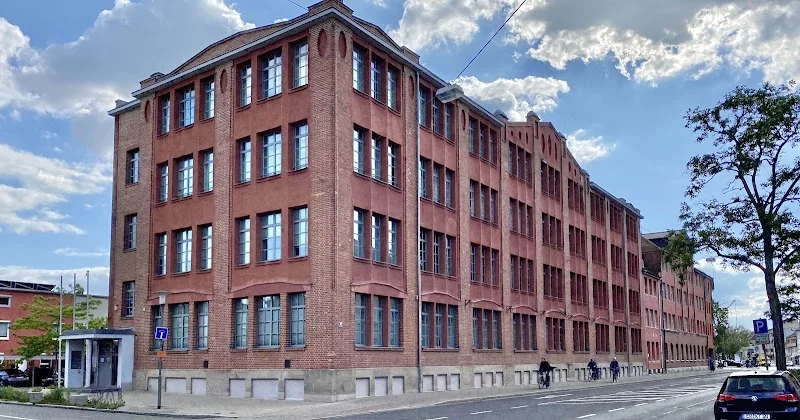
Luitpoldstraße 47, Erlangen
Luitpoldstraße 47, 91052 Erlangen, Germany
City Archive Erlangen | Events & Tickets
The City Archive Erlangen is not a classic event hall, but the cultural memory of the city. In the official information, the archive describes itself as a modern institution in the museum corner that aims to preserve, develop, research, and make history accessible to the public. The location at Luitpoldstraße 47 is more than just an address: the building was used as a modern archive and is located in a former Siemens cleaning building, which today serves as an important place for city history, research, and public communication. With around 5.5 shelf kilometers or about 55 million sheets, the city archive is one of the central knowledge repositories of Erlangen. Those looking for events, tickets, exhibitions, or historical insights will find a very unique profile here: not a pop event, but a lived culture of remembrance, research, and curated city history. ([erlangen.de](https://erlangen.de/aktuelles/ueber-das-stadtarchiv))
It is particularly important to understand how this house functions, especially for the search terms events and tickets. The city archive is not primarily a place with a continuous stage program, but an institution that organizes public exhibitions, guided tours, lectures, research appointments, and special action days. In this way, the archive answers many inquiries about programs and admission in its own way: with freely accessible cultural formats, with reading room operations, and with topics that arise directly from the city's history. Visitors will not find a random leisure location here, but an authentic access to Erlangen itself, to its sources, collections, and places of remembrance. This is precisely what creates the charm of the location: it is factual, historical, quiet, and at the same time surprisingly lively for those interested. ([erlangen.de](https://erlangen.de/aktuelles/ueber-das-stadtarchiv))
Events and Exhibitions at the City Archive Erlangen
Those looking for events at the City Archive Erlangen will primarily encounter exhibitions, guided tours, and historical special formats. On the official city pages, examples can be found such as the traveling exhibition “Traces of Colonialism in Erlangen,” which was shown at the city archive, as well as the exhibition “100 Years of Siemens in Erlangen,” which addresses the connection between the city and the company. The Day of Open Monuments is also a clear indication that the archive is regularly part of the public cultural calendar. It is not about mass events, but about content-specific formats with local relevance, often supplemented by guided tours, discussions, or accompanying program points. This mixture makes the house attractive for culture and history enthusiasts. ([erlangen.de](https://erlangen.de/aktuelles/spuren-des-kolonialismus-in-erlangen-6d69cd?utm_source=openai))
The character of the events is particularly important. The city archive uses its spaces to convey historical topics vividly: colonialism as local trace research, the industrial history surrounding Siemens, or Erlangen's written cultural heritage in the industrial monument. On the Day of Open Monuments, for example, the archive was able to offer guided tours through the building and magazines as well as a visit to an exhibition. The tours were designed for a limited number of participants, which shows that the program is organized more consciously and focused than spectacularly. This fits perfectly with an archive that stands for substance rather than show. For SEO and visitor intention, this means: those searching for programs or events will find primarily high-quality historical cultural offerings that connect knowledge, place, and the public. ([erlangen.de](https://erlangen.de/aktuelles/stadtarchiv-oeffnet-am-tag-des-offenen-denkmals?utm_source=openai))
For the content strategy, it is also relevant that the city archive often bridges research and the public with exhibitions. The topics presented usually come directly from the holdings or from collaborations with municipal and scientific partners. This makes the events feel not arbitrary, but authentically related to Erlangen. The archive thus not only opens access to sources but also to interpretations: How has the city been shaped by its economic, political, and social developments? What stories lie hidden in documents, photos, plans, and newspapers? Therefore, those who visit the archive do not just experience an exhibition, but a condensed piece of urban consciousness. ([erlangen.de](https://erlangen.de/aktuelles/ueber-das-stadtarchiv))
Tickets, Admission, and Registration at the Archive
When it comes to tickets, the City Archive Erlangen is read quite differently than a classic event location. The official pages do not feature a regular ticket shop, but rather the logic of free admission, registration, or appointment scheduling. This is very valuable for user intention, as many inquiries about tickets actually target the question: Do I have to pay, do I need to reserve, and how do I get in? The official notes show that the archive usually answers these questions with free or very low-threshold offerings. On the Day of Open Monuments, admission was free and registration was not required. For other events, registration is sometimes recommended or explicitly required. This suggests that the archive works more with free access and organizational pre-registration than with classic ticket sales. ([erlangen.de](https://erlangen.de/aktuelles/stadtarchiv-oeffnet-am-tag-des-offenen-denkmals?utm_source=openai))
For visitors, this is important because it simplifies planning. Those who want to see an exhibition at the city archive often do not need to buy an admission ticket, but should pay attention to opening hours, appointment rules, and possible special notes. This combination makes the house both likable and professional: public culture without major hurdles, but with clear rules. The use of the reading room and the archive holdings follows this logic. The city archive is open to all interested citizens for personal use, provided that the statutes and reading room regulations are observed. Some services are subject to fees, such as reproductions or research services, and the fees are determined according to the fee schedule. For classic event visits, this means primarily: the threshold is low, but not unorganized. ([erlangen.de](https://erlangen.de/aktuelles/benutzung_dienstleistungen))
In comparison to concerts or shows, this results in a different visitor behavior. Those searching for tickets for the City Archive Erlangen often actually mean access to an exhibition, a guided tour, or a lecture. And here, the official communication is very clear: some dates are freely accessible, others require registration, and still others are tied to appointment windows. Therefore, the best answer for an SEO page is not “Buy tickets now,” but “Admission usually free, registration depending on format.” This wording corresponds to the character of the house and simultaneously strengthens credibility. It shows that the archive presents itself as public but not commercial. ([erlangen.de](https://erlangen.de/aktuelles/stadtarchiv-oeffnet-am-tag-des-offenen-denkmals?utm_source=openai))
Opening Hours, Address, and Directions to the Museum Corner
The City Archive Erlangen is located at Luitpoldstraße 47, 91052 Erlangen. The official pages state the opening hours as Monday 09:00 to 18:00, Tuesday 09:00 to 16:00, Wednesday 08:00 to 12:00, and Thursday 09:00 to 16:00. Additionally, further appointments can be arranged by phone. This information is important for anyone who wants not only to visit an exhibition but also to work in the reading room, request documents, or receive advice. The address is centrally located in the museum corner and thus in an area well suited for inner-city visits. ([erlangen.de](https://erlangen.de/en/themenseite/informationsservice/stadtarchiv?utm_source=openai))
The history of the building is also part of the travel narrative. The archive is housed in a former Siemens cleaning building and is described in the official information as a modern, well-equipped archive building. This means for visitors: they are entering not just an administrative facility but a house with industrial and urban historical significance. This context makes the location unusually attractive. Those who want to understand Erlangen experience the place of transmission in a location that has itself become part of history. This is a valuable distinction from arbitrary office addresses. ([erlangen.de](https://erlangen.de/aktuelles/ueber-das-stadtarchiv))
The archive page does not mention a separate visitor parking lot or an underground garage. However, the city of Erlangen generally points out that there are capacities in parking garages and underground garages around the center and that shops, restaurants, and cultural institutions can be easily reached on foot or by bus from there. Additionally, public transport can be used in the free inner-city area. For visitors to the city archive, this means practically: those coming by car should plan to use the inner-city parking garages; those using public transport benefit from the central location. This is not an invention of an archive event, but the realistic mobility logic of an inner-city location. ([erlangen.de](https://erlangen.de/en/aktuelles/parken-in-erlangen?utm_source=openai))
Holdings, Collections, and City History
The real treasure of the City Archive Erlangen lies in its holdings. The official inventory overview lists more than 15,100 documents, including the oldest original document from 1389. There are also official books, such as land registers from 1530 and council minutes, as well as files from municipal administration with a long historical depth. Because the city fire of 1706 affected the transmission of older holdings, the collection is not only extensive but also historically particularly sensitive. For those searching for city history, this is a strong argument: history is not retold here, but developed from original sources. ([erlangen.de](https://erlangen.de/aktuelles/bestandsuebersicht-stadtarchiv))
The archive is also more than just a pure administrative depot. It collects and manages club and company archives, family estates, and Erlangen memorabilia of all kinds. This includes books, newspapers, coins, medals, postcards, photographs, and many other objects. The reference library comprises around 40,000 volumes, and over a million photos, negatives, and slides, thousands of postcards and view cards, as well as newspapers from several centuries are among the special features of the house. This makes the archive a multifunctional research and collection institution that not only makes administrative history visible but also everyday, social, cultural, and media history. ([erlangen.de](https://erlangen.de/aktuelles/bestandsuebersicht-stadtarchiv))
For the city history of Erlangen, this is of central importance. The archive documents the development of the city from the old town and new town to the incorporated areas into modern times. It preserves documents related to the incorporated communities, to Atzelsberg, to building and architectural drawings, to individuals, professions, streets, and houses. The house is thus interesting not only for historians but also for family researchers, homeowners, journalists, teachers, and anyone who wants to understand Erlangen as a developed living space. Therefore, those searching for the program or highlights of an archive will find not events in the classical sense, but the fullness of the city itself. ([erlangen.de](https://erlangen.de/aktuelles/bestandsuebersicht-stadtarchiv))
An additional focus is on publication work. The city archive publishes the “Erlangen Building Blocks” together with partners and is involved in scientific series on city history. Additionally, the Erlangen City Lexicon, with 1513 factual articles, 439 biographies, and over 1000 illustrations, provides a compact but well-founded overview of politics, society, economy, law, administration, topography, environment, church, culture, and education. From an SEO perspective, this is a strong signal: the City Archive Erlangen is not only a place of preservation but also a place of publishing and explaining. ([erlangen.de](https://erlangen.de/aktuelles/ueber-das-stadtarchiv))
Reading Room, Building Files, and Family Research
The use of the city archive follows clear rules but is fundamentally open to all interested citizens. Those who want to work with sources must observe the statutes of the city archive and the reading room regulations. The archive offers not only the reading room but also specific online forms, such as for the use of archival material or for viewing building files. For many users, this is the most important practical note: the city archive is not just an exhibition space, but a working place where real research takes place. This is precisely why it is so relevant for people with genealogical, local historical, or architectural interests. ([erlangen.de](https://erlangen.de/aktuelles/benutzung_dienstleistungen))
This becomes particularly concrete with building files. Those who want to view a building file must make an appointment and fill out the appropriate form. Between the request and the appointment, up to three weeks can pass. Specific identification rules apply for viewing: owners need a current proof of ownership, and authorized persons additionally need a signed power of attorney. The fees are also transparently regulated: for up to three files, 60 euros are charged, for each additional file 20 euros, and for structural documents, 10 euros per file are charged. Scans can be made in all formats, with processing taking up to four weeks depending on the scope. This is not spectacular but very useful and professional. ([erlangen.de](https://erlangen.de/aktuelles/benutzung_dienstleistungen))
Family and personal research is also a significant area. The archive keeps historical civil status registers, such as birth registers from 1876 to 1915, marriage registers from 1876 to 1945, and death registers from 1876 to 1995. These registers cannot be viewed in the reading room for data protection reasons; information is provided exclusively by the staff of the city archive. For genealogical research, the historical records of the residents' registration office are also important, covering approximately the period from 1880 to 1984. This makes the archive a real contact point for ancestry research and family histories, especially if the sought-after individuals lived in Erlangen or in incorporated suburbs. ([erlangen.de](https://erlangen.de/aktuelles/benutzung_dienstleistungen))
For users with search terms such as reading room, building files, or family research, the central message is therefore clear: the City Archive Erlangen works service-oriented but not arbitrarily. There are forms, deadlines, fees, and protection rules, while also maintaining a high level of professional assistance. This combination makes the location content-wise strong. It stands for reliability, for respectful handling of original documents, and for access to sources that would no longer be reachable elsewhere. ([erlangen.de](https://erlangen.de/aktuelles/benutzung_dienstleistungen))
Publications and Digital Offers of the City Archive
Another advantage of the City Archive Erlangen lies in its journalistic and digital presence. The official pages not only describe analog holdings but also mention digital access and online offers. These include the tectonics of the city archive in the archive portal-D as well as a publicly accessible online catalog for the library holdings. For visitors, this means: many preliminary information can already be researched before the personal appointment. This is particularly helpful for those searching for a specific holding, a publication, or a historical keyword and want to prepare their archive visit efficiently. ([erlangen.de](https://erlangen.de/aktuelles/stadtarchiv-onlineangebote?utm_source=openai))
The Erlangen City Lexicon is the most important showcase for this. With over 200 expert authors, 1513 factual articles, 439 biographies, and more than 1000 illustrations, it provides a broad overview of the city’s history. The online version is based on the published edition from 2002 and allows full-text searches. This enables the archive to create a bridge between classical research and modern information search. Therefore, those researching a specific topic from Erlangen receive not only files and photos but also editorially prepared background information. From an SEO perspective, this is valuable because it shows that the archive is broadly positioned in content and also addresses digital user groups. ([erlangen.de](https://erlangen.de/aktuelles/publikationen-zur-erlanger-stadtgeschichte))
The archive's publications extend far beyond the lexicon. The official list includes newer and older publications on city history, including works on Erlangen in the Weimar Republic, during National Socialism, on the book burnings of 1933, or on individual historical houses and topics. The archive is thus not only a place where sources are stored but also an institution that feeds research results back into public discourse. Therefore, those visiting the City Archive Erlangen encounter a place where the past is not concluded but continues to resonate in books, exhibitions, and digital offerings. ([erlangen.de](https://erlangen.de/aktuelles/publikationen-zur-erlanger-stadtgeschichte))
Sources:
Mehr anzeigenWeniger anzeigen
City Archive Erlangen | Events & Tickets
The City Archive Erlangen is not a classic event hall, but the cultural memory of the city. In the official information, the archive describes itself as a modern institution in the museum corner that aims to preserve, develop, research, and make history accessible to the public. The location at Luitpoldstraße 47 is more than just an address: the building was used as a modern archive and is located in a former Siemens cleaning building, which today serves as an important place for city history, research, and public communication. With around 5.5 shelf kilometers or about 55 million sheets, the city archive is one of the central knowledge repositories of Erlangen. Those looking for events, tickets, exhibitions, or historical insights will find a very unique profile here: not a pop event, but a lived culture of remembrance, research, and curated city history. ([erlangen.de](https://erlangen.de/aktuelles/ueber-das-stadtarchiv))
It is particularly important to understand how this house functions, especially for the search terms events and tickets. The city archive is not primarily a place with a continuous stage program, but an institution that organizes public exhibitions, guided tours, lectures, research appointments, and special action days. In this way, the archive answers many inquiries about programs and admission in its own way: with freely accessible cultural formats, with reading room operations, and with topics that arise directly from the city's history. Visitors will not find a random leisure location here, but an authentic access to Erlangen itself, to its sources, collections, and places of remembrance. This is precisely what creates the charm of the location: it is factual, historical, quiet, and at the same time surprisingly lively for those interested. ([erlangen.de](https://erlangen.de/aktuelles/ueber-das-stadtarchiv))
Events and Exhibitions at the City Archive Erlangen
Those looking for events at the City Archive Erlangen will primarily encounter exhibitions, guided tours, and historical special formats. On the official city pages, examples can be found such as the traveling exhibition “Traces of Colonialism in Erlangen,” which was shown at the city archive, as well as the exhibition “100 Years of Siemens in Erlangen,” which addresses the connection between the city and the company. The Day of Open Monuments is also a clear indication that the archive is regularly part of the public cultural calendar. It is not about mass events, but about content-specific formats with local relevance, often supplemented by guided tours, discussions, or accompanying program points. This mixture makes the house attractive for culture and history enthusiasts. ([erlangen.de](https://erlangen.de/aktuelles/spuren-des-kolonialismus-in-erlangen-6d69cd?utm_source=openai))
The character of the events is particularly important. The city archive uses its spaces to convey historical topics vividly: colonialism as local trace research, the industrial history surrounding Siemens, or Erlangen's written cultural heritage in the industrial monument. On the Day of Open Monuments, for example, the archive was able to offer guided tours through the building and magazines as well as a visit to an exhibition. The tours were designed for a limited number of participants, which shows that the program is organized more consciously and focused than spectacularly. This fits perfectly with an archive that stands for substance rather than show. For SEO and visitor intention, this means: those searching for programs or events will find primarily high-quality historical cultural offerings that connect knowledge, place, and the public. ([erlangen.de](https://erlangen.de/aktuelles/stadtarchiv-oeffnet-am-tag-des-offenen-denkmals?utm_source=openai))
For the content strategy, it is also relevant that the city archive often bridges research and the public with exhibitions. The topics presented usually come directly from the holdings or from collaborations with municipal and scientific partners. This makes the events feel not arbitrary, but authentically related to Erlangen. The archive thus not only opens access to sources but also to interpretations: How has the city been shaped by its economic, political, and social developments? What stories lie hidden in documents, photos, plans, and newspapers? Therefore, those who visit the archive do not just experience an exhibition, but a condensed piece of urban consciousness. ([erlangen.de](https://erlangen.de/aktuelles/ueber-das-stadtarchiv))
Tickets, Admission, and Registration at the Archive
When it comes to tickets, the City Archive Erlangen is read quite differently than a classic event location. The official pages do not feature a regular ticket shop, but rather the logic of free admission, registration, or appointment scheduling. This is very valuable for user intention, as many inquiries about tickets actually target the question: Do I have to pay, do I need to reserve, and how do I get in? The official notes show that the archive usually answers these questions with free or very low-threshold offerings. On the Day of Open Monuments, admission was free and registration was not required. For other events, registration is sometimes recommended or explicitly required. This suggests that the archive works more with free access and organizational pre-registration than with classic ticket sales. ([erlangen.de](https://erlangen.de/aktuelles/stadtarchiv-oeffnet-am-tag-des-offenen-denkmals?utm_source=openai))
For visitors, this is important because it simplifies planning. Those who want to see an exhibition at the city archive often do not need to buy an admission ticket, but should pay attention to opening hours, appointment rules, and possible special notes. This combination makes the house both likable and professional: public culture without major hurdles, but with clear rules. The use of the reading room and the archive holdings follows this logic. The city archive is open to all interested citizens for personal use, provided that the statutes and reading room regulations are observed. Some services are subject to fees, such as reproductions or research services, and the fees are determined according to the fee schedule. For classic event visits, this means primarily: the threshold is low, but not unorganized. ([erlangen.de](https://erlangen.de/aktuelles/benutzung_dienstleistungen))
In comparison to concerts or shows, this results in a different visitor behavior. Those searching for tickets for the City Archive Erlangen often actually mean access to an exhibition, a guided tour, or a lecture. And here, the official communication is very clear: some dates are freely accessible, others require registration, and still others are tied to appointment windows. Therefore, the best answer for an SEO page is not “Buy tickets now,” but “Admission usually free, registration depending on format.” This wording corresponds to the character of the house and simultaneously strengthens credibility. It shows that the archive presents itself as public but not commercial. ([erlangen.de](https://erlangen.de/aktuelles/stadtarchiv-oeffnet-am-tag-des-offenen-denkmals?utm_source=openai))
Opening Hours, Address, and Directions to the Museum Corner
The City Archive Erlangen is located at Luitpoldstraße 47, 91052 Erlangen. The official pages state the opening hours as Monday 09:00 to 18:00, Tuesday 09:00 to 16:00, Wednesday 08:00 to 12:00, and Thursday 09:00 to 16:00. Additionally, further appointments can be arranged by phone. This information is important for anyone who wants not only to visit an exhibition but also to work in the reading room, request documents, or receive advice. The address is centrally located in the museum corner and thus in an area well suited for inner-city visits. ([erlangen.de](https://erlangen.de/en/themenseite/informationsservice/stadtarchiv?utm_source=openai))
The history of the building is also part of the travel narrative. The archive is housed in a former Siemens cleaning building and is described in the official information as a modern, well-equipped archive building. This means for visitors: they are entering not just an administrative facility but a house with industrial and urban historical significance. This context makes the location unusually attractive. Those who want to understand Erlangen experience the place of transmission in a location that has itself become part of history. This is a valuable distinction from arbitrary office addresses. ([erlangen.de](https://erlangen.de/aktuelles/ueber-das-stadtarchiv))
The archive page does not mention a separate visitor parking lot or an underground garage. However, the city of Erlangen generally points out that there are capacities in parking garages and underground garages around the center and that shops, restaurants, and cultural institutions can be easily reached on foot or by bus from there. Additionally, public transport can be used in the free inner-city area. For visitors to the city archive, this means practically: those coming by car should plan to use the inner-city parking garages; those using public transport benefit from the central location. This is not an invention of an archive event, but the realistic mobility logic of an inner-city location. ([erlangen.de](https://erlangen.de/en/aktuelles/parken-in-erlangen?utm_source=openai))
Holdings, Collections, and City History
The real treasure of the City Archive Erlangen lies in its holdings. The official inventory overview lists more than 15,100 documents, including the oldest original document from 1389. There are also official books, such as land registers from 1530 and council minutes, as well as files from municipal administration with a long historical depth. Because the city fire of 1706 affected the transmission of older holdings, the collection is not only extensive but also historically particularly sensitive. For those searching for city history, this is a strong argument: history is not retold here, but developed from original sources. ([erlangen.de](https://erlangen.de/aktuelles/bestandsuebersicht-stadtarchiv))
The archive is also more than just a pure administrative depot. It collects and manages club and company archives, family estates, and Erlangen memorabilia of all kinds. This includes books, newspapers, coins, medals, postcards, photographs, and many other objects. The reference library comprises around 40,000 volumes, and over a million photos, negatives, and slides, thousands of postcards and view cards, as well as newspapers from several centuries are among the special features of the house. This makes the archive a multifunctional research and collection institution that not only makes administrative history visible but also everyday, social, cultural, and media history. ([erlangen.de](https://erlangen.de/aktuelles/bestandsuebersicht-stadtarchiv))
For the city history of Erlangen, this is of central importance. The archive documents the development of the city from the old town and new town to the incorporated areas into modern times. It preserves documents related to the incorporated communities, to Atzelsberg, to building and architectural drawings, to individuals, professions, streets, and houses. The house is thus interesting not only for historians but also for family researchers, homeowners, journalists, teachers, and anyone who wants to understand Erlangen as a developed living space. Therefore, those searching for the program or highlights of an archive will find not events in the classical sense, but the fullness of the city itself. ([erlangen.de](https://erlangen.de/aktuelles/bestandsuebersicht-stadtarchiv))
An additional focus is on publication work. The city archive publishes the “Erlangen Building Blocks” together with partners and is involved in scientific series on city history. Additionally, the Erlangen City Lexicon, with 1513 factual articles, 439 biographies, and over 1000 illustrations, provides a compact but well-founded overview of politics, society, economy, law, administration, topography, environment, church, culture, and education. From an SEO perspective, this is a strong signal: the City Archive Erlangen is not only a place of preservation but also a place of publishing and explaining. ([erlangen.de](https://erlangen.de/aktuelles/ueber-das-stadtarchiv))
Reading Room, Building Files, and Family Research
The use of the city archive follows clear rules but is fundamentally open to all interested citizens. Those who want to work with sources must observe the statutes of the city archive and the reading room regulations. The archive offers not only the reading room but also specific online forms, such as for the use of archival material or for viewing building files. For many users, this is the most important practical note: the city archive is not just an exhibition space, but a working place where real research takes place. This is precisely why it is so relevant for people with genealogical, local historical, or architectural interests. ([erlangen.de](https://erlangen.de/aktuelles/benutzung_dienstleistungen))
This becomes particularly concrete with building files. Those who want to view a building file must make an appointment and fill out the appropriate form. Between the request and the appointment, up to three weeks can pass. Specific identification rules apply for viewing: owners need a current proof of ownership, and authorized persons additionally need a signed power of attorney. The fees are also transparently regulated: for up to three files, 60 euros are charged, for each additional file 20 euros, and for structural documents, 10 euros per file are charged. Scans can be made in all formats, with processing taking up to four weeks depending on the scope. This is not spectacular but very useful and professional. ([erlangen.de](https://erlangen.de/aktuelles/benutzung_dienstleistungen))
Family and personal research is also a significant area. The archive keeps historical civil status registers, such as birth registers from 1876 to 1915, marriage registers from 1876 to 1945, and death registers from 1876 to 1995. These registers cannot be viewed in the reading room for data protection reasons; information is provided exclusively by the staff of the city archive. For genealogical research, the historical records of the residents' registration office are also important, covering approximately the period from 1880 to 1984. This makes the archive a real contact point for ancestry research and family histories, especially if the sought-after individuals lived in Erlangen or in incorporated suburbs. ([erlangen.de](https://erlangen.de/aktuelles/benutzung_dienstleistungen))
For users with search terms such as reading room, building files, or family research, the central message is therefore clear: the City Archive Erlangen works service-oriented but not arbitrarily. There are forms, deadlines, fees, and protection rules, while also maintaining a high level of professional assistance. This combination makes the location content-wise strong. It stands for reliability, for respectful handling of original documents, and for access to sources that would no longer be reachable elsewhere. ([erlangen.de](https://erlangen.de/aktuelles/benutzung_dienstleistungen))
Publications and Digital Offers of the City Archive
Another advantage of the City Archive Erlangen lies in its journalistic and digital presence. The official pages not only describe analog holdings but also mention digital access and online offers. These include the tectonics of the city archive in the archive portal-D as well as a publicly accessible online catalog for the library holdings. For visitors, this means: many preliminary information can already be researched before the personal appointment. This is particularly helpful for those searching for a specific holding, a publication, or a historical keyword and want to prepare their archive visit efficiently. ([erlangen.de](https://erlangen.de/aktuelles/stadtarchiv-onlineangebote?utm_source=openai))
The Erlangen City Lexicon is the most important showcase for this. With over 200 expert authors, 1513 factual articles, 439 biographies, and more than 1000 illustrations, it provides a broad overview of the city’s history. The online version is based on the published edition from 2002 and allows full-text searches. This enables the archive to create a bridge between classical research and modern information search. Therefore, those researching a specific topic from Erlangen receive not only files and photos but also editorially prepared background information. From an SEO perspective, this is valuable because it shows that the archive is broadly positioned in content and also addresses digital user groups. ([erlangen.de](https://erlangen.de/aktuelles/publikationen-zur-erlanger-stadtgeschichte))
The archive's publications extend far beyond the lexicon. The official list includes newer and older publications on city history, including works on Erlangen in the Weimar Republic, during National Socialism, on the book burnings of 1933, or on individual historical houses and topics. The archive is thus not only a place where sources are stored but also an institution that feeds research results back into public discourse. Therefore, those visiting the City Archive Erlangen encounter a place where the past is not concluded but continues to resonate in books, exhibitions, and digital offerings. ([erlangen.de](https://erlangen.de/aktuelles/publikationen-zur-erlanger-stadtgeschichte))
Sources:
City Archive Erlangen | Events & Tickets
The City Archive Erlangen is not a classic event hall, but the cultural memory of the city. In the official information, the archive describes itself as a modern institution in the museum corner that aims to preserve, develop, research, and make history accessible to the public. The location at Luitpoldstraße 47 is more than just an address: the building was used as a modern archive and is located in a former Siemens cleaning building, which today serves as an important place for city history, research, and public communication. With around 5.5 shelf kilometers or about 55 million sheets, the city archive is one of the central knowledge repositories of Erlangen. Those looking for events, tickets, exhibitions, or historical insights will find a very unique profile here: not a pop event, but a lived culture of remembrance, research, and curated city history. ([erlangen.de](https://erlangen.de/aktuelles/ueber-das-stadtarchiv))
It is particularly important to understand how this house functions, especially for the search terms events and tickets. The city archive is not primarily a place with a continuous stage program, but an institution that organizes public exhibitions, guided tours, lectures, research appointments, and special action days. In this way, the archive answers many inquiries about programs and admission in its own way: with freely accessible cultural formats, with reading room operations, and with topics that arise directly from the city's history. Visitors will not find a random leisure location here, but an authentic access to Erlangen itself, to its sources, collections, and places of remembrance. This is precisely what creates the charm of the location: it is factual, historical, quiet, and at the same time surprisingly lively for those interested. ([erlangen.de](https://erlangen.de/aktuelles/ueber-das-stadtarchiv))
Events and Exhibitions at the City Archive Erlangen
Those looking for events at the City Archive Erlangen will primarily encounter exhibitions, guided tours, and historical special formats. On the official city pages, examples can be found such as the traveling exhibition “Traces of Colonialism in Erlangen,” which was shown at the city archive, as well as the exhibition “100 Years of Siemens in Erlangen,” which addresses the connection between the city and the company. The Day of Open Monuments is also a clear indication that the archive is regularly part of the public cultural calendar. It is not about mass events, but about content-specific formats with local relevance, often supplemented by guided tours, discussions, or accompanying program points. This mixture makes the house attractive for culture and history enthusiasts. ([erlangen.de](https://erlangen.de/aktuelles/spuren-des-kolonialismus-in-erlangen-6d69cd?utm_source=openai))
The character of the events is particularly important. The city archive uses its spaces to convey historical topics vividly: colonialism as local trace research, the industrial history surrounding Siemens, or Erlangen's written cultural heritage in the industrial monument. On the Day of Open Monuments, for example, the archive was able to offer guided tours through the building and magazines as well as a visit to an exhibition. The tours were designed for a limited number of participants, which shows that the program is organized more consciously and focused than spectacularly. This fits perfectly with an archive that stands for substance rather than show. For SEO and visitor intention, this means: those searching for programs or events will find primarily high-quality historical cultural offerings that connect knowledge, place, and the public. ([erlangen.de](https://erlangen.de/aktuelles/stadtarchiv-oeffnet-am-tag-des-offenen-denkmals?utm_source=openai))
For the content strategy, it is also relevant that the city archive often bridges research and the public with exhibitions. The topics presented usually come directly from the holdings or from collaborations with municipal and scientific partners. This makes the events feel not arbitrary, but authentically related to Erlangen. The archive thus not only opens access to sources but also to interpretations: How has the city been shaped by its economic, political, and social developments? What stories lie hidden in documents, photos, plans, and newspapers? Therefore, those who visit the archive do not just experience an exhibition, but a condensed piece of urban consciousness. ([erlangen.de](https://erlangen.de/aktuelles/ueber-das-stadtarchiv))
Tickets, Admission, and Registration at the Archive
When it comes to tickets, the City Archive Erlangen is read quite differently than a classic event location. The official pages do not feature a regular ticket shop, but rather the logic of free admission, registration, or appointment scheduling. This is very valuable for user intention, as many inquiries about tickets actually target the question: Do I have to pay, do I need to reserve, and how do I get in? The official notes show that the archive usually answers these questions with free or very low-threshold offerings. On the Day of Open Monuments, admission was free and registration was not required. For other events, registration is sometimes recommended or explicitly required. This suggests that the archive works more with free access and organizational pre-registration than with classic ticket sales. ([erlangen.de](https://erlangen.de/aktuelles/stadtarchiv-oeffnet-am-tag-des-offenen-denkmals?utm_source=openai))
For visitors, this is important because it simplifies planning. Those who want to see an exhibition at the city archive often do not need to buy an admission ticket, but should pay attention to opening hours, appointment rules, and possible special notes. This combination makes the house both likable and professional: public culture without major hurdles, but with clear rules. The use of the reading room and the archive holdings follows this logic. The city archive is open to all interested citizens for personal use, provided that the statutes and reading room regulations are observed. Some services are subject to fees, such as reproductions or research services, and the fees are determined according to the fee schedule. For classic event visits, this means primarily: the threshold is low, but not unorganized. ([erlangen.de](https://erlangen.de/aktuelles/benutzung_dienstleistungen))
In comparison to concerts or shows, this results in a different visitor behavior. Those searching for tickets for the City Archive Erlangen often actually mean access to an exhibition, a guided tour, or a lecture. And here, the official communication is very clear: some dates are freely accessible, others require registration, and still others are tied to appointment windows. Therefore, the best answer for an SEO page is not “Buy tickets now,” but “Admission usually free, registration depending on format.” This wording corresponds to the character of the house and simultaneously strengthens credibility. It shows that the archive presents itself as public but not commercial. ([erlangen.de](https://erlangen.de/aktuelles/stadtarchiv-oeffnet-am-tag-des-offenen-denkmals?utm_source=openai))
Opening Hours, Address, and Directions to the Museum Corner
The City Archive Erlangen is located at Luitpoldstraße 47, 91052 Erlangen. The official pages state the opening hours as Monday 09:00 to 18:00, Tuesday 09:00 to 16:00, Wednesday 08:00 to 12:00, and Thursday 09:00 to 16:00. Additionally, further appointments can be arranged by phone. This information is important for anyone who wants not only to visit an exhibition but also to work in the reading room, request documents, or receive advice. The address is centrally located in the museum corner and thus in an area well suited for inner-city visits. ([erlangen.de](https://erlangen.de/en/themenseite/informationsservice/stadtarchiv?utm_source=openai))
The history of the building is also part of the travel narrative. The archive is housed in a former Siemens cleaning building and is described in the official information as a modern, well-equipped archive building. This means for visitors: they are entering not just an administrative facility but a house with industrial and urban historical significance. This context makes the location unusually attractive. Those who want to understand Erlangen experience the place of transmission in a location that has itself become part of history. This is a valuable distinction from arbitrary office addresses. ([erlangen.de](https://erlangen.de/aktuelles/ueber-das-stadtarchiv))
The archive page does not mention a separate visitor parking lot or an underground garage. However, the city of Erlangen generally points out that there are capacities in parking garages and underground garages around the center and that shops, restaurants, and cultural institutions can be easily reached on foot or by bus from there. Additionally, public transport can be used in the free inner-city area. For visitors to the city archive, this means practically: those coming by car should plan to use the inner-city parking garages; those using public transport benefit from the central location. This is not an invention of an archive event, but the realistic mobility logic of an inner-city location. ([erlangen.de](https://erlangen.de/en/aktuelles/parken-in-erlangen?utm_source=openai))
Holdings, Collections, and City History
The real treasure of the City Archive Erlangen lies in its holdings. The official inventory overview lists more than 15,100 documents, including the oldest original document from 1389. There are also official books, such as land registers from 1530 and council minutes, as well as files from municipal administration with a long historical depth. Because the city fire of 1706 affected the transmission of older holdings, the collection is not only extensive but also historically particularly sensitive. For those searching for city history, this is a strong argument: history is not retold here, but developed from original sources. ([erlangen.de](https://erlangen.de/aktuelles/bestandsuebersicht-stadtarchiv))
The archive is also more than just a pure administrative depot. It collects and manages club and company archives, family estates, and Erlangen memorabilia of all kinds. This includes books, newspapers, coins, medals, postcards, photographs, and many other objects. The reference library comprises around 40,000 volumes, and over a million photos, negatives, and slides, thousands of postcards and view cards, as well as newspapers from several centuries are among the special features of the house. This makes the archive a multifunctional research and collection institution that not only makes administrative history visible but also everyday, social, cultural, and media history. ([erlangen.de](https://erlangen.de/aktuelles/bestandsuebersicht-stadtarchiv))
For the city history of Erlangen, this is of central importance. The archive documents the development of the city from the old town and new town to the incorporated areas into modern times. It preserves documents related to the incorporated communities, to Atzelsberg, to building and architectural drawings, to individuals, professions, streets, and houses. The house is thus interesting not only for historians but also for family researchers, homeowners, journalists, teachers, and anyone who wants to understand Erlangen as a developed living space. Therefore, those searching for the program or highlights of an archive will find not events in the classical sense, but the fullness of the city itself. ([erlangen.de](https://erlangen.de/aktuelles/bestandsuebersicht-stadtarchiv))
An additional focus is on publication work. The city archive publishes the “Erlangen Building Blocks” together with partners and is involved in scientific series on city history. Additionally, the Erlangen City Lexicon, with 1513 factual articles, 439 biographies, and over 1000 illustrations, provides a compact but well-founded overview of politics, society, economy, law, administration, topography, environment, church, culture, and education. From an SEO perspective, this is a strong signal: the City Archive Erlangen is not only a place of preservation but also a place of publishing and explaining. ([erlangen.de](https://erlangen.de/aktuelles/ueber-das-stadtarchiv))
Reading Room, Building Files, and Family Research
The use of the city archive follows clear rules but is fundamentally open to all interested citizens. Those who want to work with sources must observe the statutes of the city archive and the reading room regulations. The archive offers not only the reading room but also specific online forms, such as for the use of archival material or for viewing building files. For many users, this is the most important practical note: the city archive is not just an exhibition space, but a working place where real research takes place. This is precisely why it is so relevant for people with genealogical, local historical, or architectural interests. ([erlangen.de](https://erlangen.de/aktuelles/benutzung_dienstleistungen))
This becomes particularly concrete with building files. Those who want to view a building file must make an appointment and fill out the appropriate form. Between the request and the appointment, up to three weeks can pass. Specific identification rules apply for viewing: owners need a current proof of ownership, and authorized persons additionally need a signed power of attorney. The fees are also transparently regulated: for up to three files, 60 euros are charged, for each additional file 20 euros, and for structural documents, 10 euros per file are charged. Scans can be made in all formats, with processing taking up to four weeks depending on the scope. This is not spectacular but very useful and professional. ([erlangen.de](https://erlangen.de/aktuelles/benutzung_dienstleistungen))
Family and personal research is also a significant area. The archive keeps historical civil status registers, such as birth registers from 1876 to 1915, marriage registers from 1876 to 1945, and death registers from 1876 to 1995. These registers cannot be viewed in the reading room for data protection reasons; information is provided exclusively by the staff of the city archive. For genealogical research, the historical records of the residents' registration office are also important, covering approximately the period from 1880 to 1984. This makes the archive a real contact point for ancestry research and family histories, especially if the sought-after individuals lived in Erlangen or in incorporated suburbs. ([erlangen.de](https://erlangen.de/aktuelles/benutzung_dienstleistungen))
For users with search terms such as reading room, building files, or family research, the central message is therefore clear: the City Archive Erlangen works service-oriented but not arbitrarily. There are forms, deadlines, fees, and protection rules, while also maintaining a high level of professional assistance. This combination makes the location content-wise strong. It stands for reliability, for respectful handling of original documents, and for access to sources that would no longer be reachable elsewhere. ([erlangen.de](https://erlangen.de/aktuelles/benutzung_dienstleistungen))
Publications and Digital Offers of the City Archive
Another advantage of the City Archive Erlangen lies in its journalistic and digital presence. The official pages not only describe analog holdings but also mention digital access and online offers. These include the tectonics of the city archive in the archive portal-D as well as a publicly accessible online catalog for the library holdings. For visitors, this means: many preliminary information can already be researched before the personal appointment. This is particularly helpful for those searching for a specific holding, a publication, or a historical keyword and want to prepare their archive visit efficiently. ([erlangen.de](https://erlangen.de/aktuelles/stadtarchiv-onlineangebote?utm_source=openai))
The Erlangen City Lexicon is the most important showcase for this. With over 200 expert authors, 1513 factual articles, 439 biographies, and more than 1000 illustrations, it provides a broad overview of the city’s history. The online version is based on the published edition from 2002 and allows full-text searches. This enables the archive to create a bridge between classical research and modern information search. Therefore, those researching a specific topic from Erlangen receive not only files and photos but also editorially prepared background information. From an SEO perspective, this is valuable because it shows that the archive is broadly positioned in content and also addresses digital user groups. ([erlangen.de](https://erlangen.de/aktuelles/publikationen-zur-erlanger-stadtgeschichte))
The archive's publications extend far beyond the lexicon. The official list includes newer and older publications on city history, including works on Erlangen in the Weimar Republic, during National Socialism, on the book burnings of 1933, or on individual historical houses and topics. The archive is thus not only a place where sources are stored but also an institution that feeds research results back into public discourse. Therefore, those visiting the City Archive Erlangen encounter a place where the past is not concluded but continues to resonate in books, exhibitions, and digital offerings. ([erlangen.de](https://erlangen.de/aktuelles/publikationen-zur-erlanger-stadtgeschichte))
Sources:
Upcoming Events
No events found
Frequently Asked Questions
Reviews
Paul Georg Knauer
13. September 2019
A very good archive. The archivists are extremely competent, insightful, and helpful. Anyone who wants to work there is in the best possible hands.
NoRei
15. December 2021
I only had one inquiry and I'm amazed at how good the advice is. Truly top-notch.
Wolfgang Johannsen
8. March 2018
Helpful, nice, but it's just going through the motions of dealing with the authorities. But okay.
Christian Kellner
29. June 2016
also good
Kathrin Braun
30. December 2021