
Erlangen
Universitätsstraße 15, 91054 Erlangen, Deutschland
Collegiate House of FAU Erlangen-Nuremberg | Photos & Reviews
The Collegiate House of FAU is one of the most well-known academic places in Erlangen because it uniquely combines location, usage, and recognizability. It is located directly at the Erlangen Castle Garden on Universitätsstraße 15 and is part of the Erlangen Central Campus, precisely in the area where the city center, historical university buildings, and many aspects of student life overlap. Therefore, those looking for images or photos usually find not just a purely decorative backdrop, but a functional and distinctive university location that frequently appears in events, lecture announcements, and campus representations. The building is closely associated with the humanities and law, but is used for much more than just traditional lectures. This mix of central location, academic density, and diverse spatial structure makes the Collegiate House interesting for visitors, students, and researchers alike. The location is also important for orientation: the main train station, main library, university administration, and other facilities are in close proximity, and many routes can be completed on foot. ([fau.de](https://www.fau.de/fau/standorte-der-fau/fau-campus-erlangen/?utm_source=openai))
Photos, Location, and the First Impression at the Castle Garden
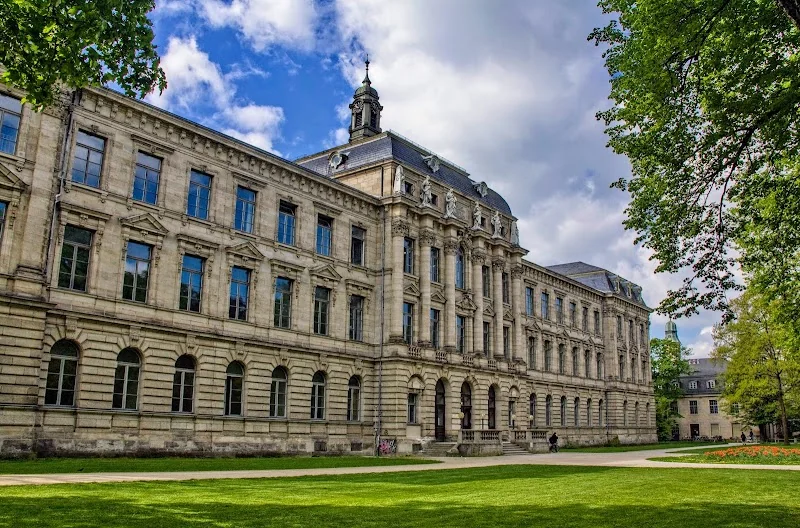
When viewing the Collegiate House for the first time, one primarily perceives its location within the urban and university context. FAU describes the site as a building directly in the city center at the Erlangen Castle Garden, and this reference shapes the perception in photos and image searches. It is not an isolated event building on the outskirts of the city, but a house in the middle of Erlangen's academic center. The surroundings, including the Castle Garden, main library, and city center, make the images particularly meaningful, as they immediately show how closely the university and city are connected at this location. For SEO searches like photos, images, or reviews, this is relevant, as users often expect not just a single building but a sense of the atmosphere of the entire environment. The Collegiate House meets this expectation: historical university, vibrant teaching, short distances, and an urban yet tranquil setting by the park. This is also why official event pages and campus pages often depict the building in a way that visibly conveys the character of the location without exaggeration. ([fau.de](https://www.fau.de/fau/standorte-der-fau/fau-campus-erlangen/?utm_source=openai))
The first impression is therefore often a dual one. On one hand, the Collegiate House appears as a clear study and conference venue, while on the other hand, it is part of a developed urban ensemble that is not only functional but also identity-forming for FAU. On the official campus pages and in event announcements, the house regularly appears as an address for lectures, lecture series, and academic meeting points, giving it high recognizability. The fact that the Collegiate House is located directly at the Castle Garden is not only important for beautiful photos but also for practical orientation: those attending an event immediately recognize the location as the center of a larger university district. In this sense, photos of the Collegiate House are always also location images. They show the proximity to the main library, the connection to the city center, and the closeness to other FAU buildings. This is precisely why such images are very suitable for users who want to know how the place feels and what environment it is in before visiting. ([fau.de](https://www.fau.de/fau/standorte-der-fau/fau-campus-erlangen/?utm_source=openai))
Events, Seminars, and Lectures in the Collegiate House
Content-wise, the Collegiate House is much more than just an address on the campus map. FAU describes it as a place where many seminars and lectures in the humanities and law take place. This is also reflected in the current and past event announcements: public lectures, lecture series, scientific colloquia, courses, and informational events are held in the Collegiate House. Examples range from the FAU Scientia lecture series in the Senate Hall to lectures from the Botanical Garden to events in political science, English studies, gender and diversity research, or archaeology. Thus, the building serves an important bridging function between teaching, research, and the public. It is a house where academic content is not only prepared for a specialized audience but is often consciously open to students, guests, and interested parties from the city. This profile makes the Collegiate House particularly relevant for searches related to programs, events, lectures, or conferences. ([fau.de](https://www.fau.de/fau/standorte-der-fau/fau-campus-erlangen/?utm_source=openai))
The diversity of content is another advantage of the location. In the Collegiate House, not only traditional subject lectures are conducted, but also interdisciplinary formats, lecture series, and event series that bring together different faculties. Official announcements mention rooms such as the Senate Hall KH 1.011, the lecture hall KH 0.016, or other numbered rooms, showing that the building is flexibly used for various formats. For visitors, this means: the Collegiate House is not a rigid lecture hall with a single function, but a university meeting point with a changing program. For FAU, this diversity of use is important because it allows research, teaching, and academic communication to be compactly bundled. Therefore, those looking for a program or specific events will regularly find new topics from law, culture, nature, society, and science in the Collegiate House. This mix explains why the location appears in many areas of the university and why it remains so present in the cityscape. ([scientia.fau.de](https://www.scientia.fau.de/studienangebot/fau-scientia-vorlesungsreihe/?utm_source=openai))
Lecture Halls, Rooms, and Orientation in the Building
A central theme for many search queries is room orientation in the Collegiate House. The official art history page of FAU explains very practically how the designations work: The abbreviation KH stands for Collegiate House, and the first number before the dot indicates the floor. Thus, KH 0.015 means the ground floor, while KH 1.011 refers to the first upper floor. This logic is extremely helpful for visitors as it simplifies orientation in the building and avoids misunderstandings before the event begins. The Collegiate House has several well-known rooms that are repeatedly mentioned in FAU announcements, such as the Senate Hall KH 1.011, the lecture hall KH 0.016, or other lecture halls and seminar rooms on the upper floors. This shows that the building has a clearly structured spatial world tailored for academic use. Therefore, those searching for seating plans, rooms, floors, or lecture halls will find a very logical and easily readable structure in the Collegiate House for university purposes. ([kunstgeschichte.phil.fau.de](https://www.kunstgeschichte.phil.fau.de/studium/fachschaft/?utm_source=openai))
The central administration of individual rooms is also noteworthy. The room allocation plan of FAU indicates that certain rooms are centrally managed and that there are designated contacts for bookings. This clarifies that the Collegiate House is not an arbitrarily usable hall building but a well-organized event venue within the university. Practically, this means: those attending an event should read the exact room information carefully, as the same building complex includes many different rooms on several floors. However, the complexity is also an advantage, as it allows for different event sizes and formats under one roof. In this way, a large scientific meeting can take place in the Senate Hall while a seminar is running in the ground floor or a smaller lecture in another room. Therefore, the Collegiate House is not just a building with a name, but a finely structured system of academic rooms that the university purposefully maintains for flexible use. ([campus.fau.de](https://www.campus.fau.de/qisserver/pages/startFlow.xhtml?_flowId=roomSchedule-flow&date=16_2025&navigationPosition=currentLecturesGeneric&roomId=227&termTypeId=&year=&utm_source=openai))
Access, Parking, and Routes to the City Center
Access to the Collegiate House is uncomplicated for most guests because the building is located in the core area of Erlangen's city center. FAU explicitly describes the location as directly in the city center at the Castle Garden; additionally, the conference page for the Collegiate House states its location in the center of Erlangen and a distance of about five minutes to the train station. This is an important practical note for visitors, as it shows that the Collegiate House can be easily reached by train, on foot, or from the city center. Those arriving at the main train station have short distances; those already in Erlangen can usually reach the event quickly and without a long detour. This proximity to the train station, main library, and university administration makes the Collegiate House attractive in the everyday life of FAU. Therefore, for access queries, it is particularly relevant that the location is central and urban and does not appear as a remote campus building. ([fau.de](https://www.fau.de/fau/standorte-der-fau/fau-campus-erlangen/?utm_source=openai))
When it comes to parking, the location is equally clear: the city of Erlangen indicates available capacities in parking garages and underground garages in the city center and recommends reaching shops, restaurants, and cultural institutions from there comfortably on foot or with the free city center buses. Since January 1, 2024, free travel on bus lines in the free city center area applies, further facilitating mobility in the center. For visiting the Collegiate House, this means in practice: those arriving by car should plan for the city's parking options in the city center rather than relying on a specific parking space directly at the building. This is a sensible conclusion from the central location at the Castle Garden and the official parking information from the city. Especially for events in the evening or during peak times, it is advisable to plan for some buffer time. The advantage remains significant: due to the very central location, the route from the parking lot or train station to the Collegiate House is short and well-planned. ([erlangen.de](https://erlangen.de/aktuelles/parken-in-erlangen?utm_source=openai))
History, Significance, and Role in the FAU Campus
Even though many users first search for photos or the current program, the historical and institutional significance of the Collegiate House plays a major role. The university archive of FAU explicitly refers to its own publication on the Collegiate House in its literature overview, indicating that the building has a fixed place in the historical self-understanding of the university. On the campus page of FAU, it is presented as a prominent building in the city center, and the university connects it with the spatial development of the Erlangen Central Campus. Additionally, the city of Erlangen writes in an official contribution about the science axis between the Collegiate House and the Raspberry Palace. This makes it clear that the Collegiate House is understood not only as a single building but as part of a larger academic urban development. For FAU, this place is therefore important both functionally and symbolically: it represents the university's presence in the city center and the connection of historical building substance, teaching, and public science communication. ([fau.de](https://www.fau.de/universitaet/universitaetsprofil/geschichte-und-erinnerungskultur/universitaetsarchiv/?utm_source=openai))
The location at the Castle Garden further strengthens this significance. The Collegiate House is embedded in an area where the university, park, historical axes, and urban paths converge. FAU describes that the main train station, main library, university administration, and medical facilities are just around the corner; the city adds its perspective on city center development and the science axis. This clarifies why the Collegiate House is more than just a lecture hall building for the university. It is a visible part of the academic center where teaching events, conferences, and public formats spatially condense. For visitors, this creates a particularly clear impression of FAU: when entering or standing in front of the Collegiate House, one experiences a university that is not hidden in the city center but remains present in the cityscape. This is exactly what makes the place so suitable for Google searches for images, addresses, reviews, and event programs. ([fau.de](https://www.fau.de/fau/standorte-der-fau/fau-campus-erlangen/?utm_source=openai))
Reviews, Practical Tips, and Frequently Asked Questions
When it comes to reviews, it is helpful to view the place not just as a single evaluation but as a total experience. According to the provided data, the Collegiate House scores 4.6 out of 5 stars based on 39 reviews, which presents a very solid picture for a university-used location with frequently changing event formats. Such evaluations often reflect the mix of location, organization, and atmosphere: a central location, short distances, clear room designations, and an academic environment that is open to many events. Therefore, those visiting the Collegiate House should pay particular attention to the room designation, as KH plus number defines the exact location in the building. For many questions, it is also important whether an event is public or internal, as the Collegiate House is used for both university-internal formats and open lectures and colloquia. This mix makes it interesting for different target groups and explains why it occurs so frequently in the everyday life of FAU. ([kunstgeschichte.phil.fau.de](https://www.kunstgeschichte.phil.fau.de/studium/fachschaft/?utm_source=openai))
Practically speaking, it is worth preparing for the visit briefly. Those arriving by train can plan the short walk from the main train station; those coming by car should best look for a parking garage or underground garage in the city center in advance. Those wishing to attend a specific event should read the room information carefully and note whether the event is taking place in the Senate Hall, a lecture hall, or a smaller room. Especially for lecture series, public subject lectures, or conferences, the variety of rooms in the Collegiate House is a real advantage, as it allows for different formats. For orientation, the combination of address, room code, and building name is usually sufficient. This way, what initially seems like an abstract search query quickly becomes a very concrete visit location with clear access, easily readable room information, and high university relevance. Therefore, those searching for photos, reviews, or the current program will find not just a building in the Collegiate House but a reliably organized academic meeting point in the heart of Erlangen. ([slsaeu23.fau.de](https://www.slsaeu23.fau.de/venue/?utm_source=openai))
Sources:
- FAU Campus Erlangen Central - Official Location Page
- FAU Conference Venue - Collegiate House Erlangen
- FAU University Archive - Literature and History of the University
- City of Erlangen - Parking in Erlangen
- FAU Art History - Collegiate House Orientation and Room System
- FAU Event - Lecture in the Collegiate House
- FAU Event - Information Session in the Collegiate House
Mehr anzeigenWeniger anzeigen
Collegiate House of FAU Erlangen-Nuremberg | Photos & Reviews
The Collegiate House of FAU is one of the most well-known academic places in Erlangen because it uniquely combines location, usage, and recognizability. It is located directly at the Erlangen Castle Garden on Universitätsstraße 15 and is part of the Erlangen Central Campus, precisely in the area where the city center, historical university buildings, and many aspects of student life overlap. Therefore, those looking for images or photos usually find not just a purely decorative backdrop, but a functional and distinctive university location that frequently appears in events, lecture announcements, and campus representations. The building is closely associated with the humanities and law, but is used for much more than just traditional lectures. This mix of central location, academic density, and diverse spatial structure makes the Collegiate House interesting for visitors, students, and researchers alike. The location is also important for orientation: the main train station, main library, university administration, and other facilities are in close proximity, and many routes can be completed on foot. ([fau.de](https://www.fau.de/fau/standorte-der-fau/fau-campus-erlangen/?utm_source=openai))
Photos, Location, and the First Impression at the Castle Garden
When viewing the Collegiate House for the first time, one primarily perceives its location within the urban and university context. FAU describes the site as a building directly in the city center at the Erlangen Castle Garden, and this reference shapes the perception in photos and image searches. It is not an isolated event building on the outskirts of the city, but a house in the middle of Erlangen's academic center. The surroundings, including the Castle Garden, main library, and city center, make the images particularly meaningful, as they immediately show how closely the university and city are connected at this location. For SEO searches like photos, images, or reviews, this is relevant, as users often expect not just a single building but a sense of the atmosphere of the entire environment. The Collegiate House meets this expectation: historical university, vibrant teaching, short distances, and an urban yet tranquil setting by the park. This is also why official event pages and campus pages often depict the building in a way that visibly conveys the character of the location without exaggeration. ([fau.de](https://www.fau.de/fau/standorte-der-fau/fau-campus-erlangen/?utm_source=openai))
The first impression is therefore often a dual one. On one hand, the Collegiate House appears as a clear study and conference venue, while on the other hand, it is part of a developed urban ensemble that is not only functional but also identity-forming for FAU. On the official campus pages and in event announcements, the house regularly appears as an address for lectures, lecture series, and academic meeting points, giving it high recognizability. The fact that the Collegiate House is located directly at the Castle Garden is not only important for beautiful photos but also for practical orientation: those attending an event immediately recognize the location as the center of a larger university district. In this sense, photos of the Collegiate House are always also location images. They show the proximity to the main library, the connection to the city center, and the closeness to other FAU buildings. This is precisely why such images are very suitable for users who want to know how the place feels and what environment it is in before visiting. ([fau.de](https://www.fau.de/fau/standorte-der-fau/fau-campus-erlangen/?utm_source=openai))
Events, Seminars, and Lectures in the Collegiate House
Content-wise, the Collegiate House is much more than just an address on the campus map. FAU describes it as a place where many seminars and lectures in the humanities and law take place. This is also reflected in the current and past event announcements: public lectures, lecture series, scientific colloquia, courses, and informational events are held in the Collegiate House. Examples range from the FAU Scientia lecture series in the Senate Hall to lectures from the Botanical Garden to events in political science, English studies, gender and diversity research, or archaeology. Thus, the building serves an important bridging function between teaching, research, and the public. It is a house where academic content is not only prepared for a specialized audience but is often consciously open to students, guests, and interested parties from the city. This profile makes the Collegiate House particularly relevant for searches related to programs, events, lectures, or conferences. ([fau.de](https://www.fau.de/fau/standorte-der-fau/fau-campus-erlangen/?utm_source=openai))
The diversity of content is another advantage of the location. In the Collegiate House, not only traditional subject lectures are conducted, but also interdisciplinary formats, lecture series, and event series that bring together different faculties. Official announcements mention rooms such as the Senate Hall KH 1.011, the lecture hall KH 0.016, or other numbered rooms, showing that the building is flexibly used for various formats. For visitors, this means: the Collegiate House is not a rigid lecture hall with a single function, but a university meeting point with a changing program. For FAU, this diversity of use is important because it allows research, teaching, and academic communication to be compactly bundled. Therefore, those looking for a program or specific events will regularly find new topics from law, culture, nature, society, and science in the Collegiate House. This mix explains why the location appears in many areas of the university and why it remains so present in the cityscape. ([scientia.fau.de](https://www.scientia.fau.de/studienangebot/fau-scientia-vorlesungsreihe/?utm_source=openai))
Lecture Halls, Rooms, and Orientation in the Building
A central theme for many search queries is room orientation in the Collegiate House. The official art history page of FAU explains very practically how the designations work: The abbreviation KH stands for Collegiate House, and the first number before the dot indicates the floor. Thus, KH 0.015 means the ground floor, while KH 1.011 refers to the first upper floor. This logic is extremely helpful for visitors as it simplifies orientation in the building and avoids misunderstandings before the event begins. The Collegiate House has several well-known rooms that are repeatedly mentioned in FAU announcements, such as the Senate Hall KH 1.011, the lecture hall KH 0.016, or other lecture halls and seminar rooms on the upper floors. This shows that the building has a clearly structured spatial world tailored for academic use. Therefore, those searching for seating plans, rooms, floors, or lecture halls will find a very logical and easily readable structure in the Collegiate House for university purposes. ([kunstgeschichte.phil.fau.de](https://www.kunstgeschichte.phil.fau.de/studium/fachschaft/?utm_source=openai))
The central administration of individual rooms is also noteworthy. The room allocation plan of FAU indicates that certain rooms are centrally managed and that there are designated contacts for bookings. This clarifies that the Collegiate House is not an arbitrarily usable hall building but a well-organized event venue within the university. Practically, this means: those attending an event should read the exact room information carefully, as the same building complex includes many different rooms on several floors. However, the complexity is also an advantage, as it allows for different event sizes and formats under one roof. In this way, a large scientific meeting can take place in the Senate Hall while a seminar is running in the ground floor or a smaller lecture in another room. Therefore, the Collegiate House is not just a building with a name, but a finely structured system of academic rooms that the university purposefully maintains for flexible use. ([campus.fau.de](https://www.campus.fau.de/qisserver/pages/startFlow.xhtml?_flowId=roomSchedule-flow&date=16_2025&navigationPosition=currentLecturesGeneric&roomId=227&termTypeId=&year=&utm_source=openai))
Access, Parking, and Routes to the City Center
Access to the Collegiate House is uncomplicated for most guests because the building is located in the core area of Erlangen's city center. FAU explicitly describes the location as directly in the city center at the Castle Garden; additionally, the conference page for the Collegiate House states its location in the center of Erlangen and a distance of about five minutes to the train station. This is an important practical note for visitors, as it shows that the Collegiate House can be easily reached by train, on foot, or from the city center. Those arriving at the main train station have short distances; those already in Erlangen can usually reach the event quickly and without a long detour. This proximity to the train station, main library, and university administration makes the Collegiate House attractive in the everyday life of FAU. Therefore, for access queries, it is particularly relevant that the location is central and urban and does not appear as a remote campus building. ([fau.de](https://www.fau.de/fau/standorte-der-fau/fau-campus-erlangen/?utm_source=openai))
When it comes to parking, the location is equally clear: the city of Erlangen indicates available capacities in parking garages and underground garages in the city center and recommends reaching shops, restaurants, and cultural institutions from there comfortably on foot or with the free city center buses. Since January 1, 2024, free travel on bus lines in the free city center area applies, further facilitating mobility in the center. For visiting the Collegiate House, this means in practice: those arriving by car should plan for the city's parking options in the city center rather than relying on a specific parking space directly at the building. This is a sensible conclusion from the central location at the Castle Garden and the official parking information from the city. Especially for events in the evening or during peak times, it is advisable to plan for some buffer time. The advantage remains significant: due to the very central location, the route from the parking lot or train station to the Collegiate House is short and well-planned. ([erlangen.de](https://erlangen.de/aktuelles/parken-in-erlangen?utm_source=openai))
History, Significance, and Role in the FAU Campus
Even though many users first search for photos or the current program, the historical and institutional significance of the Collegiate House plays a major role. The university archive of FAU explicitly refers to its own publication on the Collegiate House in its literature overview, indicating that the building has a fixed place in the historical self-understanding of the university. On the campus page of FAU, it is presented as a prominent building in the city center, and the university connects it with the spatial development of the Erlangen Central Campus. Additionally, the city of Erlangen writes in an official contribution about the science axis between the Collegiate House and the Raspberry Palace. This makes it clear that the Collegiate House is understood not only as a single building but as part of a larger academic urban development. For FAU, this place is therefore important both functionally and symbolically: it represents the university's presence in the city center and the connection of historical building substance, teaching, and public science communication. ([fau.de](https://www.fau.de/universitaet/universitaetsprofil/geschichte-und-erinnerungskultur/universitaetsarchiv/?utm_source=openai))
The location at the Castle Garden further strengthens this significance. The Collegiate House is embedded in an area where the university, park, historical axes, and urban paths converge. FAU describes that the main train station, main library, university administration, and medical facilities are just around the corner; the city adds its perspective on city center development and the science axis. This clarifies why the Collegiate House is more than just a lecture hall building for the university. It is a visible part of the academic center where teaching events, conferences, and public formats spatially condense. For visitors, this creates a particularly clear impression of FAU: when entering or standing in front of the Collegiate House, one experiences a university that is not hidden in the city center but remains present in the cityscape. This is exactly what makes the place so suitable for Google searches for images, addresses, reviews, and event programs. ([fau.de](https://www.fau.de/fau/standorte-der-fau/fau-campus-erlangen/?utm_source=openai))
Reviews, Practical Tips, and Frequently Asked Questions
When it comes to reviews, it is helpful to view the place not just as a single evaluation but as a total experience. According to the provided data, the Collegiate House scores 4.6 out of 5 stars based on 39 reviews, which presents a very solid picture for a university-used location with frequently changing event formats. Such evaluations often reflect the mix of location, organization, and atmosphere: a central location, short distances, clear room designations, and an academic environment that is open to many events. Therefore, those visiting the Collegiate House should pay particular attention to the room designation, as KH plus number defines the exact location in the building. For many questions, it is also important whether an event is public or internal, as the Collegiate House is used for both university-internal formats and open lectures and colloquia. This mix makes it interesting for different target groups and explains why it occurs so frequently in the everyday life of FAU. ([kunstgeschichte.phil.fau.de](https://www.kunstgeschichte.phil.fau.de/studium/fachschaft/?utm_source=openai))
Practically speaking, it is worth preparing for the visit briefly. Those arriving by train can plan the short walk from the main train station; those coming by car should best look for a parking garage or underground garage in the city center in advance. Those wishing to attend a specific event should read the room information carefully and note whether the event is taking place in the Senate Hall, a lecture hall, or a smaller room. Especially for lecture series, public subject lectures, or conferences, the variety of rooms in the Collegiate House is a real advantage, as it allows for different formats. For orientation, the combination of address, room code, and building name is usually sufficient. This way, what initially seems like an abstract search query quickly becomes a very concrete visit location with clear access, easily readable room information, and high university relevance. Therefore, those searching for photos, reviews, or the current program will find not just a building in the Collegiate House but a reliably organized academic meeting point in the heart of Erlangen. ([slsaeu23.fau.de](https://www.slsaeu23.fau.de/venue/?utm_source=openai))
Sources:
- FAU Campus Erlangen Central - Official Location Page
- FAU Conference Venue - Collegiate House Erlangen
- FAU University Archive - Literature and History of the University
- City of Erlangen - Parking in Erlangen
- FAU Art History - Collegiate House Orientation and Room System
- FAU Event - Lecture in the Collegiate House
- FAU Event - Information Session in the Collegiate House
Collegiate House of FAU Erlangen-Nuremberg | Photos & Reviews
The Collegiate House of FAU is one of the most well-known academic places in Erlangen because it uniquely combines location, usage, and recognizability. It is located directly at the Erlangen Castle Garden on Universitätsstraße 15 and is part of the Erlangen Central Campus, precisely in the area where the city center, historical university buildings, and many aspects of student life overlap. Therefore, those looking for images or photos usually find not just a purely decorative backdrop, but a functional and distinctive university location that frequently appears in events, lecture announcements, and campus representations. The building is closely associated with the humanities and law, but is used for much more than just traditional lectures. This mix of central location, academic density, and diverse spatial structure makes the Collegiate House interesting for visitors, students, and researchers alike. The location is also important for orientation: the main train station, main library, university administration, and other facilities are in close proximity, and many routes can be completed on foot. ([fau.de](https://www.fau.de/fau/standorte-der-fau/fau-campus-erlangen/?utm_source=openai))
Photos, Location, and the First Impression at the Castle Garden
When viewing the Collegiate House for the first time, one primarily perceives its location within the urban and university context. FAU describes the site as a building directly in the city center at the Erlangen Castle Garden, and this reference shapes the perception in photos and image searches. It is not an isolated event building on the outskirts of the city, but a house in the middle of Erlangen's academic center. The surroundings, including the Castle Garden, main library, and city center, make the images particularly meaningful, as they immediately show how closely the university and city are connected at this location. For SEO searches like photos, images, or reviews, this is relevant, as users often expect not just a single building but a sense of the atmosphere of the entire environment. The Collegiate House meets this expectation: historical university, vibrant teaching, short distances, and an urban yet tranquil setting by the park. This is also why official event pages and campus pages often depict the building in a way that visibly conveys the character of the location without exaggeration. ([fau.de](https://www.fau.de/fau/standorte-der-fau/fau-campus-erlangen/?utm_source=openai))
The first impression is therefore often a dual one. On one hand, the Collegiate House appears as a clear study and conference venue, while on the other hand, it is part of a developed urban ensemble that is not only functional but also identity-forming for FAU. On the official campus pages and in event announcements, the house regularly appears as an address for lectures, lecture series, and academic meeting points, giving it high recognizability. The fact that the Collegiate House is located directly at the Castle Garden is not only important for beautiful photos but also for practical orientation: those attending an event immediately recognize the location as the center of a larger university district. In this sense, photos of the Collegiate House are always also location images. They show the proximity to the main library, the connection to the city center, and the closeness to other FAU buildings. This is precisely why such images are very suitable for users who want to know how the place feels and what environment it is in before visiting. ([fau.de](https://www.fau.de/fau/standorte-der-fau/fau-campus-erlangen/?utm_source=openai))
Events, Seminars, and Lectures in the Collegiate House
Content-wise, the Collegiate House is much more than just an address on the campus map. FAU describes it as a place where many seminars and lectures in the humanities and law take place. This is also reflected in the current and past event announcements: public lectures, lecture series, scientific colloquia, courses, and informational events are held in the Collegiate House. Examples range from the FAU Scientia lecture series in the Senate Hall to lectures from the Botanical Garden to events in political science, English studies, gender and diversity research, or archaeology. Thus, the building serves an important bridging function between teaching, research, and the public. It is a house where academic content is not only prepared for a specialized audience but is often consciously open to students, guests, and interested parties from the city. This profile makes the Collegiate House particularly relevant for searches related to programs, events, lectures, or conferences. ([fau.de](https://www.fau.de/fau/standorte-der-fau/fau-campus-erlangen/?utm_source=openai))
The diversity of content is another advantage of the location. In the Collegiate House, not only traditional subject lectures are conducted, but also interdisciplinary formats, lecture series, and event series that bring together different faculties. Official announcements mention rooms such as the Senate Hall KH 1.011, the lecture hall KH 0.016, or other numbered rooms, showing that the building is flexibly used for various formats. For visitors, this means: the Collegiate House is not a rigid lecture hall with a single function, but a university meeting point with a changing program. For FAU, this diversity of use is important because it allows research, teaching, and academic communication to be compactly bundled. Therefore, those looking for a program or specific events will regularly find new topics from law, culture, nature, society, and science in the Collegiate House. This mix explains why the location appears in many areas of the university and why it remains so present in the cityscape. ([scientia.fau.de](https://www.scientia.fau.de/studienangebot/fau-scientia-vorlesungsreihe/?utm_source=openai))
Lecture Halls, Rooms, and Orientation in the Building
A central theme for many search queries is room orientation in the Collegiate House. The official art history page of FAU explains very practically how the designations work: The abbreviation KH stands for Collegiate House, and the first number before the dot indicates the floor. Thus, KH 0.015 means the ground floor, while KH 1.011 refers to the first upper floor. This logic is extremely helpful for visitors as it simplifies orientation in the building and avoids misunderstandings before the event begins. The Collegiate House has several well-known rooms that are repeatedly mentioned in FAU announcements, such as the Senate Hall KH 1.011, the lecture hall KH 0.016, or other lecture halls and seminar rooms on the upper floors. This shows that the building has a clearly structured spatial world tailored for academic use. Therefore, those searching for seating plans, rooms, floors, or lecture halls will find a very logical and easily readable structure in the Collegiate House for university purposes. ([kunstgeschichte.phil.fau.de](https://www.kunstgeschichte.phil.fau.de/studium/fachschaft/?utm_source=openai))
The central administration of individual rooms is also noteworthy. The room allocation plan of FAU indicates that certain rooms are centrally managed and that there are designated contacts for bookings. This clarifies that the Collegiate House is not an arbitrarily usable hall building but a well-organized event venue within the university. Practically, this means: those attending an event should read the exact room information carefully, as the same building complex includes many different rooms on several floors. However, the complexity is also an advantage, as it allows for different event sizes and formats under one roof. In this way, a large scientific meeting can take place in the Senate Hall while a seminar is running in the ground floor or a smaller lecture in another room. Therefore, the Collegiate House is not just a building with a name, but a finely structured system of academic rooms that the university purposefully maintains for flexible use. ([campus.fau.de](https://www.campus.fau.de/qisserver/pages/startFlow.xhtml?_flowId=roomSchedule-flow&date=16_2025&navigationPosition=currentLecturesGeneric&roomId=227&termTypeId=&year=&utm_source=openai))
Access, Parking, and Routes to the City Center
Access to the Collegiate House is uncomplicated for most guests because the building is located in the core area of Erlangen's city center. FAU explicitly describes the location as directly in the city center at the Castle Garden; additionally, the conference page for the Collegiate House states its location in the center of Erlangen and a distance of about five minutes to the train station. This is an important practical note for visitors, as it shows that the Collegiate House can be easily reached by train, on foot, or from the city center. Those arriving at the main train station have short distances; those already in Erlangen can usually reach the event quickly and without a long detour. This proximity to the train station, main library, and university administration makes the Collegiate House attractive in the everyday life of FAU. Therefore, for access queries, it is particularly relevant that the location is central and urban and does not appear as a remote campus building. ([fau.de](https://www.fau.de/fau/standorte-der-fau/fau-campus-erlangen/?utm_source=openai))
When it comes to parking, the location is equally clear: the city of Erlangen indicates available capacities in parking garages and underground garages in the city center and recommends reaching shops, restaurants, and cultural institutions from there comfortably on foot or with the free city center buses. Since January 1, 2024, free travel on bus lines in the free city center area applies, further facilitating mobility in the center. For visiting the Collegiate House, this means in practice: those arriving by car should plan for the city's parking options in the city center rather than relying on a specific parking space directly at the building. This is a sensible conclusion from the central location at the Castle Garden and the official parking information from the city. Especially for events in the evening or during peak times, it is advisable to plan for some buffer time. The advantage remains significant: due to the very central location, the route from the parking lot or train station to the Collegiate House is short and well-planned. ([erlangen.de](https://erlangen.de/aktuelles/parken-in-erlangen?utm_source=openai))
History, Significance, and Role in the FAU Campus
Even though many users first search for photos or the current program, the historical and institutional significance of the Collegiate House plays a major role. The university archive of FAU explicitly refers to its own publication on the Collegiate House in its literature overview, indicating that the building has a fixed place in the historical self-understanding of the university. On the campus page of FAU, it is presented as a prominent building in the city center, and the university connects it with the spatial development of the Erlangen Central Campus. Additionally, the city of Erlangen writes in an official contribution about the science axis between the Collegiate House and the Raspberry Palace. This makes it clear that the Collegiate House is understood not only as a single building but as part of a larger academic urban development. For FAU, this place is therefore important both functionally and symbolically: it represents the university's presence in the city center and the connection of historical building substance, teaching, and public science communication. ([fau.de](https://www.fau.de/universitaet/universitaetsprofil/geschichte-und-erinnerungskultur/universitaetsarchiv/?utm_source=openai))
The location at the Castle Garden further strengthens this significance. The Collegiate House is embedded in an area where the university, park, historical axes, and urban paths converge. FAU describes that the main train station, main library, university administration, and medical facilities are just around the corner; the city adds its perspective on city center development and the science axis. This clarifies why the Collegiate House is more than just a lecture hall building for the university. It is a visible part of the academic center where teaching events, conferences, and public formats spatially condense. For visitors, this creates a particularly clear impression of FAU: when entering or standing in front of the Collegiate House, one experiences a university that is not hidden in the city center but remains present in the cityscape. This is exactly what makes the place so suitable for Google searches for images, addresses, reviews, and event programs. ([fau.de](https://www.fau.de/fau/standorte-der-fau/fau-campus-erlangen/?utm_source=openai))
Reviews, Practical Tips, and Frequently Asked Questions
When it comes to reviews, it is helpful to view the place not just as a single evaluation but as a total experience. According to the provided data, the Collegiate House scores 4.6 out of 5 stars based on 39 reviews, which presents a very solid picture for a university-used location with frequently changing event formats. Such evaluations often reflect the mix of location, organization, and atmosphere: a central location, short distances, clear room designations, and an academic environment that is open to many events. Therefore, those visiting the Collegiate House should pay particular attention to the room designation, as KH plus number defines the exact location in the building. For many questions, it is also important whether an event is public or internal, as the Collegiate House is used for both university-internal formats and open lectures and colloquia. This mix makes it interesting for different target groups and explains why it occurs so frequently in the everyday life of FAU. ([kunstgeschichte.phil.fau.de](https://www.kunstgeschichte.phil.fau.de/studium/fachschaft/?utm_source=openai))
Practically speaking, it is worth preparing for the visit briefly. Those arriving by train can plan the short walk from the main train station; those coming by car should best look for a parking garage or underground garage in the city center in advance. Those wishing to attend a specific event should read the room information carefully and note whether the event is taking place in the Senate Hall, a lecture hall, or a smaller room. Especially for lecture series, public subject lectures, or conferences, the variety of rooms in the Collegiate House is a real advantage, as it allows for different formats. For orientation, the combination of address, room code, and building name is usually sufficient. This way, what initially seems like an abstract search query quickly becomes a very concrete visit location with clear access, easily readable room information, and high university relevance. Therefore, those searching for photos, reviews, or the current program will find not just a building in the Collegiate House but a reliably organized academic meeting point in the heart of Erlangen. ([slsaeu23.fau.de](https://www.slsaeu23.fau.de/venue/?utm_source=openai))
Sources:
- FAU Campus Erlangen Central - Official Location Page
- FAU Conference Venue - Collegiate House Erlangen
- FAU University Archive - Literature and History of the University
- City of Erlangen - Parking in Erlangen
- FAU Art History - Collegiate House Orientation and Room System
- FAU Event - Lecture in the Collegiate House
- FAU Event - Information Session in the Collegiate House

Frequently Asked Questions
Reviews
Thomas
26. October 2022
Built in 1900, the huge building with its fine Neo-Baroque architecture is best enjoyed sitting on a bench in the Schlossgarten.
Johannes
29. January 2026
This beautiful establishment is well and gladly used to provide refuge for victims of fire safety regulations, allowing them to attend their lectures there now. The architecture is impressive, though the design of the lecture hall seats unfortunately makes you feel a bit aged after 90 minutes of lecture.
Philip Zagorac
1. November 2025
Architecturally very beautiful. Uncomfortable seating in the lecture halls. Emergency exit is temporarily through the window, which I find pretty cool, though most aren't the biggest fans of this solution. Technical problems are almost a daily occurrence, that's just how it is. Overall, a pretty cool building with some age-related flaws, centrally located right by the Schlossgarten...
Dorina Sebők
27. October 2020
I love the cafeteria. There's usually a great selection of delicious and good food at a super price. It's a cool place to hang out with classmates outside of class and enjoy being a student. The staff are super nice and it creates a pleasant atmosphere. Definitely recommend!
Cainspace
4. December 2023
Perhaps the only truly beautiful building of the philFak. Unfortunately, the technical equipment of the rooms still leaves much to be desired.