
Schlossgarten 1, Erlangen
Orangerie, Schlossgarten 1, 91054 Erlangen, Germany
Orangerie Erlangen | Water Hall & Events
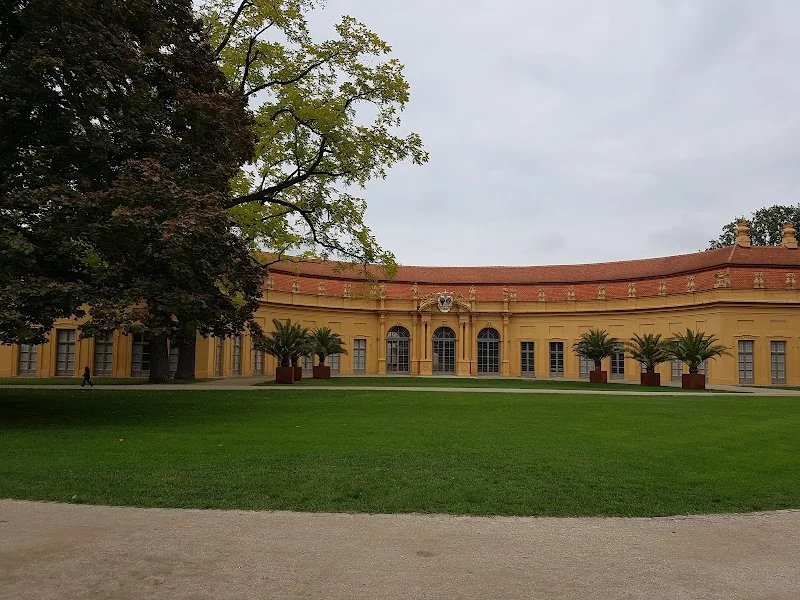
The Orangerie Erlangen is much more than a beautiful building in the palace garden: It is a historical memorial site, a stage for special occasions, and an architectural highlight in one of the earliest baroque garden layouts in Franconia. Those searching for Orangerie Erlangen, Water Hall, weddings, or palace garden concerts will find a location that uniquely combines history, culture, and festive atmosphere. Today, the Orangerie is primarily visible during events; outside of such dates, it is usually only accessible from the outside. This mixture of rarity, history, and cultural use is what makes it appealing. ([traukalender.erlangen.de](https://traukalender.erlangen.de/de/Orangerie-56.html))
History and Baroque Origin of the Orangerie Erlangen
The history of the Orangerie begins in the years 1705/1706. Under the leadership of Gottfried von Gedeler, the charming semi-oval building was originally constructed as a pomeranzen house, that is, for the cultivation of orange trees and as a princely representation site. Until 1755, the facility fulfilled this exact purpose before its function changed over time. Particularly important for today's understanding is the step taken in 1818: Since then, the Orangerie has been owned by Friedrich-Alexander-University Erlangen-Nuremberg. This not only made it part of the university landscape but also a place with changing scientific and cultural uses. The Orangerie is thus not an isolated monument but a building that has remained anchored in the city's history for centuries. ([traukalender.erlangen.de](https://traukalender.erlangen.de/de/Orangerie-56.html))
Architecturally, the Orangerie is also remarkable. The baroque facade already shows the beginning of a Rococo influence, complemented by sandstone sculptures by Elias Räntz. In the central building lies the Water Hall, whose significant stucco decoration still shapes the festive character today. There used to be fountains there that let water bubble up from the marble floor. Between 1906 and 1934, the Orangerie was also home to the Erlangen branch painting gallery, a university teaching collection for modern art history, which was open to the public on Sundays. After an extensive renovation, the building has been shining again in its former glory since 2012. This mix of architecture, science, and cultural history makes the Orangerie one of the most exciting historical locations in the city. ([orangerie.wisski.data.fau.de](https://orangerie.wisski.data.fau.de/))
Water Hall, Weddings, and Capacity in the Orangerie
The Water Hall is the room that makes the Orangerie so special for many visitors. It offers a festive setting with historical stucco decoration and is now used, among other things, for civil weddings. The official capacity is a maximum of 44 people, including the wedding couple and witnesses. For couples looking for a small, stylish, and historically charged backdrop, this is a clear advantage: The atmosphere remains personal, the space does not feel overloaded, and the historical ambiance is very well highlighted. At the same time, the Orangerie is a place with clear organizational rules, making the process calm and orderly for all involved. ([traukalender.erlangen.de](https://traukalender.erlangen.de/de/Orangerie-56.html))
It is also practically important that the Water Hall is accessible without barriers and that access is via the back of the building. An advance viewing is not possible for organizational reasons according to official information. The piano can be used for musical accompaniment; additionally, weddings have been possible again since 2012 in a representative, carefully restored setting. Clear guidelines apply to the wedding party: Animals are not allowed, and scattering flowers, confetti, or rice is prohibited in the building and the palace garden. These rules may seem strict, but they ensure safety, cleanliness, and a respectful handling of the monument and the facility. ([traukalender.erlangen.de](https://traukalender.erlangen.de/de/Orangerie-56.html))
Palace Garden Concerts and University Music as Cultural Profile
The Orangerie is not only a wedding venue but also an important cultural site of Friedrich-Alexander-University. The Erlangen University music has its location here, and current concert formats regularly take place in the Water Hall. This is particularly visible at the Palace Garden Concerts: The series traditionally starts on Mother’s Day Sunday at 11 a.m. and invites to musical matinees on selected Sundays. The venue is the historical Orangerie in the palace garden, which is explicitly described by Visit Erlangen as one of the most beautiful baroque backdrops in Northern Bavaria. That this backdrop is used for classical music is no coincidence: The room combines intimacy, acoustics, and historical dignity in a way that is ideal for chamber music and festive programs. ([visit-erlangen.de](https://www.visit-erlangen.de/schlossgartenkonzerte/))
Individual events of the FAU also show how versatile the Orangerie is used. Concert evenings, discussion concerts, and sonata evenings take place in the Water Hall, often with free admission or ticket reservation through the university music. This creates a program that appeals not only to students and university members but also to the culture-interested audience from Erlangen and the region. For SEO search queries like Orangerie Erlangen program, University music Erlangen, or Palace Garden concerts Erlangen, this connection between place and use is crucial: Those searching for the Orangerie often also look for events, tickets, concert dates, and special cultural moments. The location thus lives not only from its history but also from an active present. ([musik.fau.de](https://www.musik.fau.de/2025/03/16/klangpaare/?utm_source=openai))
Access, Entry, and Parking at the Orangerie Erlangen
For visitors, access to the Orangerie is a central topic because the grounds in the palace garden enjoy special protection. The official access is only possible from the north, specifically via the corner of Wasserturmstraße and Stichstraße Orangerie. Driving into the palace garden is not allowed, nor is parking in front of the Orangerie or within the palace garden. Vehicles or other loads may not be parked on the open space behind the Orangerie either. Therefore, those attending an event should not attempt to drive directly to the building but use the paths outside the facility and plan enough time for the walk. These hints are not only important organizationally but also protect the historical garden facility. ([erlangen.de](https://erlangen.de/aktuelles/trauung-orangerie))
Officially mentioned paid parking options exist, among others, at Theaterplatz and at the large parking lot near the train station. For guests with limited mobility, it is important that the Water Hall is accessible without barriers; at the same time, travel should be planned early, as the access situation around the palace garden and Orangerie is tightly regulated. Those coming from the region can ideally combine the location with a walk through the palace garden but should always pay attention to the respective signage during events. For search queries like Orangerie Erlangen parking, access Orangerie Erlangen, or access from the north, the clear answer is: The historical facility relies on a controlled, pedestrian access and parking outside the garden. ([erlangen.de](https://erlangen.de/aktuelles/trauung-orangerie))
Palace Garden, Surroundings, and Special Highlights Around the Orangerie
The Orangerie only unfolds its effect in conjunction with the palace garden. The Erlangen Palace Garden is considered one of the earliest baroque garden layouts in Franconia and covers about 7.5 hectares. It has been open to the public since 1849 and offers a public urban space that connects history and recreation at any time of the year. The garden is not only a backdrop but part of the overall experience: The Huguenot Fountain by Elias Räntz, the equestrian statue of Margrave Christian Ernst, and the baroque basic structure make it clear why the site is one of the most characteristic ensembles in Erlangen. In the east, the garden was transformed into an English landscape garden between 1786 and 1826, allowing various garden styles to meet in one facility. ([visit-erlangen.de](https://www.visit-erlangen.de/poi/schlossgarten-27260/))
For guests and event visitors, this results in a special added value. Those coming to the Orangerie experience not only a hall or a facade but a historical ensemble that invites walks, photos, and cultural discoveries. In June, the University’s Palace Garden Festival takes place here, a social highlight of the city. Additionally, other cultural and scientific sites are in close proximity, including university institutions and the botanical garden. Depending on the season, the palace garden is open from 6 a.m. until evening, and admission is free. This makes the location suitable for both short visits and longer stays before or after an event in the Orangerie. ([visit-erlangen.de](https://www.visit-erlangen.de/poi/schlossgarten-27260/))
Practical Tips for Visits, Celebrations, and Special Occasions
Those planning to use the Orangerie Erlangen as an event location, wedding venue, or concert venue should be aware of the official usage rules early on. An advance viewing of the rooms is not planned organizationally according to the city and university, which is why planning and expectations should be based on the published information. For weddings, it is also important: The champagne reception in the palace garden is only possible at locations specified by the FAU and for a maximum of 30 minutes; additional tables and chairs may not be brought in. Alcohol, music, or decorations are also not arbitrary but embedded in a strict protection concept. This keeps the historical site free from overuse, and at the same time, a particularly dignified setting is created for small, focused celebrations. ([erlangen.de](https://erlangen.de/aktuelles/trauung-orangerie))
For visitors, this means in practice: arrive on time, pay attention to the signage, be aware of the official access points, and treat the surroundings respectfully. Smoking is strictly prohibited in the Orangerie, open flames are not allowed, and food and drinks may not be consumed in the foyer or Water Hall. These guidelines show that the Orangerie is not just any event space but a listed site with special demands. This is precisely where its strength lies: Those seeking a location with history, cultural relevance, clear structure, and a unique baroque atmosphere will find in the Orangerie Erlangen a place that stands out significantly from ordinary event spaces. ([erlangen.de](https://erlangen.de/aktuelles/trauung-orangerie))
Sources:
Mehr anzeigenWeniger anzeigen
Orangerie Erlangen | Water Hall & Events
The Orangerie Erlangen is much more than a beautiful building in the palace garden: It is a historical memorial site, a stage for special occasions, and an architectural highlight in one of the earliest baroque garden layouts in Franconia. Those searching for Orangerie Erlangen, Water Hall, weddings, or palace garden concerts will find a location that uniquely combines history, culture, and festive atmosphere. Today, the Orangerie is primarily visible during events; outside of such dates, it is usually only accessible from the outside. This mixture of rarity, history, and cultural use is what makes it appealing. ([traukalender.erlangen.de](https://traukalender.erlangen.de/de/Orangerie-56.html))
History and Baroque Origin of the Orangerie Erlangen
The history of the Orangerie begins in the years 1705/1706. Under the leadership of Gottfried von Gedeler, the charming semi-oval building was originally constructed as a pomeranzen house, that is, for the cultivation of orange trees and as a princely representation site. Until 1755, the facility fulfilled this exact purpose before its function changed over time. Particularly important for today's understanding is the step taken in 1818: Since then, the Orangerie has been owned by Friedrich-Alexander-University Erlangen-Nuremberg. This not only made it part of the university landscape but also a place with changing scientific and cultural uses. The Orangerie is thus not an isolated monument but a building that has remained anchored in the city's history for centuries. ([traukalender.erlangen.de](https://traukalender.erlangen.de/de/Orangerie-56.html))
Architecturally, the Orangerie is also remarkable. The baroque facade already shows the beginning of a Rococo influence, complemented by sandstone sculptures by Elias Räntz. In the central building lies the Water Hall, whose significant stucco decoration still shapes the festive character today. There used to be fountains there that let water bubble up from the marble floor. Between 1906 and 1934, the Orangerie was also home to the Erlangen branch painting gallery, a university teaching collection for modern art history, which was open to the public on Sundays. After an extensive renovation, the building has been shining again in its former glory since 2012. This mix of architecture, science, and cultural history makes the Orangerie one of the most exciting historical locations in the city. ([orangerie.wisski.data.fau.de](https://orangerie.wisski.data.fau.de/))
Water Hall, Weddings, and Capacity in the Orangerie
The Water Hall is the room that makes the Orangerie so special for many visitors. It offers a festive setting with historical stucco decoration and is now used, among other things, for civil weddings. The official capacity is a maximum of 44 people, including the wedding couple and witnesses. For couples looking for a small, stylish, and historically charged backdrop, this is a clear advantage: The atmosphere remains personal, the space does not feel overloaded, and the historical ambiance is very well highlighted. At the same time, the Orangerie is a place with clear organizational rules, making the process calm and orderly for all involved. ([traukalender.erlangen.de](https://traukalender.erlangen.de/de/Orangerie-56.html))
It is also practically important that the Water Hall is accessible without barriers and that access is via the back of the building. An advance viewing is not possible for organizational reasons according to official information. The piano can be used for musical accompaniment; additionally, weddings have been possible again since 2012 in a representative, carefully restored setting. Clear guidelines apply to the wedding party: Animals are not allowed, and scattering flowers, confetti, or rice is prohibited in the building and the palace garden. These rules may seem strict, but they ensure safety, cleanliness, and a respectful handling of the monument and the facility. ([traukalender.erlangen.de](https://traukalender.erlangen.de/de/Orangerie-56.html))
Palace Garden Concerts and University Music as Cultural Profile
The Orangerie is not only a wedding venue but also an important cultural site of Friedrich-Alexander-University. The Erlangen University music has its location here, and current concert formats regularly take place in the Water Hall. This is particularly visible at the Palace Garden Concerts: The series traditionally starts on Mother’s Day Sunday at 11 a.m. and invites to musical matinees on selected Sundays. The venue is the historical Orangerie in the palace garden, which is explicitly described by Visit Erlangen as one of the most beautiful baroque backdrops in Northern Bavaria. That this backdrop is used for classical music is no coincidence: The room combines intimacy, acoustics, and historical dignity in a way that is ideal for chamber music and festive programs. ([visit-erlangen.de](https://www.visit-erlangen.de/schlossgartenkonzerte/))
Individual events of the FAU also show how versatile the Orangerie is used. Concert evenings, discussion concerts, and sonata evenings take place in the Water Hall, often with free admission or ticket reservation through the university music. This creates a program that appeals not only to students and university members but also to the culture-interested audience from Erlangen and the region. For SEO search queries like Orangerie Erlangen program, University music Erlangen, or Palace Garden concerts Erlangen, this connection between place and use is crucial: Those searching for the Orangerie often also look for events, tickets, concert dates, and special cultural moments. The location thus lives not only from its history but also from an active present. ([musik.fau.de](https://www.musik.fau.de/2025/03/16/klangpaare/?utm_source=openai))
Access, Entry, and Parking at the Orangerie Erlangen
For visitors, access to the Orangerie is a central topic because the grounds in the palace garden enjoy special protection. The official access is only possible from the north, specifically via the corner of Wasserturmstraße and Stichstraße Orangerie. Driving into the palace garden is not allowed, nor is parking in front of the Orangerie or within the palace garden. Vehicles or other loads may not be parked on the open space behind the Orangerie either. Therefore, those attending an event should not attempt to drive directly to the building but use the paths outside the facility and plan enough time for the walk. These hints are not only important organizationally but also protect the historical garden facility. ([erlangen.de](https://erlangen.de/aktuelles/trauung-orangerie))
Officially mentioned paid parking options exist, among others, at Theaterplatz and at the large parking lot near the train station. For guests with limited mobility, it is important that the Water Hall is accessible without barriers; at the same time, travel should be planned early, as the access situation around the palace garden and Orangerie is tightly regulated. Those coming from the region can ideally combine the location with a walk through the palace garden but should always pay attention to the respective signage during events. For search queries like Orangerie Erlangen parking, access Orangerie Erlangen, or access from the north, the clear answer is: The historical facility relies on a controlled, pedestrian access and parking outside the garden. ([erlangen.de](https://erlangen.de/aktuelles/trauung-orangerie))
Palace Garden, Surroundings, and Special Highlights Around the Orangerie
The Orangerie only unfolds its effect in conjunction with the palace garden. The Erlangen Palace Garden is considered one of the earliest baroque garden layouts in Franconia and covers about 7.5 hectares. It has been open to the public since 1849 and offers a public urban space that connects history and recreation at any time of the year. The garden is not only a backdrop but part of the overall experience: The Huguenot Fountain by Elias Räntz, the equestrian statue of Margrave Christian Ernst, and the baroque basic structure make it clear why the site is one of the most characteristic ensembles in Erlangen. In the east, the garden was transformed into an English landscape garden between 1786 and 1826, allowing various garden styles to meet in one facility. ([visit-erlangen.de](https://www.visit-erlangen.de/poi/schlossgarten-27260/))
For guests and event visitors, this results in a special added value. Those coming to the Orangerie experience not only a hall or a facade but a historical ensemble that invites walks, photos, and cultural discoveries. In June, the University’s Palace Garden Festival takes place here, a social highlight of the city. Additionally, other cultural and scientific sites are in close proximity, including university institutions and the botanical garden. Depending on the season, the palace garden is open from 6 a.m. until evening, and admission is free. This makes the location suitable for both short visits and longer stays before or after an event in the Orangerie. ([visit-erlangen.de](https://www.visit-erlangen.de/poi/schlossgarten-27260/))
Practical Tips for Visits, Celebrations, and Special Occasions
Those planning to use the Orangerie Erlangen as an event location, wedding venue, or concert venue should be aware of the official usage rules early on. An advance viewing of the rooms is not planned organizationally according to the city and university, which is why planning and expectations should be based on the published information. For weddings, it is also important: The champagne reception in the palace garden is only possible at locations specified by the FAU and for a maximum of 30 minutes; additional tables and chairs may not be brought in. Alcohol, music, or decorations are also not arbitrary but embedded in a strict protection concept. This keeps the historical site free from overuse, and at the same time, a particularly dignified setting is created for small, focused celebrations. ([erlangen.de](https://erlangen.de/aktuelles/trauung-orangerie))
For visitors, this means in practice: arrive on time, pay attention to the signage, be aware of the official access points, and treat the surroundings respectfully. Smoking is strictly prohibited in the Orangerie, open flames are not allowed, and food and drinks may not be consumed in the foyer or Water Hall. These guidelines show that the Orangerie is not just any event space but a listed site with special demands. This is precisely where its strength lies: Those seeking a location with history, cultural relevance, clear structure, and a unique baroque atmosphere will find in the Orangerie Erlangen a place that stands out significantly from ordinary event spaces. ([erlangen.de](https://erlangen.de/aktuelles/trauung-orangerie))
Sources:
Orangerie Erlangen | Water Hall & Events
The Orangerie Erlangen is much more than a beautiful building in the palace garden: It is a historical memorial site, a stage for special occasions, and an architectural highlight in one of the earliest baroque garden layouts in Franconia. Those searching for Orangerie Erlangen, Water Hall, weddings, or palace garden concerts will find a location that uniquely combines history, culture, and festive atmosphere. Today, the Orangerie is primarily visible during events; outside of such dates, it is usually only accessible from the outside. This mixture of rarity, history, and cultural use is what makes it appealing. ([traukalender.erlangen.de](https://traukalender.erlangen.de/de/Orangerie-56.html))
History and Baroque Origin of the Orangerie Erlangen
The history of the Orangerie begins in the years 1705/1706. Under the leadership of Gottfried von Gedeler, the charming semi-oval building was originally constructed as a pomeranzen house, that is, for the cultivation of orange trees and as a princely representation site. Until 1755, the facility fulfilled this exact purpose before its function changed over time. Particularly important for today's understanding is the step taken in 1818: Since then, the Orangerie has been owned by Friedrich-Alexander-University Erlangen-Nuremberg. This not only made it part of the university landscape but also a place with changing scientific and cultural uses. The Orangerie is thus not an isolated monument but a building that has remained anchored in the city's history for centuries. ([traukalender.erlangen.de](https://traukalender.erlangen.de/de/Orangerie-56.html))
Architecturally, the Orangerie is also remarkable. The baroque facade already shows the beginning of a Rococo influence, complemented by sandstone sculptures by Elias Räntz. In the central building lies the Water Hall, whose significant stucco decoration still shapes the festive character today. There used to be fountains there that let water bubble up from the marble floor. Between 1906 and 1934, the Orangerie was also home to the Erlangen branch painting gallery, a university teaching collection for modern art history, which was open to the public on Sundays. After an extensive renovation, the building has been shining again in its former glory since 2012. This mix of architecture, science, and cultural history makes the Orangerie one of the most exciting historical locations in the city. ([orangerie.wisski.data.fau.de](https://orangerie.wisski.data.fau.de/))
Water Hall, Weddings, and Capacity in the Orangerie
The Water Hall is the room that makes the Orangerie so special for many visitors. It offers a festive setting with historical stucco decoration and is now used, among other things, for civil weddings. The official capacity is a maximum of 44 people, including the wedding couple and witnesses. For couples looking for a small, stylish, and historically charged backdrop, this is a clear advantage: The atmosphere remains personal, the space does not feel overloaded, and the historical ambiance is very well highlighted. At the same time, the Orangerie is a place with clear organizational rules, making the process calm and orderly for all involved. ([traukalender.erlangen.de](https://traukalender.erlangen.de/de/Orangerie-56.html))
It is also practically important that the Water Hall is accessible without barriers and that access is via the back of the building. An advance viewing is not possible for organizational reasons according to official information. The piano can be used for musical accompaniment; additionally, weddings have been possible again since 2012 in a representative, carefully restored setting. Clear guidelines apply to the wedding party: Animals are not allowed, and scattering flowers, confetti, or rice is prohibited in the building and the palace garden. These rules may seem strict, but they ensure safety, cleanliness, and a respectful handling of the monument and the facility. ([traukalender.erlangen.de](https://traukalender.erlangen.de/de/Orangerie-56.html))
Palace Garden Concerts and University Music as Cultural Profile
The Orangerie is not only a wedding venue but also an important cultural site of Friedrich-Alexander-University. The Erlangen University music has its location here, and current concert formats regularly take place in the Water Hall. This is particularly visible at the Palace Garden Concerts: The series traditionally starts on Mother’s Day Sunday at 11 a.m. and invites to musical matinees on selected Sundays. The venue is the historical Orangerie in the palace garden, which is explicitly described by Visit Erlangen as one of the most beautiful baroque backdrops in Northern Bavaria. That this backdrop is used for classical music is no coincidence: The room combines intimacy, acoustics, and historical dignity in a way that is ideal for chamber music and festive programs. ([visit-erlangen.de](https://www.visit-erlangen.de/schlossgartenkonzerte/))
Individual events of the FAU also show how versatile the Orangerie is used. Concert evenings, discussion concerts, and sonata evenings take place in the Water Hall, often with free admission or ticket reservation through the university music. This creates a program that appeals not only to students and university members but also to the culture-interested audience from Erlangen and the region. For SEO search queries like Orangerie Erlangen program, University music Erlangen, or Palace Garden concerts Erlangen, this connection between place and use is crucial: Those searching for the Orangerie often also look for events, tickets, concert dates, and special cultural moments. The location thus lives not only from its history but also from an active present. ([musik.fau.de](https://www.musik.fau.de/2025/03/16/klangpaare/?utm_source=openai))
Access, Entry, and Parking at the Orangerie Erlangen
For visitors, access to the Orangerie is a central topic because the grounds in the palace garden enjoy special protection. The official access is only possible from the north, specifically via the corner of Wasserturmstraße and Stichstraße Orangerie. Driving into the palace garden is not allowed, nor is parking in front of the Orangerie or within the palace garden. Vehicles or other loads may not be parked on the open space behind the Orangerie either. Therefore, those attending an event should not attempt to drive directly to the building but use the paths outside the facility and plan enough time for the walk. These hints are not only important organizationally but also protect the historical garden facility. ([erlangen.de](https://erlangen.de/aktuelles/trauung-orangerie))
Officially mentioned paid parking options exist, among others, at Theaterplatz and at the large parking lot near the train station. For guests with limited mobility, it is important that the Water Hall is accessible without barriers; at the same time, travel should be planned early, as the access situation around the palace garden and Orangerie is tightly regulated. Those coming from the region can ideally combine the location with a walk through the palace garden but should always pay attention to the respective signage during events. For search queries like Orangerie Erlangen parking, access Orangerie Erlangen, or access from the north, the clear answer is: The historical facility relies on a controlled, pedestrian access and parking outside the garden. ([erlangen.de](https://erlangen.de/aktuelles/trauung-orangerie))
Palace Garden, Surroundings, and Special Highlights Around the Orangerie
The Orangerie only unfolds its effect in conjunction with the palace garden. The Erlangen Palace Garden is considered one of the earliest baroque garden layouts in Franconia and covers about 7.5 hectares. It has been open to the public since 1849 and offers a public urban space that connects history and recreation at any time of the year. The garden is not only a backdrop but part of the overall experience: The Huguenot Fountain by Elias Räntz, the equestrian statue of Margrave Christian Ernst, and the baroque basic structure make it clear why the site is one of the most characteristic ensembles in Erlangen. In the east, the garden was transformed into an English landscape garden between 1786 and 1826, allowing various garden styles to meet in one facility. ([visit-erlangen.de](https://www.visit-erlangen.de/poi/schlossgarten-27260/))
For guests and event visitors, this results in a special added value. Those coming to the Orangerie experience not only a hall or a facade but a historical ensemble that invites walks, photos, and cultural discoveries. In June, the University’s Palace Garden Festival takes place here, a social highlight of the city. Additionally, other cultural and scientific sites are in close proximity, including university institutions and the botanical garden. Depending on the season, the palace garden is open from 6 a.m. until evening, and admission is free. This makes the location suitable for both short visits and longer stays before or after an event in the Orangerie. ([visit-erlangen.de](https://www.visit-erlangen.de/poi/schlossgarten-27260/))
Practical Tips for Visits, Celebrations, and Special Occasions
Those planning to use the Orangerie Erlangen as an event location, wedding venue, or concert venue should be aware of the official usage rules early on. An advance viewing of the rooms is not planned organizationally according to the city and university, which is why planning and expectations should be based on the published information. For weddings, it is also important: The champagne reception in the palace garden is only possible at locations specified by the FAU and for a maximum of 30 minutes; additional tables and chairs may not be brought in. Alcohol, music, or decorations are also not arbitrary but embedded in a strict protection concept. This keeps the historical site free from overuse, and at the same time, a particularly dignified setting is created for small, focused celebrations. ([erlangen.de](https://erlangen.de/aktuelles/trauung-orangerie))
For visitors, this means in practice: arrive on time, pay attention to the signage, be aware of the official access points, and treat the surroundings respectfully. Smoking is strictly prohibited in the Orangerie, open flames are not allowed, and food and drinks may not be consumed in the foyer or Water Hall. These guidelines show that the Orangerie is not just any event space but a listed site with special demands. This is precisely where its strength lies: Those seeking a location with history, cultural relevance, clear structure, and a unique baroque atmosphere will find in the Orangerie Erlangen a place that stands out significantly from ordinary event spaces. ([erlangen.de](https://erlangen.de/aktuelles/trauung-orangerie))
Sources:
Upcoming Events
No events found
Frequently Asked Questions
Reviews
No reviews found