
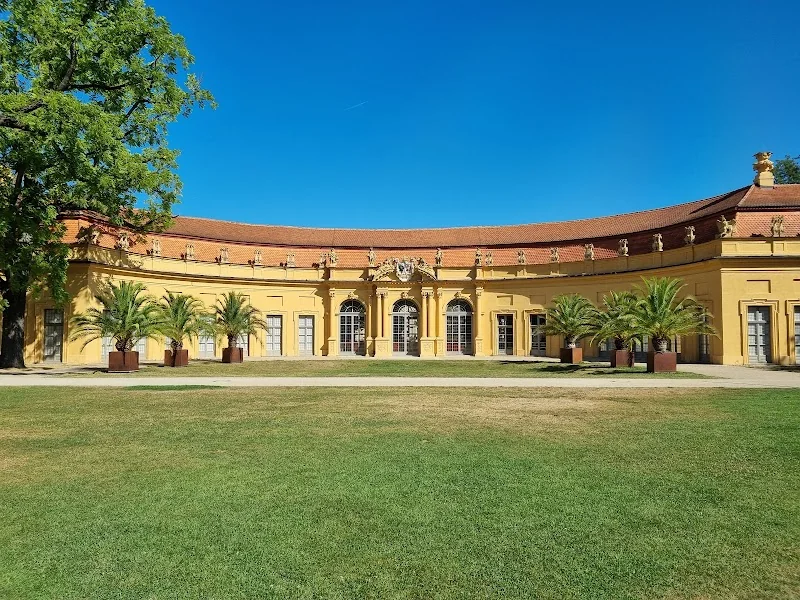
Orangerie, Wasserturmstraße 3, Erlangen
Wasserturmstraße 3, 91054 Erlangen, Germany
Orangerie Erlangen | Water Hall & Events
The Orangerie Erlangen is one of those addresses that seem calm and almost reserved at first glance, but inside it carries a surprisingly dense history. Located in the castle garden, it combines baroque architecture, university use, and a special event experience into a place that has remained visible in Erlangen for centuries and is continually experienced anew. Its current significance ranges from weddings in the Water Hall to concerts, lectures, and festive occasions of Friedrich-Alexander-University. At the same time, the Orangerie is a building that does not simply function as a backdrop, but rather, through its form, its restoration, and its location in the castle garden, becomes an occasion for attention itself. Those searching for Orangerie Erlangen, Water Hall, seating, directions, or parking are usually looking for this mix of culture, history, and practical usability. Therefore, the most important information focuses on a clear core: The Orangerie is a historical event venue with a special ambiance that is only accessible from the inside during events, and whose use is shaped by rules, protective measures, and a high spatial quality. ([visit-erlangen.de](https://www.visit-erlangen.de/poi/orangerie_im_schlossgarten-27258/))
History and Architecture of the Orangerie Erlangen
The current Orangerie Erlangen was built from 1704 to 1706 under the direction of the classicist master builder Gottfried von Gedeler. The original purpose of the ornate semi-oval building was the cultivation of orange trees and princely representation. Thus, the Orangerie belongs to that building culture which not only functioned practically but also aimed to make power, taste, and garden art visible. Even today, this origin can be read in the name and overall effect: The building does not stand isolated but as part of a historical ensemble in the castle garden that connects the courtly past of Erlangen with its later university use. ([visit-erlangen.de](https://www.visit-erlangen.de/poi/orangerie_im_schlossgarten-27258/))
Architecturally, the Orangerie is often perceived for its baroque facade, but tourist and university sources also emphasize the already emerging rococo influences. Additionally, sandstone sculptures by Elias Räntz give the building an extra ornamental depth. It is precisely this transition between representative strictness and decorative liveliness that makes the Orangerie so striking: It is not a sober functional building, but a carefully composed castle garden building that tells visually much more than a simple event space. The facade appears clear and calm from a distance, but upon closer inspection, figures, ornaments, and the precise design of the historical building body come to the fore. ([visit-erlangen.de](https://www.visit-erlangen.de/poi/orangerie_im_schlossgarten-27258/))
A decisive turning point in history was the year 1818 when the Orangerie came into the possession of Friedrich-Alexander-University. Since then, it has been used for various university purposes, including anatomy, pharmaceutical use, church music, and the so-called Royal Branch Painting Gallery. The Institute for Art History has been based in the east wing since 1914. This long sequence of uses shows that the Orangerie was never museum-frozen but has always been able to adapt to new requirements. This point is particularly important for an SEO page because it describes the Orangerie Erlangen not only as a beautiful historical object but as an actively used location with academic continuity. ([kunstgeschichte.phil.fau.de](https://www.kunstgeschichte.phil.fau.de/institut/))
The more recent history also contributes to the current impression. The city of Erlangen points out that the Orangerie has been shining in its old splendor again since 2012 after an extensive renovation. This explains why visitors often perceive the building as particularly well-maintained and impressive. The combination of historical substance, careful restoration, and vibrant use is typical for the Orangerie: It is neither just a monument nor a pure event space, but a place where monument protection, university, and urban culture come together. This is exactly what makes its special attractiveness. ([erlangen.de](https://erlangen.de/aktuelles/trauung-orangerie))
Water Hall, Weddings, and Seating in the Orangerie
The heart of the Orangerie is the Water Hall. The official information describes it as a room with significant stucco decoration that provides a festive setting. In earlier times, there were fountains in the middle section that spouted water from the marble floor; today, the room is mainly used for festive events, especially weddings and selected cultural formats. This historical and spatial peculiarity explains why the Water Hall is relevant for many inquiries regarding seating plans, best seats, weddings, or room capacity. It is not just a hall among many, but the defining interior of the Orangerie Erlangen. ([visit-erlangen.de](https://www.visit-erlangen.de/poi/orangerie_im_schlossgarten-27258/))
For civil weddings, the online wedding venue of the city of Erlangen states a maximum seating capacity of 44 persons, including the wedding couple and witnesses. The city also specifies that the wedding room is accessible without barriers via the back of the building. Thus, the Orangerie is suitable for smaller, particularly stylish celebrations where atmosphere is more important than large event dimensions. Therefore, those searching for Orangerie Erlangen seating or Water Hall capacity will find a clear, reliable number here: 44 seats. This is particularly important for practical planning because it keeps the room intentionally within an intimate framework. ([erlangen.de](https://erlangen.de/aktuelles/trauung-orangerie))
The usage rules also show that the room must be treated carefully. According to the city and university, a preliminary inspection is not possible for organizational reasons. In the hall itself, food and drinks are not permitted, and open flames or candles are also prohibited. Those using the room for a wedding can organize musical accompaniment, but the technology or playing of music must be secured independently. The Orangerie thus offers a high-class, but consciously regulated framework: festive, historical, and elegant, but not as a flexibly adaptable event space. This mix makes the Water Hall so sought after for many occasions. ([erlangen.de](https://erlangen.de/aktuelles/trauung-orangerie))
For wedding couples, it is also important that a small sparkling wine reception is only possible at locations designated by FAU in the castle garden and may last a maximum of 30 minutes. Four standing tables will be provided; additional tables or chairs are not permitted. This also underscores that the Orangerie is not just any banquet hall, but a particularly protected place. Especially in SEO texts, it is worth clearly mentioning these details because they answer exactly the questions that users have before a visit or booking: How many guests fit inside, how does a wedding proceed, and what conditions apply on-site? ([erlangen.de](https://erlangen.de/aktuelles/trauung-orangerie))
Directions to Orangerie Erlangen and Parking in the City Center
The access to the Orangerie is clearly regulated. The city of Erlangen states that access is only from the north via the corner of Wasserturmstraße and Stichstraße Orangerie. At the same time, driving through the castle garden is not allowed, and parking in front of the Orangerie or in the castle garden is expressly prohibited. The open space behind the building and the parking spaces available there may not be used for parking vehicles or loads. For guests, this means: The Orangerie is centrally located, but not intended as a place for direct access or short-term parking. ([erlangen.de](https://erlangen.de/aktuelles/trauung-orangerie))
Those arriving by car should therefore plan for the municipal parking options in the vicinity. The city mentions, among other things, the theater square and the large parking lot near the train station as paid options. Additionally, the city of Erlangen refers to its municipal parking regulations, according to which parking fees apply in the city center and mobilet can be used as a digital payment option. For visitors to the Orangerie, this is particularly relevant because the building is located in an urban environment and is typically associated with a short walk from a parking garage or a public parking space. ([erlangen.de](https://erlangen.de/aktuelles/trauung-orangerie))
Mobility in the Erlangen city center has also become significantly more relaxed. Since January 1, 2024, all bus lines in the free city center area can be used for free. The City Line 299 connects, among other things, the large parking lot, various parking garages, and central points such as the university hospitals, the arcades, and the northern city center. For visiting the Orangerie, this is a real advantage because guests can park at the periphery or in a parking garage and comfortably cover the last part of the journey by bus. This combination of parking and free onward travel is very practical, especially for evening events or bad weather. ([erlangen.de](https://erlangen.de/en/aktuelles/parken-in-erlangen))
The tourism information from Erlangen also recommends reaching the center stress-free and making use of the available parking spaces and parking garages. The official visitor information emphasizes that the large parking lot and several parking garages are good starting points for a visit to the city center. For the Orangerie, this is useful because it is located in the castle garden just a few minutes' walk from central paths. Therefore, those searching for Orangerie Erlangen parking, directions, or route descriptions should not look for a parking space directly at the building but consider the city center traffic. This protects the historical site and saves time during arrival. ([en.visit-erlangen.de](https://en.visit-erlangen.de/anreise_und_mobilitaet/))
Concerts, Lectures, and Events in the Castle Garden
The Orangerie Erlangen is today not only a place for weddings but also a fixed address in the cultural life of the city. The Erlangen University Music points out that it regularly hosts concerts with its own ensembles and guest musicians there. For concerts with admission in the Water Hall, tickets can be reserved in advance via email. This shows that the Orangerie is an active event venue that is continuously used in the university and cultural scene. For inquiries such as Orangerie Erlangen events, concerts, or programs, this is the central point: Regularly, culture-related formats take place here that go beyond mere individual events. ([musik.fau.de](https://www.musik.fau.de/konzerte/aktuell/))
The examples from the FAU program underline this diversity. In the Water Hall of the Orangerie, conversation concerts, chamber music evenings, lectures, festive acts, and academic events have taken place and continue to take place. Among other things, the series Klangpaare, a concert for violin and fortepiano, and a concert night of university music are mentioned. This range makes it clear that the Orangerie is particularly suitable for smaller, demanding formats where acoustics, spatial effect, and atmosphere play an important role. It is thus not a multipurpose hall but a historically shaped place for carefully curated content. ([musik.fau.de](https://www.musik.fau.de/2025/03/16/klangpaare/))
The academic use is also still visible. FAU events such as public inaugural lectures, conferences, and scientific symposia are held in the Water Hall. In the official event notices, the Orangerie repeatedly appears as a place for lectures and festive occasions, confirming the close bond between the university and the building. Therefore, those searching for Orangerie Erlangen program, tickets, or event calendar should especially keep an eye on the pages of the university and the city’s event information. The Orangerie is not a place with a single permanent program but a space that is used differently depending on the semester, season, and occasion. ([fau.de](https://www.fau.de/veranstaltungen/oeffentliche-antrittsvorlesung-von-prof-dr-reettakaisa-sofia-salo/?utm_source=openai))
Additionally, the special cultural-historical charm of the surroundings comes into play. The castle garden itself is part of the historical residence complex, and the Orangerie is located in an area dedicated to peace and relaxation. This makes events here different from those in a pure concert hall: The walk through the castle garden, the view of the building, and the festive character of the Water Hall create a closed experience. Precisely for this reason, the place is particularly suitable for inquiries with emotional search interest such as Orangerie Erlangen wedding, concert, or special location in Erlangen. The building provides not only a room but a complete picture of architecture, history, and present. ([erlangen.de](https://erlangen.de/aktuelles/trauung-orangerie))
Accessibility, Visitor Rules, and Practical Tips
The Orangerie is attractive to many guests because it can be well organized for use despite its historical substance. For weddings, it is expressly noted that the wedding room is accessible without barriers via the back of the building. This is an important detail for families, older guests, and persons with limited mobility. At the same time, one should know that access is strictly regulated and spontaneous wandering in the building is not intended. The combination of barrier-free access and clear usage processes makes the Orangerie planable and reliable for special occasions. ([erlangen.de](https://erlangen.de/aktuelles/trauung-orangerie))
Among the most important rules is the prohibition of driving vehicles or parking in the castle garden. Similarly, loud activities such as firecrackers or loud music in the castle garden are not allowed because the place is expressly considered a space of peace and relaxation. The scattering of flowers, confetti, or rice is also prohibited. These regulations are not just formal details but serve to protect the monument, the lawns, and other visitors. Those planning a celebration should communicate these rules in advance to ensure that the festive framework is maintained and no unpleasant surprises arise. ([erlangen.de](https://erlangen.de/aktuelles/trauung-orangerie))
Further practical tips concern the use of the Water Hall itself. Preliminary inspections are not possible for organizational reasons. Animals are not allowed in the wedding room, nor are open flames and burning candles. Bringing and hanging posters is also prohibited. The city and FAU thus provide a framework that protects the historical character of the building while ensuring a smooth process. For visitors, it is important: The Orangerie is not an open permanent attraction space but a sensitively operated event venue with clear rules. ([erlangen.de](https://erlangen.de/aktuelles/trauung-orangerie))
If one were to summarize the Orangerie in one sentence, it would be as a place where Erlangen's history, university, and culture come together in a particularly elegant way. The baroque architecture, the festive Water Hall, the manageable capacity, and the good location in the castle garden make it unique for small weddings, lectures, and musical formats. Those looking for a location that is not arbitrary but has character will find an extraordinary address here. This is exactly why the Orangerie Erlangen is a search term with high relevance for weddings, concerts, seating, directions, and parking. ([visit-erlangen.de](https://www.visit-erlangen.de/poi/orangerie_im_schlossgarten-27258/))
Sources:
- City of Erlangen – Orangerie, Wedding, and Usage Rules ([erlangen.de](https://erlangen.de/aktuelles/trauung-orangerie))
- Visit Erlangen – Orangerie in the Castle Garden, History and Address ([visit-erlangen.de](https://www.visit-erlangen.de/poi/orangerie_im_schlossgarten-27258/))
- Wedding Calendar Erlangen – Orangerie, Seating, and Accessibility ([traukalender.erlangen.de](https://traukalender.erlangen.de/de/Orangerie-56.html))
- FAU Erlangen University Music – Location Orangerie and Current Concerts ([musik.fau.de](https://www.musik.fau.de/standort/orangerie/))
- City of Erlangen – Parking in Erlangen and Free City Center Use ([erlangen.de](https://erlangen.de/en/aktuelles/parken-in-erlangen))
- FAU Institute of Art History – Historical Use of the Orangerie ([kunstgeschichte.phil.fau.de](https://www.kunstgeschichte.phil.fau.de/institut/))
Mehr anzeigenWeniger anzeigen
Orangerie Erlangen | Water Hall & Events
The Orangerie Erlangen is one of those addresses that seem calm and almost reserved at first glance, but inside it carries a surprisingly dense history. Located in the castle garden, it combines baroque architecture, university use, and a special event experience into a place that has remained visible in Erlangen for centuries and is continually experienced anew. Its current significance ranges from weddings in the Water Hall to concerts, lectures, and festive occasions of Friedrich-Alexander-University. At the same time, the Orangerie is a building that does not simply function as a backdrop, but rather, through its form, its restoration, and its location in the castle garden, becomes an occasion for attention itself. Those searching for Orangerie Erlangen, Water Hall, seating, directions, or parking are usually looking for this mix of culture, history, and practical usability. Therefore, the most important information focuses on a clear core: The Orangerie is a historical event venue with a special ambiance that is only accessible from the inside during events, and whose use is shaped by rules, protective measures, and a high spatial quality. ([visit-erlangen.de](https://www.visit-erlangen.de/poi/orangerie_im_schlossgarten-27258/))
History and Architecture of the Orangerie Erlangen
The current Orangerie Erlangen was built from 1704 to 1706 under the direction of the classicist master builder Gottfried von Gedeler. The original purpose of the ornate semi-oval building was the cultivation of orange trees and princely representation. Thus, the Orangerie belongs to that building culture which not only functioned practically but also aimed to make power, taste, and garden art visible. Even today, this origin can be read in the name and overall effect: The building does not stand isolated but as part of a historical ensemble in the castle garden that connects the courtly past of Erlangen with its later university use. ([visit-erlangen.de](https://www.visit-erlangen.de/poi/orangerie_im_schlossgarten-27258/))
Architecturally, the Orangerie is often perceived for its baroque facade, but tourist and university sources also emphasize the already emerging rococo influences. Additionally, sandstone sculptures by Elias Räntz give the building an extra ornamental depth. It is precisely this transition between representative strictness and decorative liveliness that makes the Orangerie so striking: It is not a sober functional building, but a carefully composed castle garden building that tells visually much more than a simple event space. The facade appears clear and calm from a distance, but upon closer inspection, figures, ornaments, and the precise design of the historical building body come to the fore. ([visit-erlangen.de](https://www.visit-erlangen.de/poi/orangerie_im_schlossgarten-27258/))
A decisive turning point in history was the year 1818 when the Orangerie came into the possession of Friedrich-Alexander-University. Since then, it has been used for various university purposes, including anatomy, pharmaceutical use, church music, and the so-called Royal Branch Painting Gallery. The Institute for Art History has been based in the east wing since 1914. This long sequence of uses shows that the Orangerie was never museum-frozen but has always been able to adapt to new requirements. This point is particularly important for an SEO page because it describes the Orangerie Erlangen not only as a beautiful historical object but as an actively used location with academic continuity. ([kunstgeschichte.phil.fau.de](https://www.kunstgeschichte.phil.fau.de/institut/))
The more recent history also contributes to the current impression. The city of Erlangen points out that the Orangerie has been shining in its old splendor again since 2012 after an extensive renovation. This explains why visitors often perceive the building as particularly well-maintained and impressive. The combination of historical substance, careful restoration, and vibrant use is typical for the Orangerie: It is neither just a monument nor a pure event space, but a place where monument protection, university, and urban culture come together. This is exactly what makes its special attractiveness. ([erlangen.de](https://erlangen.de/aktuelles/trauung-orangerie))
Water Hall, Weddings, and Seating in the Orangerie
The heart of the Orangerie is the Water Hall. The official information describes it as a room with significant stucco decoration that provides a festive setting. In earlier times, there were fountains in the middle section that spouted water from the marble floor; today, the room is mainly used for festive events, especially weddings and selected cultural formats. This historical and spatial peculiarity explains why the Water Hall is relevant for many inquiries regarding seating plans, best seats, weddings, or room capacity. It is not just a hall among many, but the defining interior of the Orangerie Erlangen. ([visit-erlangen.de](https://www.visit-erlangen.de/poi/orangerie_im_schlossgarten-27258/))
For civil weddings, the online wedding venue of the city of Erlangen states a maximum seating capacity of 44 persons, including the wedding couple and witnesses. The city also specifies that the wedding room is accessible without barriers via the back of the building. Thus, the Orangerie is suitable for smaller, particularly stylish celebrations where atmosphere is more important than large event dimensions. Therefore, those searching for Orangerie Erlangen seating or Water Hall capacity will find a clear, reliable number here: 44 seats. This is particularly important for practical planning because it keeps the room intentionally within an intimate framework. ([erlangen.de](https://erlangen.de/aktuelles/trauung-orangerie))
The usage rules also show that the room must be treated carefully. According to the city and university, a preliminary inspection is not possible for organizational reasons. In the hall itself, food and drinks are not permitted, and open flames or candles are also prohibited. Those using the room for a wedding can organize musical accompaniment, but the technology or playing of music must be secured independently. The Orangerie thus offers a high-class, but consciously regulated framework: festive, historical, and elegant, but not as a flexibly adaptable event space. This mix makes the Water Hall so sought after for many occasions. ([erlangen.de](https://erlangen.de/aktuelles/trauung-orangerie))
For wedding couples, it is also important that a small sparkling wine reception is only possible at locations designated by FAU in the castle garden and may last a maximum of 30 minutes. Four standing tables will be provided; additional tables or chairs are not permitted. This also underscores that the Orangerie is not just any banquet hall, but a particularly protected place. Especially in SEO texts, it is worth clearly mentioning these details because they answer exactly the questions that users have before a visit or booking: How many guests fit inside, how does a wedding proceed, and what conditions apply on-site? ([erlangen.de](https://erlangen.de/aktuelles/trauung-orangerie))
Directions to Orangerie Erlangen and Parking in the City Center
The access to the Orangerie is clearly regulated. The city of Erlangen states that access is only from the north via the corner of Wasserturmstraße and Stichstraße Orangerie. At the same time, driving through the castle garden is not allowed, and parking in front of the Orangerie or in the castle garden is expressly prohibited. The open space behind the building and the parking spaces available there may not be used for parking vehicles or loads. For guests, this means: The Orangerie is centrally located, but not intended as a place for direct access or short-term parking. ([erlangen.de](https://erlangen.de/aktuelles/trauung-orangerie))
Those arriving by car should therefore plan for the municipal parking options in the vicinity. The city mentions, among other things, the theater square and the large parking lot near the train station as paid options. Additionally, the city of Erlangen refers to its municipal parking regulations, according to which parking fees apply in the city center and mobilet can be used as a digital payment option. For visitors to the Orangerie, this is particularly relevant because the building is located in an urban environment and is typically associated with a short walk from a parking garage or a public parking space. ([erlangen.de](https://erlangen.de/aktuelles/trauung-orangerie))
Mobility in the Erlangen city center has also become significantly more relaxed. Since January 1, 2024, all bus lines in the free city center area can be used for free. The City Line 299 connects, among other things, the large parking lot, various parking garages, and central points such as the university hospitals, the arcades, and the northern city center. For visiting the Orangerie, this is a real advantage because guests can park at the periphery or in a parking garage and comfortably cover the last part of the journey by bus. This combination of parking and free onward travel is very practical, especially for evening events or bad weather. ([erlangen.de](https://erlangen.de/en/aktuelles/parken-in-erlangen))
The tourism information from Erlangen also recommends reaching the center stress-free and making use of the available parking spaces and parking garages. The official visitor information emphasizes that the large parking lot and several parking garages are good starting points for a visit to the city center. For the Orangerie, this is useful because it is located in the castle garden just a few minutes' walk from central paths. Therefore, those searching for Orangerie Erlangen parking, directions, or route descriptions should not look for a parking space directly at the building but consider the city center traffic. This protects the historical site and saves time during arrival. ([en.visit-erlangen.de](https://en.visit-erlangen.de/anreise_und_mobilitaet/))
Concerts, Lectures, and Events in the Castle Garden
The Orangerie Erlangen is today not only a place for weddings but also a fixed address in the cultural life of the city. The Erlangen University Music points out that it regularly hosts concerts with its own ensembles and guest musicians there. For concerts with admission in the Water Hall, tickets can be reserved in advance via email. This shows that the Orangerie is an active event venue that is continuously used in the university and cultural scene. For inquiries such as Orangerie Erlangen events, concerts, or programs, this is the central point: Regularly, culture-related formats take place here that go beyond mere individual events. ([musik.fau.de](https://www.musik.fau.de/konzerte/aktuell/))
The examples from the FAU program underline this diversity. In the Water Hall of the Orangerie, conversation concerts, chamber music evenings, lectures, festive acts, and academic events have taken place and continue to take place. Among other things, the series Klangpaare, a concert for violin and fortepiano, and a concert night of university music are mentioned. This range makes it clear that the Orangerie is particularly suitable for smaller, demanding formats where acoustics, spatial effect, and atmosphere play an important role. It is thus not a multipurpose hall but a historically shaped place for carefully curated content. ([musik.fau.de](https://www.musik.fau.de/2025/03/16/klangpaare/))
The academic use is also still visible. FAU events such as public inaugural lectures, conferences, and scientific symposia are held in the Water Hall. In the official event notices, the Orangerie repeatedly appears as a place for lectures and festive occasions, confirming the close bond between the university and the building. Therefore, those searching for Orangerie Erlangen program, tickets, or event calendar should especially keep an eye on the pages of the university and the city’s event information. The Orangerie is not a place with a single permanent program but a space that is used differently depending on the semester, season, and occasion. ([fau.de](https://www.fau.de/veranstaltungen/oeffentliche-antrittsvorlesung-von-prof-dr-reettakaisa-sofia-salo/?utm_source=openai))
Additionally, the special cultural-historical charm of the surroundings comes into play. The castle garden itself is part of the historical residence complex, and the Orangerie is located in an area dedicated to peace and relaxation. This makes events here different from those in a pure concert hall: The walk through the castle garden, the view of the building, and the festive character of the Water Hall create a closed experience. Precisely for this reason, the place is particularly suitable for inquiries with emotional search interest such as Orangerie Erlangen wedding, concert, or special location in Erlangen. The building provides not only a room but a complete picture of architecture, history, and present. ([erlangen.de](https://erlangen.de/aktuelles/trauung-orangerie))
Accessibility, Visitor Rules, and Practical Tips
The Orangerie is attractive to many guests because it can be well organized for use despite its historical substance. For weddings, it is expressly noted that the wedding room is accessible without barriers via the back of the building. This is an important detail for families, older guests, and persons with limited mobility. At the same time, one should know that access is strictly regulated and spontaneous wandering in the building is not intended. The combination of barrier-free access and clear usage processes makes the Orangerie planable and reliable for special occasions. ([erlangen.de](https://erlangen.de/aktuelles/trauung-orangerie))
Among the most important rules is the prohibition of driving vehicles or parking in the castle garden. Similarly, loud activities such as firecrackers or loud music in the castle garden are not allowed because the place is expressly considered a space of peace and relaxation. The scattering of flowers, confetti, or rice is also prohibited. These regulations are not just formal details but serve to protect the monument, the lawns, and other visitors. Those planning a celebration should communicate these rules in advance to ensure that the festive framework is maintained and no unpleasant surprises arise. ([erlangen.de](https://erlangen.de/aktuelles/trauung-orangerie))
Further practical tips concern the use of the Water Hall itself. Preliminary inspections are not possible for organizational reasons. Animals are not allowed in the wedding room, nor are open flames and burning candles. Bringing and hanging posters is also prohibited. The city and FAU thus provide a framework that protects the historical character of the building while ensuring a smooth process. For visitors, it is important: The Orangerie is not an open permanent attraction space but a sensitively operated event venue with clear rules. ([erlangen.de](https://erlangen.de/aktuelles/trauung-orangerie))
If one were to summarize the Orangerie in one sentence, it would be as a place where Erlangen's history, university, and culture come together in a particularly elegant way. The baroque architecture, the festive Water Hall, the manageable capacity, and the good location in the castle garden make it unique for small weddings, lectures, and musical formats. Those looking for a location that is not arbitrary but has character will find an extraordinary address here. This is exactly why the Orangerie Erlangen is a search term with high relevance for weddings, concerts, seating, directions, and parking. ([visit-erlangen.de](https://www.visit-erlangen.de/poi/orangerie_im_schlossgarten-27258/))
Sources:
- City of Erlangen – Orangerie, Wedding, and Usage Rules ([erlangen.de](https://erlangen.de/aktuelles/trauung-orangerie))
- Visit Erlangen – Orangerie in the Castle Garden, History and Address ([visit-erlangen.de](https://www.visit-erlangen.de/poi/orangerie_im_schlossgarten-27258/))
- Wedding Calendar Erlangen – Orangerie, Seating, and Accessibility ([traukalender.erlangen.de](https://traukalender.erlangen.de/de/Orangerie-56.html))
- FAU Erlangen University Music – Location Orangerie and Current Concerts ([musik.fau.de](https://www.musik.fau.de/standort/orangerie/))
- City of Erlangen – Parking in Erlangen and Free City Center Use ([erlangen.de](https://erlangen.de/en/aktuelles/parken-in-erlangen))
- FAU Institute of Art History – Historical Use of the Orangerie ([kunstgeschichte.phil.fau.de](https://www.kunstgeschichte.phil.fau.de/institut/))
Orangerie Erlangen | Water Hall & Events
The Orangerie Erlangen is one of those addresses that seem calm and almost reserved at first glance, but inside it carries a surprisingly dense history. Located in the castle garden, it combines baroque architecture, university use, and a special event experience into a place that has remained visible in Erlangen for centuries and is continually experienced anew. Its current significance ranges from weddings in the Water Hall to concerts, lectures, and festive occasions of Friedrich-Alexander-University. At the same time, the Orangerie is a building that does not simply function as a backdrop, but rather, through its form, its restoration, and its location in the castle garden, becomes an occasion for attention itself. Those searching for Orangerie Erlangen, Water Hall, seating, directions, or parking are usually looking for this mix of culture, history, and practical usability. Therefore, the most important information focuses on a clear core: The Orangerie is a historical event venue with a special ambiance that is only accessible from the inside during events, and whose use is shaped by rules, protective measures, and a high spatial quality. ([visit-erlangen.de](https://www.visit-erlangen.de/poi/orangerie_im_schlossgarten-27258/))
History and Architecture of the Orangerie Erlangen
The current Orangerie Erlangen was built from 1704 to 1706 under the direction of the classicist master builder Gottfried von Gedeler. The original purpose of the ornate semi-oval building was the cultivation of orange trees and princely representation. Thus, the Orangerie belongs to that building culture which not only functioned practically but also aimed to make power, taste, and garden art visible. Even today, this origin can be read in the name and overall effect: The building does not stand isolated but as part of a historical ensemble in the castle garden that connects the courtly past of Erlangen with its later university use. ([visit-erlangen.de](https://www.visit-erlangen.de/poi/orangerie_im_schlossgarten-27258/))
Architecturally, the Orangerie is often perceived for its baroque facade, but tourist and university sources also emphasize the already emerging rococo influences. Additionally, sandstone sculptures by Elias Räntz give the building an extra ornamental depth. It is precisely this transition between representative strictness and decorative liveliness that makes the Orangerie so striking: It is not a sober functional building, but a carefully composed castle garden building that tells visually much more than a simple event space. The facade appears clear and calm from a distance, but upon closer inspection, figures, ornaments, and the precise design of the historical building body come to the fore. ([visit-erlangen.de](https://www.visit-erlangen.de/poi/orangerie_im_schlossgarten-27258/))
A decisive turning point in history was the year 1818 when the Orangerie came into the possession of Friedrich-Alexander-University. Since then, it has been used for various university purposes, including anatomy, pharmaceutical use, church music, and the so-called Royal Branch Painting Gallery. The Institute for Art History has been based in the east wing since 1914. This long sequence of uses shows that the Orangerie was never museum-frozen but has always been able to adapt to new requirements. This point is particularly important for an SEO page because it describes the Orangerie Erlangen not only as a beautiful historical object but as an actively used location with academic continuity. ([kunstgeschichte.phil.fau.de](https://www.kunstgeschichte.phil.fau.de/institut/))
The more recent history also contributes to the current impression. The city of Erlangen points out that the Orangerie has been shining in its old splendor again since 2012 after an extensive renovation. This explains why visitors often perceive the building as particularly well-maintained and impressive. The combination of historical substance, careful restoration, and vibrant use is typical for the Orangerie: It is neither just a monument nor a pure event space, but a place where monument protection, university, and urban culture come together. This is exactly what makes its special attractiveness. ([erlangen.de](https://erlangen.de/aktuelles/trauung-orangerie))
Water Hall, Weddings, and Seating in the Orangerie
The heart of the Orangerie is the Water Hall. The official information describes it as a room with significant stucco decoration that provides a festive setting. In earlier times, there were fountains in the middle section that spouted water from the marble floor; today, the room is mainly used for festive events, especially weddings and selected cultural formats. This historical and spatial peculiarity explains why the Water Hall is relevant for many inquiries regarding seating plans, best seats, weddings, or room capacity. It is not just a hall among many, but the defining interior of the Orangerie Erlangen. ([visit-erlangen.de](https://www.visit-erlangen.de/poi/orangerie_im_schlossgarten-27258/))
For civil weddings, the online wedding venue of the city of Erlangen states a maximum seating capacity of 44 persons, including the wedding couple and witnesses. The city also specifies that the wedding room is accessible without barriers via the back of the building. Thus, the Orangerie is suitable for smaller, particularly stylish celebrations where atmosphere is more important than large event dimensions. Therefore, those searching for Orangerie Erlangen seating or Water Hall capacity will find a clear, reliable number here: 44 seats. This is particularly important for practical planning because it keeps the room intentionally within an intimate framework. ([erlangen.de](https://erlangen.de/aktuelles/trauung-orangerie))
The usage rules also show that the room must be treated carefully. According to the city and university, a preliminary inspection is not possible for organizational reasons. In the hall itself, food and drinks are not permitted, and open flames or candles are also prohibited. Those using the room for a wedding can organize musical accompaniment, but the technology or playing of music must be secured independently. The Orangerie thus offers a high-class, but consciously regulated framework: festive, historical, and elegant, but not as a flexibly adaptable event space. This mix makes the Water Hall so sought after for many occasions. ([erlangen.de](https://erlangen.de/aktuelles/trauung-orangerie))
For wedding couples, it is also important that a small sparkling wine reception is only possible at locations designated by FAU in the castle garden and may last a maximum of 30 minutes. Four standing tables will be provided; additional tables or chairs are not permitted. This also underscores that the Orangerie is not just any banquet hall, but a particularly protected place. Especially in SEO texts, it is worth clearly mentioning these details because they answer exactly the questions that users have before a visit or booking: How many guests fit inside, how does a wedding proceed, and what conditions apply on-site? ([erlangen.de](https://erlangen.de/aktuelles/trauung-orangerie))
Directions to Orangerie Erlangen and Parking in the City Center
The access to the Orangerie is clearly regulated. The city of Erlangen states that access is only from the north via the corner of Wasserturmstraße and Stichstraße Orangerie. At the same time, driving through the castle garden is not allowed, and parking in front of the Orangerie or in the castle garden is expressly prohibited. The open space behind the building and the parking spaces available there may not be used for parking vehicles or loads. For guests, this means: The Orangerie is centrally located, but not intended as a place for direct access or short-term parking. ([erlangen.de](https://erlangen.de/aktuelles/trauung-orangerie))
Those arriving by car should therefore plan for the municipal parking options in the vicinity. The city mentions, among other things, the theater square and the large parking lot near the train station as paid options. Additionally, the city of Erlangen refers to its municipal parking regulations, according to which parking fees apply in the city center and mobilet can be used as a digital payment option. For visitors to the Orangerie, this is particularly relevant because the building is located in an urban environment and is typically associated with a short walk from a parking garage or a public parking space. ([erlangen.de](https://erlangen.de/aktuelles/trauung-orangerie))
Mobility in the Erlangen city center has also become significantly more relaxed. Since January 1, 2024, all bus lines in the free city center area can be used for free. The City Line 299 connects, among other things, the large parking lot, various parking garages, and central points such as the university hospitals, the arcades, and the northern city center. For visiting the Orangerie, this is a real advantage because guests can park at the periphery or in a parking garage and comfortably cover the last part of the journey by bus. This combination of parking and free onward travel is very practical, especially for evening events or bad weather. ([erlangen.de](https://erlangen.de/en/aktuelles/parken-in-erlangen))
The tourism information from Erlangen also recommends reaching the center stress-free and making use of the available parking spaces and parking garages. The official visitor information emphasizes that the large parking lot and several parking garages are good starting points for a visit to the city center. For the Orangerie, this is useful because it is located in the castle garden just a few minutes' walk from central paths. Therefore, those searching for Orangerie Erlangen parking, directions, or route descriptions should not look for a parking space directly at the building but consider the city center traffic. This protects the historical site and saves time during arrival. ([en.visit-erlangen.de](https://en.visit-erlangen.de/anreise_und_mobilitaet/))
Concerts, Lectures, and Events in the Castle Garden
The Orangerie Erlangen is today not only a place for weddings but also a fixed address in the cultural life of the city. The Erlangen University Music points out that it regularly hosts concerts with its own ensembles and guest musicians there. For concerts with admission in the Water Hall, tickets can be reserved in advance via email. This shows that the Orangerie is an active event venue that is continuously used in the university and cultural scene. For inquiries such as Orangerie Erlangen events, concerts, or programs, this is the central point: Regularly, culture-related formats take place here that go beyond mere individual events. ([musik.fau.de](https://www.musik.fau.de/konzerte/aktuell/))
The examples from the FAU program underline this diversity. In the Water Hall of the Orangerie, conversation concerts, chamber music evenings, lectures, festive acts, and academic events have taken place and continue to take place. Among other things, the series Klangpaare, a concert for violin and fortepiano, and a concert night of university music are mentioned. This range makes it clear that the Orangerie is particularly suitable for smaller, demanding formats where acoustics, spatial effect, and atmosphere play an important role. It is thus not a multipurpose hall but a historically shaped place for carefully curated content. ([musik.fau.de](https://www.musik.fau.de/2025/03/16/klangpaare/))
The academic use is also still visible. FAU events such as public inaugural lectures, conferences, and scientific symposia are held in the Water Hall. In the official event notices, the Orangerie repeatedly appears as a place for lectures and festive occasions, confirming the close bond between the university and the building. Therefore, those searching for Orangerie Erlangen program, tickets, or event calendar should especially keep an eye on the pages of the university and the city’s event information. The Orangerie is not a place with a single permanent program but a space that is used differently depending on the semester, season, and occasion. ([fau.de](https://www.fau.de/veranstaltungen/oeffentliche-antrittsvorlesung-von-prof-dr-reettakaisa-sofia-salo/?utm_source=openai))
Additionally, the special cultural-historical charm of the surroundings comes into play. The castle garden itself is part of the historical residence complex, and the Orangerie is located in an area dedicated to peace and relaxation. This makes events here different from those in a pure concert hall: The walk through the castle garden, the view of the building, and the festive character of the Water Hall create a closed experience. Precisely for this reason, the place is particularly suitable for inquiries with emotional search interest such as Orangerie Erlangen wedding, concert, or special location in Erlangen. The building provides not only a room but a complete picture of architecture, history, and present. ([erlangen.de](https://erlangen.de/aktuelles/trauung-orangerie))
Accessibility, Visitor Rules, and Practical Tips
The Orangerie is attractive to many guests because it can be well organized for use despite its historical substance. For weddings, it is expressly noted that the wedding room is accessible without barriers via the back of the building. This is an important detail for families, older guests, and persons with limited mobility. At the same time, one should know that access is strictly regulated and spontaneous wandering in the building is not intended. The combination of barrier-free access and clear usage processes makes the Orangerie planable and reliable for special occasions. ([erlangen.de](https://erlangen.de/aktuelles/trauung-orangerie))
Among the most important rules is the prohibition of driving vehicles or parking in the castle garden. Similarly, loud activities such as firecrackers or loud music in the castle garden are not allowed because the place is expressly considered a space of peace and relaxation. The scattering of flowers, confetti, or rice is also prohibited. These regulations are not just formal details but serve to protect the monument, the lawns, and other visitors. Those planning a celebration should communicate these rules in advance to ensure that the festive framework is maintained and no unpleasant surprises arise. ([erlangen.de](https://erlangen.de/aktuelles/trauung-orangerie))
Further practical tips concern the use of the Water Hall itself. Preliminary inspections are not possible for organizational reasons. Animals are not allowed in the wedding room, nor are open flames and burning candles. Bringing and hanging posters is also prohibited. The city and FAU thus provide a framework that protects the historical character of the building while ensuring a smooth process. For visitors, it is important: The Orangerie is not an open permanent attraction space but a sensitively operated event venue with clear rules. ([erlangen.de](https://erlangen.de/aktuelles/trauung-orangerie))
If one were to summarize the Orangerie in one sentence, it would be as a place where Erlangen's history, university, and culture come together in a particularly elegant way. The baroque architecture, the festive Water Hall, the manageable capacity, and the good location in the castle garden make it unique for small weddings, lectures, and musical formats. Those looking for a location that is not arbitrary but has character will find an extraordinary address here. This is exactly why the Orangerie Erlangen is a search term with high relevance for weddings, concerts, seating, directions, and parking. ([visit-erlangen.de](https://www.visit-erlangen.de/poi/orangerie_im_schlossgarten-27258/))
Sources:
- City of Erlangen – Orangerie, Wedding, and Usage Rules ([erlangen.de](https://erlangen.de/aktuelles/trauung-orangerie))
- Visit Erlangen – Orangerie in the Castle Garden, History and Address ([visit-erlangen.de](https://www.visit-erlangen.de/poi/orangerie_im_schlossgarten-27258/))
- Wedding Calendar Erlangen – Orangerie, Seating, and Accessibility ([traukalender.erlangen.de](https://traukalender.erlangen.de/de/Orangerie-56.html))
- FAU Erlangen University Music – Location Orangerie and Current Concerts ([musik.fau.de](https://www.musik.fau.de/standort/orangerie/))
- City of Erlangen – Parking in Erlangen and Free City Center Use ([erlangen.de](https://erlangen.de/en/aktuelles/parken-in-erlangen))
- FAU Institute of Art History – Historical Use of the Orangerie ([kunstgeschichte.phil.fau.de](https://www.kunstgeschichte.phil.fau.de/institut/))
Upcoming Events
No events found
Frequently Asked Questions
Reviews
david antoun
16. September 2025
old garden of oranges which is typical in Baroque castles in Bavaria.
Krenalu Keshar
9. July 2018
Inspiring place especially with music.
Dominik Bacquez
30. January 2024
Unfortunately, I can only judge the exterior. I have no idea whether it is worth it or even possible to visit the building. What I saw that evening certainly impressed me. Due to its architectural design, this building has a very special aura. Combined with the fountain and the beautiful old trees, it is truly worth seeing. As you approach, the immaculate condition is immediately apparent. As has been mentioned elsewhere in this city, it is nice to see that, in times when cuts are being made everywhere, investments are being made in buildings such as these in the form of care, preservation, and cleanliness. Unfortunately, this is no longer a given these days. But back to the building itself. It is definitely worth taking a closer look. Despite the clear lines and sober symmetry, there are many figures, coats of arms, and other ornamentation to discover here. If it weren't so far away, I would certainly take a closer look at it more often.
김경식
9. June 2025
This building, an Orangerie built in the Baroque style between 1706 and 1712, was originally a greenhouse where nobles stored tropical plants like orange trees during the winter. It now serves as the university's main event venue and lecture hall. On the Saturday we visited, a wedding was being held there!
Ruda Ruda
21. April 2025
The place is nice, but the beginning of spring doesn't have that charm. I think May or June is better.