
Burgberggarten, Erlangen
Burgberggarten, 91054 Erlangen, Germany
Sculpture Garden Heinrich Kirchner | Opening Hours & Admission
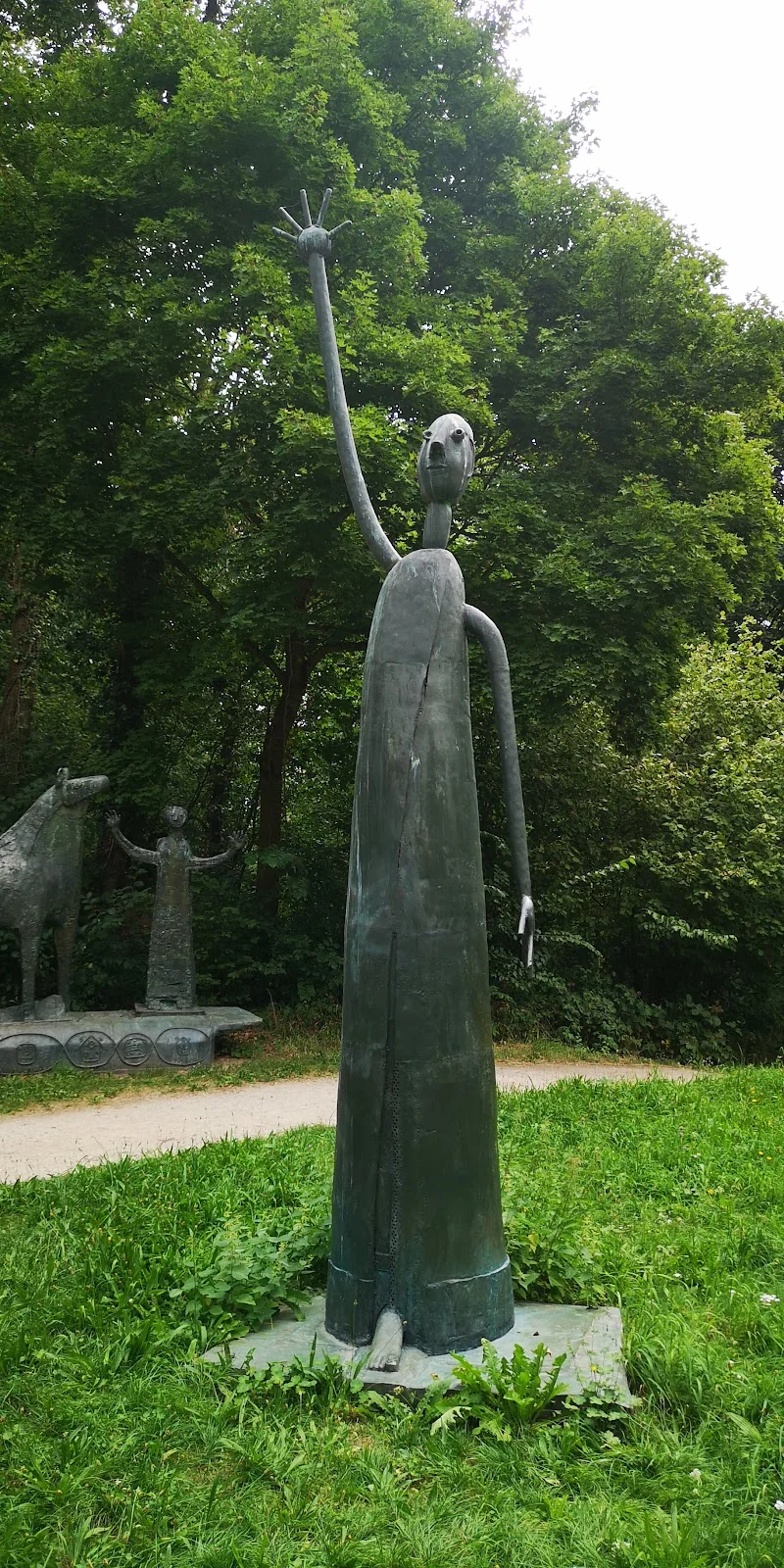
The Sculpture Garden Heinrich Kirchner is one of the quietest and most impressive art destinations in Erlangen. Those who come here are not looking for a grand stage, but a place where sculpture, landscape, and wide views merge. The garden is located on the southern slope of the Erlangen Castle Hill in the Burgberggarten, thus in a location that creates special tension through its topography: city view above, slope below, paths, trees, and the bronze sculptures of the artist. Officially, the facility is described as unique because it is dedicated to the work of a single artist. At the same time, access is uncomplicated, as admission is free and the sculpture garden is generally open year-round. This combination of high artistic density and low-threshold access makes the place so attractive for walks, culture enthusiasts, and visitors who want to experience Erlangen from a quieter side. ([visit-erlangen.de](https://www.visit-erlangen.de/poi/skulpturengarten_heinrich_kirc-27280/))
The real strength of this place lies in the fact that it is neither a museum nor a classic city park, but something third: a walkable art space in the open air. The official information speaks of 17 large bronze sculptures; a tour description mentions 19 monumental bronze sculptures displayed in a harmoniously designed garden landscape. The same core content remains: Here stand figures that address nature, humanity, hope, creation, and movement. Visitors experience art not in passing, but in walking, looking, lingering, and changing perspectives. This is also the reason why the place works both for a short detour and for a longer walk. Those visiting Erlangen find a quiet contrast to the city center in the sculpture garden, along with a clear connection to the city's art history. ([visit-erlangen.de](https://www.visit-erlangen.de/poi/skulpturengarten_heinrich_kirc-27280/))
Opening Hours, Admission, and Best Time to Visit
The most important news for planning is very simple: The Sculpture Garden Heinrich Kirchner is open year-round and admission is free. However, the official visitor information also adds two exceptions that one should be aware of: During the Bergkirchweih and on New Year's Eve, the facility remains closed. In winter, accessibility may also depend on weather conditions and winter service. These details are important because the garden is located on a slope, and the experience can vary greatly depending on the season. In spring, the facility appears fresh and open; in summer, green and calm; in autumn, colorful and contrasting; and in winter, the clear lines of the sculptures can stand out particularly clearly. Therefore, anyone planning a visit should not only look at the opening hours but also at the weather, ground conditions, and daylight progression. Especially in a place that thrives on light, shadow, and sight axes, the effect changes significantly throughout the day. ([visit-erlangen.de](https://www.visit-erlangen.de/poi/skulpturengarten_heinrich_kirc-27280/))
The best time to visit depends on what you want to experience. For photographers and quiet walkers, the early morning hours or late afternoon are often ideal, as the light is softer and the bronze surfaces are more strongly modeled. For families or first-time visitors, a daytime visit is recommended when orientation in the terrain is easier and the view over Erlangen is clearer. The official character of the place as a green oasis also plays a role: The sculpture garden is explicitly described by the city as an important part of Erlangen, similar to the Palace Garden or Botanical Garden. This means it is not merely a transit area, but a place where one consciously slows down. Those with little time can take a compact tour; those who take more time will discover the figures, their positioning on the slope, and the changing effects between the upper and lower terrain much more intensely. ([kirchnergarten.de](https://kirchnergarten.de/the-burgberggarten.html))
For SEO and visitor questions, these characteristics are crucial because they meet the most common search intentions: opening hours, admission, best time, and whether the visit is worthwhile. The answer is clear: Yes, because the place is not only freely accessible but also thematically multifaceted. The official presentation connects art, nature, and tranquility with very concrete temporal accessibility. This is practical for travelers and day visitors alike. Those visiting Erlangen and seeking culture without ticket stress will find here a destination that works spontaneously and still offers enough depth to be a real stop in the city visit. ([visit-erlangen.de](https://www.visit-erlangen.de/poi/skulpturengarten_heinrich_kirc-27280/))
History of the Sculpture Garden Heinrich Kirchner
The history of the Sculpture Garden begins with Heinrich Kirchner himself. He was born in 1902 in Erlangen and later studied in Munich and Paris before making a name for himself as a sculptor and teacher. His biography is closely linked to academic sculpture, bronze, and the search for an independent form language. On his official artist page, it is stated that he acquired the art of bronze casting through the lost-wax method in a self-taught manner and worked at the Academy of Fine Arts in Munich from 1932. These biographical stages are important because they explain why bronze plays such a central role in the Erlangen Sculpture Garden: Here, not only a local artist is showcased, but a sculptor with a long career and teaching activity, whose form language has evolved through various life phases. ([heinrich-kirchner.de](https://www.heinrich-kirchner.de/))
The place itself did not arise by chance, but in the context of a solo exhibition in Erlangen. The official artist page describes that in 1975, on a free, hilly area covered with fruit trees in the Burgberggarten, a unique sculpture garden was created that gathers works from different phases of creation. The current facility was later ceremoniously opened on May 12, 1982, on Kirchner's 80th birthday. Thus, the garden is not simply a subsequently created open-air museum, but a thoughtful ensemble of works with a clear local reference. The opening on the round birthday and the deliberate assembly of the works show that the city of Erlangen recognized the artistic value early on and preserved it in the long term. That is precisely why the place feels so cohesive and credible today: It is neither randomly assembled nor artificially over-staged, but developed from the artist's own work. ([heinrich-kirchner.de](https://www.heinrich-kirchner.de/))
The further development of the place is also interesting. The English description of the city describes the sculpture park as an important element of the city and as a green oasis of tranquility, comparable to other central green spaces in Erlangen. This classification makes it clear that the sculpture garden is not only relevant from an art historical perspective but also for the city's identity. The garden is a place of remembrance, but also a place of everyday stay. In a city with many public artworks, this location is particularly striking because it bundles the work of a single artist in a permanently experienceable landscape. Thus, the sculpture garden becomes a focal point of public art in Erlangen and a space that connects the artist's biography with the topographical peculiarity of the Burgberg. ([erlangen.de](https://erlangen.de/aktuelles/kunstguide?utm_source=openai))
Heinrich Kirchner, His Themes, and the Creation of the Facility
Those who understand the sculpture garden also understand Heinrich Kirchner better. According to the official description, his works repeatedly revolve around the relationship between man and nature. This theme shapes the facility on the Burgberg: no abstract sculpture meadow without internal connection, but an ensemble that is thematically interconnected. The figures often appear archaic, upright, strong, and simultaneously poetic. They speak of hope, warning, creation, departure, and the human place in a larger order. The official page of the artist describes him as someone who understood art as engagement. This fits well with the forms in the garden, as they are never merely decorative. They have posture, direction, and expressiveness. The sculpture garden is therefore not only worth seeing but also readable. Visitors can recognize themes in the figures that extend beyond a single work. ([heinrich-kirchner.de](https://www.heinrich-kirchner.de/))
Particularly enlightening is the spatial order of the facility. The official description names a western part of the Burgberggarten as a former villa garden with older sculptures from 1935 to 1972. The steeper eastern area is characterized by monumental figures from 1974 to 1982. This division is not only organizational but also thematically sensible. It makes visible how Kirchner's work has changed over the decades: from earlier, less monumental forms to later, highly condensed large sculptures. The facility thus follows an internal chronology. A walk through the garden is also a walk through different phases of an artist's life. Those who look closely will recognize that the landscape itself is part of the narrative. The slope, the paths, and the cardinal directions are integrated into the design. ([kirchnergarten.de](https://kirchnergarten.de/the-burgberggarten.html))
Another point that facilitates historical classification is the view of the last works. The Burgberggarten page explicitly mentions Prometheus, Guardian in the Garden of Eden, and Wanderer as late works, with Wanderer highlighted as the last work completed during the artist's lifetime. This is not only biographically significant but also for the interpretation of the facility. These late figures particularly demonstrate the maturity of the garden as a complete work. They stand for the condensation of a visual language that has developed over decades and found a lasting form in public space. In this sense, the sculpture garden is not only an exhibition space for individual works but a spatially composed late work with a strong cultural identity for Erlangen. ([kirchnergarten.de](https://kirchnergarten.de/the-burgberggarten.html))
Statues, Motifs, and Walkthrough of the Burgberggarten
The sculptures themselves are the real reason why visitors return. The official work overview mentions, among others, Guardian in the Garden of Eden, Prometheus, Man in the Boat, Conjuration and Encounter with the Spirit of New Creations, Messenger of Peace, Herald, The 7th Day of Creation, Slender Figure, The New Adam, Seated Woman, Moses, Jonah, Isaiah, Flight to Egypt, Abraham the Wanderer, Wanderer Man, He Sees the Bright Light, and Image of Hope. Even these titles make it clear that Kirchner works with biblical, philosophical, and human-existential motifs. It is about movement, transformation, protection, hope, tranquility, and the relationship to the world. The garden is thus not only visually varied but thematically rich. As one moves from figure to figure, one encounters different expressions of the same fundamental question: How can humanity be translated into bronze? ([kirchnergarten.de](https://kirchnergarten.de/the-sculptures.html))
The spatial dramaturgy enhances this effect. The bronze Guardian in the Garden of Eden greets visitors at the entrance of the Burgberggarten and thus functions almost like a gatekeeper. Further up or deeper in the terrain, one encounters other works that deal with creation and myth. The 7th Day of Creation does not depict man as a rider but next to an upright stallion, connecting the motif with Christian Genesis. In the late figure group Image of Hope, it is less about a concrete biblical narrative than about hope, rising, and overcoming. The official description even emphasizes the wide view from the highest point of the Burgberggarten over the city. It becomes clear: The sculptures are not randomly distributed but follow a walkable narrative. The tour is therefore also a kind of slow reading of the work. ([kirchnergarten.de](https://kirchnergarten.de/01-guardian-in-the-garden-of-eden.html?utm_source=openai))
This artistic diversity is particularly relevant for seekers, as many visitors search in advance for details about figures, motifs, and highlights of the tour. The official page also offers an audio guide and a location list of the works. This makes the visit not only aesthetic but also informative. Even those without an art historical background can gradually explore the place. It is precisely the interplay of freely accessible outdoor space, explanatory work pages, and striking sculptures that ensures that the place works equally well for first-time visitors as for art-interested returnees. The facility shows that public art becomes particularly strong when it offers orientation, atmosphere, and content simultaneously. ([kirchnergarten.de](https://kirchnergarten.de/the-burgberggarten.html?utm_source=openai))
Location on the Burgberg, View, and Nature Experience
The location is at least as important as the art. The sculpture garden is located on the Erlangen Burgberg, which, according to official visitor information, is 332 meters high. The garden is situated on the southern slope, thus in an area that allows for plenty of light and wide views. This shapes the mood of the entire place. From above and between the trees, the view of the city opens up repeatedly, and this shift between closeness and distance is a central part of the experience. The place is therefore perceived not only as an art location but also as a landscape space. The topography ensures that the figures show themselves from different perspectives, sometimes monumental, sometimes subdued, sometimes backlit, sometimes clearly against the sky. Those who only look at individual works miss half the effect. The landscape is not a backdrop but a player. ([visit-erlangen.de](https://www.visit-erlangen.de/poi/skulpturengarten_heinrich_kirc-27280/))
The city explicitly describes the sculpture garden as an important green oasis, and you can feel that while walking. Compared to an indoor museum, the stay is freer, quieter, and more open. You hear the wind, footsteps, and depending on the season, also the rustling of the trees. This creates a different form of concentration. The bronze sculptures gain physicality outdoors because they respond to weather, light, and ground. At the same time, they stand in a natural rhythm of slope, paths, and sight axes. Particularly interesting is that the facility unites works from all phases of creation and thus functions both historically and atmospherically. The tour therefore has not only art historical but also regenerative quality. Many visitors describe the place as inspiring, and that is understandable: The combination of nature, city view, and clear imagery creates a rare state of tranquility without boredom. ([kirchnergarten.de](https://kirchnergarten.de/the-burgberggarten.html))
For search intentions related to views, walks, and special places in Erlangen, this location is crucial. The sculpture garden is not a remote excursion without context but lies in a topographically significant part of the city that is culturally charged and simultaneously openly accessible. Those who explore the Burgberg on foot experience a connection between movement and contemplation that rarely succeeds so well in urban contexts. The place is therefore suitable for all who seek art in the open air, but also for guests who simply want to experience a particularly beautiful perspective on Erlangen. That the garden has established itself in the cityscape for decades is no coincidence: Its location makes it permanently attractive without needing to be loud. ([visit-erlangen.de](https://www.visit-erlangen.de/poi/skulpturengarten_heinrich_kirc-27280/))
Directions, Parking, and Practical Tips for the Visit
For directions, a pragmatic look at the official traffic information of the city is worthwhile. Erlangen is easily accessible via the A73, A3, and B4, and various parking garages and parking spaces are available in the city area. At the same time, the city refers to the free public transport in the city center, which has been available since January 1, 2024, and includes, among other things, the City Line 299. This is particularly helpful for visiting the sculpture garden, as you can conveniently park your car in central parking areas and then continue by bus or on foot. Since the official page of the sculpture garden itself does not highlight its own parking facility, this combination of city park space and public transport is the most practical solution. Those who prefer to arrive relaxed should not only look for a parking space directly at the destination but also consider the infrastructure of the entire city. ([visit-erlangen.de](https://www.visit-erlangen.de/parken/))
According to the tourism page, some of the most sensible general parking options in Erlangen include the Altstadt Ost parking lot, the Arcaden parking garage, the Henkestraße parking garage, the large parking lot, and other downtown locations. For visitors who want to combine the sculpture garden with a city walk, this can be useful as it allows for flexible route planning. Especially since the sculpture garden is not a classic event location with fixed access routes, it works best as part of a day's program. Those who park first in the city center and then understand the way to the Burgberg as a walk sensibly combine mobility and experience. This is not only practical but also fitting to the character of the place: A slow approach is almost part of the concept here. ([visit-erlangen.de](https://www.visit-erlangen.de/parken/))
A few practical tips round off the visit. Because the garden is located on a slope, sturdy footwear and weather-appropriate clothing are advisable, especially in wet conditions or winter. Those who want to take photographs should plan enough time, as the facility thrives on changes in perspective and not on a quick photo from above. Additionally, it is worthwhile to use the official work overview and the audio guide if you want more than just a simple walk. This turns the visit into a concentrated tour through an artistically and landscape-wise extraordinary ensemble. The combination of free admission, reliable opening hours, quiet location, and strong imagery makes the Sculpture Garden Heinrich Kirchner a very uncomplicated yet sustainable excursion destination. Those who want to experience Erlangen beyond the usual stops will find here a place that does not loudly advertise but convinces with substance. ([visit-erlangen.de](https://www.visit-erlangen.de/poi/skulpturengarten_heinrich_kirc-27280/))
Sources:
Mehr anzeigenWeniger anzeigen
Sculpture Garden Heinrich Kirchner | Opening Hours & Admission
The Sculpture Garden Heinrich Kirchner is one of the quietest and most impressive art destinations in Erlangen. Those who come here are not looking for a grand stage, but a place where sculpture, landscape, and wide views merge. The garden is located on the southern slope of the Erlangen Castle Hill in the Burgberggarten, thus in a location that creates special tension through its topography: city view above, slope below, paths, trees, and the bronze sculptures of the artist. Officially, the facility is described as unique because it is dedicated to the work of a single artist. At the same time, access is uncomplicated, as admission is free and the sculpture garden is generally open year-round. This combination of high artistic density and low-threshold access makes the place so attractive for walks, culture enthusiasts, and visitors who want to experience Erlangen from a quieter side. ([visit-erlangen.de](https://www.visit-erlangen.de/poi/skulpturengarten_heinrich_kirc-27280/))
The real strength of this place lies in the fact that it is neither a museum nor a classic city park, but something third: a walkable art space in the open air. The official information speaks of 17 large bronze sculptures; a tour description mentions 19 monumental bronze sculptures displayed in a harmoniously designed garden landscape. The same core content remains: Here stand figures that address nature, humanity, hope, creation, and movement. Visitors experience art not in passing, but in walking, looking, lingering, and changing perspectives. This is also the reason why the place works both for a short detour and for a longer walk. Those visiting Erlangen find a quiet contrast to the city center in the sculpture garden, along with a clear connection to the city's art history. ([visit-erlangen.de](https://www.visit-erlangen.de/poi/skulpturengarten_heinrich_kirc-27280/))
Opening Hours, Admission, and Best Time to Visit
The most important news for planning is very simple: The Sculpture Garden Heinrich Kirchner is open year-round and admission is free. However, the official visitor information also adds two exceptions that one should be aware of: During the Bergkirchweih and on New Year's Eve, the facility remains closed. In winter, accessibility may also depend on weather conditions and winter service. These details are important because the garden is located on a slope, and the experience can vary greatly depending on the season. In spring, the facility appears fresh and open; in summer, green and calm; in autumn, colorful and contrasting; and in winter, the clear lines of the sculptures can stand out particularly clearly. Therefore, anyone planning a visit should not only look at the opening hours but also at the weather, ground conditions, and daylight progression. Especially in a place that thrives on light, shadow, and sight axes, the effect changes significantly throughout the day. ([visit-erlangen.de](https://www.visit-erlangen.de/poi/skulpturengarten_heinrich_kirc-27280/))
The best time to visit depends on what you want to experience. For photographers and quiet walkers, the early morning hours or late afternoon are often ideal, as the light is softer and the bronze surfaces are more strongly modeled. For families or first-time visitors, a daytime visit is recommended when orientation in the terrain is easier and the view over Erlangen is clearer. The official character of the place as a green oasis also plays a role: The sculpture garden is explicitly described by the city as an important part of Erlangen, similar to the Palace Garden or Botanical Garden. This means it is not merely a transit area, but a place where one consciously slows down. Those with little time can take a compact tour; those who take more time will discover the figures, their positioning on the slope, and the changing effects between the upper and lower terrain much more intensely. ([kirchnergarten.de](https://kirchnergarten.de/the-burgberggarten.html))
For SEO and visitor questions, these characteristics are crucial because they meet the most common search intentions: opening hours, admission, best time, and whether the visit is worthwhile. The answer is clear: Yes, because the place is not only freely accessible but also thematically multifaceted. The official presentation connects art, nature, and tranquility with very concrete temporal accessibility. This is practical for travelers and day visitors alike. Those visiting Erlangen and seeking culture without ticket stress will find here a destination that works spontaneously and still offers enough depth to be a real stop in the city visit. ([visit-erlangen.de](https://www.visit-erlangen.de/poi/skulpturengarten_heinrich_kirc-27280/))
History of the Sculpture Garden Heinrich Kirchner
The history of the Sculpture Garden begins with Heinrich Kirchner himself. He was born in 1902 in Erlangen and later studied in Munich and Paris before making a name for himself as a sculptor and teacher. His biography is closely linked to academic sculpture, bronze, and the search for an independent form language. On his official artist page, it is stated that he acquired the art of bronze casting through the lost-wax method in a self-taught manner and worked at the Academy of Fine Arts in Munich from 1932. These biographical stages are important because they explain why bronze plays such a central role in the Erlangen Sculpture Garden: Here, not only a local artist is showcased, but a sculptor with a long career and teaching activity, whose form language has evolved through various life phases. ([heinrich-kirchner.de](https://www.heinrich-kirchner.de/))
The place itself did not arise by chance, but in the context of a solo exhibition in Erlangen. The official artist page describes that in 1975, on a free, hilly area covered with fruit trees in the Burgberggarten, a unique sculpture garden was created that gathers works from different phases of creation. The current facility was later ceremoniously opened on May 12, 1982, on Kirchner's 80th birthday. Thus, the garden is not simply a subsequently created open-air museum, but a thoughtful ensemble of works with a clear local reference. The opening on the round birthday and the deliberate assembly of the works show that the city of Erlangen recognized the artistic value early on and preserved it in the long term. That is precisely why the place feels so cohesive and credible today: It is neither randomly assembled nor artificially over-staged, but developed from the artist's own work. ([heinrich-kirchner.de](https://www.heinrich-kirchner.de/))
The further development of the place is also interesting. The English description of the city describes the sculpture park as an important element of the city and as a green oasis of tranquility, comparable to other central green spaces in Erlangen. This classification makes it clear that the sculpture garden is not only relevant from an art historical perspective but also for the city's identity. The garden is a place of remembrance, but also a place of everyday stay. In a city with many public artworks, this location is particularly striking because it bundles the work of a single artist in a permanently experienceable landscape. Thus, the sculpture garden becomes a focal point of public art in Erlangen and a space that connects the artist's biography with the topographical peculiarity of the Burgberg. ([erlangen.de](https://erlangen.de/aktuelles/kunstguide?utm_source=openai))
Heinrich Kirchner, His Themes, and the Creation of the Facility
Those who understand the sculpture garden also understand Heinrich Kirchner better. According to the official description, his works repeatedly revolve around the relationship between man and nature. This theme shapes the facility on the Burgberg: no abstract sculpture meadow without internal connection, but an ensemble that is thematically interconnected. The figures often appear archaic, upright, strong, and simultaneously poetic. They speak of hope, warning, creation, departure, and the human place in a larger order. The official page of the artist describes him as someone who understood art as engagement. This fits well with the forms in the garden, as they are never merely decorative. They have posture, direction, and expressiveness. The sculpture garden is therefore not only worth seeing but also readable. Visitors can recognize themes in the figures that extend beyond a single work. ([heinrich-kirchner.de](https://www.heinrich-kirchner.de/))
Particularly enlightening is the spatial order of the facility. The official description names a western part of the Burgberggarten as a former villa garden with older sculptures from 1935 to 1972. The steeper eastern area is characterized by monumental figures from 1974 to 1982. This division is not only organizational but also thematically sensible. It makes visible how Kirchner's work has changed over the decades: from earlier, less monumental forms to later, highly condensed large sculptures. The facility thus follows an internal chronology. A walk through the garden is also a walk through different phases of an artist's life. Those who look closely will recognize that the landscape itself is part of the narrative. The slope, the paths, and the cardinal directions are integrated into the design. ([kirchnergarten.de](https://kirchnergarten.de/the-burgberggarten.html))
Another point that facilitates historical classification is the view of the last works. The Burgberggarten page explicitly mentions Prometheus, Guardian in the Garden of Eden, and Wanderer as late works, with Wanderer highlighted as the last work completed during the artist's lifetime. This is not only biographically significant but also for the interpretation of the facility. These late figures particularly demonstrate the maturity of the garden as a complete work. They stand for the condensation of a visual language that has developed over decades and found a lasting form in public space. In this sense, the sculpture garden is not only an exhibition space for individual works but a spatially composed late work with a strong cultural identity for Erlangen. ([kirchnergarten.de](https://kirchnergarten.de/the-burgberggarten.html))
Statues, Motifs, and Walkthrough of the Burgberggarten
The sculptures themselves are the real reason why visitors return. The official work overview mentions, among others, Guardian in the Garden of Eden, Prometheus, Man in the Boat, Conjuration and Encounter with the Spirit of New Creations, Messenger of Peace, Herald, The 7th Day of Creation, Slender Figure, The New Adam, Seated Woman, Moses, Jonah, Isaiah, Flight to Egypt, Abraham the Wanderer, Wanderer Man, He Sees the Bright Light, and Image of Hope. Even these titles make it clear that Kirchner works with biblical, philosophical, and human-existential motifs. It is about movement, transformation, protection, hope, tranquility, and the relationship to the world. The garden is thus not only visually varied but thematically rich. As one moves from figure to figure, one encounters different expressions of the same fundamental question: How can humanity be translated into bronze? ([kirchnergarten.de](https://kirchnergarten.de/the-sculptures.html))
The spatial dramaturgy enhances this effect. The bronze Guardian in the Garden of Eden greets visitors at the entrance of the Burgberggarten and thus functions almost like a gatekeeper. Further up or deeper in the terrain, one encounters other works that deal with creation and myth. The 7th Day of Creation does not depict man as a rider but next to an upright stallion, connecting the motif with Christian Genesis. In the late figure group Image of Hope, it is less about a concrete biblical narrative than about hope, rising, and overcoming. The official description even emphasizes the wide view from the highest point of the Burgberggarten over the city. It becomes clear: The sculptures are not randomly distributed but follow a walkable narrative. The tour is therefore also a kind of slow reading of the work. ([kirchnergarten.de](https://kirchnergarten.de/01-guardian-in-the-garden-of-eden.html?utm_source=openai))
This artistic diversity is particularly relevant for seekers, as many visitors search in advance for details about figures, motifs, and highlights of the tour. The official page also offers an audio guide and a location list of the works. This makes the visit not only aesthetic but also informative. Even those without an art historical background can gradually explore the place. It is precisely the interplay of freely accessible outdoor space, explanatory work pages, and striking sculptures that ensures that the place works equally well for first-time visitors as for art-interested returnees. The facility shows that public art becomes particularly strong when it offers orientation, atmosphere, and content simultaneously. ([kirchnergarten.de](https://kirchnergarten.de/the-burgberggarten.html?utm_source=openai))
Location on the Burgberg, View, and Nature Experience
The location is at least as important as the art. The sculpture garden is located on the Erlangen Burgberg, which, according to official visitor information, is 332 meters high. The garden is situated on the southern slope, thus in an area that allows for plenty of light and wide views. This shapes the mood of the entire place. From above and between the trees, the view of the city opens up repeatedly, and this shift between closeness and distance is a central part of the experience. The place is therefore perceived not only as an art location but also as a landscape space. The topography ensures that the figures show themselves from different perspectives, sometimes monumental, sometimes subdued, sometimes backlit, sometimes clearly against the sky. Those who only look at individual works miss half the effect. The landscape is not a backdrop but a player. ([visit-erlangen.de](https://www.visit-erlangen.de/poi/skulpturengarten_heinrich_kirc-27280/))
The city explicitly describes the sculpture garden as an important green oasis, and you can feel that while walking. Compared to an indoor museum, the stay is freer, quieter, and more open. You hear the wind, footsteps, and depending on the season, also the rustling of the trees. This creates a different form of concentration. The bronze sculptures gain physicality outdoors because they respond to weather, light, and ground. At the same time, they stand in a natural rhythm of slope, paths, and sight axes. Particularly interesting is that the facility unites works from all phases of creation and thus functions both historically and atmospherically. The tour therefore has not only art historical but also regenerative quality. Many visitors describe the place as inspiring, and that is understandable: The combination of nature, city view, and clear imagery creates a rare state of tranquility without boredom. ([kirchnergarten.de](https://kirchnergarten.de/the-burgberggarten.html))
For search intentions related to views, walks, and special places in Erlangen, this location is crucial. The sculpture garden is not a remote excursion without context but lies in a topographically significant part of the city that is culturally charged and simultaneously openly accessible. Those who explore the Burgberg on foot experience a connection between movement and contemplation that rarely succeeds so well in urban contexts. The place is therefore suitable for all who seek art in the open air, but also for guests who simply want to experience a particularly beautiful perspective on Erlangen. That the garden has established itself in the cityscape for decades is no coincidence: Its location makes it permanently attractive without needing to be loud. ([visit-erlangen.de](https://www.visit-erlangen.de/poi/skulpturengarten_heinrich_kirc-27280/))
Directions, Parking, and Practical Tips for the Visit
For directions, a pragmatic look at the official traffic information of the city is worthwhile. Erlangen is easily accessible via the A73, A3, and B4, and various parking garages and parking spaces are available in the city area. At the same time, the city refers to the free public transport in the city center, which has been available since January 1, 2024, and includes, among other things, the City Line 299. This is particularly helpful for visiting the sculpture garden, as you can conveniently park your car in central parking areas and then continue by bus or on foot. Since the official page of the sculpture garden itself does not highlight its own parking facility, this combination of city park space and public transport is the most practical solution. Those who prefer to arrive relaxed should not only look for a parking space directly at the destination but also consider the infrastructure of the entire city. ([visit-erlangen.de](https://www.visit-erlangen.de/parken/))
According to the tourism page, some of the most sensible general parking options in Erlangen include the Altstadt Ost parking lot, the Arcaden parking garage, the Henkestraße parking garage, the large parking lot, and other downtown locations. For visitors who want to combine the sculpture garden with a city walk, this can be useful as it allows for flexible route planning. Especially since the sculpture garden is not a classic event location with fixed access routes, it works best as part of a day's program. Those who park first in the city center and then understand the way to the Burgberg as a walk sensibly combine mobility and experience. This is not only practical but also fitting to the character of the place: A slow approach is almost part of the concept here. ([visit-erlangen.de](https://www.visit-erlangen.de/parken/))
A few practical tips round off the visit. Because the garden is located on a slope, sturdy footwear and weather-appropriate clothing are advisable, especially in wet conditions or winter. Those who want to take photographs should plan enough time, as the facility thrives on changes in perspective and not on a quick photo from above. Additionally, it is worthwhile to use the official work overview and the audio guide if you want more than just a simple walk. This turns the visit into a concentrated tour through an artistically and landscape-wise extraordinary ensemble. The combination of free admission, reliable opening hours, quiet location, and strong imagery makes the Sculpture Garden Heinrich Kirchner a very uncomplicated yet sustainable excursion destination. Those who want to experience Erlangen beyond the usual stops will find here a place that does not loudly advertise but convinces with substance. ([visit-erlangen.de](https://www.visit-erlangen.de/poi/skulpturengarten_heinrich_kirc-27280/))
Sources:
Sculpture Garden Heinrich Kirchner | Opening Hours & Admission
The Sculpture Garden Heinrich Kirchner is one of the quietest and most impressive art destinations in Erlangen. Those who come here are not looking for a grand stage, but a place where sculpture, landscape, and wide views merge. The garden is located on the southern slope of the Erlangen Castle Hill in the Burgberggarten, thus in a location that creates special tension through its topography: city view above, slope below, paths, trees, and the bronze sculptures of the artist. Officially, the facility is described as unique because it is dedicated to the work of a single artist. At the same time, access is uncomplicated, as admission is free and the sculpture garden is generally open year-round. This combination of high artistic density and low-threshold access makes the place so attractive for walks, culture enthusiasts, and visitors who want to experience Erlangen from a quieter side. ([visit-erlangen.de](https://www.visit-erlangen.de/poi/skulpturengarten_heinrich_kirc-27280/))
The real strength of this place lies in the fact that it is neither a museum nor a classic city park, but something third: a walkable art space in the open air. The official information speaks of 17 large bronze sculptures; a tour description mentions 19 monumental bronze sculptures displayed in a harmoniously designed garden landscape. The same core content remains: Here stand figures that address nature, humanity, hope, creation, and movement. Visitors experience art not in passing, but in walking, looking, lingering, and changing perspectives. This is also the reason why the place works both for a short detour and for a longer walk. Those visiting Erlangen find a quiet contrast to the city center in the sculpture garden, along with a clear connection to the city's art history. ([visit-erlangen.de](https://www.visit-erlangen.de/poi/skulpturengarten_heinrich_kirc-27280/))
Opening Hours, Admission, and Best Time to Visit
The most important news for planning is very simple: The Sculpture Garden Heinrich Kirchner is open year-round and admission is free. However, the official visitor information also adds two exceptions that one should be aware of: During the Bergkirchweih and on New Year's Eve, the facility remains closed. In winter, accessibility may also depend on weather conditions and winter service. These details are important because the garden is located on a slope, and the experience can vary greatly depending on the season. In spring, the facility appears fresh and open; in summer, green and calm; in autumn, colorful and contrasting; and in winter, the clear lines of the sculptures can stand out particularly clearly. Therefore, anyone planning a visit should not only look at the opening hours but also at the weather, ground conditions, and daylight progression. Especially in a place that thrives on light, shadow, and sight axes, the effect changes significantly throughout the day. ([visit-erlangen.de](https://www.visit-erlangen.de/poi/skulpturengarten_heinrich_kirc-27280/))
The best time to visit depends on what you want to experience. For photographers and quiet walkers, the early morning hours or late afternoon are often ideal, as the light is softer and the bronze surfaces are more strongly modeled. For families or first-time visitors, a daytime visit is recommended when orientation in the terrain is easier and the view over Erlangen is clearer. The official character of the place as a green oasis also plays a role: The sculpture garden is explicitly described by the city as an important part of Erlangen, similar to the Palace Garden or Botanical Garden. This means it is not merely a transit area, but a place where one consciously slows down. Those with little time can take a compact tour; those who take more time will discover the figures, their positioning on the slope, and the changing effects between the upper and lower terrain much more intensely. ([kirchnergarten.de](https://kirchnergarten.de/the-burgberggarten.html))
For SEO and visitor questions, these characteristics are crucial because they meet the most common search intentions: opening hours, admission, best time, and whether the visit is worthwhile. The answer is clear: Yes, because the place is not only freely accessible but also thematically multifaceted. The official presentation connects art, nature, and tranquility with very concrete temporal accessibility. This is practical for travelers and day visitors alike. Those visiting Erlangen and seeking culture without ticket stress will find here a destination that works spontaneously and still offers enough depth to be a real stop in the city visit. ([visit-erlangen.de](https://www.visit-erlangen.de/poi/skulpturengarten_heinrich_kirc-27280/))
History of the Sculpture Garden Heinrich Kirchner
The history of the Sculpture Garden begins with Heinrich Kirchner himself. He was born in 1902 in Erlangen and later studied in Munich and Paris before making a name for himself as a sculptor and teacher. His biography is closely linked to academic sculpture, bronze, and the search for an independent form language. On his official artist page, it is stated that he acquired the art of bronze casting through the lost-wax method in a self-taught manner and worked at the Academy of Fine Arts in Munich from 1932. These biographical stages are important because they explain why bronze plays such a central role in the Erlangen Sculpture Garden: Here, not only a local artist is showcased, but a sculptor with a long career and teaching activity, whose form language has evolved through various life phases. ([heinrich-kirchner.de](https://www.heinrich-kirchner.de/))
The place itself did not arise by chance, but in the context of a solo exhibition in Erlangen. The official artist page describes that in 1975, on a free, hilly area covered with fruit trees in the Burgberggarten, a unique sculpture garden was created that gathers works from different phases of creation. The current facility was later ceremoniously opened on May 12, 1982, on Kirchner's 80th birthday. Thus, the garden is not simply a subsequently created open-air museum, but a thoughtful ensemble of works with a clear local reference. The opening on the round birthday and the deliberate assembly of the works show that the city of Erlangen recognized the artistic value early on and preserved it in the long term. That is precisely why the place feels so cohesive and credible today: It is neither randomly assembled nor artificially over-staged, but developed from the artist's own work. ([heinrich-kirchner.de](https://www.heinrich-kirchner.de/))
The further development of the place is also interesting. The English description of the city describes the sculpture park as an important element of the city and as a green oasis of tranquility, comparable to other central green spaces in Erlangen. This classification makes it clear that the sculpture garden is not only relevant from an art historical perspective but also for the city's identity. The garden is a place of remembrance, but also a place of everyday stay. In a city with many public artworks, this location is particularly striking because it bundles the work of a single artist in a permanently experienceable landscape. Thus, the sculpture garden becomes a focal point of public art in Erlangen and a space that connects the artist's biography with the topographical peculiarity of the Burgberg. ([erlangen.de](https://erlangen.de/aktuelles/kunstguide?utm_source=openai))
Heinrich Kirchner, His Themes, and the Creation of the Facility
Those who understand the sculpture garden also understand Heinrich Kirchner better. According to the official description, his works repeatedly revolve around the relationship between man and nature. This theme shapes the facility on the Burgberg: no abstract sculpture meadow without internal connection, but an ensemble that is thematically interconnected. The figures often appear archaic, upright, strong, and simultaneously poetic. They speak of hope, warning, creation, departure, and the human place in a larger order. The official page of the artist describes him as someone who understood art as engagement. This fits well with the forms in the garden, as they are never merely decorative. They have posture, direction, and expressiveness. The sculpture garden is therefore not only worth seeing but also readable. Visitors can recognize themes in the figures that extend beyond a single work. ([heinrich-kirchner.de](https://www.heinrich-kirchner.de/))
Particularly enlightening is the spatial order of the facility. The official description names a western part of the Burgberggarten as a former villa garden with older sculptures from 1935 to 1972. The steeper eastern area is characterized by monumental figures from 1974 to 1982. This division is not only organizational but also thematically sensible. It makes visible how Kirchner's work has changed over the decades: from earlier, less monumental forms to later, highly condensed large sculptures. The facility thus follows an internal chronology. A walk through the garden is also a walk through different phases of an artist's life. Those who look closely will recognize that the landscape itself is part of the narrative. The slope, the paths, and the cardinal directions are integrated into the design. ([kirchnergarten.de](https://kirchnergarten.de/the-burgberggarten.html))
Another point that facilitates historical classification is the view of the last works. The Burgberggarten page explicitly mentions Prometheus, Guardian in the Garden of Eden, and Wanderer as late works, with Wanderer highlighted as the last work completed during the artist's lifetime. This is not only biographically significant but also for the interpretation of the facility. These late figures particularly demonstrate the maturity of the garden as a complete work. They stand for the condensation of a visual language that has developed over decades and found a lasting form in public space. In this sense, the sculpture garden is not only an exhibition space for individual works but a spatially composed late work with a strong cultural identity for Erlangen. ([kirchnergarten.de](https://kirchnergarten.de/the-burgberggarten.html))
Statues, Motifs, and Walkthrough of the Burgberggarten
The sculptures themselves are the real reason why visitors return. The official work overview mentions, among others, Guardian in the Garden of Eden, Prometheus, Man in the Boat, Conjuration and Encounter with the Spirit of New Creations, Messenger of Peace, Herald, The 7th Day of Creation, Slender Figure, The New Adam, Seated Woman, Moses, Jonah, Isaiah, Flight to Egypt, Abraham the Wanderer, Wanderer Man, He Sees the Bright Light, and Image of Hope. Even these titles make it clear that Kirchner works with biblical, philosophical, and human-existential motifs. It is about movement, transformation, protection, hope, tranquility, and the relationship to the world. The garden is thus not only visually varied but thematically rich. As one moves from figure to figure, one encounters different expressions of the same fundamental question: How can humanity be translated into bronze? ([kirchnergarten.de](https://kirchnergarten.de/the-sculptures.html))
The spatial dramaturgy enhances this effect. The bronze Guardian in the Garden of Eden greets visitors at the entrance of the Burgberggarten and thus functions almost like a gatekeeper. Further up or deeper in the terrain, one encounters other works that deal with creation and myth. The 7th Day of Creation does not depict man as a rider but next to an upright stallion, connecting the motif with Christian Genesis. In the late figure group Image of Hope, it is less about a concrete biblical narrative than about hope, rising, and overcoming. The official description even emphasizes the wide view from the highest point of the Burgberggarten over the city. It becomes clear: The sculptures are not randomly distributed but follow a walkable narrative. The tour is therefore also a kind of slow reading of the work. ([kirchnergarten.de](https://kirchnergarten.de/01-guardian-in-the-garden-of-eden.html?utm_source=openai))
This artistic diversity is particularly relevant for seekers, as many visitors search in advance for details about figures, motifs, and highlights of the tour. The official page also offers an audio guide and a location list of the works. This makes the visit not only aesthetic but also informative. Even those without an art historical background can gradually explore the place. It is precisely the interplay of freely accessible outdoor space, explanatory work pages, and striking sculptures that ensures that the place works equally well for first-time visitors as for art-interested returnees. The facility shows that public art becomes particularly strong when it offers orientation, atmosphere, and content simultaneously. ([kirchnergarten.de](https://kirchnergarten.de/the-burgberggarten.html?utm_source=openai))
Location on the Burgberg, View, and Nature Experience
The location is at least as important as the art. The sculpture garden is located on the Erlangen Burgberg, which, according to official visitor information, is 332 meters high. The garden is situated on the southern slope, thus in an area that allows for plenty of light and wide views. This shapes the mood of the entire place. From above and between the trees, the view of the city opens up repeatedly, and this shift between closeness and distance is a central part of the experience. The place is therefore perceived not only as an art location but also as a landscape space. The topography ensures that the figures show themselves from different perspectives, sometimes monumental, sometimes subdued, sometimes backlit, sometimes clearly against the sky. Those who only look at individual works miss half the effect. The landscape is not a backdrop but a player. ([visit-erlangen.de](https://www.visit-erlangen.de/poi/skulpturengarten_heinrich_kirc-27280/))
The city explicitly describes the sculpture garden as an important green oasis, and you can feel that while walking. Compared to an indoor museum, the stay is freer, quieter, and more open. You hear the wind, footsteps, and depending on the season, also the rustling of the trees. This creates a different form of concentration. The bronze sculptures gain physicality outdoors because they respond to weather, light, and ground. At the same time, they stand in a natural rhythm of slope, paths, and sight axes. Particularly interesting is that the facility unites works from all phases of creation and thus functions both historically and atmospherically. The tour therefore has not only art historical but also regenerative quality. Many visitors describe the place as inspiring, and that is understandable: The combination of nature, city view, and clear imagery creates a rare state of tranquility without boredom. ([kirchnergarten.de](https://kirchnergarten.de/the-burgberggarten.html))
For search intentions related to views, walks, and special places in Erlangen, this location is crucial. The sculpture garden is not a remote excursion without context but lies in a topographically significant part of the city that is culturally charged and simultaneously openly accessible. Those who explore the Burgberg on foot experience a connection between movement and contemplation that rarely succeeds so well in urban contexts. The place is therefore suitable for all who seek art in the open air, but also for guests who simply want to experience a particularly beautiful perspective on Erlangen. That the garden has established itself in the cityscape for decades is no coincidence: Its location makes it permanently attractive without needing to be loud. ([visit-erlangen.de](https://www.visit-erlangen.de/poi/skulpturengarten_heinrich_kirc-27280/))
Directions, Parking, and Practical Tips for the Visit
For directions, a pragmatic look at the official traffic information of the city is worthwhile. Erlangen is easily accessible via the A73, A3, and B4, and various parking garages and parking spaces are available in the city area. At the same time, the city refers to the free public transport in the city center, which has been available since January 1, 2024, and includes, among other things, the City Line 299. This is particularly helpful for visiting the sculpture garden, as you can conveniently park your car in central parking areas and then continue by bus or on foot. Since the official page of the sculpture garden itself does not highlight its own parking facility, this combination of city park space and public transport is the most practical solution. Those who prefer to arrive relaxed should not only look for a parking space directly at the destination but also consider the infrastructure of the entire city. ([visit-erlangen.de](https://www.visit-erlangen.de/parken/))
According to the tourism page, some of the most sensible general parking options in Erlangen include the Altstadt Ost parking lot, the Arcaden parking garage, the Henkestraße parking garage, the large parking lot, and other downtown locations. For visitors who want to combine the sculpture garden with a city walk, this can be useful as it allows for flexible route planning. Especially since the sculpture garden is not a classic event location with fixed access routes, it works best as part of a day's program. Those who park first in the city center and then understand the way to the Burgberg as a walk sensibly combine mobility and experience. This is not only practical but also fitting to the character of the place: A slow approach is almost part of the concept here. ([visit-erlangen.de](https://www.visit-erlangen.de/parken/))
A few practical tips round off the visit. Because the garden is located on a slope, sturdy footwear and weather-appropriate clothing are advisable, especially in wet conditions or winter. Those who want to take photographs should plan enough time, as the facility thrives on changes in perspective and not on a quick photo from above. Additionally, it is worthwhile to use the official work overview and the audio guide if you want more than just a simple walk. This turns the visit into a concentrated tour through an artistically and landscape-wise extraordinary ensemble. The combination of free admission, reliable opening hours, quiet location, and strong imagery makes the Sculpture Garden Heinrich Kirchner a very uncomplicated yet sustainable excursion destination. Those who want to experience Erlangen beyond the usual stops will find here a place that does not loudly advertise but convinces with substance. ([visit-erlangen.de](https://www.visit-erlangen.de/poi/skulpturengarten_heinrich_kirc-27280/))
Sources:
Upcoming Events
No events found
Frequently Asked Questions
Reviews
GUNJAN
14. July 2023
It's a great place to walk around in the green. A mind-refreshing view of the city. Good place to hang out.
Tak Wong
31. January 2023
Different visit times bring different feelings, so I suggest revisiting the same sceneries from time to time; you might get some new inspiration.
Ahmed A. Kassem
26. August 2022
Wonderful place to visit in Erlangen. It's worth a visit. I like it a lot.
Ari Kemppainen
21. November 2024
Nice place. Take a good flashlight with you.
Tetiana Synkova
10. March 2019
A wonderful spot for walking and admiring the sunset and views of the city.