
Nürnberg
Winklerstraße 26, 90403 Nürnberg, Deutschland
Sebalduskirche Nürnberg | Admission & History
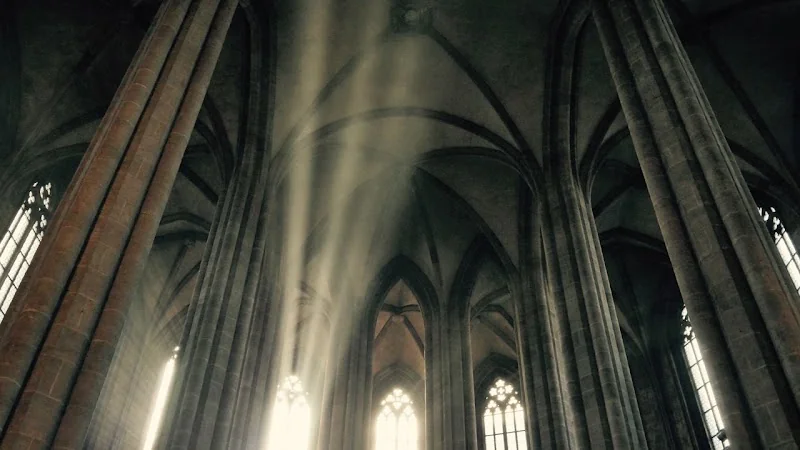
The Sebalduskirche is one of the most important landmarks of Nuremberg's Old Town. As the oldest parish church in the city, it combines medieval architectural history, the veneration of the city patron Sebaldus, and a vibrant evangelical-lutheran community culture. Inside, visitors encounter the famous Sebaldus grave, art-historically significant furnishings, and a church that is still used today for services, church music, tours, and tower visits. Due to its location at Sebalder Platz, near the Imperial Castle and Albrecht Dürer Square, St. Sebald is one of the places where history, faith, and urban experience come together closely. ([nuernberg.de](https://www.nuernberg.de/internet/stadtportal/sebalduskirche.html))
Admission, Opening Hours, and Tickets at Sebalduskirche Nürnberg
Since May 17, 2026, a contribution to the open church applies for tourist visits: Children and teenagers have free admission, adults pay 5 euros, reduced admission costs 2.50 euros, and an annual pass is available for 15 euros. At the same time, prayer, devotions, services, and pastoral concerns remain freely accessible. The church is currently open daily; in the winter months from January to February, it is usually open from 9:30 AM to 4:00 PM, and from March to December from 9:30 AM to 6:00 PM. Thus, St. Sebald serves as both a spiritual space and a classic excursion destination in the Old Town. ([sebalduskirche.de](https://sebalduskirche.de/?utm_source=openai))
Those who wish to experience the church without a fixed appointment can participate in the general church tour daily at 3 PM; admission is free, donations are appreciated. On public holidays, action days, or during concerts, exceptions may apply, so it is worthwhile to check the event calendar before visiting. For concert attendees, it is important: The box office opens usually one hour before the start, and no entry is allowed after the concert has begun. Upon request, certain concert tickets also serve as tickets for the entire VGN network area. ([sebalduskirche.de](https://sebalduskirche.de/allgemeine-kirchenfuehrungen/))
The tourist organization of the church is also practical: Tickets can be booked online, and those coming in winter should plan for warm clothing, as the Sebalduskirche is noticeably cool in the colder months. Clear opening hours, a simple pricing structure, and regular tours are a great advantage, especially for families, art lovers, and visitors with tight schedules. This allows for a well-planned stay, whether one wants to see the most important artworks briefly or combine a longer Old Town visit with a tour, concert, and tower view. ([sebalduskirche.de](https://sebalduskirche.de/?utm_source=openai))
History of the Sebalduskirche: Oldest Parish Church in Nuremberg
The history of the Sebalduskirche dates back deep into the 13th century. On the foundations of a predecessor church dedicated to Saint Peter, the construction of the late Romanesque, double-choir pillar basilica began around 1215 or 1230/40. By 1309, the side aisles were expanded and modified in the Gothic style. Further expansions followed until 1379, including the elevation of the towers and the late Gothic hall choir. Around 1480, after several expansions, the building received its final form. The church thus exemplifies the close connection between urban development, the power of the imperial city, and religious veneration. ([tourismus.nuernberg.de](https://tourismus.nuernberg.de/sehen/sehenswuerdigkeiten/kirchen/location/sebalduskirche/))
Closely associated with the church is the veneration of the city patron Sebaldus. After his death around 1070, he was venerated by the people, and in 1425 he was canonized at the behest of the Nuremberg council. This veneration was not only piety but also an expression of urban identity and self-confidence. With the Reformation, the confessional orientation changed: When Nuremberg became definitively Lutheran in 1525, the Sebalduskirche also became evangelical. However, the character as an artistically furnished city church remained, as did the close ties to patrician families and urban representation. ([tourismus.nuernberg.de](https://tourismus.nuernberg.de/sehen/sehenswuerdigkeiten/kirchen/location/sebalduskirche/))
The more recent history is also visible. During World War II, the church was severely damaged; many artworks were stored or protected, but the building itself had to be rebuilt step by step between 1945 and 1978. The rededication took place in 1957. After the war, the Sebaldus grave was moved eastward for services, and in 1971, a modern altar was created in front of the church nave. Between 1988 and 1991, the Romanesque arch field under the north tower was redesigned. The Sebalduskirche is thus not only medieval but also a place of conscious post-war monument preservation. ([tourismus.nuernberg.de](https://tourismus.nuernberg.de/en/discover/places-of-interest/location/sebalduskirche-st-sebald-church/))
Sebaldus Grave, Art Treasures, and the Evangelical-Catholic Contrast
The most significant artwork in St. Sebald is the Sebaldus grave. The reliquary was created in 1391, and the outer tabernacle made of bronze casting was started by Peter Vischer in 1488 and completed in 1519 together with his sons. It is believed that the bones of the Nuremberg city patron rest in the silver-plated shrine. Hardly any other place in Nuremberg connects religious veneration, goldsmithing, bronze casting, and urban self-representation as impressively as this tomb. It is the visual centerpiece of the church space and one of the main reasons why St. Sebald receives international attention. ([tourismus.nuernberg.de](https://tourismus.nuernberg.de/sehen/sehenswuerdigkeiten/kirchen/location/sebalduskirche/))
The special aura of the church is also enhanced by the contrast between Catholic saint cult and evangelical-lutheran use. The relics of a Catholic venerated city patron are preserved in an evangelical church, and this very break makes the place historically exciting. In addition, there are numerous other artworks, including figures and epitaphs by Veit Stoß, as well as stained glass windows made after designs by Albrecht Dürer and Hans Süß. The church thus possesses not only a famous tomb but a whole ensemble of pre-reformation art that makes the wealth of Nuremberg's patrician families visible. ([tourismus.nuernberg.de](https://tourismus.nuernberg.de/sehen/sehenswuerdigkeiten/kirchen/location/sebalduskirche/))
As one walks through the nave, one repeatedly discovers hints that St. Sebald was once also a council and representation church. Almost exclusively council members were allowed to donate artworks and altars here, which illustrates the close connection between the bourgeoisie, piety, and political power. The church, along with St. Lorenz and the Frauenkirche, is one of the three most significant churches in Nuremberg and still preserves valuable inventory from pre-reformation art. For this reason, a visit is not only religious but also art-historically rewarding. ([tourismus.nuernberg.de](https://tourismus.nuernberg.de/sehen/sehenswuerdigkeiten/kirchen/location/sebalduskirche/))
Services, Church Music, and Concerts at St. Sebald
St. Sebald is not just a sight but an active community church. Sunday services begin at 8:30 AM, usually on the first Sunday of the month with Holy Communion. At 10:00 AM, the main service follows with a sermon, liturgy, and church music; four times a year, it takes place as a Laudate service with special musical arrangements. On Fridays, at 12 PM, the reconciliation prayer is celebrated, a liturgical cross prayer after Coventry. Therefore, those who wish to experience the Sebalduskirche at a specific time will find a clear rhythm of worship, prayer, and communal life here. ([sebalduskirche.de](https://sebalduskirche.de/gottesdienst/))
Church music is also a central profile feature. Since January 1, 2025, Alexander Rebetge is the new Sebaldus cantor, and under his leadership, the singing school of the Nuremberg city churches will be further developed into the Pachelbel Choir Academy. This fits with the long musical tradition of the house, as the Sebalduskirche is closely associated with organ music and choral culture. The official site refers to ensembles, children's and youth choirs, support associations, and concert visits, showing that not only occasional performances take place here, but a permanent musical life is cultivated. ([sebalduskirche.de](https://sebalduskirche.de/kirchenmusik/))
Particularly impressive is the organ history. The current Peter organ was built in 1975 by the Cologne organ building company Willi Peter; a choir organ was added in 1976. Its predecessor dates back to the legendary Traxdorff organ of 1440, on which, among others, Conrad Paumann and Johann Pachelbel played. This older organ was even known until its destruction in 1945 as the oldest playable organ in the world. For concerts, it is noted that the church is cold in the winter months, so the organizers recommend warm clothing. Especially during organ evenings, St. Sebald combines historical substance with lively performance practice. ([sebalduskirche.de](https://sebalduskirche.de/die-instrumente/))
Tower Climbing, Tours, and Views Over the Old Town
For visitors who want to get to know the Sebalduskirche more intensively, the regular church tours are ideal. They take place daily at 3 PM, last a good introduction as a general tour, and are basically free of charge; donations are appreciated. In addition, there are special tours, individual tours, and special formats for groups. So, for those who do not just want to take a quick look but really want to understand architectural history, artworks, and faith history, there is a very well-organized offer here. ([sebalduskirche.de](https://sebalduskirche.de/allgemeine-kirchenfuehrungen/))
The tower climb is one of the most popular experiences. From April to December, tower tours take place every Thursday and Saturday at 4:30 PM; tickets cost 7 euros for adults and 2 euros for children and are available in the church. The ascent leads over the gallery and roof structure to the gallery of the Sebalder South Tower, about 50 meters high. At the top, the view opens over the sea of rooftops of the Old Town up to the castle. This is why many visitors search for terms like tower climbing, height, or view when they discover St. Sebald on the internet. ([sebalduskirche.de](https://sebalduskirche.de/turmfuehrungen/?utm_source=openai))
The tours not only tell architectural stories but also urban history. Where once tower guards watched over Nuremberg and today peregrine falcons reside, the tower becomes a viewpoint with historical added value. For special occasions, there are additional tower tours, seminars, and events; individual bookings are also possible. Those who plan early can thus combine a classic Old Town visit with a very personal view of Nuremberg from above. Especially for photographers and cultural travelers, this is a strong argument to experience the Sebalduskirche not only from the outside but also from above. ([sebalduskirche.de](https://sebalduskirche.de/turmfuehrungen/?utm_source=openai))
Directions, Parking, and Practical Tips for the Visit
The Sebalduskirche is centrally located in the Old Town at Sebalder Platz; the address listed on the website is also Winklerstraße 26, 90403 Nuremberg. In close proximity are Albrecht Dürer Square, the Imperial Castle, the Old Town Hall, and the historic Old Town district around Weinmarkt and Sebalder Platz. Thus, the church is not only spatially but also atmospherically closely connected to medieval Nuremberg. Those who combine the visit with a tour of the Old Town can reach other sights, cafés, and alleys with historical character in a short distance. ([sebalduskirche.de](https://sebalduskirche.de/gottesdienst/))
Public transport is also attractive, as the location is right in the city center and well integrated into the rest of the Old Town. Those arriving by car will find several parking garages in Nuremberg's city center, such as Sebalder Höfe or Hauptmarkt; the city of Nuremberg continuously publishes the occupancy of these parking garages online and updates it usually every 15 minutes. This is particularly useful on heavily frequented days, as the occupancy in the Old Town area changes quickly. For practical use, a mix of short travel, walking, and current parking control is usually sensible. ([tiefbauamt.nuernberg.de](https://tiefbauamt.nuernberg.de/site/parken/parkhausbelegung/parkhaus_belegung.html?ei=kmAlVI2WAcf8ygPjsYC4BQ&sa=U&usg=AFQjCNHpHN4EHJe0qA43rBJ4b-r9suNlAw&ved=0CCUQFjAC&utm_source=openai))
The Sebalduskirche is also fully wheelchair accessible. This is an important point for concert and tour visitors, as access to a historical building is often associated with restrictions. On-site, the parish office, regular opening hours, and clear tour times help with orientation. Those planning a quiet visit are best off outside peak times, while those wanting to experience music should check the calendar and secure tickets in advance. This way, the visit can be tailored to personal interests without sacrificing authenticity, comfort, or good planning. ([tourismus.nuernberg.de](https://tourismus.nuernberg.de/sehen/sehenswuerdigkeiten/kirchen/location/sebalduskirche/))
Sources:
- Official Website ST. SEBALD NUREMBERG – Construction History, Services, Church Music, Tours, and Visitor Information ([sebalduskirche.de](https://sebalduskirche.de/baugeschichte/?utm_source=openai))
- Tourism Nuremberg – Sebalduskirche, Opening Hours, Admission, Tours, Tower, and Accessibility ([tourismus.nuernberg.de](https://tourismus.nuernberg.de/sehen/sehenswuerdigkeiten/kirchen/location/sebalduskirche/))
- Nuremberg.de City Portal – St. Sebald in Nuremberg's City History ([nuernberg.de](https://www.nuernberg.de/internet/stadtportal/sebalduskirche.html))
- Department of Civil Engineering Nuremberg – Parking Garage Occupancy City Center ([tiefbauamt.nuernberg.de](https://tiefbauamt.nuernberg.de/site/parken/parkhausbelegung/parkhaus_belegung.html?ei=kmAlVI2WAcf8ygPjsYC4BQ&sa=U&usg=AFQjCNHpHN4EHJe0qA43rBJ4b-r9suNlAw&ved=0CCUQFjAC&utm_source=openai))
Mehr anzeigenWeniger anzeigen
Sebalduskirche Nürnberg | Admission & History
The Sebalduskirche is one of the most important landmarks of Nuremberg's Old Town. As the oldest parish church in the city, it combines medieval architectural history, the veneration of the city patron Sebaldus, and a vibrant evangelical-lutheran community culture. Inside, visitors encounter the famous Sebaldus grave, art-historically significant furnishings, and a church that is still used today for services, church music, tours, and tower visits. Due to its location at Sebalder Platz, near the Imperial Castle and Albrecht Dürer Square, St. Sebald is one of the places where history, faith, and urban experience come together closely. ([nuernberg.de](https://www.nuernberg.de/internet/stadtportal/sebalduskirche.html))
Admission, Opening Hours, and Tickets at Sebalduskirche Nürnberg
Since May 17, 2026, a contribution to the open church applies for tourist visits: Children and teenagers have free admission, adults pay 5 euros, reduced admission costs 2.50 euros, and an annual pass is available for 15 euros. At the same time, prayer, devotions, services, and pastoral concerns remain freely accessible. The church is currently open daily; in the winter months from January to February, it is usually open from 9:30 AM to 4:00 PM, and from March to December from 9:30 AM to 6:00 PM. Thus, St. Sebald serves as both a spiritual space and a classic excursion destination in the Old Town. ([sebalduskirche.de](https://sebalduskirche.de/?utm_source=openai))
Those who wish to experience the church without a fixed appointment can participate in the general church tour daily at 3 PM; admission is free, donations are appreciated. On public holidays, action days, or during concerts, exceptions may apply, so it is worthwhile to check the event calendar before visiting. For concert attendees, it is important: The box office opens usually one hour before the start, and no entry is allowed after the concert has begun. Upon request, certain concert tickets also serve as tickets for the entire VGN network area. ([sebalduskirche.de](https://sebalduskirche.de/allgemeine-kirchenfuehrungen/))
The tourist organization of the church is also practical: Tickets can be booked online, and those coming in winter should plan for warm clothing, as the Sebalduskirche is noticeably cool in the colder months. Clear opening hours, a simple pricing structure, and regular tours are a great advantage, especially for families, art lovers, and visitors with tight schedules. This allows for a well-planned stay, whether one wants to see the most important artworks briefly or combine a longer Old Town visit with a tour, concert, and tower view. ([sebalduskirche.de](https://sebalduskirche.de/?utm_source=openai))
History of the Sebalduskirche: Oldest Parish Church in Nuremberg
The history of the Sebalduskirche dates back deep into the 13th century. On the foundations of a predecessor church dedicated to Saint Peter, the construction of the late Romanesque, double-choir pillar basilica began around 1215 or 1230/40. By 1309, the side aisles were expanded and modified in the Gothic style. Further expansions followed until 1379, including the elevation of the towers and the late Gothic hall choir. Around 1480, after several expansions, the building received its final form. The church thus exemplifies the close connection between urban development, the power of the imperial city, and religious veneration. ([tourismus.nuernberg.de](https://tourismus.nuernberg.de/sehen/sehenswuerdigkeiten/kirchen/location/sebalduskirche/))
Closely associated with the church is the veneration of the city patron Sebaldus. After his death around 1070, he was venerated by the people, and in 1425 he was canonized at the behest of the Nuremberg council. This veneration was not only piety but also an expression of urban identity and self-confidence. With the Reformation, the confessional orientation changed: When Nuremberg became definitively Lutheran in 1525, the Sebalduskirche also became evangelical. However, the character as an artistically furnished city church remained, as did the close ties to patrician families and urban representation. ([tourismus.nuernberg.de](https://tourismus.nuernberg.de/sehen/sehenswuerdigkeiten/kirchen/location/sebalduskirche/))
The more recent history is also visible. During World War II, the church was severely damaged; many artworks were stored or protected, but the building itself had to be rebuilt step by step between 1945 and 1978. The rededication took place in 1957. After the war, the Sebaldus grave was moved eastward for services, and in 1971, a modern altar was created in front of the church nave. Between 1988 and 1991, the Romanesque arch field under the north tower was redesigned. The Sebalduskirche is thus not only medieval but also a place of conscious post-war monument preservation. ([tourismus.nuernberg.de](https://tourismus.nuernberg.de/en/discover/places-of-interest/location/sebalduskirche-st-sebald-church/))
Sebaldus Grave, Art Treasures, and the Evangelical-Catholic Contrast
The most significant artwork in St. Sebald is the Sebaldus grave. The reliquary was created in 1391, and the outer tabernacle made of bronze casting was started by Peter Vischer in 1488 and completed in 1519 together with his sons. It is believed that the bones of the Nuremberg city patron rest in the silver-plated shrine. Hardly any other place in Nuremberg connects religious veneration, goldsmithing, bronze casting, and urban self-representation as impressively as this tomb. It is the visual centerpiece of the church space and one of the main reasons why St. Sebald receives international attention. ([tourismus.nuernberg.de](https://tourismus.nuernberg.de/sehen/sehenswuerdigkeiten/kirchen/location/sebalduskirche/))
The special aura of the church is also enhanced by the contrast between Catholic saint cult and evangelical-lutheran use. The relics of a Catholic venerated city patron are preserved in an evangelical church, and this very break makes the place historically exciting. In addition, there are numerous other artworks, including figures and epitaphs by Veit Stoß, as well as stained glass windows made after designs by Albrecht Dürer and Hans Süß. The church thus possesses not only a famous tomb but a whole ensemble of pre-reformation art that makes the wealth of Nuremberg's patrician families visible. ([tourismus.nuernberg.de](https://tourismus.nuernberg.de/sehen/sehenswuerdigkeiten/kirchen/location/sebalduskirche/))
As one walks through the nave, one repeatedly discovers hints that St. Sebald was once also a council and representation church. Almost exclusively council members were allowed to donate artworks and altars here, which illustrates the close connection between the bourgeoisie, piety, and political power. The church, along with St. Lorenz and the Frauenkirche, is one of the three most significant churches in Nuremberg and still preserves valuable inventory from pre-reformation art. For this reason, a visit is not only religious but also art-historically rewarding. ([tourismus.nuernberg.de](https://tourismus.nuernberg.de/sehen/sehenswuerdigkeiten/kirchen/location/sebalduskirche/))
Services, Church Music, and Concerts at St. Sebald
St. Sebald is not just a sight but an active community church. Sunday services begin at 8:30 AM, usually on the first Sunday of the month with Holy Communion. At 10:00 AM, the main service follows with a sermon, liturgy, and church music; four times a year, it takes place as a Laudate service with special musical arrangements. On Fridays, at 12 PM, the reconciliation prayer is celebrated, a liturgical cross prayer after Coventry. Therefore, those who wish to experience the Sebalduskirche at a specific time will find a clear rhythm of worship, prayer, and communal life here. ([sebalduskirche.de](https://sebalduskirche.de/gottesdienst/))
Church music is also a central profile feature. Since January 1, 2025, Alexander Rebetge is the new Sebaldus cantor, and under his leadership, the singing school of the Nuremberg city churches will be further developed into the Pachelbel Choir Academy. This fits with the long musical tradition of the house, as the Sebalduskirche is closely associated with organ music and choral culture. The official site refers to ensembles, children's and youth choirs, support associations, and concert visits, showing that not only occasional performances take place here, but a permanent musical life is cultivated. ([sebalduskirche.de](https://sebalduskirche.de/kirchenmusik/))
Particularly impressive is the organ history. The current Peter organ was built in 1975 by the Cologne organ building company Willi Peter; a choir organ was added in 1976. Its predecessor dates back to the legendary Traxdorff organ of 1440, on which, among others, Conrad Paumann and Johann Pachelbel played. This older organ was even known until its destruction in 1945 as the oldest playable organ in the world. For concerts, it is noted that the church is cold in the winter months, so the organizers recommend warm clothing. Especially during organ evenings, St. Sebald combines historical substance with lively performance practice. ([sebalduskirche.de](https://sebalduskirche.de/die-instrumente/))
Tower Climbing, Tours, and Views Over the Old Town
For visitors who want to get to know the Sebalduskirche more intensively, the regular church tours are ideal. They take place daily at 3 PM, last a good introduction as a general tour, and are basically free of charge; donations are appreciated. In addition, there are special tours, individual tours, and special formats for groups. So, for those who do not just want to take a quick look but really want to understand architectural history, artworks, and faith history, there is a very well-organized offer here. ([sebalduskirche.de](https://sebalduskirche.de/allgemeine-kirchenfuehrungen/))
The tower climb is one of the most popular experiences. From April to December, tower tours take place every Thursday and Saturday at 4:30 PM; tickets cost 7 euros for adults and 2 euros for children and are available in the church. The ascent leads over the gallery and roof structure to the gallery of the Sebalder South Tower, about 50 meters high. At the top, the view opens over the sea of rooftops of the Old Town up to the castle. This is why many visitors search for terms like tower climbing, height, or view when they discover St. Sebald on the internet. ([sebalduskirche.de](https://sebalduskirche.de/turmfuehrungen/?utm_source=openai))
The tours not only tell architectural stories but also urban history. Where once tower guards watched over Nuremberg and today peregrine falcons reside, the tower becomes a viewpoint with historical added value. For special occasions, there are additional tower tours, seminars, and events; individual bookings are also possible. Those who plan early can thus combine a classic Old Town visit with a very personal view of Nuremberg from above. Especially for photographers and cultural travelers, this is a strong argument to experience the Sebalduskirche not only from the outside but also from above. ([sebalduskirche.de](https://sebalduskirche.de/turmfuehrungen/?utm_source=openai))
Directions, Parking, and Practical Tips for the Visit
The Sebalduskirche is centrally located in the Old Town at Sebalder Platz; the address listed on the website is also Winklerstraße 26, 90403 Nuremberg. In close proximity are Albrecht Dürer Square, the Imperial Castle, the Old Town Hall, and the historic Old Town district around Weinmarkt and Sebalder Platz. Thus, the church is not only spatially but also atmospherically closely connected to medieval Nuremberg. Those who combine the visit with a tour of the Old Town can reach other sights, cafés, and alleys with historical character in a short distance. ([sebalduskirche.de](https://sebalduskirche.de/gottesdienst/))
Public transport is also attractive, as the location is right in the city center and well integrated into the rest of the Old Town. Those arriving by car will find several parking garages in Nuremberg's city center, such as Sebalder Höfe or Hauptmarkt; the city of Nuremberg continuously publishes the occupancy of these parking garages online and updates it usually every 15 minutes. This is particularly useful on heavily frequented days, as the occupancy in the Old Town area changes quickly. For practical use, a mix of short travel, walking, and current parking control is usually sensible. ([tiefbauamt.nuernberg.de](https://tiefbauamt.nuernberg.de/site/parken/parkhausbelegung/parkhaus_belegung.html?ei=kmAlVI2WAcf8ygPjsYC4BQ&sa=U&usg=AFQjCNHpHN4EHJe0qA43rBJ4b-r9suNlAw&ved=0CCUQFjAC&utm_source=openai))
The Sebalduskirche is also fully wheelchair accessible. This is an important point for concert and tour visitors, as access to a historical building is often associated with restrictions. On-site, the parish office, regular opening hours, and clear tour times help with orientation. Those planning a quiet visit are best off outside peak times, while those wanting to experience music should check the calendar and secure tickets in advance. This way, the visit can be tailored to personal interests without sacrificing authenticity, comfort, or good planning. ([tourismus.nuernberg.de](https://tourismus.nuernberg.de/sehen/sehenswuerdigkeiten/kirchen/location/sebalduskirche/))
Sources:
- Official Website ST. SEBALD NUREMBERG – Construction History, Services, Church Music, Tours, and Visitor Information ([sebalduskirche.de](https://sebalduskirche.de/baugeschichte/?utm_source=openai))
- Tourism Nuremberg – Sebalduskirche, Opening Hours, Admission, Tours, Tower, and Accessibility ([tourismus.nuernberg.de](https://tourismus.nuernberg.de/sehen/sehenswuerdigkeiten/kirchen/location/sebalduskirche/))
- Nuremberg.de City Portal – St. Sebald in Nuremberg's City History ([nuernberg.de](https://www.nuernberg.de/internet/stadtportal/sebalduskirche.html))
- Department of Civil Engineering Nuremberg – Parking Garage Occupancy City Center ([tiefbauamt.nuernberg.de](https://tiefbauamt.nuernberg.de/site/parken/parkhausbelegung/parkhaus_belegung.html?ei=kmAlVI2WAcf8ygPjsYC4BQ&sa=U&usg=AFQjCNHpHN4EHJe0qA43rBJ4b-r9suNlAw&ved=0CCUQFjAC&utm_source=openai))
Sebalduskirche Nürnberg | Admission & History
The Sebalduskirche is one of the most important landmarks of Nuremberg's Old Town. As the oldest parish church in the city, it combines medieval architectural history, the veneration of the city patron Sebaldus, and a vibrant evangelical-lutheran community culture. Inside, visitors encounter the famous Sebaldus grave, art-historically significant furnishings, and a church that is still used today for services, church music, tours, and tower visits. Due to its location at Sebalder Platz, near the Imperial Castle and Albrecht Dürer Square, St. Sebald is one of the places where history, faith, and urban experience come together closely. ([nuernberg.de](https://www.nuernberg.de/internet/stadtportal/sebalduskirche.html))
Admission, Opening Hours, and Tickets at Sebalduskirche Nürnberg
Since May 17, 2026, a contribution to the open church applies for tourist visits: Children and teenagers have free admission, adults pay 5 euros, reduced admission costs 2.50 euros, and an annual pass is available for 15 euros. At the same time, prayer, devotions, services, and pastoral concerns remain freely accessible. The church is currently open daily; in the winter months from January to February, it is usually open from 9:30 AM to 4:00 PM, and from March to December from 9:30 AM to 6:00 PM. Thus, St. Sebald serves as both a spiritual space and a classic excursion destination in the Old Town. ([sebalduskirche.de](https://sebalduskirche.de/?utm_source=openai))
Those who wish to experience the church without a fixed appointment can participate in the general church tour daily at 3 PM; admission is free, donations are appreciated. On public holidays, action days, or during concerts, exceptions may apply, so it is worthwhile to check the event calendar before visiting. For concert attendees, it is important: The box office opens usually one hour before the start, and no entry is allowed after the concert has begun. Upon request, certain concert tickets also serve as tickets for the entire VGN network area. ([sebalduskirche.de](https://sebalduskirche.de/allgemeine-kirchenfuehrungen/))
The tourist organization of the church is also practical: Tickets can be booked online, and those coming in winter should plan for warm clothing, as the Sebalduskirche is noticeably cool in the colder months. Clear opening hours, a simple pricing structure, and regular tours are a great advantage, especially for families, art lovers, and visitors with tight schedules. This allows for a well-planned stay, whether one wants to see the most important artworks briefly or combine a longer Old Town visit with a tour, concert, and tower view. ([sebalduskirche.de](https://sebalduskirche.de/?utm_source=openai))
History of the Sebalduskirche: Oldest Parish Church in Nuremberg
The history of the Sebalduskirche dates back deep into the 13th century. On the foundations of a predecessor church dedicated to Saint Peter, the construction of the late Romanesque, double-choir pillar basilica began around 1215 or 1230/40. By 1309, the side aisles were expanded and modified in the Gothic style. Further expansions followed until 1379, including the elevation of the towers and the late Gothic hall choir. Around 1480, after several expansions, the building received its final form. The church thus exemplifies the close connection between urban development, the power of the imperial city, and religious veneration. ([tourismus.nuernberg.de](https://tourismus.nuernberg.de/sehen/sehenswuerdigkeiten/kirchen/location/sebalduskirche/))
Closely associated with the church is the veneration of the city patron Sebaldus. After his death around 1070, he was venerated by the people, and in 1425 he was canonized at the behest of the Nuremberg council. This veneration was not only piety but also an expression of urban identity and self-confidence. With the Reformation, the confessional orientation changed: When Nuremberg became definitively Lutheran in 1525, the Sebalduskirche also became evangelical. However, the character as an artistically furnished city church remained, as did the close ties to patrician families and urban representation. ([tourismus.nuernberg.de](https://tourismus.nuernberg.de/sehen/sehenswuerdigkeiten/kirchen/location/sebalduskirche/))
The more recent history is also visible. During World War II, the church was severely damaged; many artworks were stored or protected, but the building itself had to be rebuilt step by step between 1945 and 1978. The rededication took place in 1957. After the war, the Sebaldus grave was moved eastward for services, and in 1971, a modern altar was created in front of the church nave. Between 1988 and 1991, the Romanesque arch field under the north tower was redesigned. The Sebalduskirche is thus not only medieval but also a place of conscious post-war monument preservation. ([tourismus.nuernberg.de](https://tourismus.nuernberg.de/en/discover/places-of-interest/location/sebalduskirche-st-sebald-church/))
Sebaldus Grave, Art Treasures, and the Evangelical-Catholic Contrast
The most significant artwork in St. Sebald is the Sebaldus grave. The reliquary was created in 1391, and the outer tabernacle made of bronze casting was started by Peter Vischer in 1488 and completed in 1519 together with his sons. It is believed that the bones of the Nuremberg city patron rest in the silver-plated shrine. Hardly any other place in Nuremberg connects religious veneration, goldsmithing, bronze casting, and urban self-representation as impressively as this tomb. It is the visual centerpiece of the church space and one of the main reasons why St. Sebald receives international attention. ([tourismus.nuernberg.de](https://tourismus.nuernberg.de/sehen/sehenswuerdigkeiten/kirchen/location/sebalduskirche/))
The special aura of the church is also enhanced by the contrast between Catholic saint cult and evangelical-lutheran use. The relics of a Catholic venerated city patron are preserved in an evangelical church, and this very break makes the place historically exciting. In addition, there are numerous other artworks, including figures and epitaphs by Veit Stoß, as well as stained glass windows made after designs by Albrecht Dürer and Hans Süß. The church thus possesses not only a famous tomb but a whole ensemble of pre-reformation art that makes the wealth of Nuremberg's patrician families visible. ([tourismus.nuernberg.de](https://tourismus.nuernberg.de/sehen/sehenswuerdigkeiten/kirchen/location/sebalduskirche/))
As one walks through the nave, one repeatedly discovers hints that St. Sebald was once also a council and representation church. Almost exclusively council members were allowed to donate artworks and altars here, which illustrates the close connection between the bourgeoisie, piety, and political power. The church, along with St. Lorenz and the Frauenkirche, is one of the three most significant churches in Nuremberg and still preserves valuable inventory from pre-reformation art. For this reason, a visit is not only religious but also art-historically rewarding. ([tourismus.nuernberg.de](https://tourismus.nuernberg.de/sehen/sehenswuerdigkeiten/kirchen/location/sebalduskirche/))
Services, Church Music, and Concerts at St. Sebald
St. Sebald is not just a sight but an active community church. Sunday services begin at 8:30 AM, usually on the first Sunday of the month with Holy Communion. At 10:00 AM, the main service follows with a sermon, liturgy, and church music; four times a year, it takes place as a Laudate service with special musical arrangements. On Fridays, at 12 PM, the reconciliation prayer is celebrated, a liturgical cross prayer after Coventry. Therefore, those who wish to experience the Sebalduskirche at a specific time will find a clear rhythm of worship, prayer, and communal life here. ([sebalduskirche.de](https://sebalduskirche.de/gottesdienst/))
Church music is also a central profile feature. Since January 1, 2025, Alexander Rebetge is the new Sebaldus cantor, and under his leadership, the singing school of the Nuremberg city churches will be further developed into the Pachelbel Choir Academy. This fits with the long musical tradition of the house, as the Sebalduskirche is closely associated with organ music and choral culture. The official site refers to ensembles, children's and youth choirs, support associations, and concert visits, showing that not only occasional performances take place here, but a permanent musical life is cultivated. ([sebalduskirche.de](https://sebalduskirche.de/kirchenmusik/))
Particularly impressive is the organ history. The current Peter organ was built in 1975 by the Cologne organ building company Willi Peter; a choir organ was added in 1976. Its predecessor dates back to the legendary Traxdorff organ of 1440, on which, among others, Conrad Paumann and Johann Pachelbel played. This older organ was even known until its destruction in 1945 as the oldest playable organ in the world. For concerts, it is noted that the church is cold in the winter months, so the organizers recommend warm clothing. Especially during organ evenings, St. Sebald combines historical substance with lively performance practice. ([sebalduskirche.de](https://sebalduskirche.de/die-instrumente/))
Tower Climbing, Tours, and Views Over the Old Town
For visitors who want to get to know the Sebalduskirche more intensively, the regular church tours are ideal. They take place daily at 3 PM, last a good introduction as a general tour, and are basically free of charge; donations are appreciated. In addition, there are special tours, individual tours, and special formats for groups. So, for those who do not just want to take a quick look but really want to understand architectural history, artworks, and faith history, there is a very well-organized offer here. ([sebalduskirche.de](https://sebalduskirche.de/allgemeine-kirchenfuehrungen/))
The tower climb is one of the most popular experiences. From April to December, tower tours take place every Thursday and Saturday at 4:30 PM; tickets cost 7 euros for adults and 2 euros for children and are available in the church. The ascent leads over the gallery and roof structure to the gallery of the Sebalder South Tower, about 50 meters high. At the top, the view opens over the sea of rooftops of the Old Town up to the castle. This is why many visitors search for terms like tower climbing, height, or view when they discover St. Sebald on the internet. ([sebalduskirche.de](https://sebalduskirche.de/turmfuehrungen/?utm_source=openai))
The tours not only tell architectural stories but also urban history. Where once tower guards watched over Nuremberg and today peregrine falcons reside, the tower becomes a viewpoint with historical added value. For special occasions, there are additional tower tours, seminars, and events; individual bookings are also possible. Those who plan early can thus combine a classic Old Town visit with a very personal view of Nuremberg from above. Especially for photographers and cultural travelers, this is a strong argument to experience the Sebalduskirche not only from the outside but also from above. ([sebalduskirche.de](https://sebalduskirche.de/turmfuehrungen/?utm_source=openai))
Directions, Parking, and Practical Tips for the Visit
The Sebalduskirche is centrally located in the Old Town at Sebalder Platz; the address listed on the website is also Winklerstraße 26, 90403 Nuremberg. In close proximity are Albrecht Dürer Square, the Imperial Castle, the Old Town Hall, and the historic Old Town district around Weinmarkt and Sebalder Platz. Thus, the church is not only spatially but also atmospherically closely connected to medieval Nuremberg. Those who combine the visit with a tour of the Old Town can reach other sights, cafés, and alleys with historical character in a short distance. ([sebalduskirche.de](https://sebalduskirche.de/gottesdienst/))
Public transport is also attractive, as the location is right in the city center and well integrated into the rest of the Old Town. Those arriving by car will find several parking garages in Nuremberg's city center, such as Sebalder Höfe or Hauptmarkt; the city of Nuremberg continuously publishes the occupancy of these parking garages online and updates it usually every 15 minutes. This is particularly useful on heavily frequented days, as the occupancy in the Old Town area changes quickly. For practical use, a mix of short travel, walking, and current parking control is usually sensible. ([tiefbauamt.nuernberg.de](https://tiefbauamt.nuernberg.de/site/parken/parkhausbelegung/parkhaus_belegung.html?ei=kmAlVI2WAcf8ygPjsYC4BQ&sa=U&usg=AFQjCNHpHN4EHJe0qA43rBJ4b-r9suNlAw&ved=0CCUQFjAC&utm_source=openai))
The Sebalduskirche is also fully wheelchair accessible. This is an important point for concert and tour visitors, as access to a historical building is often associated with restrictions. On-site, the parish office, regular opening hours, and clear tour times help with orientation. Those planning a quiet visit are best off outside peak times, while those wanting to experience music should check the calendar and secure tickets in advance. This way, the visit can be tailored to personal interests without sacrificing authenticity, comfort, or good planning. ([tourismus.nuernberg.de](https://tourismus.nuernberg.de/sehen/sehenswuerdigkeiten/kirchen/location/sebalduskirche/))
Sources:
- Official Website ST. SEBALD NUREMBERG – Construction History, Services, Church Music, Tours, and Visitor Information ([sebalduskirche.de](https://sebalduskirche.de/baugeschichte/?utm_source=openai))
- Tourism Nuremberg – Sebalduskirche, Opening Hours, Admission, Tours, Tower, and Accessibility ([tourismus.nuernberg.de](https://tourismus.nuernberg.de/sehen/sehenswuerdigkeiten/kirchen/location/sebalduskirche/))
- Nuremberg.de City Portal – St. Sebald in Nuremberg's City History ([nuernberg.de](https://www.nuernberg.de/internet/stadtportal/sebalduskirche.html))
- Department of Civil Engineering Nuremberg – Parking Garage Occupancy City Center ([tiefbauamt.nuernberg.de](https://tiefbauamt.nuernberg.de/site/parken/parkhausbelegung/parkhaus_belegung.html?ei=kmAlVI2WAcf8ygPjsYC4BQ&sa=U&usg=AFQjCNHpHN4EHJe0qA43rBJ4b-r9suNlAw&ved=0CCUQFjAC&utm_source=openai))

Frequently Asked Questions
Reviews
No reviews found