
Erlangen
Martin-Luther-Platz 9, 91054 Erlangen, Deutschland
City Museum Erlangen | Opening Hours & Exhibitions
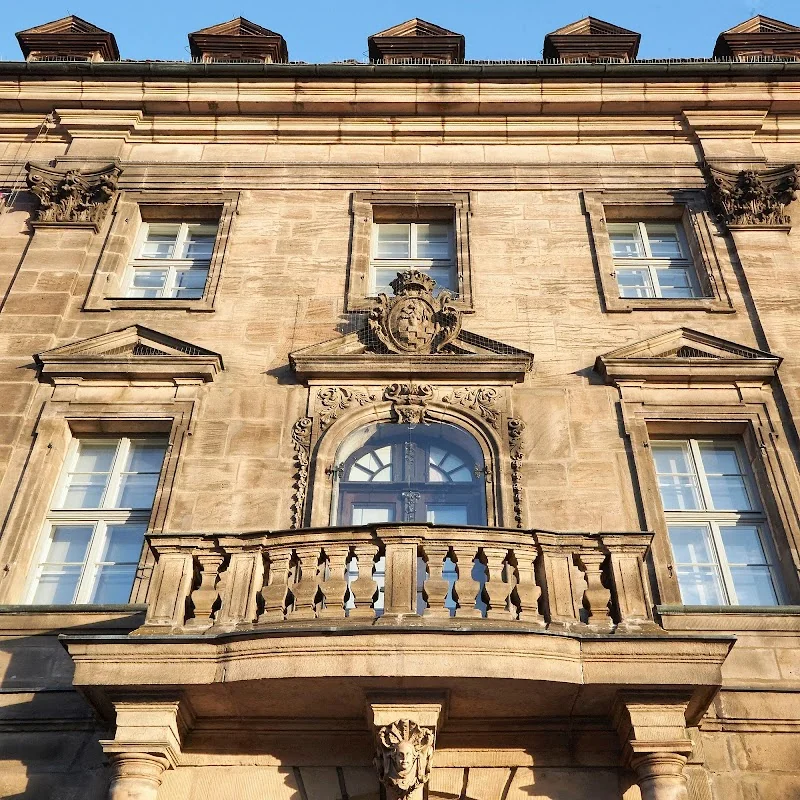
The City Museum Erlangen is located in the heart of the old town at Martin-Luther-Platz and tells the history of the city and the region from the first traces of human life to the modern university and Siemens city. The building is housed in the former old town hall and a neighboring citizen's house; the museum complex covers around 1,000 square meters of exhibition space. Those who enter here not only get a collection of historical objects but also a place with a permanent exhibition, changing special exhibitions, educational offerings, events, and a courtyard that is also used for cultural formats in summer. For orientation in the building, Brigitte Korn is mentioned as the head of the City Museum. This connects the museum's historical depth with a lively program for families, school classes, culture-interested guests, and all those who want to better understand Erlangen in its historical core. ([stadtmuseum-erlangen.de](https://www.stadtmuseum-erlangen.de/))
Opening Hours, Admission, and Closing Days at the City Museum Erlangen
Anyone planning a visit should know the opening hours of the City Museum exactly, as they are clearly structured and coordinated with the museum operation in the city center. The building is closed on Mondays, except on public holidays. On Tuesdays and Wednesdays, it is open from 9 AM to 5 PM, Thursdays from 9 AM to 8 PM, Fridays from 9 AM to 5 PM, and on Saturdays, Sundays, and public holidays from 11 AM to 5 PM. Thursday evenings are particularly attractive because admission is free between 5 PM and 8 PM. Additionally, the museum specifies concrete closing days such as Shrove Tuesday, Whit Monday, Whit Tuesday, Christmas Eve, the first Christmas holiday, New Year's Eve, and New Year's Day. For inquiries regarding City Museum Erlangen opening hours or City Museum Erlangen Easter, it is important: On public holidays, the holiday hours apply, so visits are possible on many public holidays, provided there is no explicitly stated closing day. ([stadtmuseum-erlangen.de](https://www.stadtmuseum-erlangen.de/de/ihr-besuch/informationen))
The admission pricing at the City Museum Erlangen is also family-friendly and transparent. Adults pay 6 euros, and the reduced admission costs 3.50 euros. Free admission is granted to children and teenagers under 18 years, as well as various pass holders such as ErlangenPass, Nürnberg-Pass, Fürth-Pass, or Schwabach-Pass. Additionally, there are other groups with free contingents, such as companions of people with the B mark, teachers and companions of school classes and youth groups, as well as several museum associations. There are special rates for school and educational offerings. Important for planning your visit: During times without special exhibitions, admission to the permanent exhibition is usually free. So, those specifically looking for City Museum Erlangen admission, affordable times, or free visits will find several good options for a spontaneous museum visit. ([stadtmuseum-erlangen.de](https://www.stadtmuseum-erlangen.de/de/ihr-besuch/informationen))
Permanent Exhibition, Special Exhibitions, and Current Exhibition
The permanent exhibition is the heart of the City Museum Erlangen. It takes visitors through the history of the city in several stations, starting from the first traces of settlement, before covering the old town, new town, industrialization, the German Empire, World War I, National Socialism, and the post-war period up to modern urban development. On the permanent exhibition page, these major narrative threads are divided into sections, such as prehistory, old town Erlangen, new town Erlangen, industrialization, German Empire, World War I, National Socialism, and post-war period. The English homepage additionally emphasizes the significance of the Baroque period: the planned development of the new town, the Huguenot manufactories, the establishment of the margravial residence, the founding of Friedrich-Alexander-University, and Erlangen's later development into a Siemens city. This makes the museum exciting for all those who want to not only read about city history but experience it as a coherent journey. ([stadtmuseum-erlangen.de](https://www.stadtmuseum-erlangen.de/de/ausstellungen/dauerausstellung))
For those searching for City Museum Erlangen current exhibition or City Museum Erlangen special exhibition, the website is currently particularly interesting because it clearly communicates the transition between two exhibitions. The homepage mentions the end of NEU ENTDECKT – Georg Greve-Lindau on April 12, 2026, while the next special exhibition The Comedic Art of Walter Moers is announced to start on May 3, 2026. The preview page specifies the duration until September 13, 2026, and describes the exhibition as a comprehensive showcase of Walter Moers' graphic works in collaboration with the 22nd International Comic Salon and the Ludwig Gallery Schloss Oberhausen. This shows how closely local history, graphic art, and regional cultural themes can be interconnected. So, those looking for a current exhibition will find not only a preview but a concrete programmatic connection between the present, comic culture, and the City Museum. ([stadtmuseum-erlangen.de](https://stadtmuseum-erlangen.de/?utm_source=openai))
The special exhibition program regularly complements the permanent exhibition with themes from city history, cultural and contemporary history, history of science, medical history, and fine arts. The website also refers to the preview of upcoming exhibitions and the review of past exhibitions, which makes the site particularly useful for returning visitors. Additionally, the homepage and event sections contain information on guided tours, lectures, action days, and other formats. There is also a dedicated courtyard that is used in summer for museum festivals and cultural events. So, those who want to experience the City Museum Erlangen as a lively event location rather than just see a single exhibit will find a place with clear exhibition logic and changing programs. Particularly practical: The newsletter keeps you updated on new special exhibitions and events. ([visit-erlangen.de](https://www.visit-erlangen.de/poi/stadtmuseum_erlangen-27149/?utm_source=openai))
Children, Teenagers, and Children's Birthdays at the Museum
The City Museum Erlangen is also a strong destination for families because it consciously builds educational offerings for children, teenagers, and groups. The page for children and teenagers explains that the program gives young people the opportunity to experience history and art playfully and through their own observation. It is aimed at school classes of all ages, kindergartens, daycare centers, and also individual visitors. The thematic spectrum includes tours and hands-on workshops related to the permanent exhibition and everyday culture; separate programs are developed for special exhibitions. Additionally, there are action and family days aimed at a broad audience. For those searching for City Museum Erlangen children or City Museum Erlangen events, this is an important note: The museum does not only think of classic guided tours but also of low-threshold formats that make the visit active. Furthermore, the homepage mentions the constitutional quarter-hour in the museum for the 2nd grade with a duration of 90 minutes. ([stadtmuseum-erlangen.de](https://www.stadtmuseum-erlangen.de/de/ihr-besuch/kinder-und-jugendliche))
The offerings become particularly concrete for children's birthdays at the museum. Children can choose between three activities: Cooking in Grandma's Kitchen, Wenzel – a cart full of city stories, and Stone Age Workshop. The birthday group is allowed to experiment, create, play for two hours, and learn something about their ancestors; if desired, they can celebrate with cake brought along afterward. The offer is aimed at groups of up to 12 children aged 6 and older. The duration is 120 minutes, or 150 minutes with cake, and the cost is 120 euros without a celebration and 135 euros with a celebration. Registration should be made at least 14 days before the date. For families specifically looking for City Museum Erlangen children's birthday, this is a very clear and attractive offer because it combines historical themes with movement, creativity, and an occasion from family life. ([stadtmuseum-erlangen.de](https://www.stadtmuseum-erlangen.de/de/ihr-besuch/feiern-im-museum))
Directions, Parking, and Location at Martin-Luther-Platz
The location of the City Museum is extremely central for visitors. The museum is located at Martin-Luther-Platz 9 in the heart of the old town and is close to the old town church. It is about 750 meters on foot from the main train station Erlangen, and the bus stop Martin-Luther-Platz is located directly in front of the museum entrance. This is helpful for anyone searching for City Museum Erlangen directions or City Museum Erlangen opening hours plus directions: The building can be reached comfortably on foot as well as by public transport. The city center is also facilitated by the free city center area, where since January 1, 2024, all bus lines can be used without a ticket. So, those coming from the city center or arriving from the train station can easily integrate the museum visit into a city walk. ([stadtmuseum-erlangen.de](https://www.stadtmuseum-erlangen.de/de/ihr-besuch/informationen))
There are also several practical parking options in Erlangen. The city explains that there are free capacities in the parking garages and underground garages around the city center at all times of the day, mentioning among others the parking garage Henkestraße, the underground garage Sedanstraße, the parking garage Neuer Markt, the parking lot Altstadt Ost, and the parking lot Theaterplatz. Additionally, the large parking lot is a central starting point; from there, the free city line 299 runs through the city center every seven to eight minutes. The official parking fees are also transparently regulated: In the public parking lots of the city center, the first half hour costs 1 euro, each additional hour 2.60 euros, at the large parking lot 1.50 euros per hour, each on weekdays. For electric vehicles, special rules apply since April 1, 2025, with a parking disc in the first three hours. So, those visiting the City Museum by car can specifically look for well-connected city center parking spots and combine the museum visit with a short walk. ([erlangen.de](https://erlangen.de/aktuelles/parken-in-erlangen))
Accessibility, Photos, and Practical Visit Tips
The City Museum Erlangen places great importance on accessibility and on a visit that works well for as many people as possible. The entrance of the main building at Martin-Luther-Platz 9 is at ground level, the door opens via a button, the passage width is between 96 and 123 centimeters, and all exhibition and event rooms are generally wheelchair accessible. Additionally, there is a wheelchair-accessible visitor elevator, a barrier-free toilet on the ground floor, mobile seating, a free folding wheelchair, and permission for companion and assistance dogs. Upon request, guided tours with sign language interpreters are possible; mobile FM systems and induction loops are also available. For guests searching for City Museum Erlangen accessibility, this is a very strong profile. Information in easy language, German sign language, and English is also anchored on the website. ([stadtmuseum-erlangen.de](https://www.stadtmuseum-erlangen.de/de/ihr-besuch/barrierefreies-museum))
Some practical rules include details that make the visit pleasant. Coats and larger bags should be left at the cloakroom; lockers are available for a 1 euro deposit. Eating and drinking are not allowed in the exhibition rooms, and dogs are generally not permitted in the museum, except for assistance dogs for people with disabilities. For private purposes, photography without flash and tripod is allowed, which answers the keyword City Museum Erlangen photos well. Free BayernWLAN is also available, and a museum floor plan can be downloaded. For visitors who want to orient themselves in advance, these are valuable little details because they make the walk through the building stress-free and significantly facilitate planning for families, school classes, or older guests. ([stadtmuseum-erlangen.de](https://www.stadtmuseum-erlangen.de/de/ihr-besuch/informationen))
History, Collection, and Special Highlights
The history of the City Museum itself is a piece of Erlangen's city history. Its roots lie in the Germanic Museum founded in 1865, which was dedicated to collecting antiquities. After an exhibition on the 100-year membership of Erlangen in the Kingdom of Bavaria in 1910, the Erlangen Tourist Association began the actual collection activity for a local museum. This opened in 1919 in the water tower on Apfelstraße, the former detention center. In 1923, an exhibition room was added in the former old town hall, which later became the central museum location. In 1964, the building received its current name, and in 1993, the major renovation was completed, and the museum was expanded by the newly acquired citizen's house at Martin-Luther-Platz 8. Since then, the complex has been positioned even more strongly as a city history center. So, those searching for City Museum Erlangen management or City Museum Erlangen history will find a dense historical background here. ([stadtmuseum-erlangen.de](https://www.stadtmuseum-erlangen.de/de/das-museum/unsere-geschichte))
The collection itself is also extremely diverse. Of regional significance is the collection on the Huguenot trades of stocking weavers, glove makers, tanners, and carpet weavers. Additionally, there are archaeological finds from the urn field and Hallstatt periods, tools and machines from the time of industrialization, objects of rural life and folklore, craft items, bourgeois living culture, as well as studentica and toys. Furthermore, the house possesses works by Erlangen and Franconian artists. This mixture makes the museum exciting for people interested in city history, craftsmanship, migration history, everyday culture, or the development of a university city. The permanent exhibition is thus not just an archive but a narrative walk through several centuries with very tangible objects. ([stadtmuseum-erlangen.de](https://www.stadtmuseum-erlangen.de/de/das-museum/unsere-sammlung))
A special charm lies in the selected strong pieces and depot highlights with which the museum points out individual themes. These include, for example, the Kosbach altar, the stocking weaver's chair, the arrival of the Huguenots, Erlangen woven carpets, beer mugs from Erlangen, the X-ray machine from RGS, the first telephone, the Siemens theme, the war Christmas tree, or toys and everyday objects with local reference. The page strong pieces shows how Erlangen's history can be exemplarily read from objects, while the depot area presents further curious, rare, or particularly illustrative pieces. It is exactly this depth of detail that makes the visit attractive: The museum not only tells big lines but also offers concrete things at many points that can anchor history. For guests searching for photos, reviews, or special highlights, this is often the moment when expectations of a classic local museum are positively exceeded. ([stadtmuseum-erlangen.de](https://www.stadtmuseum-erlangen.de/de/ausstellungen/starke-stuecke))
Sources:
- City Museum Erlangen - Official Website
- City Museum Erlangen - Information
- City Museum Erlangen - Accessible Museum
- City Museum Erlangen - Children and Teenagers
- City Museum Erlangen - Celebrating in the Museum
- City Museum Erlangen - Permanent Exhibition
- City Museum Erlangen - Special Exhibitions
- City Museum Erlangen - Strong Pieces
- City Erlangen - Parking in Erlangen
- Visit Erlangen - City Museum Erlangen
Mehr anzeigenWeniger anzeigen
City Museum Erlangen | Opening Hours & Exhibitions
The City Museum Erlangen is located in the heart of the old town at Martin-Luther-Platz and tells the history of the city and the region from the first traces of human life to the modern university and Siemens city. The building is housed in the former old town hall and a neighboring citizen's house; the museum complex covers around 1,000 square meters of exhibition space. Those who enter here not only get a collection of historical objects but also a place with a permanent exhibition, changing special exhibitions, educational offerings, events, and a courtyard that is also used for cultural formats in summer. For orientation in the building, Brigitte Korn is mentioned as the head of the City Museum. This connects the museum's historical depth with a lively program for families, school classes, culture-interested guests, and all those who want to better understand Erlangen in its historical core. ([stadtmuseum-erlangen.de](https://www.stadtmuseum-erlangen.de/))
Opening Hours, Admission, and Closing Days at the City Museum Erlangen
Anyone planning a visit should know the opening hours of the City Museum exactly, as they are clearly structured and coordinated with the museum operation in the city center. The building is closed on Mondays, except on public holidays. On Tuesdays and Wednesdays, it is open from 9 AM to 5 PM, Thursdays from 9 AM to 8 PM, Fridays from 9 AM to 5 PM, and on Saturdays, Sundays, and public holidays from 11 AM to 5 PM. Thursday evenings are particularly attractive because admission is free between 5 PM and 8 PM. Additionally, the museum specifies concrete closing days such as Shrove Tuesday, Whit Monday, Whit Tuesday, Christmas Eve, the first Christmas holiday, New Year's Eve, and New Year's Day. For inquiries regarding City Museum Erlangen opening hours or City Museum Erlangen Easter, it is important: On public holidays, the holiday hours apply, so visits are possible on many public holidays, provided there is no explicitly stated closing day. ([stadtmuseum-erlangen.de](https://www.stadtmuseum-erlangen.de/de/ihr-besuch/informationen))
The admission pricing at the City Museum Erlangen is also family-friendly and transparent. Adults pay 6 euros, and the reduced admission costs 3.50 euros. Free admission is granted to children and teenagers under 18 years, as well as various pass holders such as ErlangenPass, Nürnberg-Pass, Fürth-Pass, or Schwabach-Pass. Additionally, there are other groups with free contingents, such as companions of people with the B mark, teachers and companions of school classes and youth groups, as well as several museum associations. There are special rates for school and educational offerings. Important for planning your visit: During times without special exhibitions, admission to the permanent exhibition is usually free. So, those specifically looking for City Museum Erlangen admission, affordable times, or free visits will find several good options for a spontaneous museum visit. ([stadtmuseum-erlangen.de](https://www.stadtmuseum-erlangen.de/de/ihr-besuch/informationen))
Permanent Exhibition, Special Exhibitions, and Current Exhibition
The permanent exhibition is the heart of the City Museum Erlangen. It takes visitors through the history of the city in several stations, starting from the first traces of settlement, before covering the old town, new town, industrialization, the German Empire, World War I, National Socialism, and the post-war period up to modern urban development. On the permanent exhibition page, these major narrative threads are divided into sections, such as prehistory, old town Erlangen, new town Erlangen, industrialization, German Empire, World War I, National Socialism, and post-war period. The English homepage additionally emphasizes the significance of the Baroque period: the planned development of the new town, the Huguenot manufactories, the establishment of the margravial residence, the founding of Friedrich-Alexander-University, and Erlangen's later development into a Siemens city. This makes the museum exciting for all those who want to not only read about city history but experience it as a coherent journey. ([stadtmuseum-erlangen.de](https://www.stadtmuseum-erlangen.de/de/ausstellungen/dauerausstellung))
For those searching for City Museum Erlangen current exhibition or City Museum Erlangen special exhibition, the website is currently particularly interesting because it clearly communicates the transition between two exhibitions. The homepage mentions the end of NEU ENTDECKT – Georg Greve-Lindau on April 12, 2026, while the next special exhibition The Comedic Art of Walter Moers is announced to start on May 3, 2026. The preview page specifies the duration until September 13, 2026, and describes the exhibition as a comprehensive showcase of Walter Moers' graphic works in collaboration with the 22nd International Comic Salon and the Ludwig Gallery Schloss Oberhausen. This shows how closely local history, graphic art, and regional cultural themes can be interconnected. So, those looking for a current exhibition will find not only a preview but a concrete programmatic connection between the present, comic culture, and the City Museum. ([stadtmuseum-erlangen.de](https://stadtmuseum-erlangen.de/?utm_source=openai))
The special exhibition program regularly complements the permanent exhibition with themes from city history, cultural and contemporary history, history of science, medical history, and fine arts. The website also refers to the preview of upcoming exhibitions and the review of past exhibitions, which makes the site particularly useful for returning visitors. Additionally, the homepage and event sections contain information on guided tours, lectures, action days, and other formats. There is also a dedicated courtyard that is used in summer for museum festivals and cultural events. So, those who want to experience the City Museum Erlangen as a lively event location rather than just see a single exhibit will find a place with clear exhibition logic and changing programs. Particularly practical: The newsletter keeps you updated on new special exhibitions and events. ([visit-erlangen.de](https://www.visit-erlangen.de/poi/stadtmuseum_erlangen-27149/?utm_source=openai))
Children, Teenagers, and Children's Birthdays at the Museum
The City Museum Erlangen is also a strong destination for families because it consciously builds educational offerings for children, teenagers, and groups. The page for children and teenagers explains that the program gives young people the opportunity to experience history and art playfully and through their own observation. It is aimed at school classes of all ages, kindergartens, daycare centers, and also individual visitors. The thematic spectrum includes tours and hands-on workshops related to the permanent exhibition and everyday culture; separate programs are developed for special exhibitions. Additionally, there are action and family days aimed at a broad audience. For those searching for City Museum Erlangen children or City Museum Erlangen events, this is an important note: The museum does not only think of classic guided tours but also of low-threshold formats that make the visit active. Furthermore, the homepage mentions the constitutional quarter-hour in the museum for the 2nd grade with a duration of 90 minutes. ([stadtmuseum-erlangen.de](https://www.stadtmuseum-erlangen.de/de/ihr-besuch/kinder-und-jugendliche))
The offerings become particularly concrete for children's birthdays at the museum. Children can choose between three activities: Cooking in Grandma's Kitchen, Wenzel – a cart full of city stories, and Stone Age Workshop. The birthday group is allowed to experiment, create, play for two hours, and learn something about their ancestors; if desired, they can celebrate with cake brought along afterward. The offer is aimed at groups of up to 12 children aged 6 and older. The duration is 120 minutes, or 150 minutes with cake, and the cost is 120 euros without a celebration and 135 euros with a celebration. Registration should be made at least 14 days before the date. For families specifically looking for City Museum Erlangen children's birthday, this is a very clear and attractive offer because it combines historical themes with movement, creativity, and an occasion from family life. ([stadtmuseum-erlangen.de](https://www.stadtmuseum-erlangen.de/de/ihr-besuch/feiern-im-museum))
Directions, Parking, and Location at Martin-Luther-Platz
The location of the City Museum is extremely central for visitors. The museum is located at Martin-Luther-Platz 9 in the heart of the old town and is close to the old town church. It is about 750 meters on foot from the main train station Erlangen, and the bus stop Martin-Luther-Platz is located directly in front of the museum entrance. This is helpful for anyone searching for City Museum Erlangen directions or City Museum Erlangen opening hours plus directions: The building can be reached comfortably on foot as well as by public transport. The city center is also facilitated by the free city center area, where since January 1, 2024, all bus lines can be used without a ticket. So, those coming from the city center or arriving from the train station can easily integrate the museum visit into a city walk. ([stadtmuseum-erlangen.de](https://www.stadtmuseum-erlangen.de/de/ihr-besuch/informationen))
There are also several practical parking options in Erlangen. The city explains that there are free capacities in the parking garages and underground garages around the city center at all times of the day, mentioning among others the parking garage Henkestraße, the underground garage Sedanstraße, the parking garage Neuer Markt, the parking lot Altstadt Ost, and the parking lot Theaterplatz. Additionally, the large parking lot is a central starting point; from there, the free city line 299 runs through the city center every seven to eight minutes. The official parking fees are also transparently regulated: In the public parking lots of the city center, the first half hour costs 1 euro, each additional hour 2.60 euros, at the large parking lot 1.50 euros per hour, each on weekdays. For electric vehicles, special rules apply since April 1, 2025, with a parking disc in the first three hours. So, those visiting the City Museum by car can specifically look for well-connected city center parking spots and combine the museum visit with a short walk. ([erlangen.de](https://erlangen.de/aktuelles/parken-in-erlangen))
Accessibility, Photos, and Practical Visit Tips
The City Museum Erlangen places great importance on accessibility and on a visit that works well for as many people as possible. The entrance of the main building at Martin-Luther-Platz 9 is at ground level, the door opens via a button, the passage width is between 96 and 123 centimeters, and all exhibition and event rooms are generally wheelchair accessible. Additionally, there is a wheelchair-accessible visitor elevator, a barrier-free toilet on the ground floor, mobile seating, a free folding wheelchair, and permission for companion and assistance dogs. Upon request, guided tours with sign language interpreters are possible; mobile FM systems and induction loops are also available. For guests searching for City Museum Erlangen accessibility, this is a very strong profile. Information in easy language, German sign language, and English is also anchored on the website. ([stadtmuseum-erlangen.de](https://www.stadtmuseum-erlangen.de/de/ihr-besuch/barrierefreies-museum))
Some practical rules include details that make the visit pleasant. Coats and larger bags should be left at the cloakroom; lockers are available for a 1 euro deposit. Eating and drinking are not allowed in the exhibition rooms, and dogs are generally not permitted in the museum, except for assistance dogs for people with disabilities. For private purposes, photography without flash and tripod is allowed, which answers the keyword City Museum Erlangen photos well. Free BayernWLAN is also available, and a museum floor plan can be downloaded. For visitors who want to orient themselves in advance, these are valuable little details because they make the walk through the building stress-free and significantly facilitate planning for families, school classes, or older guests. ([stadtmuseum-erlangen.de](https://www.stadtmuseum-erlangen.de/de/ihr-besuch/informationen))
History, Collection, and Special Highlights
The history of the City Museum itself is a piece of Erlangen's city history. Its roots lie in the Germanic Museum founded in 1865, which was dedicated to collecting antiquities. After an exhibition on the 100-year membership of Erlangen in the Kingdom of Bavaria in 1910, the Erlangen Tourist Association began the actual collection activity for a local museum. This opened in 1919 in the water tower on Apfelstraße, the former detention center. In 1923, an exhibition room was added in the former old town hall, which later became the central museum location. In 1964, the building received its current name, and in 1993, the major renovation was completed, and the museum was expanded by the newly acquired citizen's house at Martin-Luther-Platz 8. Since then, the complex has been positioned even more strongly as a city history center. So, those searching for City Museum Erlangen management or City Museum Erlangen history will find a dense historical background here. ([stadtmuseum-erlangen.de](https://www.stadtmuseum-erlangen.de/de/das-museum/unsere-geschichte))
The collection itself is also extremely diverse. Of regional significance is the collection on the Huguenot trades of stocking weavers, glove makers, tanners, and carpet weavers. Additionally, there are archaeological finds from the urn field and Hallstatt periods, tools and machines from the time of industrialization, objects of rural life and folklore, craft items, bourgeois living culture, as well as studentica and toys. Furthermore, the house possesses works by Erlangen and Franconian artists. This mixture makes the museum exciting for people interested in city history, craftsmanship, migration history, everyday culture, or the development of a university city. The permanent exhibition is thus not just an archive but a narrative walk through several centuries with very tangible objects. ([stadtmuseum-erlangen.de](https://www.stadtmuseum-erlangen.de/de/das-museum/unsere-sammlung))
A special charm lies in the selected strong pieces and depot highlights with which the museum points out individual themes. These include, for example, the Kosbach altar, the stocking weaver's chair, the arrival of the Huguenots, Erlangen woven carpets, beer mugs from Erlangen, the X-ray machine from RGS, the first telephone, the Siemens theme, the war Christmas tree, or toys and everyday objects with local reference. The page strong pieces shows how Erlangen's history can be exemplarily read from objects, while the depot area presents further curious, rare, or particularly illustrative pieces. It is exactly this depth of detail that makes the visit attractive: The museum not only tells big lines but also offers concrete things at many points that can anchor history. For guests searching for photos, reviews, or special highlights, this is often the moment when expectations of a classic local museum are positively exceeded. ([stadtmuseum-erlangen.de](https://www.stadtmuseum-erlangen.de/de/ausstellungen/starke-stuecke))
Sources:
- City Museum Erlangen - Official Website
- City Museum Erlangen - Information
- City Museum Erlangen - Accessible Museum
- City Museum Erlangen - Children and Teenagers
- City Museum Erlangen - Celebrating in the Museum
- City Museum Erlangen - Permanent Exhibition
- City Museum Erlangen - Special Exhibitions
- City Museum Erlangen - Strong Pieces
- City Erlangen - Parking in Erlangen
- Visit Erlangen - City Museum Erlangen
City Museum Erlangen | Opening Hours & Exhibitions
The City Museum Erlangen is located in the heart of the old town at Martin-Luther-Platz and tells the history of the city and the region from the first traces of human life to the modern university and Siemens city. The building is housed in the former old town hall and a neighboring citizen's house; the museum complex covers around 1,000 square meters of exhibition space. Those who enter here not only get a collection of historical objects but also a place with a permanent exhibition, changing special exhibitions, educational offerings, events, and a courtyard that is also used for cultural formats in summer. For orientation in the building, Brigitte Korn is mentioned as the head of the City Museum. This connects the museum's historical depth with a lively program for families, school classes, culture-interested guests, and all those who want to better understand Erlangen in its historical core. ([stadtmuseum-erlangen.de](https://www.stadtmuseum-erlangen.de/))
Opening Hours, Admission, and Closing Days at the City Museum Erlangen
Anyone planning a visit should know the opening hours of the City Museum exactly, as they are clearly structured and coordinated with the museum operation in the city center. The building is closed on Mondays, except on public holidays. On Tuesdays and Wednesdays, it is open from 9 AM to 5 PM, Thursdays from 9 AM to 8 PM, Fridays from 9 AM to 5 PM, and on Saturdays, Sundays, and public holidays from 11 AM to 5 PM. Thursday evenings are particularly attractive because admission is free between 5 PM and 8 PM. Additionally, the museum specifies concrete closing days such as Shrove Tuesday, Whit Monday, Whit Tuesday, Christmas Eve, the first Christmas holiday, New Year's Eve, and New Year's Day. For inquiries regarding City Museum Erlangen opening hours or City Museum Erlangen Easter, it is important: On public holidays, the holiday hours apply, so visits are possible on many public holidays, provided there is no explicitly stated closing day. ([stadtmuseum-erlangen.de](https://www.stadtmuseum-erlangen.de/de/ihr-besuch/informationen))
The admission pricing at the City Museum Erlangen is also family-friendly and transparent. Adults pay 6 euros, and the reduced admission costs 3.50 euros. Free admission is granted to children and teenagers under 18 years, as well as various pass holders such as ErlangenPass, Nürnberg-Pass, Fürth-Pass, or Schwabach-Pass. Additionally, there are other groups with free contingents, such as companions of people with the B mark, teachers and companions of school classes and youth groups, as well as several museum associations. There are special rates for school and educational offerings. Important for planning your visit: During times without special exhibitions, admission to the permanent exhibition is usually free. So, those specifically looking for City Museum Erlangen admission, affordable times, or free visits will find several good options for a spontaneous museum visit. ([stadtmuseum-erlangen.de](https://www.stadtmuseum-erlangen.de/de/ihr-besuch/informationen))
Permanent Exhibition, Special Exhibitions, and Current Exhibition
The permanent exhibition is the heart of the City Museum Erlangen. It takes visitors through the history of the city in several stations, starting from the first traces of settlement, before covering the old town, new town, industrialization, the German Empire, World War I, National Socialism, and the post-war period up to modern urban development. On the permanent exhibition page, these major narrative threads are divided into sections, such as prehistory, old town Erlangen, new town Erlangen, industrialization, German Empire, World War I, National Socialism, and post-war period. The English homepage additionally emphasizes the significance of the Baroque period: the planned development of the new town, the Huguenot manufactories, the establishment of the margravial residence, the founding of Friedrich-Alexander-University, and Erlangen's later development into a Siemens city. This makes the museum exciting for all those who want to not only read about city history but experience it as a coherent journey. ([stadtmuseum-erlangen.de](https://www.stadtmuseum-erlangen.de/de/ausstellungen/dauerausstellung))
For those searching for City Museum Erlangen current exhibition or City Museum Erlangen special exhibition, the website is currently particularly interesting because it clearly communicates the transition between two exhibitions. The homepage mentions the end of NEU ENTDECKT – Georg Greve-Lindau on April 12, 2026, while the next special exhibition The Comedic Art of Walter Moers is announced to start on May 3, 2026. The preview page specifies the duration until September 13, 2026, and describes the exhibition as a comprehensive showcase of Walter Moers' graphic works in collaboration with the 22nd International Comic Salon and the Ludwig Gallery Schloss Oberhausen. This shows how closely local history, graphic art, and regional cultural themes can be interconnected. So, those looking for a current exhibition will find not only a preview but a concrete programmatic connection between the present, comic culture, and the City Museum. ([stadtmuseum-erlangen.de](https://stadtmuseum-erlangen.de/?utm_source=openai))
The special exhibition program regularly complements the permanent exhibition with themes from city history, cultural and contemporary history, history of science, medical history, and fine arts. The website also refers to the preview of upcoming exhibitions and the review of past exhibitions, which makes the site particularly useful for returning visitors. Additionally, the homepage and event sections contain information on guided tours, lectures, action days, and other formats. There is also a dedicated courtyard that is used in summer for museum festivals and cultural events. So, those who want to experience the City Museum Erlangen as a lively event location rather than just see a single exhibit will find a place with clear exhibition logic and changing programs. Particularly practical: The newsletter keeps you updated on new special exhibitions and events. ([visit-erlangen.de](https://www.visit-erlangen.de/poi/stadtmuseum_erlangen-27149/?utm_source=openai))
Children, Teenagers, and Children's Birthdays at the Museum
The City Museum Erlangen is also a strong destination for families because it consciously builds educational offerings for children, teenagers, and groups. The page for children and teenagers explains that the program gives young people the opportunity to experience history and art playfully and through their own observation. It is aimed at school classes of all ages, kindergartens, daycare centers, and also individual visitors. The thematic spectrum includes tours and hands-on workshops related to the permanent exhibition and everyday culture; separate programs are developed for special exhibitions. Additionally, there are action and family days aimed at a broad audience. For those searching for City Museum Erlangen children or City Museum Erlangen events, this is an important note: The museum does not only think of classic guided tours but also of low-threshold formats that make the visit active. Furthermore, the homepage mentions the constitutional quarter-hour in the museum for the 2nd grade with a duration of 90 minutes. ([stadtmuseum-erlangen.de](https://www.stadtmuseum-erlangen.de/de/ihr-besuch/kinder-und-jugendliche))
The offerings become particularly concrete for children's birthdays at the museum. Children can choose between three activities: Cooking in Grandma's Kitchen, Wenzel – a cart full of city stories, and Stone Age Workshop. The birthday group is allowed to experiment, create, play for two hours, and learn something about their ancestors; if desired, they can celebrate with cake brought along afterward. The offer is aimed at groups of up to 12 children aged 6 and older. The duration is 120 minutes, or 150 minutes with cake, and the cost is 120 euros without a celebration and 135 euros with a celebration. Registration should be made at least 14 days before the date. For families specifically looking for City Museum Erlangen children's birthday, this is a very clear and attractive offer because it combines historical themes with movement, creativity, and an occasion from family life. ([stadtmuseum-erlangen.de](https://www.stadtmuseum-erlangen.de/de/ihr-besuch/feiern-im-museum))
Directions, Parking, and Location at Martin-Luther-Platz
The location of the City Museum is extremely central for visitors. The museum is located at Martin-Luther-Platz 9 in the heart of the old town and is close to the old town church. It is about 750 meters on foot from the main train station Erlangen, and the bus stop Martin-Luther-Platz is located directly in front of the museum entrance. This is helpful for anyone searching for City Museum Erlangen directions or City Museum Erlangen opening hours plus directions: The building can be reached comfortably on foot as well as by public transport. The city center is also facilitated by the free city center area, where since January 1, 2024, all bus lines can be used without a ticket. So, those coming from the city center or arriving from the train station can easily integrate the museum visit into a city walk. ([stadtmuseum-erlangen.de](https://www.stadtmuseum-erlangen.de/de/ihr-besuch/informationen))
There are also several practical parking options in Erlangen. The city explains that there are free capacities in the parking garages and underground garages around the city center at all times of the day, mentioning among others the parking garage Henkestraße, the underground garage Sedanstraße, the parking garage Neuer Markt, the parking lot Altstadt Ost, and the parking lot Theaterplatz. Additionally, the large parking lot is a central starting point; from there, the free city line 299 runs through the city center every seven to eight minutes. The official parking fees are also transparently regulated: In the public parking lots of the city center, the first half hour costs 1 euro, each additional hour 2.60 euros, at the large parking lot 1.50 euros per hour, each on weekdays. For electric vehicles, special rules apply since April 1, 2025, with a parking disc in the first three hours. So, those visiting the City Museum by car can specifically look for well-connected city center parking spots and combine the museum visit with a short walk. ([erlangen.de](https://erlangen.de/aktuelles/parken-in-erlangen))
Accessibility, Photos, and Practical Visit Tips
The City Museum Erlangen places great importance on accessibility and on a visit that works well for as many people as possible. The entrance of the main building at Martin-Luther-Platz 9 is at ground level, the door opens via a button, the passage width is between 96 and 123 centimeters, and all exhibition and event rooms are generally wheelchair accessible. Additionally, there is a wheelchair-accessible visitor elevator, a barrier-free toilet on the ground floor, mobile seating, a free folding wheelchair, and permission for companion and assistance dogs. Upon request, guided tours with sign language interpreters are possible; mobile FM systems and induction loops are also available. For guests searching for City Museum Erlangen accessibility, this is a very strong profile. Information in easy language, German sign language, and English is also anchored on the website. ([stadtmuseum-erlangen.de](https://www.stadtmuseum-erlangen.de/de/ihr-besuch/barrierefreies-museum))
Some practical rules include details that make the visit pleasant. Coats and larger bags should be left at the cloakroom; lockers are available for a 1 euro deposit. Eating and drinking are not allowed in the exhibition rooms, and dogs are generally not permitted in the museum, except for assistance dogs for people with disabilities. For private purposes, photography without flash and tripod is allowed, which answers the keyword City Museum Erlangen photos well. Free BayernWLAN is also available, and a museum floor plan can be downloaded. For visitors who want to orient themselves in advance, these are valuable little details because they make the walk through the building stress-free and significantly facilitate planning for families, school classes, or older guests. ([stadtmuseum-erlangen.de](https://www.stadtmuseum-erlangen.de/de/ihr-besuch/informationen))
History, Collection, and Special Highlights
The history of the City Museum itself is a piece of Erlangen's city history. Its roots lie in the Germanic Museum founded in 1865, which was dedicated to collecting antiquities. After an exhibition on the 100-year membership of Erlangen in the Kingdom of Bavaria in 1910, the Erlangen Tourist Association began the actual collection activity for a local museum. This opened in 1919 in the water tower on Apfelstraße, the former detention center. In 1923, an exhibition room was added in the former old town hall, which later became the central museum location. In 1964, the building received its current name, and in 1993, the major renovation was completed, and the museum was expanded by the newly acquired citizen's house at Martin-Luther-Platz 8. Since then, the complex has been positioned even more strongly as a city history center. So, those searching for City Museum Erlangen management or City Museum Erlangen history will find a dense historical background here. ([stadtmuseum-erlangen.de](https://www.stadtmuseum-erlangen.de/de/das-museum/unsere-geschichte))
The collection itself is also extremely diverse. Of regional significance is the collection on the Huguenot trades of stocking weavers, glove makers, tanners, and carpet weavers. Additionally, there are archaeological finds from the urn field and Hallstatt periods, tools and machines from the time of industrialization, objects of rural life and folklore, craft items, bourgeois living culture, as well as studentica and toys. Furthermore, the house possesses works by Erlangen and Franconian artists. This mixture makes the museum exciting for people interested in city history, craftsmanship, migration history, everyday culture, or the development of a university city. The permanent exhibition is thus not just an archive but a narrative walk through several centuries with very tangible objects. ([stadtmuseum-erlangen.de](https://www.stadtmuseum-erlangen.de/de/das-museum/unsere-sammlung))
A special charm lies in the selected strong pieces and depot highlights with which the museum points out individual themes. These include, for example, the Kosbach altar, the stocking weaver's chair, the arrival of the Huguenots, Erlangen woven carpets, beer mugs from Erlangen, the X-ray machine from RGS, the first telephone, the Siemens theme, the war Christmas tree, or toys and everyday objects with local reference. The page strong pieces shows how Erlangen's history can be exemplarily read from objects, while the depot area presents further curious, rare, or particularly illustrative pieces. It is exactly this depth of detail that makes the visit attractive: The museum not only tells big lines but also offers concrete things at many points that can anchor history. For guests searching for photos, reviews, or special highlights, this is often the moment when expectations of a classic local museum are positively exceeded. ([stadtmuseum-erlangen.de](https://www.stadtmuseum-erlangen.de/de/ausstellungen/starke-stuecke))
Sources:
- City Museum Erlangen - Official Website
- City Museum Erlangen - Information
- City Museum Erlangen - Accessible Museum
- City Museum Erlangen - Children and Teenagers
- City Museum Erlangen - Celebrating in the Museum
- City Museum Erlangen - Permanent Exhibition
- City Museum Erlangen - Special Exhibitions
- City Museum Erlangen - Strong Pieces
- City Erlangen - Parking in Erlangen
- Visit Erlangen - City Museum Erlangen
Upcoming Events
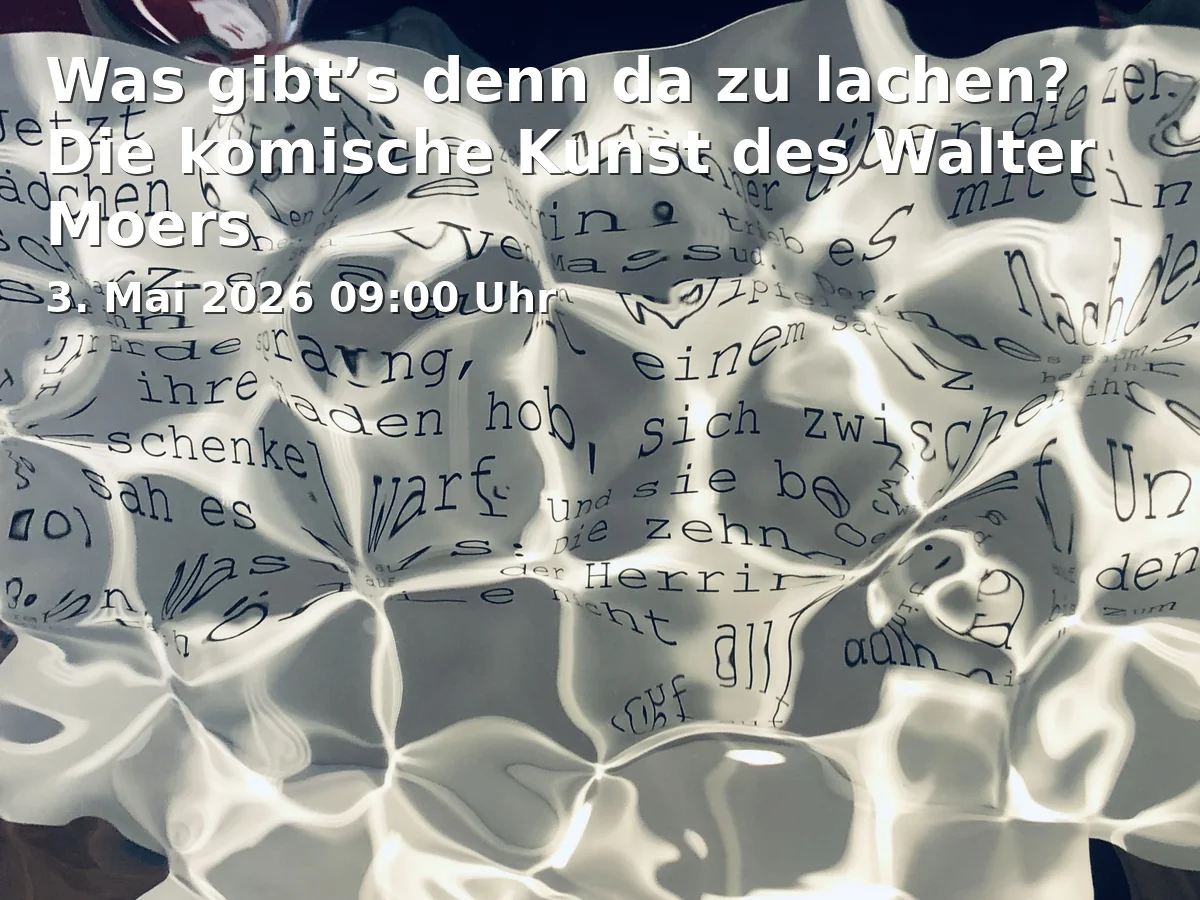
What's there to laugh about? The humorous art of Walter Moers
Erlangen gets Moers pure: comic cult, dark humor, and fantasy at the City Museum. Experience it from 03.05. to 13.09.2026 for 6 euros. #WalterMoers #Erlangen
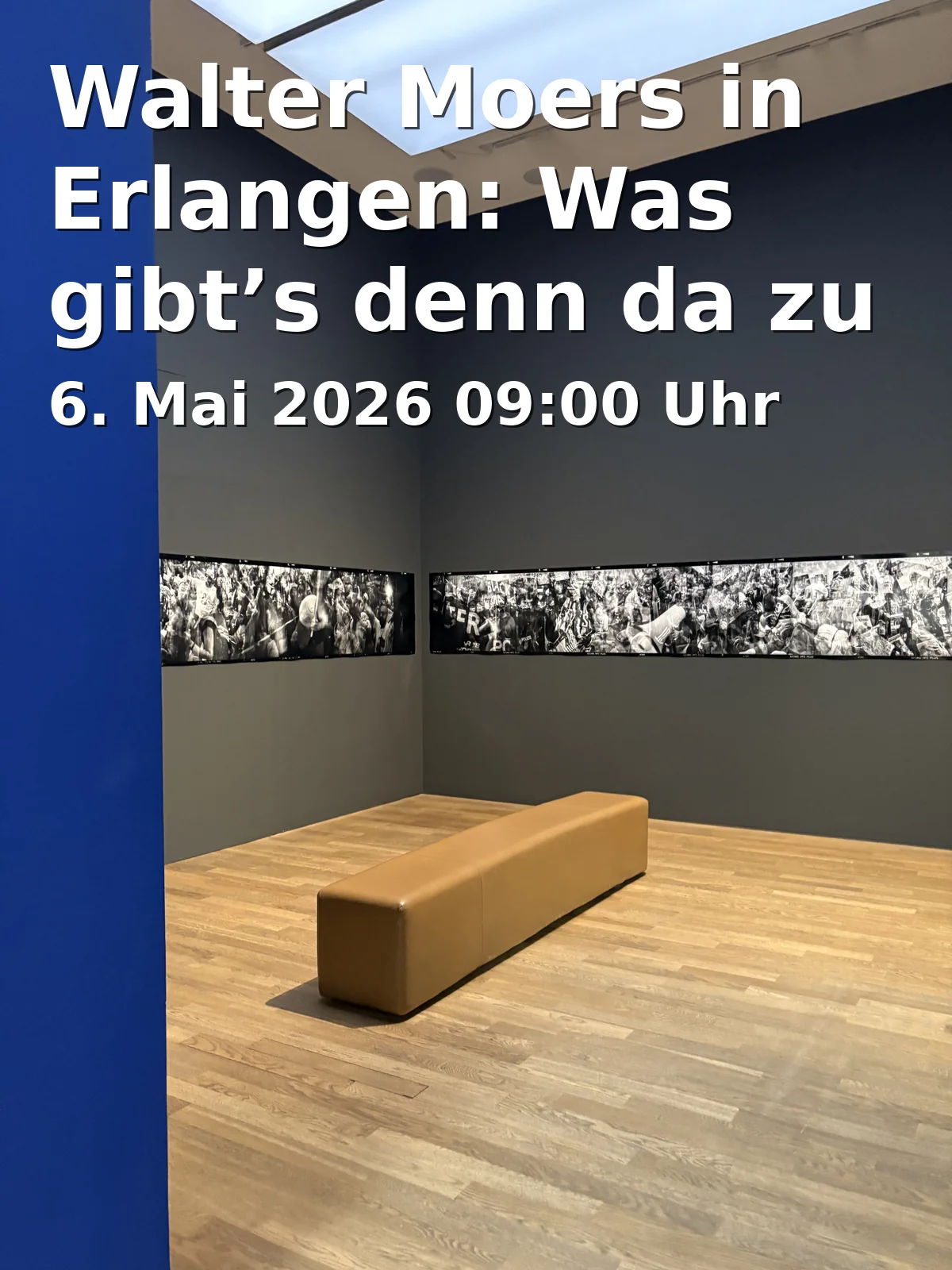
Walter Moers in Erlangen: What’s there to laugh about?
Erlangen receives a wonderfully quirky Moers world: drawings, satire, and Zamonien at the City Museum. Until September 13, 2026, admission 6 euros. #WalterMoers #Erlangen
Museum Festival for the Whole Family
Experience a family day full of culture with free admission at the Erlangen City Museum. A must for art lovers!
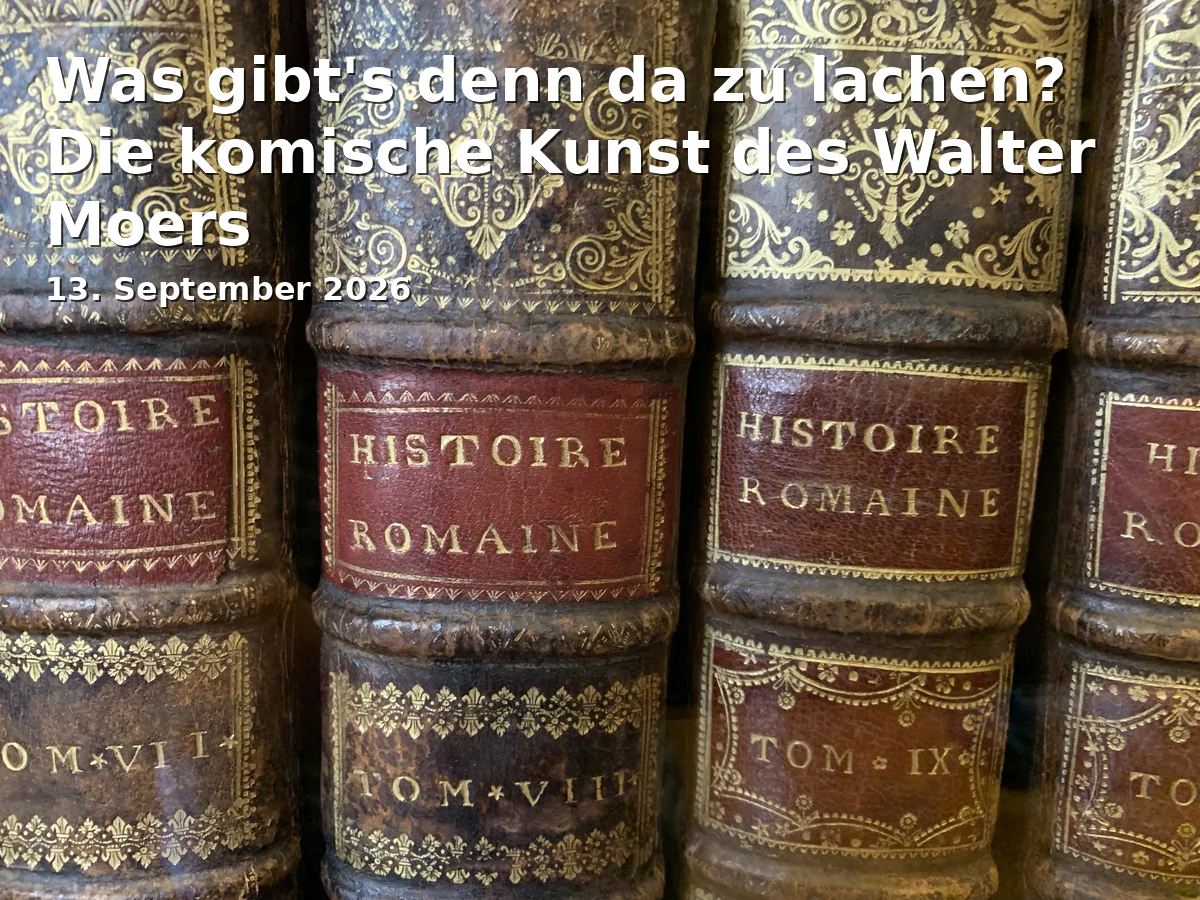
What's there to laugh about? The humorous art of Walter Moers
Visit Walter Moers' exhibition at the Erlangen City Museum and discover the funny world of the artist.
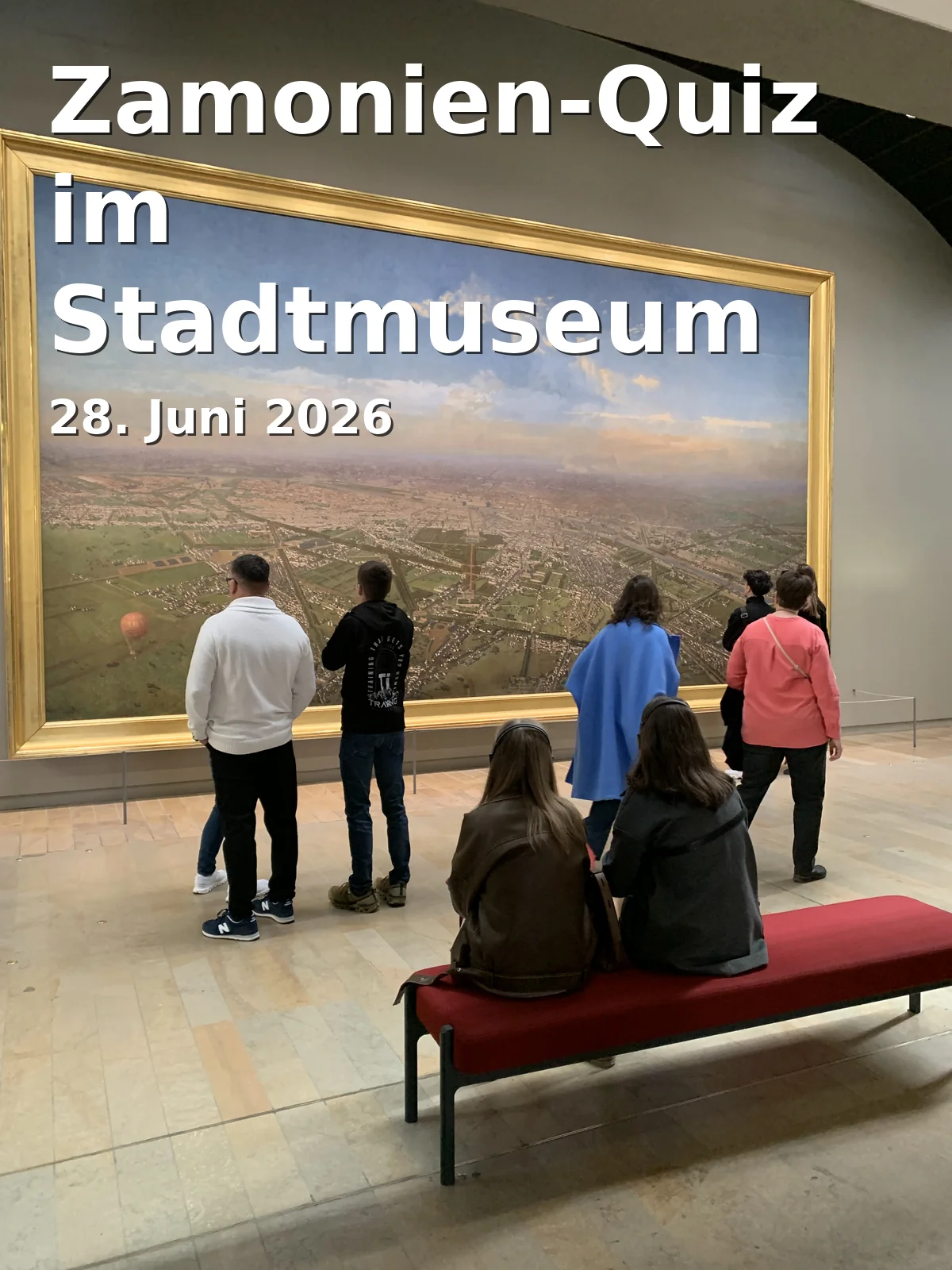
Zamonien Quiz at the City Museum
The Erlangen City Museum now offers a very special journey of discovery through the fantastic world of Walter Moers. A new scavenger hunt invites you to explore the exhibition on your own...Link to the event details Zamonien Quiz at the City Museum
Frequently Asked Questions
Reviews
Camilo Velasquez
7. March 2026
It's a very interesting museum, it shows you the historical evolution of Erlangen since prehistoric times, going through the revolutionary industry, wars, and modern times. Only 6 EUR entrance with lockers.
Désirée Russo
21. February 2025
A dive into the past of this nice city! It is an amazing city museum, one of the biggest I've ever seen, including authentic materials from prehistoric to modern times, also the Nazi period. Very kind staff, they also gave me a pencil with the museum facade because I was looking for a souvenir. Perfect experience! Thank you!
Gordana Vukoša
7. May 2023
Not too big museum but with some very interesting pieces and information. I liked it.
Nemo Wooderson
1. March 2025
I'm from the UK and working in Erlangen. The museum is fantastic. It is free, and the staff were a real pleasure. All the exhibits can be translated into English via a QR code on the phone. A really nice touch. All in all highly recommended. Steve
Greg Lengkeek
18. November 2023
Free entry to the museum during renovations; just one floor is open. Still worth a peek!