
Weisendorf
91 Weisendorf, Deutschland
Weisendorf | Mayoral Election & Municipal Council
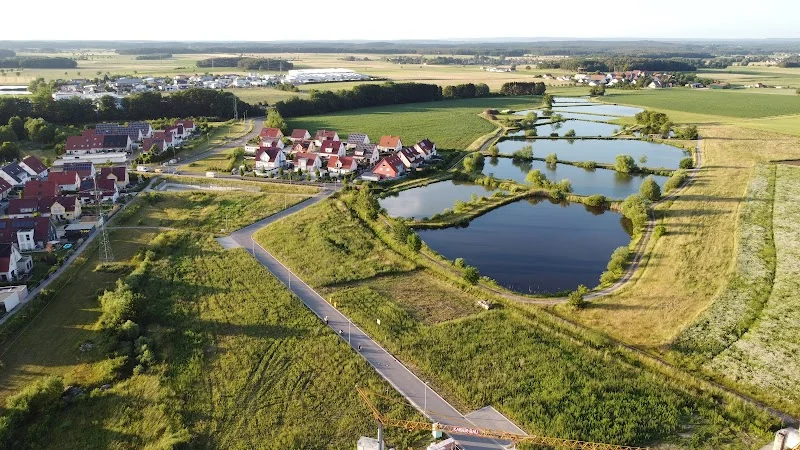
Weisendorf is a market town with a clear identity, a developed local landscape, and a very active community life. Those looking for Weisendorf today are not only interested in an address on the map but also in current information from the municipality, the political developments surrounding the mayoral election and municipal council, local club life, events such as the fire brigade festival, and the classification of the place in the Seebachgrund. Officially, Weisendorf describes itself as a centrally located market in the district of Erlangen-Höchstadt, which, together with Großenseebach and Heßdorf, forms the small region of Seebachgrund. The municipal website also provides numbers, data, and facts such as 6,611 inhabitants, an area of 3,672 hectares, and an elevation of 308 meters above NHN. At the same time, the municipality's presence shows that Weisendorf is much more than an administrative location: digital offerings, a citizen service portal, the digital twin, the Heimat-Info app, and active volunteer work shape everyday life on site. This mix of tradition, administration, neighborhood, and development makes Weisendorf particularly interesting for search queries like weisendorf aktuell, weisendorf gemeinde, weisendorf maps, or weisendorf einwohner. ([weisendorf.de](https://www.weisendorf.de/unsere-gemeinde))
Current Mayoral Election and Municipal Council in Weisendorf
In search queries related to Weisendorf, the political and municipal focus is particularly strong. Terms like weisendorf bürgermeister, weisendorf bürgermeisterwahl, weisendorf wahlergebnisse, and weisendorf gemeinderat show that many users are looking for the current decision-making structures of the place. The official town hall page lists Timo Wendel as the First Mayor. Additionally, the municipality has published the constitutive meeting of the newly elected municipal council on May 11, 2026; there, Timo Wendel was sworn in, Stefan Groß was elected as the Second Mayor, and Marco Hümmer as the Third Mayor. This clearly documents the current leadership structure of the municipality and makes it publicly accessible. The page about the municipal council describes it as the most important political body besides the mayor. This is central for SEO relevance because the municipality itself makes the political functions visible, thus precisely meeting the search intent behind the keywords. The local elections in 2026 are also extensively depicted on the official election page: On March 8, 2026, the local elections took place, and for the mayoral runoff on March 22, 2026, the municipality provides result portals as well as official announcements. The fact that the results are continuously updated during the election evening underscores the timeliness of the offering. Therefore, those seeking information about weisendorf aktuell, weisendorf bürgermeisterwahl, or weisendorf wahlergebnisse are primarily looking for these transparent, official information. For a municipal or local page, the politically administrative information needs is therefore one of the most important topics at all. ([weisendorf.de](https://www.weisendorf.de/buergerinfo/rathaus/organisationsstruktur/erster-buergermeister))
At the same time, it is remarkable in Weisendorf how closely political information is linked to citizen proximity. The official homepage not only announces election results but also directly provides further administrative services. This ranges from official announcements to the digital town hall to forms and citizen service links. This is where the added value lies for both search engines and users: Weisendorf is not just a place where elections are held, but also a place where municipal work is made accessible online. The election page refers to direct links to the mayoral election, municipal council election, district council election, and county council election, emphasizing that citizens can follow the election evening live. In practice, this means for the content strategy that the H2 heading around the mayoral election and municipal council is not just a keyword container but a real, current information center. For a local page, this is particularly strong because users do not expect abstract politics here but concrete local responsibilities, election dates, and publication practices. The combination of current office management, election history, and municipal transparency thus forms one of the strongest content focuses around Weisendorf. ([weisendorf.de](https://www.weisendorf.de/buergerinfo/wahlen-1/kommunalwahl-2026))
Fire Brigade Festival, Volunteer Fire Brigade, and Event Culture
A second central theme in the Weisendorf search queries is the fire brigade festival. Terms like weisendorf feuerwehr, weisendorf feuerwehrfest, and even weisendorf brand refer to the high importance of safety, volunteer work, and local festival culture. The official page of the Volunteer Fire Brigade Market Weisendorf e.V. shows how lively this environment is: In 2026, the fire brigade will celebrate its 150th anniversary, and the program ranges from the festive commemoration to a festive service and a large parade to the traditional fire brigade barbecue and a closing fireworks display. Particularly important for practical orientation is that the barbecue takes place at the festival site on Reuther Weg and explicitly not at the fire station. The fire brigade also states that the festival traditionally takes place on Ascension Day and that guests from near and far are welcome. The atmosphere is provided, among other things, by the Heckenmusikanten during the day and the band The Septembers in the evening. This mix of tradition, music, and social gathering is precisely what shapes local events in a market town. For the user question regarding weisendorf feuerwehrfest, it is also crucial that the festival is organized in tents and can therefore take place even in rain. The FAQ page also mentions the bus stop “Weisendorf, Schule” directly opposite the festival site. This is a very concrete, user-friendly hint and makes the event not only emotionally but also practically findable. Therefore, anyone looking for a place with real event and club culture will find in Weisendorf a strong example of how the fire brigade, municipality, and population shape a place together. ([feuerwehr-weisendorf.de](https://www.feuerwehr-weisendorf.de/termine/traditionelles-feuerwehr-grillfest-mit-livemusik-150-jahre-ff-weisendorf/))
For the content depth of a local page, the community aspect is also important here. The fire brigade festival is not just any arbitrary date in Weisendorf, but an event with identity-forming effects. The fire brigade page emphasizes that the anniversary is intentionally celebrated with several program points and that the festival weekend attracts visitors from the region. The official tone is explicitly inviting: It is about celebrating together, about encounters, and about a place where club culture becomes visible. Additionally, the fire brigade FAQ shows that even seating options and weather questions are taken into account. At the most important music and evening events, only a few seats are available, while the festival tent and beer garden are furnished on the other days. These details are relevant because they explain why search queries like weisendorf aktuell or weisendorf maps often also have event context: People are not only looking for the place itself but for a concrete reason to visit it. For SEO, this is valuable because the fire brigade page precisely addresses the genuine search intent behind local festival interest. Weisendorf thus connects tradition, mobility, and community in a very vivid way. ([feuerwehr-weisendorf.de](https://www.feuerwehr-weisendorf.de/150jahre/faqs-zum-festwochenende/))
Location, Population, and Access to Weisendorf
The geographical classification of Weisendorf is important for both users and search engines. The municipality describes itself as centrally located to Erlangen, Neustadt a.d. Aisch, Herzogenaurach, and Höchstadt a.d. Aisch. Together with Großenseebach and Heßdorf, Weisendorf forms the small region of Seebachgrund in the district of Erlangen-Höchstadt. This location makes the market attractive for people who want to combine rural living with good accessibility. The municipal website also emphasizes that the region opens up between Karpfenland, Franconian Wine Country, Franconian Switzerland, and Steigerwald as a recreational and local recreation area. At the same time, the page provides hard facts: 3,672 hectares of area, 308 meters elevation, 6,611 inhabitants, and the postal code 91085. For everyday life, the telephone area code 09135 and the location in the government district of Middle Franconia are also important orientation data. Those searching for weisendorf maps often expect a quick spatial classification; exactly this is provided by the municipality itself by making location, centrality, and regional proximity visible. The use of Google Maps and BayernAtlas on the website also shows that the market makes its locations and directions accessible through digital map services. This is helpful for visitors, newcomers, and businesses alike because access and orientation are not treated as secondary matters but as part of the service understanding. Thus, Weisendorf practically covers the search intent behind local, route, and location queries. ([weisendorf.de](https://www.weisendorf.de/unsere-gemeinde))
For a good local page, it is also important how the municipality describes itself to the outside world. Weisendorf does not see itself as an anonymous dormitory community but as a place with a connection between nature, work, and regional mobility. The municipality speaks of infrastructure for daycare centers to senior facilities and simultaneously refers to the expansion of sports and recreational opportunities. This is also relevant for the keyword strategy because many users not only search for weisendorf einwohner or weisendorf wetter but also want to know in the same breath whether the place is well connected and livable. The official representation makes it clear that population development has been closely linked to new building areas and the development of Gerbersleite. This makes it visible that Weisendorf has not stood still in recent decades but has continuously developed. Therefore, anyone looking for a modern yet locally connected municipality will find here a good example of Franconian settlement dynamics. For practical visits, it is also important that the town hall is located at Gerbersleite 2 and that the municipality has clearly communicated opening hours. This turns a geographical search term into a tangible place with real paths, real points of contact, and a comprehensible service offer. ([weisendorf.de](https://www.weisendorf.de/unsere-gemeinde))
History and Districts of Weisendorf
The historical depth of Weisendorf is significantly greater than a short place name might suggest. The official page on the history and districts shows that the place has been growing, changing, and at the same time preserving its identity for centuries. As early as the 14th century, individual districts appear in documents: Buch is mentioned for the first time in 1348 as “Puech,” Reinersdorf also appears in 1348 as “Reynhartzdorff,” Neuenbürg is documented in 1165 as “Nuvenburg,” Kairlindach is linguistically traced back to a derivation from “Kira” or church, and Mitteldorf is first documented in 1416. These historical traces show that Weisendorf did not emerge from a single compact core but from a network of settlement areas that developed over a long time. The market itself has been definitively referred to as “Markt” since 1820, and even then, four markets were regularly held. The page also tells of social and economic developments: In the 19th century, around a hundred houses with 155 families and 697 inhabitants lived in Weisendorf; the place was religiously diverse, with Catholic, Protestant, and Jewish inhabitants. The production of marigolds reached its peak around 1900, resulting in the nickname “Blumazupfa.” Such details make the place historically vivid and provide exactly the content that search queries for weisendorf aktuell may not directly expect but is crucial for the depth of a local page. ([weisendorf.de](https://www.weisendorf.de/unsere-gemeinde/ortsteile))
Particularly important is the recent history of the municipality. With the territorial reform of the 1970s, on January 1, 1972, the previously independent municipalities of Reinersdorf and Rezelsdorf as well as Nankendorf, which previously belonged to the municipality of Hammerbach, and Buch as part of the municipality of Unterreichenbach were incorporated. On May 1, 1978, Kairlindach and Oberlindach as well as Boxbrunn and Schmiedelberg were added. This development is still shaping the municipal image today because Weisendorf thus bundles several historical town centers in a market municipality. The municipality also describes that it was designated as a small center of the Seebachgrund as part of regional planning. Additionally, there is a visible infrastructure history: In 1974, the new secondary school was built, in 1985 the multipurpose hall was opened, and the central water supply was realized. From the 1990s onwards, Weisendorf experienced further growth phases through the eastern industrial area and new building areas; in 1993, the population exceeded 5,000 for the first time, and through the development of Gerbersleite, it rose to over 6,600 by 2014. These facts show how strongly the past and present overlap in Weisendorf: historical districts, municipal development, growth, and new infrastructure together form the foundation of today's market municipality. Therefore, those searching for weisendorf gemeinde or weisendorf einwohner receive not just a number but a comprehensible development history. ([weisendorf.de](https://www.weisendorf.de/unsere-gemeinde/ortsteile))
The listing of the districts themselves is also valuable for local orientation. The official page documents, among others, Boxbrunn, Buch, Kairlindach, Mitteldorf, Nankendorf, Neuenbürg, Oberlindach, Reinersdorf, Reuth, Rezelsdorf, Sauerheim, Schmiedelberg, and Sintmann. Each of these names carries its own historical and geographical character, and therein lies a piece of the municipality's special charm. While some places have emerged from early medieval settlement cores, others are shaped by clearing, feudal history, or later administrative reforms. This diversity also explains why Weisendorf as a place cannot be described with a single townscape. The market municipality lives from its core town and the surrounding districts, which together create a multifaceted community structure. For an SEO-optimized local page, this is of great advantage because search queries do not only target the main town but also the smaller structural elements. A good description of Weisendorf must therefore take the districts into account, not just the center. The municipality already does this quite well on its website by linking history and districts and thus creating a narratable local history from an administrative unit. ([weisendorf.de](https://www.weisendorf.de/unsere-gemeinde/ortsteile))
Town Hall, Digital Services, and Practical Contact Paths
Weisendorf not only excels in history and community but also with a clear understanding of digital services. The official homepage highlights that the market Weisendorf offers a digital town hall, official announcements, a virtual office, the Heimat-Info app, the digital twin, and a citizen service portal. This is particularly relevant for users because search queries like weisendorf aktuell, weisendorf gemeinde, or weisendorf maps are often associated with a quick need for information. Those wanting to get something done or check something should not have to search long. This also fits with the clear town hall address Gerbersleite 2 in 91085 Weisendorf. The page also lists the opening hours: Monday 8:00 AM to 12:00 PM, Tuesday 7:30 AM to 12:00 PM, Wednesday 8:00 AM to 12:00 PM, Thursday 8:00 AM to 12:00 PM and 2:00 PM to 6:00 PM, and Friday 8:00 AM to 12:00 PM. For direct contact, phone, fax, and email are visible on the website, as well as the contact person for the First Mayor. This builds trust and ensures that the place does not appear as a distant administrative unit online but as an accessible municipality with concrete paths. Additionally, the homepage lists numerous services, including waste disposal, building applications, dog tax, identity cards, passports, and residence registration. Such genuine service points are valuable for a local page because they establish the connection between search intent and everyday utility. Those wanting to not only read about Weisendorf but also visit or get something done there will quickly find the most important entry points. ([weisendorf.de](https://www.weisendorf.de/?utm_source=openai))
Furthermore, the municipality organizes its information not only as a static page but as a lively news offering. On the homepage and in the section “Current News from Weisendorf,” there are current notices about citizen events, water saving, digital projects, civil registry office appointments, and other official information. The website also refers to the digital publication of official announcements, making it clear that administration in Weisendorf is increasingly taking place online. For users, this is a strong signal because many local search queries demand exactly this mix of timeliness and practical relevance. The reference to the interactive map service and BayernAtlas shows that the municipality relies on digital support for orientation and wayfinding. This fits excellently with the keyword maps and simultaneously strengthens the feeling that Weisendorf is organized in a modern and citizen-friendly way. In sum, a picture emerges of a municipality that does not hide classic administration but presents it openly and user-friendly. This is exactly why Weisendorf is also interesting for people who specifically search for town hall, municipal administration, or current announcements. The digital infrastructure is not an addition here but a clear part of the local identity. ([weisendorf.de](https://www.weisendorf.de/buergerinfo/amtsblatt?utm_source=openai))
Family Place, Club Life, and Local Recreation around Weisendorf
The municipality describes Weisendorf as a family place and emphasizes the expansion of infrastructure, sports and recreational opportunities, as well as strong support for active club life. This is precisely important for the search intent of many users who are looking for not just an administrative object but a livable place. Weisendorf presents itself as a market with proximity to larger cities and at the same time with rural quality. The official website refers to the surrounding cities of Erlangen, Nuremberg, Fürth, Herzogenaurach, Höchstadt a.d. Aisch, and Neustadt a.d. Aisch, as well as to recreational areas like Karpfenland, Franconian Switzerland, and Steigerwald. This creates the image of a municipality that combines living, working, and leisure in a typical Franconian balance. This mix is particularly attractive for families because it connects short distances, good everyday infrastructure, and an intact club landscape. The municipality itself emphasizes that the population growth has been accompanied by the expansion of daycare centers to senior facilities. Additionally, the senior advisory board has been established as a public municipal institution to address and promote the concerns of older citizens. This shows that Weisendorf is not only aimed at young families but at all generations. For a local page, this is a strong signal because it answers the question of why people should live, stay, or come to Weisendorf. The answer is: because of the mix of proximity, community, and reliable municipal structure. ([weisendorf.de](https://www.weisendorf.de/unsere-gemeinde))
The community image also includes the Bürgerstiftung Weisendorf, which the market has established for the benefit of the population. Such institutions are important for social cohesion because they make engagement visible and can support local initiatives. Together with the clubs, the fire brigade, municipal participation formats, and digital offerings, a place emerges that goes far beyond the classic village or small-town cliché. Those searching for weisendorf aktuell often want to understand exactly these layers of development: What is happening in the municipality? How connected is it? Where can one find participation, events, and services? The municipal website answers these questions on several levels. It shows, on the one hand, the traditional bond to place and history, and on the other hand, the openness to digital administration and regional cooperation. The proximity to larger centers remains an important location advantage without Weisendorf losing its own identity. For content and SEO purposes, this tension field is particularly valuable because it locates the locality in a larger movement space while keeping it concrete and tangible. This also gives a search term like weisendorf apotheke, weisendorf tankstelle, or weisendorf pizza its meaning: people are not just looking for a business but for the functioning everyday world of a municipality that is well organized in practice. ([weisendorf.de](https://www.weisendorf.de/unsere-gemeinde/buergerstiftung?utm_source=openai))
Overall, Weisendorf shows a remarkable balance between administration, history, festival culture, and future orientation. The municipality is large enough to have its own profile and at the same time small enough to maintain personal closeness and local identity. Therefore, those writing about Weisendorf should not only mention the dry data but also take seriously the topics that truly move the people on site: mayoral election, municipal council, fire brigade festival, districts, digital services, club life, and local recreation. This is precisely why the keywords selected in the first step are so sensibly interconnected. They do not merely form a list of search terms but a local thematic structure. And they show that Weisendorf is an active market municipality in both political and cultural as well as practical everyday life. For visitors, newcomers, and interested parties, this is good news: the place is clearly findable, well documented, and accessible with real, current information. The best starting points for this are the official municipal page, the election page, the mayor's page, and the pages of the volunteer fire brigade, as these are where the most important facts are directly maintained and kept up to date. ([weisendorf.de](https://www.weisendorf.de/unsere-gemeinde))
Sources:
- Market Weisendorf – Official Website
- Market Weisendorf – Our Municipality
- Market Weisendorf – History and Districts
- Market Weisendorf – First Mayor
- Market Weisendorf – Local Election 2026
- Market Weisendorf – Constitutive Meeting of the Municipal Council
- Volunteer Fire Brigade Market Weisendorf e.V. – 150 Years
- Volunteer Fire Brigade Market Weisendorf e.V. – FAQs for the Festival Weekend
Mehr anzeigenWeniger anzeigen
Weisendorf | Mayoral Election & Municipal Council
Weisendorf is a market town with a clear identity, a developed local landscape, and a very active community life. Those looking for Weisendorf today are not only interested in an address on the map but also in current information from the municipality, the political developments surrounding the mayoral election and municipal council, local club life, events such as the fire brigade festival, and the classification of the place in the Seebachgrund. Officially, Weisendorf describes itself as a centrally located market in the district of Erlangen-Höchstadt, which, together with Großenseebach and Heßdorf, forms the small region of Seebachgrund. The municipal website also provides numbers, data, and facts such as 6,611 inhabitants, an area of 3,672 hectares, and an elevation of 308 meters above NHN. At the same time, the municipality's presence shows that Weisendorf is much more than an administrative location: digital offerings, a citizen service portal, the digital twin, the Heimat-Info app, and active volunteer work shape everyday life on site. This mix of tradition, administration, neighborhood, and development makes Weisendorf particularly interesting for search queries like weisendorf aktuell, weisendorf gemeinde, weisendorf maps, or weisendorf einwohner. ([weisendorf.de](https://www.weisendorf.de/unsere-gemeinde))
Current Mayoral Election and Municipal Council in Weisendorf
In search queries related to Weisendorf, the political and municipal focus is particularly strong. Terms like weisendorf bürgermeister, weisendorf bürgermeisterwahl, weisendorf wahlergebnisse, and weisendorf gemeinderat show that many users are looking for the current decision-making structures of the place. The official town hall page lists Timo Wendel as the First Mayor. Additionally, the municipality has published the constitutive meeting of the newly elected municipal council on May 11, 2026; there, Timo Wendel was sworn in, Stefan Groß was elected as the Second Mayor, and Marco Hümmer as the Third Mayor. This clearly documents the current leadership structure of the municipality and makes it publicly accessible. The page about the municipal council describes it as the most important political body besides the mayor. This is central for SEO relevance because the municipality itself makes the political functions visible, thus precisely meeting the search intent behind the keywords. The local elections in 2026 are also extensively depicted on the official election page: On March 8, 2026, the local elections took place, and for the mayoral runoff on March 22, 2026, the municipality provides result portals as well as official announcements. The fact that the results are continuously updated during the election evening underscores the timeliness of the offering. Therefore, those seeking information about weisendorf aktuell, weisendorf bürgermeisterwahl, or weisendorf wahlergebnisse are primarily looking for these transparent, official information. For a municipal or local page, the politically administrative information needs is therefore one of the most important topics at all. ([weisendorf.de](https://www.weisendorf.de/buergerinfo/rathaus/organisationsstruktur/erster-buergermeister))
At the same time, it is remarkable in Weisendorf how closely political information is linked to citizen proximity. The official homepage not only announces election results but also directly provides further administrative services. This ranges from official announcements to the digital town hall to forms and citizen service links. This is where the added value lies for both search engines and users: Weisendorf is not just a place where elections are held, but also a place where municipal work is made accessible online. The election page refers to direct links to the mayoral election, municipal council election, district council election, and county council election, emphasizing that citizens can follow the election evening live. In practice, this means for the content strategy that the H2 heading around the mayoral election and municipal council is not just a keyword container but a real, current information center. For a local page, this is particularly strong because users do not expect abstract politics here but concrete local responsibilities, election dates, and publication practices. The combination of current office management, election history, and municipal transparency thus forms one of the strongest content focuses around Weisendorf. ([weisendorf.de](https://www.weisendorf.de/buergerinfo/wahlen-1/kommunalwahl-2026))
Fire Brigade Festival, Volunteer Fire Brigade, and Event Culture
A second central theme in the Weisendorf search queries is the fire brigade festival. Terms like weisendorf feuerwehr, weisendorf feuerwehrfest, and even weisendorf brand refer to the high importance of safety, volunteer work, and local festival culture. The official page of the Volunteer Fire Brigade Market Weisendorf e.V. shows how lively this environment is: In 2026, the fire brigade will celebrate its 150th anniversary, and the program ranges from the festive commemoration to a festive service and a large parade to the traditional fire brigade barbecue and a closing fireworks display. Particularly important for practical orientation is that the barbecue takes place at the festival site on Reuther Weg and explicitly not at the fire station. The fire brigade also states that the festival traditionally takes place on Ascension Day and that guests from near and far are welcome. The atmosphere is provided, among other things, by the Heckenmusikanten during the day and the band The Septembers in the evening. This mix of tradition, music, and social gathering is precisely what shapes local events in a market town. For the user question regarding weisendorf feuerwehrfest, it is also crucial that the festival is organized in tents and can therefore take place even in rain. The FAQ page also mentions the bus stop “Weisendorf, Schule” directly opposite the festival site. This is a very concrete, user-friendly hint and makes the event not only emotionally but also practically findable. Therefore, anyone looking for a place with real event and club culture will find in Weisendorf a strong example of how the fire brigade, municipality, and population shape a place together. ([feuerwehr-weisendorf.de](https://www.feuerwehr-weisendorf.de/termine/traditionelles-feuerwehr-grillfest-mit-livemusik-150-jahre-ff-weisendorf/))
For the content depth of a local page, the community aspect is also important here. The fire brigade festival is not just any arbitrary date in Weisendorf, but an event with identity-forming effects. The fire brigade page emphasizes that the anniversary is intentionally celebrated with several program points and that the festival weekend attracts visitors from the region. The official tone is explicitly inviting: It is about celebrating together, about encounters, and about a place where club culture becomes visible. Additionally, the fire brigade FAQ shows that even seating options and weather questions are taken into account. At the most important music and evening events, only a few seats are available, while the festival tent and beer garden are furnished on the other days. These details are relevant because they explain why search queries like weisendorf aktuell or weisendorf maps often also have event context: People are not only looking for the place itself but for a concrete reason to visit it. For SEO, this is valuable because the fire brigade page precisely addresses the genuine search intent behind local festival interest. Weisendorf thus connects tradition, mobility, and community in a very vivid way. ([feuerwehr-weisendorf.de](https://www.feuerwehr-weisendorf.de/150jahre/faqs-zum-festwochenende/))
Location, Population, and Access to Weisendorf
The geographical classification of Weisendorf is important for both users and search engines. The municipality describes itself as centrally located to Erlangen, Neustadt a.d. Aisch, Herzogenaurach, and Höchstadt a.d. Aisch. Together with Großenseebach and Heßdorf, Weisendorf forms the small region of Seebachgrund in the district of Erlangen-Höchstadt. This location makes the market attractive for people who want to combine rural living with good accessibility. The municipal website also emphasizes that the region opens up between Karpfenland, Franconian Wine Country, Franconian Switzerland, and Steigerwald as a recreational and local recreation area. At the same time, the page provides hard facts: 3,672 hectares of area, 308 meters elevation, 6,611 inhabitants, and the postal code 91085. For everyday life, the telephone area code 09135 and the location in the government district of Middle Franconia are also important orientation data. Those searching for weisendorf maps often expect a quick spatial classification; exactly this is provided by the municipality itself by making location, centrality, and regional proximity visible. The use of Google Maps and BayernAtlas on the website also shows that the market makes its locations and directions accessible through digital map services. This is helpful for visitors, newcomers, and businesses alike because access and orientation are not treated as secondary matters but as part of the service understanding. Thus, Weisendorf practically covers the search intent behind local, route, and location queries. ([weisendorf.de](https://www.weisendorf.de/unsere-gemeinde))
For a good local page, it is also important how the municipality describes itself to the outside world. Weisendorf does not see itself as an anonymous dormitory community but as a place with a connection between nature, work, and regional mobility. The municipality speaks of infrastructure for daycare centers to senior facilities and simultaneously refers to the expansion of sports and recreational opportunities. This is also relevant for the keyword strategy because many users not only search for weisendorf einwohner or weisendorf wetter but also want to know in the same breath whether the place is well connected and livable. The official representation makes it clear that population development has been closely linked to new building areas and the development of Gerbersleite. This makes it visible that Weisendorf has not stood still in recent decades but has continuously developed. Therefore, anyone looking for a modern yet locally connected municipality will find here a good example of Franconian settlement dynamics. For practical visits, it is also important that the town hall is located at Gerbersleite 2 and that the municipality has clearly communicated opening hours. This turns a geographical search term into a tangible place with real paths, real points of contact, and a comprehensible service offer. ([weisendorf.de](https://www.weisendorf.de/unsere-gemeinde))
History and Districts of Weisendorf
The historical depth of Weisendorf is significantly greater than a short place name might suggest. The official page on the history and districts shows that the place has been growing, changing, and at the same time preserving its identity for centuries. As early as the 14th century, individual districts appear in documents: Buch is mentioned for the first time in 1348 as “Puech,” Reinersdorf also appears in 1348 as “Reynhartzdorff,” Neuenbürg is documented in 1165 as “Nuvenburg,” Kairlindach is linguistically traced back to a derivation from “Kira” or church, and Mitteldorf is first documented in 1416. These historical traces show that Weisendorf did not emerge from a single compact core but from a network of settlement areas that developed over a long time. The market itself has been definitively referred to as “Markt” since 1820, and even then, four markets were regularly held. The page also tells of social and economic developments: In the 19th century, around a hundred houses with 155 families and 697 inhabitants lived in Weisendorf; the place was religiously diverse, with Catholic, Protestant, and Jewish inhabitants. The production of marigolds reached its peak around 1900, resulting in the nickname “Blumazupfa.” Such details make the place historically vivid and provide exactly the content that search queries for weisendorf aktuell may not directly expect but is crucial for the depth of a local page. ([weisendorf.de](https://www.weisendorf.de/unsere-gemeinde/ortsteile))
Particularly important is the recent history of the municipality. With the territorial reform of the 1970s, on January 1, 1972, the previously independent municipalities of Reinersdorf and Rezelsdorf as well as Nankendorf, which previously belonged to the municipality of Hammerbach, and Buch as part of the municipality of Unterreichenbach were incorporated. On May 1, 1978, Kairlindach and Oberlindach as well as Boxbrunn and Schmiedelberg were added. This development is still shaping the municipal image today because Weisendorf thus bundles several historical town centers in a market municipality. The municipality also describes that it was designated as a small center of the Seebachgrund as part of regional planning. Additionally, there is a visible infrastructure history: In 1974, the new secondary school was built, in 1985 the multipurpose hall was opened, and the central water supply was realized. From the 1990s onwards, Weisendorf experienced further growth phases through the eastern industrial area and new building areas; in 1993, the population exceeded 5,000 for the first time, and through the development of Gerbersleite, it rose to over 6,600 by 2014. These facts show how strongly the past and present overlap in Weisendorf: historical districts, municipal development, growth, and new infrastructure together form the foundation of today's market municipality. Therefore, those searching for weisendorf gemeinde or weisendorf einwohner receive not just a number but a comprehensible development history. ([weisendorf.de](https://www.weisendorf.de/unsere-gemeinde/ortsteile))
The listing of the districts themselves is also valuable for local orientation. The official page documents, among others, Boxbrunn, Buch, Kairlindach, Mitteldorf, Nankendorf, Neuenbürg, Oberlindach, Reinersdorf, Reuth, Rezelsdorf, Sauerheim, Schmiedelberg, and Sintmann. Each of these names carries its own historical and geographical character, and therein lies a piece of the municipality's special charm. While some places have emerged from early medieval settlement cores, others are shaped by clearing, feudal history, or later administrative reforms. This diversity also explains why Weisendorf as a place cannot be described with a single townscape. The market municipality lives from its core town and the surrounding districts, which together create a multifaceted community structure. For an SEO-optimized local page, this is of great advantage because search queries do not only target the main town but also the smaller structural elements. A good description of Weisendorf must therefore take the districts into account, not just the center. The municipality already does this quite well on its website by linking history and districts and thus creating a narratable local history from an administrative unit. ([weisendorf.de](https://www.weisendorf.de/unsere-gemeinde/ortsteile))
Town Hall, Digital Services, and Practical Contact Paths
Weisendorf not only excels in history and community but also with a clear understanding of digital services. The official homepage highlights that the market Weisendorf offers a digital town hall, official announcements, a virtual office, the Heimat-Info app, the digital twin, and a citizen service portal. This is particularly relevant for users because search queries like weisendorf aktuell, weisendorf gemeinde, or weisendorf maps are often associated with a quick need for information. Those wanting to get something done or check something should not have to search long. This also fits with the clear town hall address Gerbersleite 2 in 91085 Weisendorf. The page also lists the opening hours: Monday 8:00 AM to 12:00 PM, Tuesday 7:30 AM to 12:00 PM, Wednesday 8:00 AM to 12:00 PM, Thursday 8:00 AM to 12:00 PM and 2:00 PM to 6:00 PM, and Friday 8:00 AM to 12:00 PM. For direct contact, phone, fax, and email are visible on the website, as well as the contact person for the First Mayor. This builds trust and ensures that the place does not appear as a distant administrative unit online but as an accessible municipality with concrete paths. Additionally, the homepage lists numerous services, including waste disposal, building applications, dog tax, identity cards, passports, and residence registration. Such genuine service points are valuable for a local page because they establish the connection between search intent and everyday utility. Those wanting to not only read about Weisendorf but also visit or get something done there will quickly find the most important entry points. ([weisendorf.de](https://www.weisendorf.de/?utm_source=openai))
Furthermore, the municipality organizes its information not only as a static page but as a lively news offering. On the homepage and in the section “Current News from Weisendorf,” there are current notices about citizen events, water saving, digital projects, civil registry office appointments, and other official information. The website also refers to the digital publication of official announcements, making it clear that administration in Weisendorf is increasingly taking place online. For users, this is a strong signal because many local search queries demand exactly this mix of timeliness and practical relevance. The reference to the interactive map service and BayernAtlas shows that the municipality relies on digital support for orientation and wayfinding. This fits excellently with the keyword maps and simultaneously strengthens the feeling that Weisendorf is organized in a modern and citizen-friendly way. In sum, a picture emerges of a municipality that does not hide classic administration but presents it openly and user-friendly. This is exactly why Weisendorf is also interesting for people who specifically search for town hall, municipal administration, or current announcements. The digital infrastructure is not an addition here but a clear part of the local identity. ([weisendorf.de](https://www.weisendorf.de/buergerinfo/amtsblatt?utm_source=openai))
Family Place, Club Life, and Local Recreation around Weisendorf
The municipality describes Weisendorf as a family place and emphasizes the expansion of infrastructure, sports and recreational opportunities, as well as strong support for active club life. This is precisely important for the search intent of many users who are looking for not just an administrative object but a livable place. Weisendorf presents itself as a market with proximity to larger cities and at the same time with rural quality. The official website refers to the surrounding cities of Erlangen, Nuremberg, Fürth, Herzogenaurach, Höchstadt a.d. Aisch, and Neustadt a.d. Aisch, as well as to recreational areas like Karpfenland, Franconian Switzerland, and Steigerwald. This creates the image of a municipality that combines living, working, and leisure in a typical Franconian balance. This mix is particularly attractive for families because it connects short distances, good everyday infrastructure, and an intact club landscape. The municipality itself emphasizes that the population growth has been accompanied by the expansion of daycare centers to senior facilities. Additionally, the senior advisory board has been established as a public municipal institution to address and promote the concerns of older citizens. This shows that Weisendorf is not only aimed at young families but at all generations. For a local page, this is a strong signal because it answers the question of why people should live, stay, or come to Weisendorf. The answer is: because of the mix of proximity, community, and reliable municipal structure. ([weisendorf.de](https://www.weisendorf.de/unsere-gemeinde))
The community image also includes the Bürgerstiftung Weisendorf, which the market has established for the benefit of the population. Such institutions are important for social cohesion because they make engagement visible and can support local initiatives. Together with the clubs, the fire brigade, municipal participation formats, and digital offerings, a place emerges that goes far beyond the classic village or small-town cliché. Those searching for weisendorf aktuell often want to understand exactly these layers of development: What is happening in the municipality? How connected is it? Where can one find participation, events, and services? The municipal website answers these questions on several levels. It shows, on the one hand, the traditional bond to place and history, and on the other hand, the openness to digital administration and regional cooperation. The proximity to larger centers remains an important location advantage without Weisendorf losing its own identity. For content and SEO purposes, this tension field is particularly valuable because it locates the locality in a larger movement space while keeping it concrete and tangible. This also gives a search term like weisendorf apotheke, weisendorf tankstelle, or weisendorf pizza its meaning: people are not just looking for a business but for the functioning everyday world of a municipality that is well organized in practice. ([weisendorf.de](https://www.weisendorf.de/unsere-gemeinde/buergerstiftung?utm_source=openai))
Overall, Weisendorf shows a remarkable balance between administration, history, festival culture, and future orientation. The municipality is large enough to have its own profile and at the same time small enough to maintain personal closeness and local identity. Therefore, those writing about Weisendorf should not only mention the dry data but also take seriously the topics that truly move the people on site: mayoral election, municipal council, fire brigade festival, districts, digital services, club life, and local recreation. This is precisely why the keywords selected in the first step are so sensibly interconnected. They do not merely form a list of search terms but a local thematic structure. And they show that Weisendorf is an active market municipality in both political and cultural as well as practical everyday life. For visitors, newcomers, and interested parties, this is good news: the place is clearly findable, well documented, and accessible with real, current information. The best starting points for this are the official municipal page, the election page, the mayor's page, and the pages of the volunteer fire brigade, as these are where the most important facts are directly maintained and kept up to date. ([weisendorf.de](https://www.weisendorf.de/unsere-gemeinde))
Sources:
- Market Weisendorf – Official Website
- Market Weisendorf – Our Municipality
- Market Weisendorf – History and Districts
- Market Weisendorf – First Mayor
- Market Weisendorf – Local Election 2026
- Market Weisendorf – Constitutive Meeting of the Municipal Council
- Volunteer Fire Brigade Market Weisendorf e.V. – 150 Years
- Volunteer Fire Brigade Market Weisendorf e.V. – FAQs for the Festival Weekend
Weisendorf | Mayoral Election & Municipal Council
Weisendorf is a market town with a clear identity, a developed local landscape, and a very active community life. Those looking for Weisendorf today are not only interested in an address on the map but also in current information from the municipality, the political developments surrounding the mayoral election and municipal council, local club life, events such as the fire brigade festival, and the classification of the place in the Seebachgrund. Officially, Weisendorf describes itself as a centrally located market in the district of Erlangen-Höchstadt, which, together with Großenseebach and Heßdorf, forms the small region of Seebachgrund. The municipal website also provides numbers, data, and facts such as 6,611 inhabitants, an area of 3,672 hectares, and an elevation of 308 meters above NHN. At the same time, the municipality's presence shows that Weisendorf is much more than an administrative location: digital offerings, a citizen service portal, the digital twin, the Heimat-Info app, and active volunteer work shape everyday life on site. This mix of tradition, administration, neighborhood, and development makes Weisendorf particularly interesting for search queries like weisendorf aktuell, weisendorf gemeinde, weisendorf maps, or weisendorf einwohner. ([weisendorf.de](https://www.weisendorf.de/unsere-gemeinde))
Current Mayoral Election and Municipal Council in Weisendorf
In search queries related to Weisendorf, the political and municipal focus is particularly strong. Terms like weisendorf bürgermeister, weisendorf bürgermeisterwahl, weisendorf wahlergebnisse, and weisendorf gemeinderat show that many users are looking for the current decision-making structures of the place. The official town hall page lists Timo Wendel as the First Mayor. Additionally, the municipality has published the constitutive meeting of the newly elected municipal council on May 11, 2026; there, Timo Wendel was sworn in, Stefan Groß was elected as the Second Mayor, and Marco Hümmer as the Third Mayor. This clearly documents the current leadership structure of the municipality and makes it publicly accessible. The page about the municipal council describes it as the most important political body besides the mayor. This is central for SEO relevance because the municipality itself makes the political functions visible, thus precisely meeting the search intent behind the keywords. The local elections in 2026 are also extensively depicted on the official election page: On March 8, 2026, the local elections took place, and for the mayoral runoff on March 22, 2026, the municipality provides result portals as well as official announcements. The fact that the results are continuously updated during the election evening underscores the timeliness of the offering. Therefore, those seeking information about weisendorf aktuell, weisendorf bürgermeisterwahl, or weisendorf wahlergebnisse are primarily looking for these transparent, official information. For a municipal or local page, the politically administrative information needs is therefore one of the most important topics at all. ([weisendorf.de](https://www.weisendorf.de/buergerinfo/rathaus/organisationsstruktur/erster-buergermeister))
At the same time, it is remarkable in Weisendorf how closely political information is linked to citizen proximity. The official homepage not only announces election results but also directly provides further administrative services. This ranges from official announcements to the digital town hall to forms and citizen service links. This is where the added value lies for both search engines and users: Weisendorf is not just a place where elections are held, but also a place where municipal work is made accessible online. The election page refers to direct links to the mayoral election, municipal council election, district council election, and county council election, emphasizing that citizens can follow the election evening live. In practice, this means for the content strategy that the H2 heading around the mayoral election and municipal council is not just a keyword container but a real, current information center. For a local page, this is particularly strong because users do not expect abstract politics here but concrete local responsibilities, election dates, and publication practices. The combination of current office management, election history, and municipal transparency thus forms one of the strongest content focuses around Weisendorf. ([weisendorf.de](https://www.weisendorf.de/buergerinfo/wahlen-1/kommunalwahl-2026))
Fire Brigade Festival, Volunteer Fire Brigade, and Event Culture
A second central theme in the Weisendorf search queries is the fire brigade festival. Terms like weisendorf feuerwehr, weisendorf feuerwehrfest, and even weisendorf brand refer to the high importance of safety, volunteer work, and local festival culture. The official page of the Volunteer Fire Brigade Market Weisendorf e.V. shows how lively this environment is: In 2026, the fire brigade will celebrate its 150th anniversary, and the program ranges from the festive commemoration to a festive service and a large parade to the traditional fire brigade barbecue and a closing fireworks display. Particularly important for practical orientation is that the barbecue takes place at the festival site on Reuther Weg and explicitly not at the fire station. The fire brigade also states that the festival traditionally takes place on Ascension Day and that guests from near and far are welcome. The atmosphere is provided, among other things, by the Heckenmusikanten during the day and the band The Septembers in the evening. This mix of tradition, music, and social gathering is precisely what shapes local events in a market town. For the user question regarding weisendorf feuerwehrfest, it is also crucial that the festival is organized in tents and can therefore take place even in rain. The FAQ page also mentions the bus stop “Weisendorf, Schule” directly opposite the festival site. This is a very concrete, user-friendly hint and makes the event not only emotionally but also practically findable. Therefore, anyone looking for a place with real event and club culture will find in Weisendorf a strong example of how the fire brigade, municipality, and population shape a place together. ([feuerwehr-weisendorf.de](https://www.feuerwehr-weisendorf.de/termine/traditionelles-feuerwehr-grillfest-mit-livemusik-150-jahre-ff-weisendorf/))
For the content depth of a local page, the community aspect is also important here. The fire brigade festival is not just any arbitrary date in Weisendorf, but an event with identity-forming effects. The fire brigade page emphasizes that the anniversary is intentionally celebrated with several program points and that the festival weekend attracts visitors from the region. The official tone is explicitly inviting: It is about celebrating together, about encounters, and about a place where club culture becomes visible. Additionally, the fire brigade FAQ shows that even seating options and weather questions are taken into account. At the most important music and evening events, only a few seats are available, while the festival tent and beer garden are furnished on the other days. These details are relevant because they explain why search queries like weisendorf aktuell or weisendorf maps often also have event context: People are not only looking for the place itself but for a concrete reason to visit it. For SEO, this is valuable because the fire brigade page precisely addresses the genuine search intent behind local festival interest. Weisendorf thus connects tradition, mobility, and community in a very vivid way. ([feuerwehr-weisendorf.de](https://www.feuerwehr-weisendorf.de/150jahre/faqs-zum-festwochenende/))
Location, Population, and Access to Weisendorf
The geographical classification of Weisendorf is important for both users and search engines. The municipality describes itself as centrally located to Erlangen, Neustadt a.d. Aisch, Herzogenaurach, and Höchstadt a.d. Aisch. Together with Großenseebach and Heßdorf, Weisendorf forms the small region of Seebachgrund in the district of Erlangen-Höchstadt. This location makes the market attractive for people who want to combine rural living with good accessibility. The municipal website also emphasizes that the region opens up between Karpfenland, Franconian Wine Country, Franconian Switzerland, and Steigerwald as a recreational and local recreation area. At the same time, the page provides hard facts: 3,672 hectares of area, 308 meters elevation, 6,611 inhabitants, and the postal code 91085. For everyday life, the telephone area code 09135 and the location in the government district of Middle Franconia are also important orientation data. Those searching for weisendorf maps often expect a quick spatial classification; exactly this is provided by the municipality itself by making location, centrality, and regional proximity visible. The use of Google Maps and BayernAtlas on the website also shows that the market makes its locations and directions accessible through digital map services. This is helpful for visitors, newcomers, and businesses alike because access and orientation are not treated as secondary matters but as part of the service understanding. Thus, Weisendorf practically covers the search intent behind local, route, and location queries. ([weisendorf.de](https://www.weisendorf.de/unsere-gemeinde))
For a good local page, it is also important how the municipality describes itself to the outside world. Weisendorf does not see itself as an anonymous dormitory community but as a place with a connection between nature, work, and regional mobility. The municipality speaks of infrastructure for daycare centers to senior facilities and simultaneously refers to the expansion of sports and recreational opportunities. This is also relevant for the keyword strategy because many users not only search for weisendorf einwohner or weisendorf wetter but also want to know in the same breath whether the place is well connected and livable. The official representation makes it clear that population development has been closely linked to new building areas and the development of Gerbersleite. This makes it visible that Weisendorf has not stood still in recent decades but has continuously developed. Therefore, anyone looking for a modern yet locally connected municipality will find here a good example of Franconian settlement dynamics. For practical visits, it is also important that the town hall is located at Gerbersleite 2 and that the municipality has clearly communicated opening hours. This turns a geographical search term into a tangible place with real paths, real points of contact, and a comprehensible service offer. ([weisendorf.de](https://www.weisendorf.de/unsere-gemeinde))
History and Districts of Weisendorf
The historical depth of Weisendorf is significantly greater than a short place name might suggest. The official page on the history and districts shows that the place has been growing, changing, and at the same time preserving its identity for centuries. As early as the 14th century, individual districts appear in documents: Buch is mentioned for the first time in 1348 as “Puech,” Reinersdorf also appears in 1348 as “Reynhartzdorff,” Neuenbürg is documented in 1165 as “Nuvenburg,” Kairlindach is linguistically traced back to a derivation from “Kira” or church, and Mitteldorf is first documented in 1416. These historical traces show that Weisendorf did not emerge from a single compact core but from a network of settlement areas that developed over a long time. The market itself has been definitively referred to as “Markt” since 1820, and even then, four markets were regularly held. The page also tells of social and economic developments: In the 19th century, around a hundred houses with 155 families and 697 inhabitants lived in Weisendorf; the place was religiously diverse, with Catholic, Protestant, and Jewish inhabitants. The production of marigolds reached its peak around 1900, resulting in the nickname “Blumazupfa.” Such details make the place historically vivid and provide exactly the content that search queries for weisendorf aktuell may not directly expect but is crucial for the depth of a local page. ([weisendorf.de](https://www.weisendorf.de/unsere-gemeinde/ortsteile))
Particularly important is the recent history of the municipality. With the territorial reform of the 1970s, on January 1, 1972, the previously independent municipalities of Reinersdorf and Rezelsdorf as well as Nankendorf, which previously belonged to the municipality of Hammerbach, and Buch as part of the municipality of Unterreichenbach were incorporated. On May 1, 1978, Kairlindach and Oberlindach as well as Boxbrunn and Schmiedelberg were added. This development is still shaping the municipal image today because Weisendorf thus bundles several historical town centers in a market municipality. The municipality also describes that it was designated as a small center of the Seebachgrund as part of regional planning. Additionally, there is a visible infrastructure history: In 1974, the new secondary school was built, in 1985 the multipurpose hall was opened, and the central water supply was realized. From the 1990s onwards, Weisendorf experienced further growth phases through the eastern industrial area and new building areas; in 1993, the population exceeded 5,000 for the first time, and through the development of Gerbersleite, it rose to over 6,600 by 2014. These facts show how strongly the past and present overlap in Weisendorf: historical districts, municipal development, growth, and new infrastructure together form the foundation of today's market municipality. Therefore, those searching for weisendorf gemeinde or weisendorf einwohner receive not just a number but a comprehensible development history. ([weisendorf.de](https://www.weisendorf.de/unsere-gemeinde/ortsteile))
The listing of the districts themselves is also valuable for local orientation. The official page documents, among others, Boxbrunn, Buch, Kairlindach, Mitteldorf, Nankendorf, Neuenbürg, Oberlindach, Reinersdorf, Reuth, Rezelsdorf, Sauerheim, Schmiedelberg, and Sintmann. Each of these names carries its own historical and geographical character, and therein lies a piece of the municipality's special charm. While some places have emerged from early medieval settlement cores, others are shaped by clearing, feudal history, or later administrative reforms. This diversity also explains why Weisendorf as a place cannot be described with a single townscape. The market municipality lives from its core town and the surrounding districts, which together create a multifaceted community structure. For an SEO-optimized local page, this is of great advantage because search queries do not only target the main town but also the smaller structural elements. A good description of Weisendorf must therefore take the districts into account, not just the center. The municipality already does this quite well on its website by linking history and districts and thus creating a narratable local history from an administrative unit. ([weisendorf.de](https://www.weisendorf.de/unsere-gemeinde/ortsteile))
Town Hall, Digital Services, and Practical Contact Paths
Weisendorf not only excels in history and community but also with a clear understanding of digital services. The official homepage highlights that the market Weisendorf offers a digital town hall, official announcements, a virtual office, the Heimat-Info app, the digital twin, and a citizen service portal. This is particularly relevant for users because search queries like weisendorf aktuell, weisendorf gemeinde, or weisendorf maps are often associated with a quick need for information. Those wanting to get something done or check something should not have to search long. This also fits with the clear town hall address Gerbersleite 2 in 91085 Weisendorf. The page also lists the opening hours: Monday 8:00 AM to 12:00 PM, Tuesday 7:30 AM to 12:00 PM, Wednesday 8:00 AM to 12:00 PM, Thursday 8:00 AM to 12:00 PM and 2:00 PM to 6:00 PM, and Friday 8:00 AM to 12:00 PM. For direct contact, phone, fax, and email are visible on the website, as well as the contact person for the First Mayor. This builds trust and ensures that the place does not appear as a distant administrative unit online but as an accessible municipality with concrete paths. Additionally, the homepage lists numerous services, including waste disposal, building applications, dog tax, identity cards, passports, and residence registration. Such genuine service points are valuable for a local page because they establish the connection between search intent and everyday utility. Those wanting to not only read about Weisendorf but also visit or get something done there will quickly find the most important entry points. ([weisendorf.de](https://www.weisendorf.de/?utm_source=openai))
Furthermore, the municipality organizes its information not only as a static page but as a lively news offering. On the homepage and in the section “Current News from Weisendorf,” there are current notices about citizen events, water saving, digital projects, civil registry office appointments, and other official information. The website also refers to the digital publication of official announcements, making it clear that administration in Weisendorf is increasingly taking place online. For users, this is a strong signal because many local search queries demand exactly this mix of timeliness and practical relevance. The reference to the interactive map service and BayernAtlas shows that the municipality relies on digital support for orientation and wayfinding. This fits excellently with the keyword maps and simultaneously strengthens the feeling that Weisendorf is organized in a modern and citizen-friendly way. In sum, a picture emerges of a municipality that does not hide classic administration but presents it openly and user-friendly. This is exactly why Weisendorf is also interesting for people who specifically search for town hall, municipal administration, or current announcements. The digital infrastructure is not an addition here but a clear part of the local identity. ([weisendorf.de](https://www.weisendorf.de/buergerinfo/amtsblatt?utm_source=openai))
Family Place, Club Life, and Local Recreation around Weisendorf
The municipality describes Weisendorf as a family place and emphasizes the expansion of infrastructure, sports and recreational opportunities, as well as strong support for active club life. This is precisely important for the search intent of many users who are looking for not just an administrative object but a livable place. Weisendorf presents itself as a market with proximity to larger cities and at the same time with rural quality. The official website refers to the surrounding cities of Erlangen, Nuremberg, Fürth, Herzogenaurach, Höchstadt a.d. Aisch, and Neustadt a.d. Aisch, as well as to recreational areas like Karpfenland, Franconian Switzerland, and Steigerwald. This creates the image of a municipality that combines living, working, and leisure in a typical Franconian balance. This mix is particularly attractive for families because it connects short distances, good everyday infrastructure, and an intact club landscape. The municipality itself emphasizes that the population growth has been accompanied by the expansion of daycare centers to senior facilities. Additionally, the senior advisory board has been established as a public municipal institution to address and promote the concerns of older citizens. This shows that Weisendorf is not only aimed at young families but at all generations. For a local page, this is a strong signal because it answers the question of why people should live, stay, or come to Weisendorf. The answer is: because of the mix of proximity, community, and reliable municipal structure. ([weisendorf.de](https://www.weisendorf.de/unsere-gemeinde))
The community image also includes the Bürgerstiftung Weisendorf, which the market has established for the benefit of the population. Such institutions are important for social cohesion because they make engagement visible and can support local initiatives. Together with the clubs, the fire brigade, municipal participation formats, and digital offerings, a place emerges that goes far beyond the classic village or small-town cliché. Those searching for weisendorf aktuell often want to understand exactly these layers of development: What is happening in the municipality? How connected is it? Where can one find participation, events, and services? The municipal website answers these questions on several levels. It shows, on the one hand, the traditional bond to place and history, and on the other hand, the openness to digital administration and regional cooperation. The proximity to larger centers remains an important location advantage without Weisendorf losing its own identity. For content and SEO purposes, this tension field is particularly valuable because it locates the locality in a larger movement space while keeping it concrete and tangible. This also gives a search term like weisendorf apotheke, weisendorf tankstelle, or weisendorf pizza its meaning: people are not just looking for a business but for the functioning everyday world of a municipality that is well organized in practice. ([weisendorf.de](https://www.weisendorf.de/unsere-gemeinde/buergerstiftung?utm_source=openai))
Overall, Weisendorf shows a remarkable balance between administration, history, festival culture, and future orientation. The municipality is large enough to have its own profile and at the same time small enough to maintain personal closeness and local identity. Therefore, those writing about Weisendorf should not only mention the dry data but also take seriously the topics that truly move the people on site: mayoral election, municipal council, fire brigade festival, districts, digital services, club life, and local recreation. This is precisely why the keywords selected in the first step are so sensibly interconnected. They do not merely form a list of search terms but a local thematic structure. And they show that Weisendorf is an active market municipality in both political and cultural as well as practical everyday life. For visitors, newcomers, and interested parties, this is good news: the place is clearly findable, well documented, and accessible with real, current information. The best starting points for this are the official municipal page, the election page, the mayor's page, and the pages of the volunteer fire brigade, as these are where the most important facts are directly maintained and kept up to date. ([weisendorf.de](https://www.weisendorf.de/unsere-gemeinde))
Sources:
- Market Weisendorf – Official Website
- Market Weisendorf – Our Municipality
- Market Weisendorf – History and Districts
- Market Weisendorf – First Mayor
- Market Weisendorf – Local Election 2026
- Market Weisendorf – Constitutive Meeting of the Municipal Council
- Volunteer Fire Brigade Market Weisendorf e.V. – 150 Years
- Volunteer Fire Brigade Market Weisendorf e.V. – FAQs for the Festival Weekend
Upcoming Events
No events found
Frequently Asked Questions
Reviews
No reviews found