Hauptstraße 65-67, Erlangen
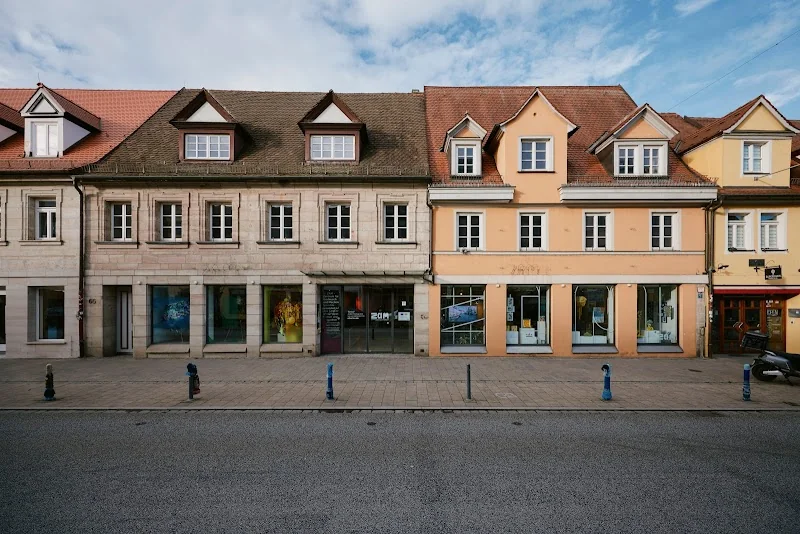
Hauptstraße 65-67, 91054 Erlangen, Germany
ZAM – Center for Exchange and Making | Workshops & Tickets
The ZAM – Center for Exchange and Making is Erlangen's central address for collaborative tinkering, learning, and experimenting. Spanning 2,400 m², the building connects open workshops and project spaces in the fields of technology, science, play, and art. The operating association ZAM e.V. was founded in spring 2021; at the end of 2021, the city of Erlangen handed over the former Greiner property, and after more than three years of planning and renovation work, ZAM was officially opened in June 2025. Those looking for a place where community, craftsmanship, and digital practice come together will find here not a classic event operation, but a vibrant house for participation. ([zam.haus](https://www.zam.haus/))
Events and Program at ZAM Erlangen
The program at ZAM is designed to bring together diverse interests: projects, exhibitions, workshops, and regular meetings run alongside each other, forming an open house where tinkering, learning, and culture mutually enrich one another. The program page continuously displays current dates; there, one can see not only individual workshops but also recurring formats that shape the house as a meeting point for the local community. These include, for example, the Friday meeting as an open gathering for members of the operating association and all those interested in making, ZAMlöffeln with SuppKultur as a low-threshold exchange over soup and conversations, the wood workshop's Orgatreffen, as well as formats like ZAM:kreativ, the computer consultation hour, the Repair Café, game inventors, or the school program Try it! for classes. It is precisely this mix that makes ZAM interesting: it is not just a workshop but also a place where knowledge, hobbies, and neighborhood come together. Those searching for events can therefore expect both open meetings and clearly structured courses and thematic offerings. The program overview also shows that the offerings can differ according to target groups, from children's and school contexts to technically oriented groups, from community repairing to creative work. For visitors, this means a wide range: from a brief visit to regular meetings to targeted participation in workshops. Since a large part of the opening hours and offerings is supported by volunteers, it is worthwhile to always check the program for current dates. This keeps ZAM flexible, lively, and adapted to the everyday life of the community. ([zam.haus](https://www.zam.haus/programm/))
For editorial classification, it is important because search terms like events, program, tickets, meetings, and school offerings at ZAM are not thought of separately. The house works consciously in a hybrid manner: a public meeting point can simultaneously be a learning space, exhibition venue, and workshop. This continuously creates new occasions, ranging from a brief visit to the open main building to multi-hour workshops. Therefore, anyone looking for a place that connects current dates, regular formats, and concrete practice will find in ZAM a rarely clear structure with many points of connection for different target groups. ([zam.haus](https://www.zam.haus/programm/))
Tickets, Membership, and Workshop Use
Those looking for tickets will encounter a model at ZAM that consciously distinguishes between open access and fee-based workshop use. The open main building is freely accessible, and trying out in all workshops is also possible for free. However, for the actual use of the workshops, rates apply, consumables are charged separately, and depending on the offering, daily or hourly fees may be added. Regular members of the operating association can use the workshops without extra fees and have voting rights in the members' assembly; supporting members pay a daily or hourly flat rate for workshop use. Membership is not an automatic requirement for independent access, but it supports the ongoing operation and the community-oriented concept of the house. Monthly contributions currently amount to 25 euros, reduced to 12.50 euros, and for supporting members, 5 euros. For inquiries such as tickets, registration, or booking, it is important to know: ZAM does not operate like a single event hall with a single cash register, but like an open house with different access paths. For workshops and events, registration links or program points are published online; for workshops and membership, there are separate rules. This is practical for anyone who wants to take a look without obligation, as well as for people who want to work regularly or become members of the community. Therefore, anyone who just wants to attend an event checks the respective program point; those who want to work with tools and machines should read the rate and membership information carefully. This keeps ZAM low-threshold without sacrificing commitment and good organization. ([zam.haus](https://www.zam.haus/mitmachen/))
The concept is also practical for guests: those who just want to drop by once can find a low-threshold entry through trying out and open times. Those who come more frequently benefit from membership, co-determination, and access without extra workshop fees. Thus, a ticket search quickly turns into the question of whether one prefers to be a visitor, participant, or member. This differentiation is helpful because it explains why ZAM remains open, solidary, and organizationally clear at the same time. ([zam.haus](https://www.zam.haus/mitmachen/))
Workshops, Machines, and Open Project Spaces
The heart of ZAM is the workshops and open spaces. On the official workshop page, wood, metal, textiles, printing, prototypes, electronics, colors, bio, and experimentation are mentioned; in addition, there are open project, exhibition, and workspaces. This variety shows that the house is not limited to a single craft or a single audience. In the experimentation workshop, for example, scroll saws, 3D printers, and painting supplies are available so that visitors can get started without significant hurdles. The bio workshop works with microscopes and laboratory utensils to explore biology and develop bio-materials. The printing workshop focuses on machines, presses, and accessories for both analog and digital printing processes, while the electronics workshop provides soldering irons, multimeters, oscilloscopes, and power supplies for self-developments and repairs. The colors workshop is designed for painting and drawing on different surfaces and stands for creative creation and design. In the wood workshop, one can find table saws, planers, thicknessers, drills, sanding machines, and other equipment, each with expert guidance. The metal workshop allows milling, drilling, turning, bending, folding, and welding, and the prototype workshop is focused on computer-controlled machines for quick small prototypes. Finally, the textile workshop covers sewing, embroidery, and felting with machines and by hand and processes or repairs textiles of all kinds. Thus, anyone visiting ZAM experiences not a loose collection of rooms, but a clearly structured makerspace with different competencies. This is particularly important for people looking for wood workshop, metal workshop, 3D printer, or Repair Café offerings: ZAM bundles these search intentions in one place. And because the workshops benefit from each other, projects often arise at the intersection of craftsmanship, technology, and design. Thus, ZAM perfectly fits inquiries such as workshop, courses, tinkering, or open workshop and transforms the city center into a place where knowledge is not only conveyed but applied directly. ([zam.haus](https://www.zam.haus/werkstaetten/))
The technical details show how professionally ZAM is set up. In the prototype workshop, not only experimental models are built, but digital and manual processes are also combined; the official page mentions laser cutters, 3D printers, pillar drills, and hand tools. This makes the workshop attractive for rapid prototyping, small series, and learning settings. In the electronics area, self-developments and repairs are added, which expands the spectrum from classic craftsmanship to maker culture. The wood workshop is also more than just a carpentry shop: with machines like table saws, planers, and thicknessers, projects can be accompanied from raw wood to finished parts, and the metal workshop covers precise processing and joining. The fact that ZAM also offers an experimentation workshop is strategically smart because it lowers barriers and fosters curiosity. Thus, the house suits people who want to experiment first, as well as advanced users with specific project goals. The combination of machines, knowledge, and exchange is precisely what brings together search terms like workshop, 3D printer, laser cutter, repair, or prototyping in content. ([zam.haus](https://www.zam.haus/werkstatt/prototypen/?utm_source=openai))
Particularly valuable is the spatial mix of the workshops. A project can be sketched at ZAM, tested in the prototype workshop, refined in wood or metal, and documented or duplicated in printing or textiles. These pathways make the house equally exciting for makers, schools, creatives, and repair enthusiasts. Those seeking a visible result will find here not only machines but also the suitable environment to turn an idea step by step into a robust object or a learnable process. ([zam.haus](https://www.zam.haus/werkstaetten/))
Opening Hours, Trying Out, and Practical Procedures
The opening hours at ZAM are consciously organized to be lively and are made possible by volunteers. Therefore, the website points out that times can change daily and that the workshops have different opening hours. The open main building is currently open on Tuesdays from 5 PM to 8 PM, Thursdays from 3 PM to 5 PM, Fridays from 4 PM to 6 PM, and Saturdays from 2 PM to 4 PM. The complete workshop overview additionally shows specific time slots, for example, for wood, metal, textiles, printing, and prototype or electronics areas. Thus, the wood workshop is open on Tuesdays from 5 PM to 8 PM, Fridays from 5 PM to 8 PM, and Saturdays from 2 PM to 5 PM; the metal workshop on Tuesdays from 5 PM to 8 PM, Fridays from 7 PM to 10 PM, and Sundays from 1 PM to 4 PM; the textile workshop on Tuesdays from 6 PM to 9 PM, Thursdays from 9 AM to 12 PM, and Fridays from 6 PM to 9 PM; the printing workshop on Wednesdays from 6 PM to 10 PM, Thursdays from 10 AM to 12 PM, and Fridays from 5 PM to 7 PM; the prototype and electronics workshop on Tuesdays and Wednesdays from 6 PM to 9 PM and Fridays from 7 PM to 10 PM. On public holidays, ZAM is usually closed. Important for use: workshop opening hours are supervised times, trying out is free, and it is best to come at the beginning of the opening time, as there is usually a brief introduction then. Additionally, there is the practical rule that projects should be completed or at least neatly interrupted, packed, and cleaned up by the end of the opening hours. This may sound strict, but it is precisely what makes the operation reliable and allows the next person a good start. Those who find ZAM as a search result with terms like opening hours, today, or open today should always check the current calendar and not rely solely on general times. For visitors, the system is transparent: open house for initial contact, workshops with their own rhythm, and holiday breaks. This keeps enough flexibility for workshops, meeting points, and spontaneous discoveries without the house losing structure. ([zam.haus](https://www.zam.haus/oeffnungszeiten/))
The note on public holidays is also relevant because ZAM is usually closed on public holidays. Therefore, anyone planning around Easter, Christmas, or other holidays should definitely check the calendar. The combination of supervised opening hours, free trying out, and clear completion rules ensures that even spontaneous visits work well. This system is particularly ideal for people who want to test without obligation, as it provides orientation without closing the door to new ideas. ([zam.haus](https://www.zam.haus/oeffnungszeiten/))
Access, Parking, and Barrier-Free Access
ZAM is located in the center of Erlangen at Hauptstraße 65-67, 91054 Erlangen; as a workshop house, the Western City Wall Street 58-62 is also mentioned. For orientation, it is important that the house is situated in the middle of the city center and is therefore easily accessible on foot. At an official event, the Erlangen main train station was indicated to be about 600 meters away, and the nearest bus stop was Altstadtmarkt. The same event information also mentioned the parking lot Fuchsengarten 1 directly at ZAM, the large parking lot about 800 meters away, and Baiersdorfer Straße 9 as a free option approximately 700 meters away. Additionally, the city of Erlangen points to the parking offer in the city center and that bus rides in the free inner-city area have been free since January 1, 2024. Therefore, those searching with terms like access, parking, or parking space receive a well-connected city center offer overall, but should check the specific situation depending on the occasion and time. Accessibility is also an important topic: ZAM is currently barrier-free accessible except for the metal workshop, and elevators and barrier-free toilets are available in both buildings. This is a clear advantage for visitor groups, school classes, and people with mobility restrictions. Also practical: for group and event contexts, registration and access are clearly regulated, allowing the main building and the workshop building to be well combined. The location in the city center also has the advantage that ZAM can be combined with walks to the old town, castle garden, and botanical garden. This makes the house not isolated but part of a vibrant neighborhood where culture, shopping, and workshop work mix. ([zam.haus](https://www.zam.haus/kontakt/))
Those arriving by public transport particularly benefit from the central location. According to event information, the main train station is only about 600 meters away, and the nearest stop Altstadtmarkt is close to the house. Thus, ZAM is easily accessible for both locals and guests from the region. The parking information from the event guide also shows that there are various options around ZAM, from paid to free parking spaces. This is particularly practical for larger meetings or workshops, as travel methods can be flexibly combined. At the same time, the barrier-free facilities make the house open to different groups: elevators and barrier-free toilets in both buildings support a low-threshold visit, while only the metal workshop is currently noted as not barrier-free. In conjunction with the city center location, this creates a place that is not off to the side but firmly anchored in urban everyday life. This is also relevant for the search intention: those searching for ZAM and access, ZAM and parking, or ZAM barrier-free want to quickly know how uncomplicated the visit actually is. The official communication provides clear, concrete points of reference for this. ([zam.haus](https://www.zam.haus/projekt/vulca-vow-2024/))
The location in the city center is also a strategic advantage for events. Guests can combine their visit to ZAM with shopping, dining, or a walk through the old town and castle garden. This way, the visit is not experienced as an isolated special trip but as part of a compact city visit, which is particularly practical for guests from outside the region. Those arriving by train, bus, on foot, or by bicycle benefit from the dense infrastructure and the short distance between the train station, city center, and house. ([zam.haus](https://www.zam.haus/projekt/vulca-vow-2024/))
History, Opening, and Special Role in Erlangen
The history of ZAM is closely linked to civic engagement and urban development. The operating association ZAM e.V. was founded in spring 2021 to create a permanent place for a culture of making. At the end of 2021, the city of Erlangen handed over the former Greiner property to the association, after which planning, renovation, fire protection, accessibility, and technical infrastructure followed. According to ZAM, construction began in 2023, and in June 2025, the house was officially opened. The opening announcement also describes that remaining work, workshop setup, community kitchen, as well as exchange and exhibition areas were finalized before the house fully opened its doors. This development explains why ZAM did not simply emerge as a finished space, but as a joint project of professionals, volunteers, the city, and the community. The public perception is also interesting: the city of Erlangen emphasizes that ZAM has been recognized by the German Institute for Urban Studies as a special place and is considered an example of how urban development originates from the community. This fits well with the DNA of the house, which not only provides tools and spaces but also promotes exchange, community, openness, and learning opportunities. Therefore, those visiting ZAM experience more than just a makerspace: it is a place where craftsmanship, technology, artistic, and social practices converge. This is precisely what makes the location relevant for search inquiries like events, workshops, program, tickets, and opening hours. ZAM stands for an urban house that has developed from the bottom up and today sets a visible sign for communal shaping in the middle of Erlangen. ([zam.haus](https://www.zam.haus/))
The official recognition by the city also shows that ZAM is now more than just a project behind a facade. It stands for urban development from the bottom up, for tangible participation, and for the idea that learning and doing it yourself can have public quality. This attitude makes ZAM a strong address for future program and event pages. For content related to tickets, workshops, opening hours, and history, the house therefore offers not only facts but also a clear narrative framework. ([erlangen.de](https://erlangen.de/aktuelles/difu-nennt-zam-als-besonderen-ort?utm_source=openai))
Sources:
Mehr anzeigenWeniger anzeigen
ZAM – Center for Exchange and Making | Workshops & Tickets
The ZAM – Center for Exchange and Making is Erlangen's central address for collaborative tinkering, learning, and experimenting. Spanning 2,400 m², the building connects open workshops and project spaces in the fields of technology, science, play, and art. The operating association ZAM e.V. was founded in spring 2021; at the end of 2021, the city of Erlangen handed over the former Greiner property, and after more than three years of planning and renovation work, ZAM was officially opened in June 2025. Those looking for a place where community, craftsmanship, and digital practice come together will find here not a classic event operation, but a vibrant house for participation. ([zam.haus](https://www.zam.haus/))
Events and Program at ZAM Erlangen
The program at ZAM is designed to bring together diverse interests: projects, exhibitions, workshops, and regular meetings run alongside each other, forming an open house where tinkering, learning, and culture mutually enrich one another. The program page continuously displays current dates; there, one can see not only individual workshops but also recurring formats that shape the house as a meeting point for the local community. These include, for example, the Friday meeting as an open gathering for members of the operating association and all those interested in making, ZAMlöffeln with SuppKultur as a low-threshold exchange over soup and conversations, the wood workshop's Orgatreffen, as well as formats like ZAM:kreativ, the computer consultation hour, the Repair Café, game inventors, or the school program Try it! for classes. It is precisely this mix that makes ZAM interesting: it is not just a workshop but also a place where knowledge, hobbies, and neighborhood come together. Those searching for events can therefore expect both open meetings and clearly structured courses and thematic offerings. The program overview also shows that the offerings can differ according to target groups, from children's and school contexts to technically oriented groups, from community repairing to creative work. For visitors, this means a wide range: from a brief visit to regular meetings to targeted participation in workshops. Since a large part of the opening hours and offerings is supported by volunteers, it is worthwhile to always check the program for current dates. This keeps ZAM flexible, lively, and adapted to the everyday life of the community. ([zam.haus](https://www.zam.haus/programm/))
For editorial classification, it is important because search terms like events, program, tickets, meetings, and school offerings at ZAM are not thought of separately. The house works consciously in a hybrid manner: a public meeting point can simultaneously be a learning space, exhibition venue, and workshop. This continuously creates new occasions, ranging from a brief visit to the open main building to multi-hour workshops. Therefore, anyone looking for a place that connects current dates, regular formats, and concrete practice will find in ZAM a rarely clear structure with many points of connection for different target groups. ([zam.haus](https://www.zam.haus/programm/))
Tickets, Membership, and Workshop Use
Those looking for tickets will encounter a model at ZAM that consciously distinguishes between open access and fee-based workshop use. The open main building is freely accessible, and trying out in all workshops is also possible for free. However, for the actual use of the workshops, rates apply, consumables are charged separately, and depending on the offering, daily or hourly fees may be added. Regular members of the operating association can use the workshops without extra fees and have voting rights in the members' assembly; supporting members pay a daily or hourly flat rate for workshop use. Membership is not an automatic requirement for independent access, but it supports the ongoing operation and the community-oriented concept of the house. Monthly contributions currently amount to 25 euros, reduced to 12.50 euros, and for supporting members, 5 euros. For inquiries such as tickets, registration, or booking, it is important to know: ZAM does not operate like a single event hall with a single cash register, but like an open house with different access paths. For workshops and events, registration links or program points are published online; for workshops and membership, there are separate rules. This is practical for anyone who wants to take a look without obligation, as well as for people who want to work regularly or become members of the community. Therefore, anyone who just wants to attend an event checks the respective program point; those who want to work with tools and machines should read the rate and membership information carefully. This keeps ZAM low-threshold without sacrificing commitment and good organization. ([zam.haus](https://www.zam.haus/mitmachen/))
The concept is also practical for guests: those who just want to drop by once can find a low-threshold entry through trying out and open times. Those who come more frequently benefit from membership, co-determination, and access without extra workshop fees. Thus, a ticket search quickly turns into the question of whether one prefers to be a visitor, participant, or member. This differentiation is helpful because it explains why ZAM remains open, solidary, and organizationally clear at the same time. ([zam.haus](https://www.zam.haus/mitmachen/))
Workshops, Machines, and Open Project Spaces
The heart of ZAM is the workshops and open spaces. On the official workshop page, wood, metal, textiles, printing, prototypes, electronics, colors, bio, and experimentation are mentioned; in addition, there are open project, exhibition, and workspaces. This variety shows that the house is not limited to a single craft or a single audience. In the experimentation workshop, for example, scroll saws, 3D printers, and painting supplies are available so that visitors can get started without significant hurdles. The bio workshop works with microscopes and laboratory utensils to explore biology and develop bio-materials. The printing workshop focuses on machines, presses, and accessories for both analog and digital printing processes, while the electronics workshop provides soldering irons, multimeters, oscilloscopes, and power supplies for self-developments and repairs. The colors workshop is designed for painting and drawing on different surfaces and stands for creative creation and design. In the wood workshop, one can find table saws, planers, thicknessers, drills, sanding machines, and other equipment, each with expert guidance. The metal workshop allows milling, drilling, turning, bending, folding, and welding, and the prototype workshop is focused on computer-controlled machines for quick small prototypes. Finally, the textile workshop covers sewing, embroidery, and felting with machines and by hand and processes or repairs textiles of all kinds. Thus, anyone visiting ZAM experiences not a loose collection of rooms, but a clearly structured makerspace with different competencies. This is particularly important for people looking for wood workshop, metal workshop, 3D printer, or Repair Café offerings: ZAM bundles these search intentions in one place. And because the workshops benefit from each other, projects often arise at the intersection of craftsmanship, technology, and design. Thus, ZAM perfectly fits inquiries such as workshop, courses, tinkering, or open workshop and transforms the city center into a place where knowledge is not only conveyed but applied directly. ([zam.haus](https://www.zam.haus/werkstaetten/))
The technical details show how professionally ZAM is set up. In the prototype workshop, not only experimental models are built, but digital and manual processes are also combined; the official page mentions laser cutters, 3D printers, pillar drills, and hand tools. This makes the workshop attractive for rapid prototyping, small series, and learning settings. In the electronics area, self-developments and repairs are added, which expands the spectrum from classic craftsmanship to maker culture. The wood workshop is also more than just a carpentry shop: with machines like table saws, planers, and thicknessers, projects can be accompanied from raw wood to finished parts, and the metal workshop covers precise processing and joining. The fact that ZAM also offers an experimentation workshop is strategically smart because it lowers barriers and fosters curiosity. Thus, the house suits people who want to experiment first, as well as advanced users with specific project goals. The combination of machines, knowledge, and exchange is precisely what brings together search terms like workshop, 3D printer, laser cutter, repair, or prototyping in content. ([zam.haus](https://www.zam.haus/werkstatt/prototypen/?utm_source=openai))
Particularly valuable is the spatial mix of the workshops. A project can be sketched at ZAM, tested in the prototype workshop, refined in wood or metal, and documented or duplicated in printing or textiles. These pathways make the house equally exciting for makers, schools, creatives, and repair enthusiasts. Those seeking a visible result will find here not only machines but also the suitable environment to turn an idea step by step into a robust object or a learnable process. ([zam.haus](https://www.zam.haus/werkstaetten/))
Opening Hours, Trying Out, and Practical Procedures
The opening hours at ZAM are consciously organized to be lively and are made possible by volunteers. Therefore, the website points out that times can change daily and that the workshops have different opening hours. The open main building is currently open on Tuesdays from 5 PM to 8 PM, Thursdays from 3 PM to 5 PM, Fridays from 4 PM to 6 PM, and Saturdays from 2 PM to 4 PM. The complete workshop overview additionally shows specific time slots, for example, for wood, metal, textiles, printing, and prototype or electronics areas. Thus, the wood workshop is open on Tuesdays from 5 PM to 8 PM, Fridays from 5 PM to 8 PM, and Saturdays from 2 PM to 5 PM; the metal workshop on Tuesdays from 5 PM to 8 PM, Fridays from 7 PM to 10 PM, and Sundays from 1 PM to 4 PM; the textile workshop on Tuesdays from 6 PM to 9 PM, Thursdays from 9 AM to 12 PM, and Fridays from 6 PM to 9 PM; the printing workshop on Wednesdays from 6 PM to 10 PM, Thursdays from 10 AM to 12 PM, and Fridays from 5 PM to 7 PM; the prototype and electronics workshop on Tuesdays and Wednesdays from 6 PM to 9 PM and Fridays from 7 PM to 10 PM. On public holidays, ZAM is usually closed. Important for use: workshop opening hours are supervised times, trying out is free, and it is best to come at the beginning of the opening time, as there is usually a brief introduction then. Additionally, there is the practical rule that projects should be completed or at least neatly interrupted, packed, and cleaned up by the end of the opening hours. This may sound strict, but it is precisely what makes the operation reliable and allows the next person a good start. Those who find ZAM as a search result with terms like opening hours, today, or open today should always check the current calendar and not rely solely on general times. For visitors, the system is transparent: open house for initial contact, workshops with their own rhythm, and holiday breaks. This keeps enough flexibility for workshops, meeting points, and spontaneous discoveries without the house losing structure. ([zam.haus](https://www.zam.haus/oeffnungszeiten/))
The note on public holidays is also relevant because ZAM is usually closed on public holidays. Therefore, anyone planning around Easter, Christmas, or other holidays should definitely check the calendar. The combination of supervised opening hours, free trying out, and clear completion rules ensures that even spontaneous visits work well. This system is particularly ideal for people who want to test without obligation, as it provides orientation without closing the door to new ideas. ([zam.haus](https://www.zam.haus/oeffnungszeiten/))
Access, Parking, and Barrier-Free Access
ZAM is located in the center of Erlangen at Hauptstraße 65-67, 91054 Erlangen; as a workshop house, the Western City Wall Street 58-62 is also mentioned. For orientation, it is important that the house is situated in the middle of the city center and is therefore easily accessible on foot. At an official event, the Erlangen main train station was indicated to be about 600 meters away, and the nearest bus stop was Altstadtmarkt. The same event information also mentioned the parking lot Fuchsengarten 1 directly at ZAM, the large parking lot about 800 meters away, and Baiersdorfer Straße 9 as a free option approximately 700 meters away. Additionally, the city of Erlangen points to the parking offer in the city center and that bus rides in the free inner-city area have been free since January 1, 2024. Therefore, those searching with terms like access, parking, or parking space receive a well-connected city center offer overall, but should check the specific situation depending on the occasion and time. Accessibility is also an important topic: ZAM is currently barrier-free accessible except for the metal workshop, and elevators and barrier-free toilets are available in both buildings. This is a clear advantage for visitor groups, school classes, and people with mobility restrictions. Also practical: for group and event contexts, registration and access are clearly regulated, allowing the main building and the workshop building to be well combined. The location in the city center also has the advantage that ZAM can be combined with walks to the old town, castle garden, and botanical garden. This makes the house not isolated but part of a vibrant neighborhood where culture, shopping, and workshop work mix. ([zam.haus](https://www.zam.haus/kontakt/))
Those arriving by public transport particularly benefit from the central location. According to event information, the main train station is only about 600 meters away, and the nearest stop Altstadtmarkt is close to the house. Thus, ZAM is easily accessible for both locals and guests from the region. The parking information from the event guide also shows that there are various options around ZAM, from paid to free parking spaces. This is particularly practical for larger meetings or workshops, as travel methods can be flexibly combined. At the same time, the barrier-free facilities make the house open to different groups: elevators and barrier-free toilets in both buildings support a low-threshold visit, while only the metal workshop is currently noted as not barrier-free. In conjunction with the city center location, this creates a place that is not off to the side but firmly anchored in urban everyday life. This is also relevant for the search intention: those searching for ZAM and access, ZAM and parking, or ZAM barrier-free want to quickly know how uncomplicated the visit actually is. The official communication provides clear, concrete points of reference for this. ([zam.haus](https://www.zam.haus/projekt/vulca-vow-2024/))
The location in the city center is also a strategic advantage for events. Guests can combine their visit to ZAM with shopping, dining, or a walk through the old town and castle garden. This way, the visit is not experienced as an isolated special trip but as part of a compact city visit, which is particularly practical for guests from outside the region. Those arriving by train, bus, on foot, or by bicycle benefit from the dense infrastructure and the short distance between the train station, city center, and house. ([zam.haus](https://www.zam.haus/projekt/vulca-vow-2024/))
History, Opening, and Special Role in Erlangen
The history of ZAM is closely linked to civic engagement and urban development. The operating association ZAM e.V. was founded in spring 2021 to create a permanent place for a culture of making. At the end of 2021, the city of Erlangen handed over the former Greiner property to the association, after which planning, renovation, fire protection, accessibility, and technical infrastructure followed. According to ZAM, construction began in 2023, and in June 2025, the house was officially opened. The opening announcement also describes that remaining work, workshop setup, community kitchen, as well as exchange and exhibition areas were finalized before the house fully opened its doors. This development explains why ZAM did not simply emerge as a finished space, but as a joint project of professionals, volunteers, the city, and the community. The public perception is also interesting: the city of Erlangen emphasizes that ZAM has been recognized by the German Institute for Urban Studies as a special place and is considered an example of how urban development originates from the community. This fits well with the DNA of the house, which not only provides tools and spaces but also promotes exchange, community, openness, and learning opportunities. Therefore, those visiting ZAM experience more than just a makerspace: it is a place where craftsmanship, technology, artistic, and social practices converge. This is precisely what makes the location relevant for search inquiries like events, workshops, program, tickets, and opening hours. ZAM stands for an urban house that has developed from the bottom up and today sets a visible sign for communal shaping in the middle of Erlangen. ([zam.haus](https://www.zam.haus/))
The official recognition by the city also shows that ZAM is now more than just a project behind a facade. It stands for urban development from the bottom up, for tangible participation, and for the idea that learning and doing it yourself can have public quality. This attitude makes ZAM a strong address for future program and event pages. For content related to tickets, workshops, opening hours, and history, the house therefore offers not only facts but also a clear narrative framework. ([erlangen.de](https://erlangen.de/aktuelles/difu-nennt-zam-als-besonderen-ort?utm_source=openai))
Sources:
ZAM – Center for Exchange and Making | Workshops & Tickets
The ZAM – Center for Exchange and Making is Erlangen's central address for collaborative tinkering, learning, and experimenting. Spanning 2,400 m², the building connects open workshops and project spaces in the fields of technology, science, play, and art. The operating association ZAM e.V. was founded in spring 2021; at the end of 2021, the city of Erlangen handed over the former Greiner property, and after more than three years of planning and renovation work, ZAM was officially opened in June 2025. Those looking for a place where community, craftsmanship, and digital practice come together will find here not a classic event operation, but a vibrant house for participation. ([zam.haus](https://www.zam.haus/))
Events and Program at ZAM Erlangen
The program at ZAM is designed to bring together diverse interests: projects, exhibitions, workshops, and regular meetings run alongside each other, forming an open house where tinkering, learning, and culture mutually enrich one another. The program page continuously displays current dates; there, one can see not only individual workshops but also recurring formats that shape the house as a meeting point for the local community. These include, for example, the Friday meeting as an open gathering for members of the operating association and all those interested in making, ZAMlöffeln with SuppKultur as a low-threshold exchange over soup and conversations, the wood workshop's Orgatreffen, as well as formats like ZAM:kreativ, the computer consultation hour, the Repair Café, game inventors, or the school program Try it! for classes. It is precisely this mix that makes ZAM interesting: it is not just a workshop but also a place where knowledge, hobbies, and neighborhood come together. Those searching for events can therefore expect both open meetings and clearly structured courses and thematic offerings. The program overview also shows that the offerings can differ according to target groups, from children's and school contexts to technically oriented groups, from community repairing to creative work. For visitors, this means a wide range: from a brief visit to regular meetings to targeted participation in workshops. Since a large part of the opening hours and offerings is supported by volunteers, it is worthwhile to always check the program for current dates. This keeps ZAM flexible, lively, and adapted to the everyday life of the community. ([zam.haus](https://www.zam.haus/programm/))
For editorial classification, it is important because search terms like events, program, tickets, meetings, and school offerings at ZAM are not thought of separately. The house works consciously in a hybrid manner: a public meeting point can simultaneously be a learning space, exhibition venue, and workshop. This continuously creates new occasions, ranging from a brief visit to the open main building to multi-hour workshops. Therefore, anyone looking for a place that connects current dates, regular formats, and concrete practice will find in ZAM a rarely clear structure with many points of connection for different target groups. ([zam.haus](https://www.zam.haus/programm/))
Tickets, Membership, and Workshop Use
Those looking for tickets will encounter a model at ZAM that consciously distinguishes between open access and fee-based workshop use. The open main building is freely accessible, and trying out in all workshops is also possible for free. However, for the actual use of the workshops, rates apply, consumables are charged separately, and depending on the offering, daily or hourly fees may be added. Regular members of the operating association can use the workshops without extra fees and have voting rights in the members' assembly; supporting members pay a daily or hourly flat rate for workshop use. Membership is not an automatic requirement for independent access, but it supports the ongoing operation and the community-oriented concept of the house. Monthly contributions currently amount to 25 euros, reduced to 12.50 euros, and for supporting members, 5 euros. For inquiries such as tickets, registration, or booking, it is important to know: ZAM does not operate like a single event hall with a single cash register, but like an open house with different access paths. For workshops and events, registration links or program points are published online; for workshops and membership, there are separate rules. This is practical for anyone who wants to take a look without obligation, as well as for people who want to work regularly or become members of the community. Therefore, anyone who just wants to attend an event checks the respective program point; those who want to work with tools and machines should read the rate and membership information carefully. This keeps ZAM low-threshold without sacrificing commitment and good organization. ([zam.haus](https://www.zam.haus/mitmachen/))
The concept is also practical for guests: those who just want to drop by once can find a low-threshold entry through trying out and open times. Those who come more frequently benefit from membership, co-determination, and access without extra workshop fees. Thus, a ticket search quickly turns into the question of whether one prefers to be a visitor, participant, or member. This differentiation is helpful because it explains why ZAM remains open, solidary, and organizationally clear at the same time. ([zam.haus](https://www.zam.haus/mitmachen/))
Workshops, Machines, and Open Project Spaces
The heart of ZAM is the workshops and open spaces. On the official workshop page, wood, metal, textiles, printing, prototypes, electronics, colors, bio, and experimentation are mentioned; in addition, there are open project, exhibition, and workspaces. This variety shows that the house is not limited to a single craft or a single audience. In the experimentation workshop, for example, scroll saws, 3D printers, and painting supplies are available so that visitors can get started without significant hurdles. The bio workshop works with microscopes and laboratory utensils to explore biology and develop bio-materials. The printing workshop focuses on machines, presses, and accessories for both analog and digital printing processes, while the electronics workshop provides soldering irons, multimeters, oscilloscopes, and power supplies for self-developments and repairs. The colors workshop is designed for painting and drawing on different surfaces and stands for creative creation and design. In the wood workshop, one can find table saws, planers, thicknessers, drills, sanding machines, and other equipment, each with expert guidance. The metal workshop allows milling, drilling, turning, bending, folding, and welding, and the prototype workshop is focused on computer-controlled machines for quick small prototypes. Finally, the textile workshop covers sewing, embroidery, and felting with machines and by hand and processes or repairs textiles of all kinds. Thus, anyone visiting ZAM experiences not a loose collection of rooms, but a clearly structured makerspace with different competencies. This is particularly important for people looking for wood workshop, metal workshop, 3D printer, or Repair Café offerings: ZAM bundles these search intentions in one place. And because the workshops benefit from each other, projects often arise at the intersection of craftsmanship, technology, and design. Thus, ZAM perfectly fits inquiries such as workshop, courses, tinkering, or open workshop and transforms the city center into a place where knowledge is not only conveyed but applied directly. ([zam.haus](https://www.zam.haus/werkstaetten/))
The technical details show how professionally ZAM is set up. In the prototype workshop, not only experimental models are built, but digital and manual processes are also combined; the official page mentions laser cutters, 3D printers, pillar drills, and hand tools. This makes the workshop attractive for rapid prototyping, small series, and learning settings. In the electronics area, self-developments and repairs are added, which expands the spectrum from classic craftsmanship to maker culture. The wood workshop is also more than just a carpentry shop: with machines like table saws, planers, and thicknessers, projects can be accompanied from raw wood to finished parts, and the metal workshop covers precise processing and joining. The fact that ZAM also offers an experimentation workshop is strategically smart because it lowers barriers and fosters curiosity. Thus, the house suits people who want to experiment first, as well as advanced users with specific project goals. The combination of machines, knowledge, and exchange is precisely what brings together search terms like workshop, 3D printer, laser cutter, repair, or prototyping in content. ([zam.haus](https://www.zam.haus/werkstatt/prototypen/?utm_source=openai))
Particularly valuable is the spatial mix of the workshops. A project can be sketched at ZAM, tested in the prototype workshop, refined in wood or metal, and documented or duplicated in printing or textiles. These pathways make the house equally exciting for makers, schools, creatives, and repair enthusiasts. Those seeking a visible result will find here not only machines but also the suitable environment to turn an idea step by step into a robust object or a learnable process. ([zam.haus](https://www.zam.haus/werkstaetten/))
Opening Hours, Trying Out, and Practical Procedures
The opening hours at ZAM are consciously organized to be lively and are made possible by volunteers. Therefore, the website points out that times can change daily and that the workshops have different opening hours. The open main building is currently open on Tuesdays from 5 PM to 8 PM, Thursdays from 3 PM to 5 PM, Fridays from 4 PM to 6 PM, and Saturdays from 2 PM to 4 PM. The complete workshop overview additionally shows specific time slots, for example, for wood, metal, textiles, printing, and prototype or electronics areas. Thus, the wood workshop is open on Tuesdays from 5 PM to 8 PM, Fridays from 5 PM to 8 PM, and Saturdays from 2 PM to 5 PM; the metal workshop on Tuesdays from 5 PM to 8 PM, Fridays from 7 PM to 10 PM, and Sundays from 1 PM to 4 PM; the textile workshop on Tuesdays from 6 PM to 9 PM, Thursdays from 9 AM to 12 PM, and Fridays from 6 PM to 9 PM; the printing workshop on Wednesdays from 6 PM to 10 PM, Thursdays from 10 AM to 12 PM, and Fridays from 5 PM to 7 PM; the prototype and electronics workshop on Tuesdays and Wednesdays from 6 PM to 9 PM and Fridays from 7 PM to 10 PM. On public holidays, ZAM is usually closed. Important for use: workshop opening hours are supervised times, trying out is free, and it is best to come at the beginning of the opening time, as there is usually a brief introduction then. Additionally, there is the practical rule that projects should be completed or at least neatly interrupted, packed, and cleaned up by the end of the opening hours. This may sound strict, but it is precisely what makes the operation reliable and allows the next person a good start. Those who find ZAM as a search result with terms like opening hours, today, or open today should always check the current calendar and not rely solely on general times. For visitors, the system is transparent: open house for initial contact, workshops with their own rhythm, and holiday breaks. This keeps enough flexibility for workshops, meeting points, and spontaneous discoveries without the house losing structure. ([zam.haus](https://www.zam.haus/oeffnungszeiten/))
The note on public holidays is also relevant because ZAM is usually closed on public holidays. Therefore, anyone planning around Easter, Christmas, or other holidays should definitely check the calendar. The combination of supervised opening hours, free trying out, and clear completion rules ensures that even spontaneous visits work well. This system is particularly ideal for people who want to test without obligation, as it provides orientation without closing the door to new ideas. ([zam.haus](https://www.zam.haus/oeffnungszeiten/))
Access, Parking, and Barrier-Free Access
ZAM is located in the center of Erlangen at Hauptstraße 65-67, 91054 Erlangen; as a workshop house, the Western City Wall Street 58-62 is also mentioned. For orientation, it is important that the house is situated in the middle of the city center and is therefore easily accessible on foot. At an official event, the Erlangen main train station was indicated to be about 600 meters away, and the nearest bus stop was Altstadtmarkt. The same event information also mentioned the parking lot Fuchsengarten 1 directly at ZAM, the large parking lot about 800 meters away, and Baiersdorfer Straße 9 as a free option approximately 700 meters away. Additionally, the city of Erlangen points to the parking offer in the city center and that bus rides in the free inner-city area have been free since January 1, 2024. Therefore, those searching with terms like access, parking, or parking space receive a well-connected city center offer overall, but should check the specific situation depending on the occasion and time. Accessibility is also an important topic: ZAM is currently barrier-free accessible except for the metal workshop, and elevators and barrier-free toilets are available in both buildings. This is a clear advantage for visitor groups, school classes, and people with mobility restrictions. Also practical: for group and event contexts, registration and access are clearly regulated, allowing the main building and the workshop building to be well combined. The location in the city center also has the advantage that ZAM can be combined with walks to the old town, castle garden, and botanical garden. This makes the house not isolated but part of a vibrant neighborhood where culture, shopping, and workshop work mix. ([zam.haus](https://www.zam.haus/kontakt/))
Those arriving by public transport particularly benefit from the central location. According to event information, the main train station is only about 600 meters away, and the nearest stop Altstadtmarkt is close to the house. Thus, ZAM is easily accessible for both locals and guests from the region. The parking information from the event guide also shows that there are various options around ZAM, from paid to free parking spaces. This is particularly practical for larger meetings or workshops, as travel methods can be flexibly combined. At the same time, the barrier-free facilities make the house open to different groups: elevators and barrier-free toilets in both buildings support a low-threshold visit, while only the metal workshop is currently noted as not barrier-free. In conjunction with the city center location, this creates a place that is not off to the side but firmly anchored in urban everyday life. This is also relevant for the search intention: those searching for ZAM and access, ZAM and parking, or ZAM barrier-free want to quickly know how uncomplicated the visit actually is. The official communication provides clear, concrete points of reference for this. ([zam.haus](https://www.zam.haus/projekt/vulca-vow-2024/))
The location in the city center is also a strategic advantage for events. Guests can combine their visit to ZAM with shopping, dining, or a walk through the old town and castle garden. This way, the visit is not experienced as an isolated special trip but as part of a compact city visit, which is particularly practical for guests from outside the region. Those arriving by train, bus, on foot, or by bicycle benefit from the dense infrastructure and the short distance between the train station, city center, and house. ([zam.haus](https://www.zam.haus/projekt/vulca-vow-2024/))
History, Opening, and Special Role in Erlangen
The history of ZAM is closely linked to civic engagement and urban development. The operating association ZAM e.V. was founded in spring 2021 to create a permanent place for a culture of making. At the end of 2021, the city of Erlangen handed over the former Greiner property to the association, after which planning, renovation, fire protection, accessibility, and technical infrastructure followed. According to ZAM, construction began in 2023, and in June 2025, the house was officially opened. The opening announcement also describes that remaining work, workshop setup, community kitchen, as well as exchange and exhibition areas were finalized before the house fully opened its doors. This development explains why ZAM did not simply emerge as a finished space, but as a joint project of professionals, volunteers, the city, and the community. The public perception is also interesting: the city of Erlangen emphasizes that ZAM has been recognized by the German Institute for Urban Studies as a special place and is considered an example of how urban development originates from the community. This fits well with the DNA of the house, which not only provides tools and spaces but also promotes exchange, community, openness, and learning opportunities. Therefore, those visiting ZAM experience more than just a makerspace: it is a place where craftsmanship, technology, artistic, and social practices converge. This is precisely what makes the location relevant for search inquiries like events, workshops, program, tickets, and opening hours. ZAM stands for an urban house that has developed from the bottom up and today sets a visible sign for communal shaping in the middle of Erlangen. ([zam.haus](https://www.zam.haus/))
The official recognition by the city also shows that ZAM is now more than just a project behind a facade. It stands for urban development from the bottom up, for tangible participation, and for the idea that learning and doing it yourself can have public quality. This attitude makes ZAM a strong address for future program and event pages. For content related to tickets, workshops, opening hours, and history, the house therefore offers not only facts but also a clear narrative framework. ([erlangen.de](https://erlangen.de/aktuelles/difu-nennt-zam-als-besonderen-ort?utm_source=openai))
Sources:
Upcoming Events
No events found
Frequently Asked Questions
Reviews
Karlheinz Pape
10. December 2025
Learning together through hands-on experience – that's the core principle of ZAM in Erlangen. I took the large-machine course in the woodworking shop there and made a kitchen cutting board from boards with tree bark still attached. I should have had that experience much sooner. Even without taking a course, you can build your own things here. Using the workshop costs only €3.50 per hour.
Pia Jacobi
22. January 2026
We took my son's second-grade class to the school workshop "Colorful Fantasy Worlds from Trash," which the kids absolutely loved. First, they created a creature, then edited a video in a special setup and brought the characters to life. It was fantastic! The supervision, the organization, and the materials were all top-notch! Highly recommended!
Tobias “knilch” Jordan
3. August 2022
If you're looking to make something that requires a laser, a 3D printer, a chisel, a sewing machine, or just have general ideas for how to bring your project to life: head to ZAM on Fridays. The best part is meeting the computer nerds there from time to time (one even has an original Bubble Bobble), but the other artists, crafters, and makers are pretty cool too.
Katharina Zeutschner
3. August 2022
ZAM is more than "just" a makerspace. Here, skills and knowledge in a wide variety of areas, from analog to digital, are shared. I'm really looking forward to the workshops!
Enrico Kahl
23. November 2024
A public makerspace. What more could you want? Top-notch equipment. Good support. A fantastic community. Definitely stop by.