
Alban Berg
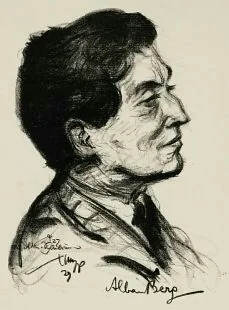
Image from Wikipedia
Image from Wikipedia
Alban Berg: The Expressionist Sound Architect of the Second Viennese School
Between Late Romanticism, Expressionist Drama, and Musical Modernism
Alban Berg is considered one of the most influential composers of the 20th century and a central voice of the Second Viennese School. Born on February 9, 1885, in Vienna and passing away there on December 24, 1935, he combined late romantic sound colors with radical atonality and a distinctive dramatic expressiveness throughout his musical career. His literary sensitivity, which profoundly influenced his operas and vocal compositions, became evident early on. ([de.wikipedia.org](https://de.wikipedia.org/wiki/Alban_Berg))
Early Years in Vienna: Literature, Music, and First Compositions
Berg grew up as the son of a wealthy merchant in Vienna, showing equal interest in literature and music as a student. He began composing songs at the age of 16, an early sign of the connection between linguistic precision and emotional condensation that would characterize his later work. After his father's death in 1900, the family faced a new life situation, yet Berg's talent continued to be nurtured. His encounter with Arnold Schönberg in 1904 became a turning point in his artistic development. ([de.wikipedia.org](https://de.wikipedia.org/wiki/Alban_Berg))
Schönberg accepted the young Berg into his composition class and later tutored him privately. These years of instruction were not just an academic education but a laboratory for Berg's musical language: he learned contrapuntal discipline, harmonic boldness, and the handling of form at the frontier between tradition and avant-garde. Throughout his life, Berg remained a composer who shaped intense expression from strict construction. This is at the core of his authority in music history. ([de.wikipedia.org](https://de.wikipedia.org/wiki/Alban_Berg))
The Breakthrough with Wozzeck: Opera as Psychological World Theater
Berg achieved his actual international breakthrough with the opera Wozzeck, based on Georg Büchner's fragmented drama. Work on it began before World War I but was delayed by military service and the turmoil of the time; composing the score presented Berg with the challenge of condensing a complex dramatic narrative into three acts. The work was fully premiered in Berlin in 1925, eliciting a fierce yet widely sensational reaction. The opera is still considered one of the most performed music theater works in the atonal idiom today. ([britannica.com](https://www.britannica.com/biography/Alban-Berg))
Musically, Wozzeck connects traditional forms like passacaglia and sonata principle with harsh chromaticism, atonality, and passages reminiscent of popular music. This blend of formal control and emotional extremes gives the work its power. Berg made opera a psychological seismograph of modernity; not only the character Wozzeck stands at the center, but also the question of human existence under social pressure. This work marks a milestone in music history between expressionism and dramatic modernism. ([britannica.com](https://www.britannica.com/biography/Alban-Berg))
Chamber Music, Song, and the Fine-Tuning of Form
After Wozzeck, Berg increasingly turned to chamber music. Works like the Kammerkonzert, the Lyrical Suite, and the Altenberg Lieder demonstrate his mastery in concentrated musical writing. The scores from this period are characterized by a highly sensitive balance between motivic work, sound differentiation, and emotional condensation. Berg's arrangements and compositional art reached a density that makes him one of the most intriguing sound thinkers of his time. ([en.wikipedia.org](https://en.wikipedia.org/wiki/List_of_compositions_by_Alban_Berg))
In particular, the Lyrical Suite and the Kammerkonzert showcase how Berg treats form not as a rigid framework but as a dramatic resonance space. Universal Edition describes the Three Pieces for Orchestra as a turning point in his oeuvre; after the songs, he began to think on a larger scale and to use orchestral color as a structural element. These works are not merely episodes in the creation of an opera composer but standalone statement pieces of musical modernism. ([universaledition.com](https://www.universaledition.com/en/Works/3-Pieces-for-Orchestra/P0002507?utm_source=openai))
Lulu and Radical Modernism: Completion in Fragment
With Lulu, Berg reached the utmost level of his expressionist music theater art. The opera, which he worked on from 1929 to 1935, remained unfinished at the time of the composer’s death; the orchestration of the third act existed only as a sketch and was later made playable by Friedrich Cerha. The plot is based on Wedekind's Erdgeist and Die Büchse der Pandora, and the musical language is entirely structured in twelve-tone technique. ([britannica.com](https://www.britannica.com/biography/Alban-Berg))
Lulu showcases Berg as a composer who intertwines construction and sensuality rather than pitting them against each other. Universal Edition emphasizes that Berg published the Lulu Suite as early as 1934 to give the public a hint of the new work. The fact that the opera remained unfinished has not diminished its stature; rather, the fragment has become part of its aura, solidifying Berg's reputation as an uncompromising creator of a musical modernity that opens the theater both psychologically and structurally. ([universaledition.com](https://www.universaledition.com/en/Works/Lulu/P0047687?utm_source=openai))
The Late Summit: The Violin Concerto as Requiem in Sound
Alban Berg's last completed work, the Violin Concerto of 1935, was created under emotionally extraordinary circumstances. It was commissioned by American violinist Louis Krasner and transformed into a kind of requiem after the death of Manon Gropius, the daughter of Alma Mahler. Berg composed the concerto in a short time at his villa in Carinthia; Universal Edition describes the work as one of the most important violin concertos of the 20th century. ([britannica.com](https://www.britannica.com/biography/Alban-Berg))
This late work encapsulates Berg's aesthetic world: singable lines, formal rigor, symbolic depth, and a sound language that never loses its human warmth, even within twelve-tone logic. The dedication "In memory of an angel" anchors the work in a biographical and cultural memory that goes far beyond mere sorrow. It is a piece that demonstrates Berg's ability to transform private experience into universal music. ([britannica.com](https://www.britannica.com/biography/Alban-Berg))
Discography, Reception, and Cultural Influence
Since Alban Berg was not a performer but a composer, his "discography" consists of the central works that have shaped his oeuvre internationally: Wozzeck, Lulu, the Violin Concerto, the Three Pieces for Orchestra, the Kammerkonzert, the Lyrical Suite, the Altenberg Lieder, and the early songs. These works form a canonical core of the 20th century and continue to be regularly reinterpreted in opera houses, concert halls, and recordings today. Reception has ranged from shocked rejection to enthusiastic acclaim. ([en.wikipedia.org](https://en.wikipedia.org/wiki/List_of_compositions_by_Alban_Berg))
The premiere of Wozzeck already demonstrated the polarized reactions of contemporary criticism; later assessments turned Berg into a symbol of the connection between expressionism, psychological opera, and strictly organized form. In music press and scholarly publications, he is often described as a composer who transferred Viennese modernism from Schönberg's shadow into his own, immediately touching language. Pierre Boulez's much-quoted characterization as the "last hothouse plant of late romanticism" points to this very tension between fervor and construction. ([britannica.com](https://www.britannica.com/biography/Alban-Berg))
His cultural influence extends far beyond the avant-garde. Berg made it clear that twelve-tone technique can generate not only intellectual order but also emotional intensity, dramatic tension, and lyrical transparency. For subsequent generations of composers, conductors, and performers, he remains a reference figure because his works do not merely dryly document the transition from late romanticism to musical modernism, but offer a tangible auditory experience. ([britannica.com](https://www.britannica.com/biography/Alban-Berg))
Current Relevance and Contemporary Context
There are naturally no current projects in the strict sense related to Alban Berg; however, his works continue to be managed in critical editions, scholarly publications, and international concert and opera programs. Universal Edition refers to the historically critical complete edition and the ongoing editorial work on his oeuvre. Thus, Berg remains not only a historical name but a vital part of current performance practice and musicology. ([universaledition.com](https://www.universaledition.com/Spotlight/Alban-Berg-Saemtliche-Werke/?utm_source=openai))
Particularly in an era when music is often judged by its immediate availability, Berg's works appear as counter-models: they demand attention, but in return, they open entire psychological and sound worlds. His stage presence does not rely on the person on the podium but on the intensity of his scores. Engaging with Alban Berg means encountering a composer who understood modernity not as renunciation, but as an expansion of expression. ([britannica.com](https://www.britannica.com/biography/Alban-Berg))
Conclusion: Why Alban Berg Remains Fascinating
Alban Berg remains compelling because he transforms contrasts into unique music: construction and passion, formal rigor and emotional upheaval, Viennese tradition and radical modernity. His career exemplifies an artist who developed an unmistakably human tonal language from the spirit of the Second Viennese School. Those who listen to Berg's operas and orchestral works not only experience music history but also psychological music theater in its highest concentration. ([britannica.com](https://www.britannica.com/biography/Alban-Berg))
For this reason, every encounter with his work is worthwhile: in the concert hall, in the opera, or on recordings. Alban Berg challenges, touches, and electrifies simultaneously. His music remains an appeal to embrace the intensity of expression and to experience the great works of modernity live. ([britannica.com](https://www.britannica.com/biography/Alban-Berg))
Official Channels of Alban Berg:
- Instagram: no official profile found
- Facebook: no official profile found
- YouTube: no official profile found
- Spotify: no official profile found
- TikTok: no official profile found
Sources:
- Wikipedia – Alban Berg
- Britannica – Alban Berg: Austrian Composer & Expressionist Pioneer
- Universal Edition – Alban Berg
- Universal Edition – Alban Berg Complete Works
- Universal Edition – Lulu
- Universal Edition – Three Pieces for Orchestra
- Universal Edition – Violin Concerto
- Deutsche Grammophon – Biography of Alban Berg
Upcoming Events
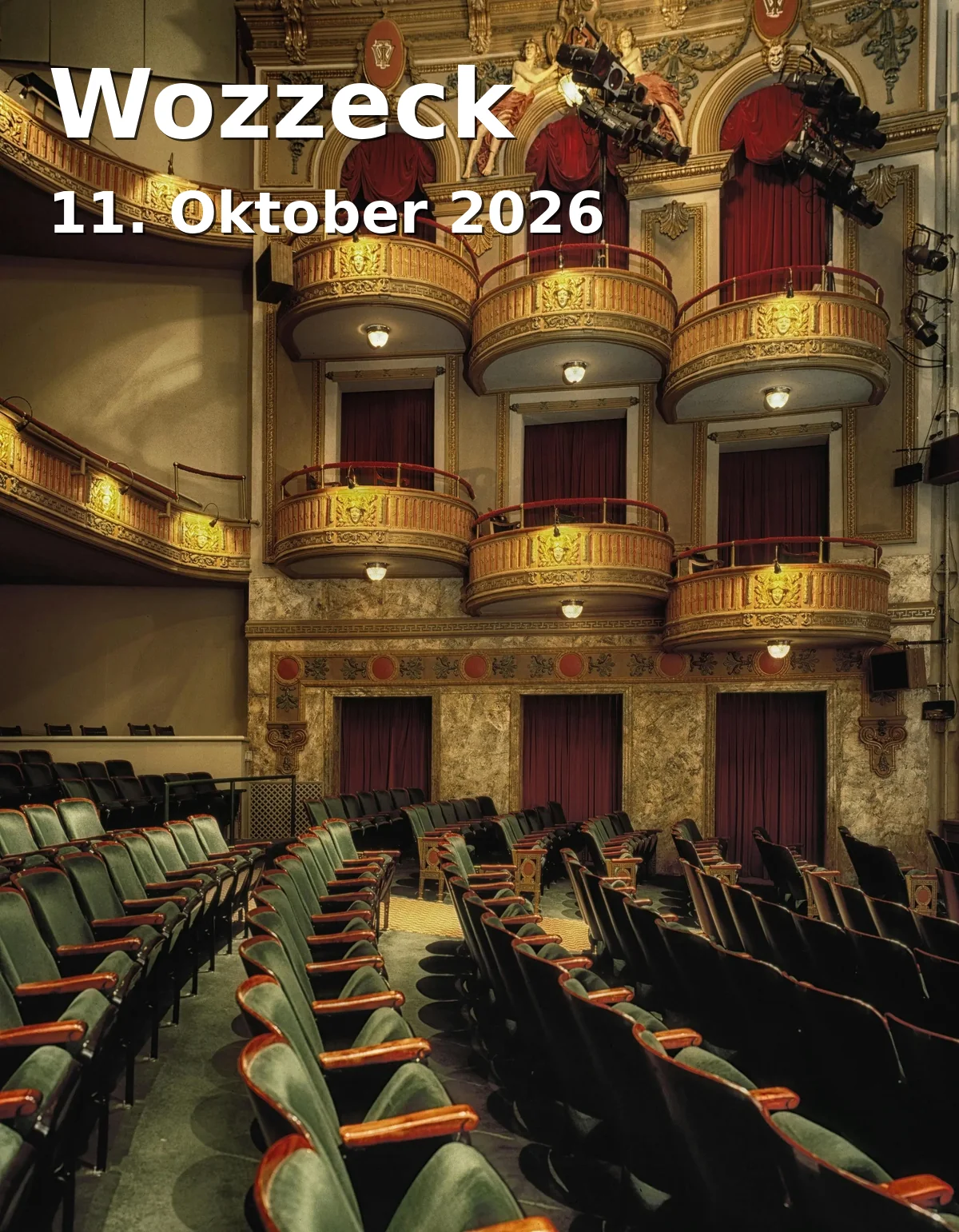
Wozzeck
Alban Berg's "Wozzeck" in Gelsenkirchen
Wozzeck
Wozzeck
Wozzeck