Alessandro Baricco
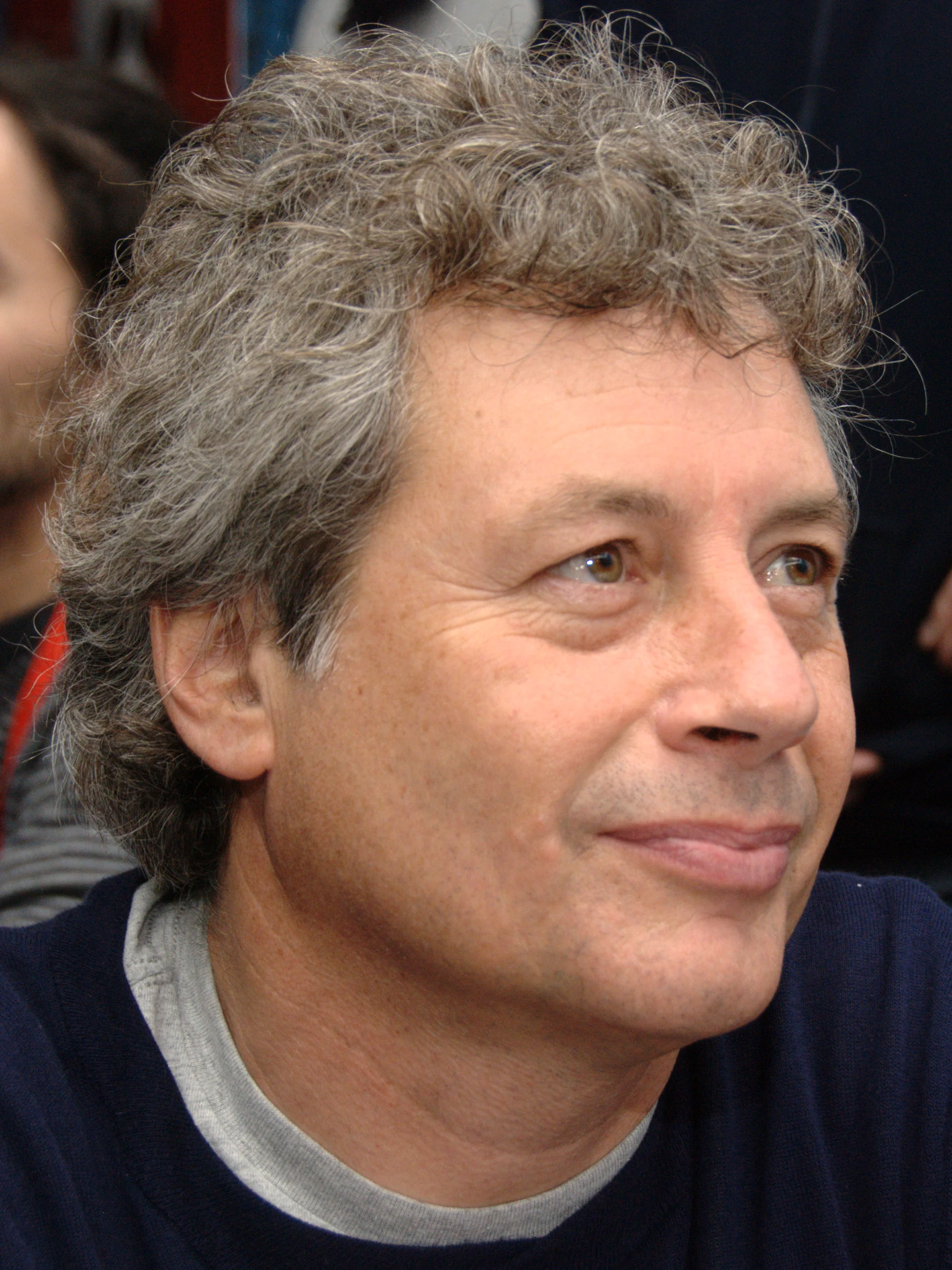
Image from Wikipedia
Image from Wikipedia
Alessandro Baricco – the Elegant Stylist Between Literature, Music, and Modern Culture
An Author Who Changed the Tone of a Generation
Alessandro Baricco, born on January 25, 1958, in Turin, is one of the most distinctive voices in contemporary Italian literature. His work combines narrative precision with a strong sense of rhythm, sound, and cultural dramaturgy. He became known not only as a writer but also as a journalist, music critic, television host, and intellectual boundary crosser between the arts. ([es.wikipedia.org](https://es.wikipedia.org/wiki/Alessandro_Baricco?utm_source=openai))
His career exemplifies an author who does not see literature as a closed discipline but as an open form of cultural criticism and aesthetic experimentation. Baricco wrote about music, worked in media, founded the Scuola Holden in Turin, and became internationally recognized with novels like Castelli di rabbia, Oceano mare, Seta, and City. ([de.wikipedia.org](https://de.wikipedia.org/wiki/Alessandro_Baricco?utm_source=openai))
Biography: Turin as the Starting Point of a Literary Career
Baricco's biographical path begins in Turin, a city with a strong industrial, bourgeois, and cultural tradition. After his studies and initial journalistic work, he early on developed a language that steered clear of academic heaviness, focusing instead on accessibility, suggestion, and formal elegance. His early work as a cultural correspondent and music journalist shaped the sensitivity to staging, rhythm, and atmosphere that would later characterize his prose. ([encyclopedia.com](https://www.encyclopedia.com/arts/educational-magazines/baricco-alessandro-1958?utm_source=openai))
Particularly important for his profile was the connection between literature and music. In his essays on Gioachino Rossini and the relationship between music and modernity, Baricco demonstrated that he views art not in isolation but as a system of perception, emotion, and temporal structure. This perspective grants his entire body of work a unique authority: he does not just tell stories but analyzes the cultural conditions of storytelling itself. ([en.wikipedia.org](https://en.wikipedia.org/wiki/Alessandro_Baricco?utm_source=openai))
The Breakthrough: From Writer to Cultural Phenomenon
The literary breakthrough came in 1991 with Castelli di rabbia, a novel that garnered significant attention in Italy and beyond and won the Prix Médicis étranger for its French translation. The success made Baricco an author who was not just read but discussed. His texts combined poetic condensation with narrative movement, resonating with an audience searching for literary form infused with emotional intensity. ([de.wikipedia.org](https://de.wikipedia.org/wiki/Alessandro_Baricco?utm_source=openai))
The later success of Oceano mare and Seta solidified this position. While Oceano mare was read as multi-layered, atmospherically dense prose, Seta, with its radically reduced, almost musical narrative style, reached a broad international audience. During this period, Baricco developed a distinctive signature: concise, controlled, lyrical, with a strong sense of repetition, motifs, and subtle tension arcs. ([de.wikipedia.org](https://de.wikipedia.org/wiki/Alessandro_Baricco?utm_source=openai))
Career Beyond the Novel: Television, School, and Cultural Institutions
Baricco also became well-known in Italy through his television presence. In 1993, he hosted L'amore è un dardo, followed later by the literary format Pickwick. These appearances significantly expanded his audience and showcased an author who conveys intellectual content in a performative and media-aware manner, bridging high culture and popular culture. His public role as a mediator between these realms became as defining as his books. ([repubblica.it](https://www.repubblica.it/dossier/tecnologia/onlife/2019/09/18/news/alessandro_baricco-236304949/?utm_source=openai))
Another milestone was the founding of the Scuola Holden in Turin, a school for creative writing. With it, Baricco not only created a place of education but an institution that institutionalized his view of narrative art. The school represents a philosophy connecting writing practice, stylistic awareness, and cultural presence. In this way, Baricco also became relevant as a mentor and cultural entrepreneur. ([encyclopedia.com](https://www.encyclopedia.com/arts/educational-magazines/baricco-alessandro-1958?utm_source=openai))
Music, Critique, and Thinking in Sound Forms
Baricco's relationship to music is a central key to his work. Even his early essays on Rossini and musical modernity show that he perceives composition not merely as a subject but as a form of thought. Music appears in his work as a model for time, tension, and perception—elements that also structure his prose. ([en.wikipedia.org](https://en.wikipedia.org/wiki/Alessandro_Baricco?utm_source=openai))
This closeness to music became evident in later projects, such as his collaboration with the French duo Air on City Reading (Tre Storie Western). The album combined Baricco's literary texts with electronically influenced soundscapes, demonstrating how open his work is to interdisciplinary formats. Critics described the project as an unusual, bold connection between narrative and music. ([en.wikipedia.org](https://en.wikipedia.org/wiki/City_Reading_%28Tre_Storie_Western%29?utm_source=openai))
Current Projects and New Perspectives
Even in the 2020s, Baricco remains active. In 2024, he appeared at the Romaeuropa Festival with Tucidide. Atene contro Melo, underscoring his ongoing relevance as a public thinker and stage author. The project again showcased his ability to stage historical material as vibrant contemporary issues. ([ansa.it](https://www.ansa.it/lazio/notizie/2024/09/07/tucidide.-atene-contro-melo-baricco-al-romaeuropa_a360ef08-1c65-4973-8578-f76aedc87d6e.html?utm_source=openai))
Additionally, Breve storia eretica della musica classica was published in 2025, a work that continues to reflect Baricco's interest in music history and cultural mediation. During an event at La Scala in Milan, he spoke about the book's development and how classical music can be narrated today. This reaffirms his reputation as an author who does not archive cultural history but reframes it. ([ansa.it](https://www.ansa.it/amp/sito/notizie/cultura/libri/2026/03/02/baricco-oggi-la-musica-classica-va-raccontata-con-valori-diversi_0c88d18a-5191-4fc0-b2b1-e75296455d34.html?utm_source=openai))
Discography, Adaptations, and Media Resonance
Although Baricco is not a musician in the strict sense, his work possesses a remarkable discographic and performative dimension. City Reading (Tre Storie Western) remains the most well-known example of a literary-musical collaboration in which his voice and texts became part of a standalone album. Such projects extend the concept of discography to a literary performance level that is central to Baricco's case. ([en.wikipedia.org](https://en.wikipedia.org/wiki/City_Reading_%28Tre_Storie_Western%29?utm_source=openai))
Additionally, there are film and theater adaptations that have further propagated his narratives. Novecento developed into one of the most frequently performed monologues in contemporary Italian theater, disseminated internationally through various stage and film adaptations. This adaptability explains Baricco's cultural influence: his texts function not only on the page but also in voice, scene, and sound. ([en.wikipedia.org](https://en.wikipedia.org/wiki/Novecento_%28monologue%29?utm_source=openai))
Style, Themes, and Cultural Influence
Baricco's style is characterized by clarity, musical sentence structure, and a consciously composed emotionality. His novels and essays often employ reduction, variation, and a keen sense of omission. This results in texts that are both easy to read and aesthetically demanding, a hallmark that has garnered him both broad popularity and serious literary acclaim. ([de.wikipedia.org](https://de.wikipedia.org/wiki/Alessandro_Baricco?utm_source=openai))
His cultural influence extends beyond literature. As a mediator, critic, and educator, he has shaped in Italy a generation of readers who view literature as a contemporary, public art form. At the same time, he has also been critically discussed, particularly regarding his style, which some view as too elegant while others celebrate it as highly precise. This very tension makes Baricco a consistently relevant figure in European contemporary culture. ([encyclopedia.com](https://www.encyclopedia.com/arts/educational-magazines/baricco-alessandro-1958?utm_source=openai))
An Author Who Makes Literature Audible
Alessandro Baricco remains intriguing because he balances literature, music, and cultural criticism in a rare equilibrium. His books possess melodic power, his public appearances intellectual presence, and his projects exhibit an extraordinary openness to new forms of storytelling. Those who read or experience Baricco encounter not a conventional novelist but an artist of language who measures cultural contemporaneity with elegance and analytical sharpness. ([de.wikipedia.org](https://de.wikipedia.org/wiki/Alessandro_Baricco?utm_source=openai))
His special effect unfolds particularly live: as a speaker, as a thinker, as a cultural performer. Those who follow his readings, conversations, or stage formats experience an author who not only formulates thoughts but stages them. Baricco thus remains a recommendation for all who wish to not only read literature but hear, feel, and experience it in the best sense. ([ansa.it](https://www.ansa.it/lazio/notizie/2024/09/07/tucidide.-atene-contro-melo-baricco-al-romaeuropa_a360ef08-1c65-4973-8578-f76aedc87d6e.html?utm_source=openai))
Official Channels of Alessandro Baricco:
- Instagram: no official profile found
- Facebook: no official profile found
- YouTube: no official profile found
- Spotify: no official profile found
- TikTok: no official profile found
Sources:
- Wikipedia – Alessandro Baricco
- Wikipedia (EN) – Alessandro Baricco
- Treccani – Baricco, Alessandro
- Encyclopedia.com – Baricco, Alessandro (1958–)
- la Repubblica – Alessandro Baricco
- ANSA – Baricco: today classical music must be narrated with different values
- ANSA – Tucidide. Atene contro Melo at the Romaeuropa Festival
- Pitchfork – Air / Alessandro Baricco: City Reading Album Review
- Wikipedia – City Reading (Tre Storie Western)
- Wikipedia – Novecento (monologue)