
Burning Spear
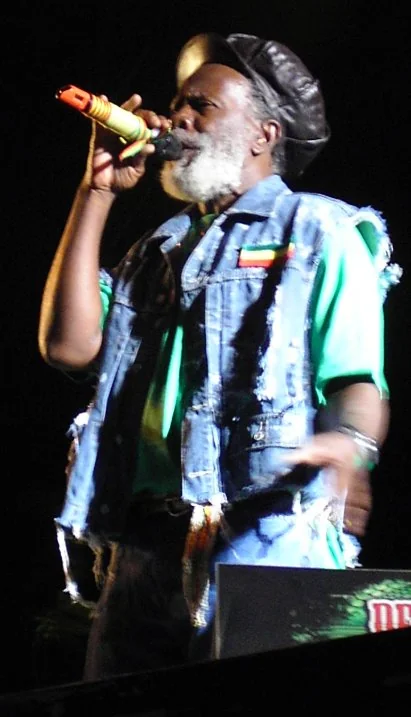
Image from Wikipedia
Image from Wikipedia
Burning Spear – The Distinctive Voice of Roots Reggae
Winston Rodney and the Legacy of a Rastafarian Music Pioneer
Burning Spear, born Winston Rodney, is one of the defining voices of Jamaican reggae, particularly of roots reggae. Since the late 1960s, he has shaped a music career that combines spiritual conviction, political message, and a distinctive stage presence into a unique artistic profile. His songs revolve around African history, self-determination, Rastafari philosophy, and the dignity of black identity – themes that continue to resonate in his work today. ([burningspearwebsite.com](https://www.burningspearwebsite.com/bio))
Born on March 1, 1945, in Saint Ann's Bay, Jamaica, Rodney grew up in a cultural environment influenced by Jamaican R&B, soul, and the emerging sound system culture. The artist name Burning Spear refers to Jomo Kenyatta and carries political, pan-African symbolism that aligns with his later body of work. From an early age, he connected musical development with a clear message: reggae as a conscious, thought-provoking medium and not merely as entertainment. ([universal-music.de](https://www.universal-music.de/burning-spear/biografie))
From the Village in Saint Ann to the Heart of the Jamaican Music Scene
Burning Spear's path into music began with a legendary encounter in reggae history: Bob Marley introduced Rodney to producer Coxsone Dodd and Studio One. From this early phase, the first recordings emerged, such as "Door Peep," which Rodney initially expanded into the group Burning Spear with the duo and later with other musicians. These early years already showcase the fundamental form of his work: minimalist, powerful, driven by deep bass lines and a vocal line that preaches more than it boasts. ([universal-music.de](https://www.universal-music.de/burning-spear/biografie))
The first phase of his career exemplifies the emergence of roots reggae from the Jamaican music culture of the 1970s. Burning Spear developed a blend of earthy rhythms, spiritual charge, and historical self-affirmation that quickly set him apart from many of his contemporaries. In his early songs, a concentrated sound emerges that would later become his trademark: heavy offbeat, clear bass lines, and singing with almost liturgical authority. ([universal-music.de](https://www.universal-music.de/burning-spear/biografie))
The Breakthrough with "Marcus Garvey" and the Political Impact of Roots Reggae
The actual international breakthrough came in 1975 with the album Marcus Garvey. Universal Music describes the work as a masterpiece of roots reggae, highlighting that Robert Christgau called it “the most African-sounding and politically charged reggae album of the time.” Songs like "Marcus Garvey" and "Slavery Days" made Burning Spear the voice of a pan-African consciousness that resonated far beyond Jamaica. ([universal-music.de](https://www.universal-music.de/burning-spear/biografie))
This album marks the moment when Burning Spear transitioned from a local hope to an international reference point. The combination of Marcus Garvey's thinking, Rastafari spirituality, and historical memory gave his music an intellectual and emotional density that had rarely been achieved in reggae before. Collaborative efforts with strong backing musicians like the Black Disciples also contributed to the production sounding both raw and monumental. ([universal-music.de](https://www.universal-music.de/burning-spear/biografie))
Discography: More than 25 Albums and a Body of Work of Remarkable Constancy
According to the Wikipedia list, Burning Spear's discography includes 28 studio albums, 6 live albums, and 23 compilation albums. Key releases include Studio One Presents Burning Spear (1973), Rocking Time (1974), Marcus Garvey (1975), Garvey’s Ghost (1976), Man in the Hills (1976), Dry & Heavy (1977), Social Living (1978), Hail H.I.M. (1980), Farover (1982), Resistance (1985), Mek We Dweet (1990), Calling Rastafari (1999), Our Music (2005), Jah Is Real (2008), and No Destroyer (2023). This long chain of albums showcases a career driven not by trends, but by conviction. ([en.wikipedia.org](https://en.wikipedia.org/wiki/Burning_Spear_discography))
The compilation and live releases are also important for reception as they document Burning Spear as a live artist. Albums like Live (1977), Live in Paris Zenith '88, Love & Peace: Burning Spear Live!, and Live in South Africa 2000 demonstrate how consistently he condenses his studio work on stage. Especially in the live context, his art unfolds as a collective ritual: singing, dub weight, percussion, and a calm yet hypnotic arrangement. ([en.wikipedia.org](https://en.wikipedia.org/wiki/Burning_Spear_discography))
Grammys, Awards, and Critical Reception
According to Universal Music, Burning Spear has been nominated for a Grammy twelve times and won the award in 2000 and 2009; Reggaeville and DancehallMag also place his later works in the context of his Grammy history. Additionally, No Destroyer was nominated for the Grammy Award for Best Reggae Album in 2024, confirming his relevance in the 21st century. These awards are not just trophies but indicators of an exceptionally enduring artistic authority. ([universal-music.de](https://www.universal-music.de/burning-spear/biografie))
The music press frequently highlights his integrity, political clarity, and distinctive sound. In feature articles and biographical portraits, Burning Spear is described as a pioneer, preacher, and custodian of a spiritually charged roots tradition. Particularly his commitment to content consistency – rather than calculated pop adaptation – shapes critical reception to this day and explains why his work ranks so highly in reggae history. ([universal-music.de](https://www.universal-music.de/burning-spear/biografie))
Musical Development: Bass, Dub, Ritual, and Political Language
The typical Burning Spear sound is based on a deep, often almost archaic rhythmic aesthetic. His music uses the bass not just as a foundation, but as a narrative force; the arrangements often remain sparse, yet it is precisely from this that tension arises. In combination with dub elements, ritual repetition, and the raw, deep timbre of his voice, a music develops that evokes more than it explains. ([reggaeville.com](https://www.reggaeville.com/artist-details/burning-spear/about/))
On content, Burning Spear is closely tied to Marcus Garvey, whose ideas of self-determination and African renewal have become a guiding motif of his work. His lyrics speak of history, resistance, community, spirituality, and resilience against oppression. Thus, his music career appears as a cohesive artistic statement in which genre, attitude, and message are inextricably intertwined. ([burningspearwebsite.com](https://www.burningspearwebsite.com/bio))
Current Projects, Return to the Stage, and Renewed Interest in the Legend
With No Destroyer, an album released in 2023 which was later Grammy-nominated in 2024, Burning Spear has re-entered the center of international reggae attention. DancehallMag reports that the album was recorded in 2011 at New York's Magic Shop and only released in 2023, giving his later work a special historical depth. MusikBlog also described his return to the stage in German-speaking regions in 2025, highlighting a performance in Cologne, emphasizing the artist's ongoing live presence. ([dancehallmag.com](https://www.dancehallmag.com/2023/11/15/features/interviews/interview-burning-spear-on-his-grammy-nominated-comeback-with-no-destroyer.html?utm_source=openai))
Tour dates and festival appearances further demonstrate that Burning Spear is not just an archival figure of reggae, but continues to be perceived as a living stage legend. Reggaeville lists a “Ziggy Marley & Burning Spear - Do The Reggae Tour” in the USA for 2025, and other event websites document festival and concert dates. This ongoing activity strengthens his status as an artist whose cultural influence does not end in the past. ([reggaeville.com](https://www.reggaeville.com/artist-details/burning-spear/dates/mode/archive/?utm_source=openai))
Official Channels of Burning Spear:
- Instagram: https://instagram.com/officialburningspear/
- Facebook: https://facebook.com/burningspearmusic
- YouTube: No official profile found
- Spotify: https://open.spotify.com/artist/6qaKS0nzGP4hfjl4aFZmEU
- TikTok: No official profile found
Conclusion: Why Burning Spear Remains Fascinating Today
Burning Spear captivates because his art is so much more than reggae history. It combines spiritual depth, political consequence, and sonic independence into a discography that retains its power over decades. Those who delve into his songs experience not just a great singer, but a cultural chronicler of African consciousness in the diaspora. ([burningspearwebsite.com](https://www.burningspearwebsite.com/bio))
Especially live, it becomes apparent how uncompromising and timeless this music is: the audience encounters heavy grooves, historical resonance, and a presence that commands respect. Burning Spear is an artist one must not only listen to but experience – as a voice, as an attitude, and as a living force of roots reggae. ([mojo4music.com](https://www.mojo4music.com/articles/stories/burning-spear-at-glastonbury-review/?utm_source=openai))
Sources:
- Burning Spear - BIO, Official Website
- Burning Spear - Official Website
- Universal Music - Burning Spear Biography
- Reggaeville - Biography: Burning Spear
- GRAMMY.com - Living Legends: Burning Spear On New Album, No Destroyer & Taking Control Of His Music
- DancehallMag - Interview: Burning Spear On His Grammy-Nominated Comeback With No Destroyer
- Primary Wave - Burning Spear PDF
- Wikipedia - Burning Spear Discography
- Wikipedia - Burning Spear
- Reggaeville - Burning Spear Dates
- MOJO - Burning Spear at Glastonbury Review
- MusikBlog - Burning Spear Presentation
Upcoming Events
Burning Spear opens the Tent Music Festival
Burning Spear live in Freiburg