
Erich Fromm
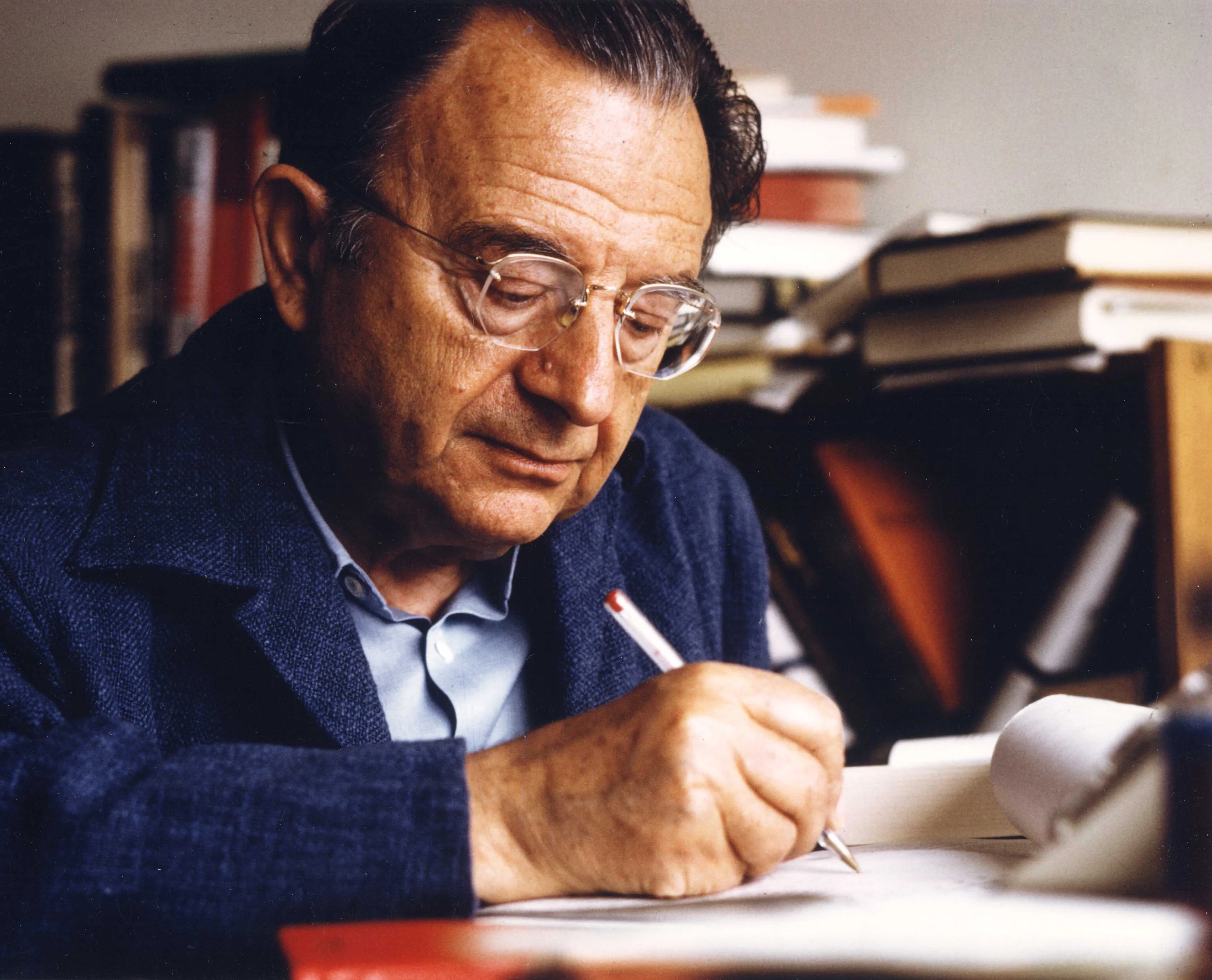
Image from Wikipedia
Image from Wikipedia
Erich Fromm: The Humanistic Thinker Whose Ideas Resonate to This Day
Influential Psychoanalyst, Cultural Critic, and Visionary of a More Human Modernity
Erich Fromm is one of the great intellectual voices of the 20th century. Born on March 23, 1900, in Frankfurt am Main and died on March 18, 1980, in Muralto, he combined psychoanalysis, social psychology, philosophy, and social criticism into an independent mode of thinking that extended far beyond academic circles. His books became bestsellers, most notably The Art of Loving and To Have or To Be, making him an author whose ideas remain present in discussions about freedom, authority, consumption, and human development. ([dhm.de](https://www.dhm.de/lemo/biografie/erich-fromm))
Biographical Roots: Frankfurt, Judaism, and Intellectual Influence
Fromm grew up in an orthodox Jewish family and began engaging deeply with Talmud studies at an early age. After finishing high school, he initially studied law in Frankfurt, then transferred to Heidelberg, delving into sociology, psychology, and philosophy. In 1922, he earned his doctorate on The Jewish Law, a topic that already foreshadowed his later connection between religion, society, and individual life. ([dhm.de](https://www.dhm.de/lemo/biografie/erich-fromm))
This early intellectual discipline significantly shaped Fromm's later approach to psychoanalysis. He was not just a pure theorist but constantly sought a human image that considers psychological dynamics alongside social conditions. This is where his lasting prominence lies: Fromm not only analyzed the individual but also the social structures that shape character, fear, and freedom. ([deutsche-biographie.de](https://www.deutsche-biographie.de/dbo049478.html?utm_source=openai))
Career at the Intersection of Psychoanalysis and Critical Theory
In the late 1920s, Fromm increasingly turned to psychoanalysis, training at the Psychoanalytic Institute in Berlin and co-founding the South German Institute for Psychoanalysis in Frankfurt am Main in 1929. In 1930, Max Horkheimer appointed him to the Frankfurt Institute for Social Research, where Fromm worked with Herbert Marcuse and Theodor W. Adorno in an environment that would later be regarded as the core of Critical Theory. This phase marked the beginning of his public influence as an original thinker bridging individual psychology and social analysis. ([dhm.de](https://www.dhm.de/lemo/biografie/erich-fromm))
In 1934, Fromm emigrated with the Institute for Social Research to New York and opened a psychoanalytic practice there. At the same time, he taught at Columbia University and quickly gained recognition in the United States as an independent thinker who did not reject Freud but instead reinterpreted his ideas. Fromm emphasized different drives and social factors and became a defining figure in Neo-Psychoanalysis with his 1941 work The Fear of Freedom. ([dhm.de](https://www.dhm.de/lemo/biografie/erich-fromm))
Exile, America, and the Path to Becoming an International Bestseller Author
After breaking with the Institute for Social Research and acquiring U.S. citizenship in 1940, Fromm further developed his ideas in the U.S. and later in Mexico. He taught in Vermont, published Psychoanalysis and Ethics, and moved to Mexico City in 1949, where he established a practice and received an extraordinary professorship at the state university in 1951. His intellectual biography illustrates a thinker who did not remain in one place but sharpened his concepts in ever-new cultural spaces. ([dhm.de](https://www.dhm.de/lemo/biografie/erich-fromm))
The surge in popularity came in 1956 with The Art of Loving, which became a success beyond the academic world. Fromm tapped into the pulse of the post-war era: the question of how people can love, bond, and at the same time remain autonomous resonated with a wide audience. Later followed To Have or To Be in 1976, a book that succinctly articulated his critique of possessive thinking, alienation, and unrestrained consumption, keeping him relevant in later decades. ([dhm.de](https://www.dhm.de/lemo/biografie/erich-fromm))
Significant Works: The Intellectual "Discography" of a Thinker
For those looking for a discographic overview in a metaphorical sense, Fromm offers an impressive succession of books and essays that can be read as a cohesive oeuvre. Central titles include The Fear of Freedom (1941), Psychoanalysis and Ethics (1947), The Art of Loving (1956), and To Have or To Be (1976). Later publications, such as The Heart of Man, further develop his concepts of biophilia, necrophilia, and narcissism. ([dhm.de](https://www.dhm.de/lemo/biografie/erich-fromm))
Fromm's work was never merely theoretical production but rather a cultural counter-model. He articulated a humanistic, democratic-socialist perspective that understands freedom not as mere choice but as a task of character and relationships. The fact that many of his books became bestsellers speaks to the unusual combination of scientific depth and accessible language. ([de.wikipedia.org](https://de.wikipedia.org/wiki/Erich_Fromm?utm_source=openai))
Style, Method, and Intellectual Signature
Fromm's style is characterized by clarity, ethical seriousness, and a strong societal critique. He utilized psychoanalytic concepts without getting lost in jargon, integrating them with psychology of religion, social theory, and a normative question: How can a person truly live rather than just function? It is precisely this blend of analytical precision and moral urgency that made him an author with extraordinary resonance. ([deutsche-biographie.de](https://www.deutsche-biographie.de/dbo049478.html?utm_source=openai))
His thinking focused on the character of humans in modernity: authoritarian, narcissistic, productive, or alienated. In the 1960s, Fromm recognized the significance of narcissism and group narcissism, and his theory of the authoritarian character was understood as a tool to explain power structures and patterns of submission. This conceptual sharpness gives his work significant relevance even in the 21st century. ([fromm-gesellschaft.eu](https://fromm-gesellschaft.eu/wp-content/uploads/2024/10/Presse-Mitteilung-zum-125.-Geburtstag-Erich-Fromms-final-2.pdf))
Cultural Influence, Reception, and Lasting Relevance
Fromm was not always equally valued in the academic world, yet his influence extended widely into public, political, and cultural debates. The German Historical Museum describes him as a significant representative of Neo-Psychoanalysis, and the International Erich Fromm Society continues to emphasize the relevance of his thinking to this day. His books and concepts have profoundly shaped the language of modern self- and social critique. ([dhm.de](https://www.dhm.de/lemo/biografie/erich-fromm))
Even in 2025 and 2026, Fromm remains relevant: On the occasion of his 125th birthday, the Erich Fromm Society pointed out his continued significance for issues of authoritarianism, narcissism, and digital capitalism. Furthermore, the official Fromm website continues to list lectures, new publications, and a podcast featuring talks by Erich Fromm. This indicates that his work is not complete but is being read in new contexts. ([fromm-gesellschaft.eu](https://fromm-gesellschaft.eu/wp-content/uploads/2024/10/Presse-Mitteilung-zum-125.-Geburtstag-Erich-Fromms-final-2.pdf))
Conclusion: Why Erich Fromm Remains Fascinating Today
Erich Fromm continues to captivate because he never separates psychology from society and never decouples critique from humanism. His books do not offer quick answers but provide tools to rethink freedom, love, possession, and responsibility. Anyone wanting to understand why Fromm is considered one of the great thinkers of modernity should not read him as a historical figure but as an intellectually contemporary author with astonishing accuracy. ([deutsche-biographie.de](https://www.deutsche-biographie.de/dbo049478.html?utm_source=openai))
His texts are still worth reading today because they not only explain but also challenge. Fromm invites one to take their own thinking, feeling, and acting seriously, and therein lies his enduring power. Those who read his works or follow lectures and materials from Fromm institutions discover a thinker whose humanistic vision continues to resonate and whose perspective on being human remains strikingly modern. ([rainerfunk.com](https://www.rainerfunk.com/))
Official Channels of Erich Fromm:
- Instagram: No official profile found
- Facebook: No official profile found
- YouTube: No official profile found
- Spotify: No official profile found
- TikTok: No official profile found