
Frederic Hormuth
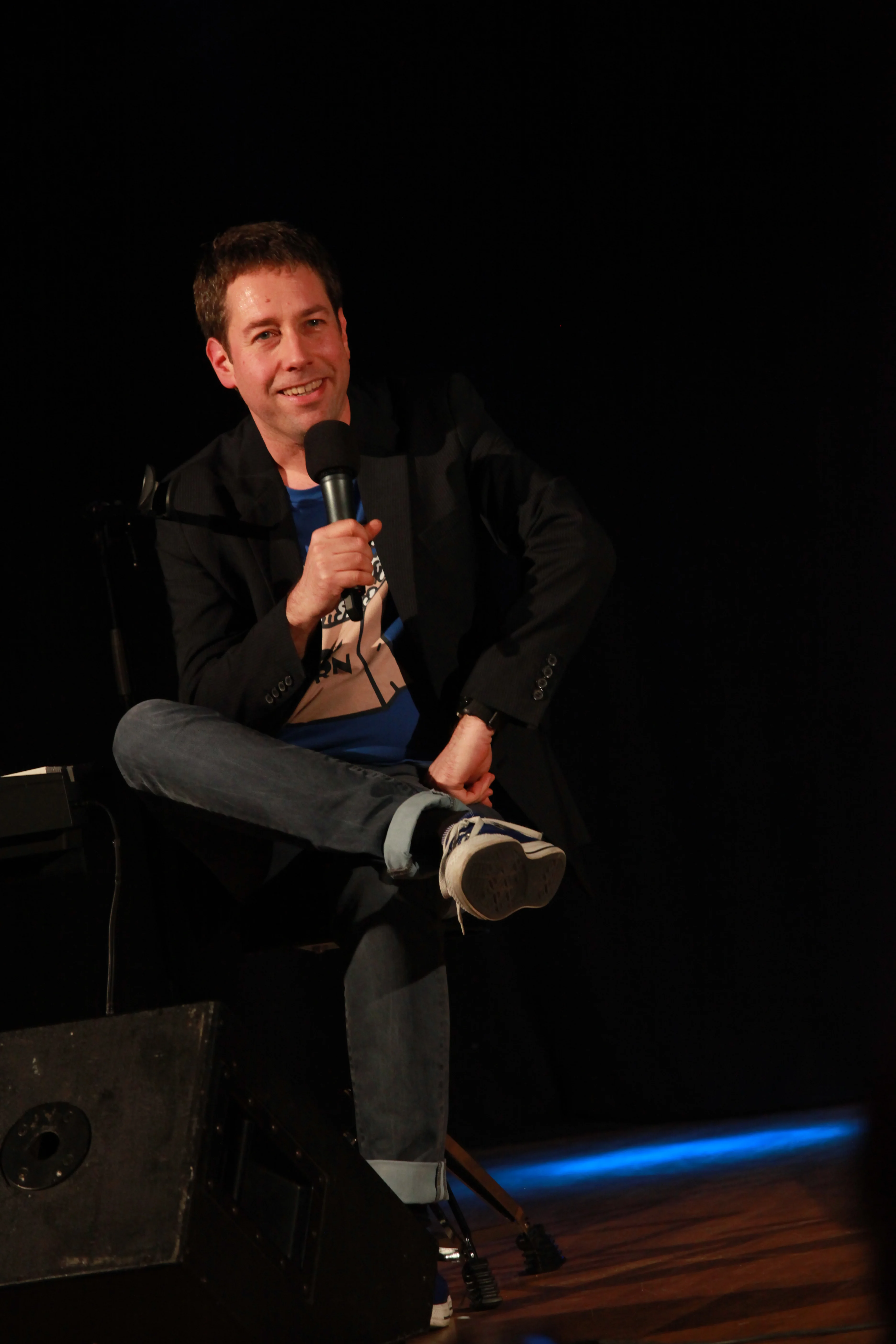
Image from Wikipedia
Image from Wikipedia
Frederic Hormuth: Cabaret, Piano, and Clever Punchlines with Attitude
A Mannheim cabaret artist with a musical profile and a sharp eye on the present
Frederic Hormuth, born on November 1, 1968, in Mannheim, is one of those German stage artists where cabaret, music, and authorship do not stand alongside each other but rather charge each other mutually. After completing his high school diploma and doing civilian service, he initially trained as a sound engineer before dropping out of his studies in German and English. In the late 1990s, he took the step into the cabaret scene. Since then, he has shaped the small art landscape between Mannheim and national stages with solo programs, song lyrics, and directing work. ([de.wikipedia.org](https://de.wikipedia.org/wiki/Frederic_Hormuth))
Hormuth stands for political cabaret with musical substance: songs at the piano, language with rhythm, punchlines with precision. His work combines stage presence with a satirical gift for observation, described in press quotes as dry, pointed, and extraordinary. This mixture makes him exciting for an audience that seeks not only laughs but also intellectual friction. ([eawent.de](https://www.eawent.de/kabarettisten-und-comedians/frederic-hormuth/))
Biography: From Mannheim to the small art stages of the country
The artistic development began in Mannheim, where Hormuth had his first performances as a cabaret artist during his studies, both solo and in the trio "Die Allergiker," which he was part of from 1992 to 2004. With this formation, he not only gained stage experience but also early recognition in the German small art scene. The Mannheim Klapsmühl’ am Rathaus became his regular stage and the place where he sharpened his profile as a performer. ([de.wikipedia.org](https://de.wikipedia.org/wiki/Frederic_Hormuth))
His path shows a classical but by no means ordinary development in German-speaking cabaret: training, studies, early stage practice, followed by a consistent move into professionalism. Particularly formative was the step into his solo career with "Kabarazzo" in 1998, a program that was performed nationwide and made his name known far beyond the region. Since then, he has developed new solo programs approximately every two years and has held a fixed place in the satirical calendar since 2005 with his year-in-review "Wie war’s für Dich?" ([de.wikipedia.org](https://de.wikipedia.org/wiki/Frederic_Hormuth))
Career: Solo programs, authorship, and directing work
Frederic Hormuth is not only a performer but also a lyricist, co-author, and director. He has written and continues to write for colleagues such as the Mannheim cabaret Dusche, Bülent Ceylan, Didi Saxer, Ingo Börchers, Lutz von Rosenberg Lipinsky, Christoph Brüske, and Britta von Anklang; he has also directed for Daniel Helfrich, Einhart Klucke, and other productions. This versatility adds additional depth to his musical career in the context of cabaret, making him as visible as a creator behind the scenes as he is on stage. ([de.wikipedia.org](https://de.wikipedia.org/wiki/Frederic_Hormuth))
He has also been present in the media: On television, he has appeared on "Ottis Schlachthof," at the cabaret festival of the Wühlmäuse, and in other formats. Press and organizers describe him as an artist with attitude, heart, and "awesome songs at the piano," whose programs are constantly updated and satirically address the present. Additionally, on his official website, he announces a new solo program titled "Quatsch" for October 2025, following a creative and family break. ([de.wikipedia.org](https://de.wikipedia.org/wiki/Frederic_Hormuth))
Discography and Publications: Cabaret to Listen to and Read
Although Frederic Hormuth does not appear as a classical album artist in the pop or rock sense, his discography in the cabaret format has clear cornerstones. Wikipedia lists as CD releases the live recording "Kabarazzo" from 1998, "Nett war gestern" as a live recording from 2006, a guest contribution on "Schräge Weihnachten," and "Honigbrot für alle!," a trio release with cabaret songs from 2012. This is complemented by the book publication "Mensch ärgere dich!" from 2014. ([de.wikipedia.org](https://de.wikipedia.org/wiki/Frederic_Hormuth))
Another important book is "100 Gründe warum du kein Klopapier hamstern musst," published in 2020 by Books on Demand. The publisher describes the work as a satirical response to a crisis year and emphasizes that Hormuth has been observing, researching, and articulating Germany satirically for over 20 years. With this, he expands his artistic production beyond the stage into the realm of humorous journalism and satirical literature. ([buchshop.bod.de](https://buchshop.bod.de/100-gruende-warum-du-kein-klopapier-hamstern-musst-frederic-hormuth-9783751901758))
Musical Development: Songs at the Piano as a Satirical Steam Engine
Hormuth's musical style is closely tied to the piano. The official artist page specifically mentions "awesome piano songs" and that he mixes songs, language, and gags into a "playful snack for the brain." This formulation captures the essence of his compositions: the song serves not merely as an interlude but as a structural means to intertwine satire, observation, and timing. ([eawent.de](https://www.eawent.de/kabarettisten-und-comedians/frederic-hormuth/))
Content-wise, his programs revolve around societal suppression, political irritations, everyday contradictions, and the question of how to remain rational in a complex world. The music acts as an amplifier for the text work: it rhythms the punchlines, opens emotional spaces, and adds an additional layer to cabaret that goes beyond mere spoken theater. It is precisely in this connection between arrangement, language, and stage presence that his unique signature lies. ([eawent.de](https://www.eawent.de/kabarettisten-und-comedians/frederic-hormuth/))
Awards: Early Recognition and Lasting Relevance
Hormuth's career has been honored with awards early on. Among the most important awards are 1st place at the Kabarett Kaktus in 1998, 1st place at the Reinheimer Satirelöwe in 1999 with "Die Allergiker," 3rd place at the Passauer Scharfrichterbeil in 1999, 3rd place at "Das Schwarze Schaf" in 1999, and the Kleinkunstpreis Baden-Württemberg for the young cabaret with the trio. In 2015, he won 1st place at the Hallertauer Kleinkunstpreis. ([de.wikipedia.org](https://de.wikipedia.org/wiki/Frederic_Hormuth))
The artist agency East Westfalian Entertainment also highlights these awards and adds stylistic praise: the press has referred to him as a specialist in thought boogie-woogie. Such classifications indicate that Hormuth establishes himself not only through awards but also through a distinctly recognizable artistic signature in the German-speaking cabaret scene. ([eawent.de](https://www.eawent.de/kabarettisten-und-comedians/frederic-hormuth/))
Critical Reception and Cultural Influence
Press reviews paint the picture of a precise observer with a high recognition value. On his program page, he collects authenticated quotes from regional and national press, ranging from "brilliant texts" to "dry and hearty" punchlines to pointed political analysis. The reactions confirm that Hormuth's cabaret is not reduced to spontaneous effects but is based on careful text work, timing, and musical shaping. ([frederic-hormuth.de](https://frederic-hormuth.de/programm/?utm_source=openai))
His cultural influence lies primarily in this consistent connection between political satire and musical cabaret. He is an artist who continues and modernizes the tradition of German-speaking small art, as he comments on the present with ironic sharpness, literary precision, and pianistic touch. For the audience, this results in an evening that entertains, irritates, and ideally leaves an impact. ([eawent.de](https://www.eawent.de/kabarettisten-und-comedians/frederic-hormuth/))
Conclusion: Why Frederic Hormuth Remains Fascinating
Frederic Hormuth represents cabaret with substance, musical sovereignty, and a clear attitude. His biography shows the path from his beginnings on stage in Mannheim through awards and solo programs to authorship, directing, and book publications. Those who appreciate political cabaret with piano, clever language, and a clear comedic signature will find an artist with independence and recognizability here. ([de.wikipedia.org](https://de.wikipedia.org/wiki/Frederic_Hormuth))
His art unfolds its full effect, especially live: punchlines, songs, and stage presence meet directly. Anyone looking for an evening that combines laughter, reflection, and musical precision should experience Frederic Hormuth on stage. His programs demonstrate how vibrant, relevant, and linguistically finely-tuned German cabaret can be. ([eawent.de](https://www.eawent.de/kabarettisten-und-comedians/frederic-hormuth/))
Official Channels of Frederic Hormuth:
- Instagram: No official profile found
- Facebook: No official profile found
- YouTube: No official profile found
- Spotify: No official profile found
- TikTok: No official profile found
Sources:
- Frederic Hormuth – Political Cabaret – Official Website
- Frederic Hormuth – Program Page "Quatsch"
- Wikipedia – Frederic Hormuth
- East Westfalian Entertainment – Frederic Hormuth
- Theaterstückverlag – Frederic Hormuth
- Books on Demand – 100 Gründe warum du kein Klopapier hamstern musst
- Mannheimer Morgen – Flapsig, furios und voller Facetten