
Friedrich Rückert
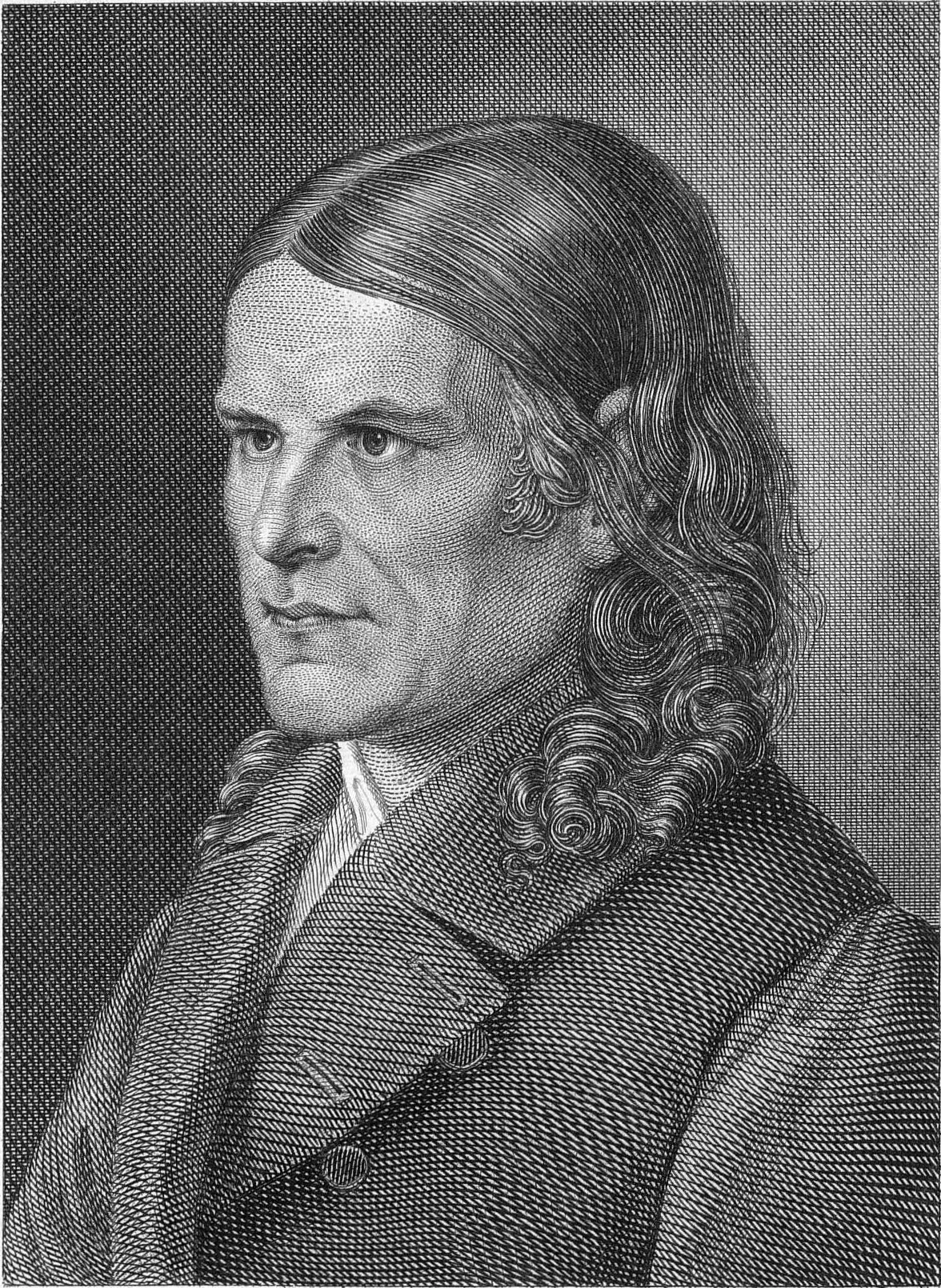
Image from Wikipedia
Image from Wikipedia
Friedrich Rückert – the Language Virtuoso Whose Poetry Resonates Through Music History
A Poet Who Treated Language as Sound
Friedrich Johann Michael Rückert is one of the great European language artists of the 19th century. Born on May 16, 1788, in Schweinfurt and died on January 31, 1866, in Neuses near Coburg, he was active as a poet, linguist, translator, and one of the founders of German Oriental studies. His significance extends far beyond literature, as his texts were repeatedly chosen by composers as templates for artistic song settings. ([literaturland-thueringen.de](https://www.literaturland-thueringen.de/personen/friedrich-rueckert/))
Rückert was not an artist in the modern pop or chart sense, yet his literary authority possesses an astonishing musical radiance. His verses became a resonance space for composition, expression, and psychological intensity, especially where the German art song canon demanded concise, linguistically precise texts. It is precisely this connection of language, rhythm, and inner sound that keeps him relevant to music lovers even today. ([allmusic.com](https://www.allmusic.com/artist/friedrich-r%C3%BCckert-mn0001778055?utm_source=openai))
Biography: From Law Student to Language Genius
Rückert began studying law in Würzburg in 1805 but soon switched to philology and philosophy. He received crucial impulses from teachers such as Johann Jakob Wagner and Heinrich Voss the Younger; in 1811, he earned his habilitation in Jena with the dissertation De idea philologiae. In it, he already outlined the idea of connecting linguistics and poetry to create an ideal form of language. ([rueckert-gesellschaft.de](https://rueckert-gesellschaft.de/friedrich-rueckert/))
This early theoretical foundation shaped his entire work. Rückert did not view the philologist merely as a scholar but as a creative shaper of language. This explains why his career did not follow a linear path but oscillated between academic work, poetic production, translation, and cultural mediation. ([rueckert-gesellschaft.de](https://rueckert-gesellschaft.de/friedrich-rueckert/))
The Breakthrough in the Literary Scene
The real breakthrough for Rückert came with the Deutschen Gedichten, which received significant attention in the context of the Wars of Liberation in 1814. The Rückert Society describes how his patron Christian Truchseß von Wetzhausen actively supported the reception and opened up access to important publishing circles. Through Johann Friedrich von Cotta, Rückert also gained significant contacts that strengthened his further career as an author and editor. ([rueckert-gesellschaft.de](https://rueckert-gesellschaft.de/friedrich-rueckert/))
In 1816/17, Rückert worked together with Friedrich Haug on the editorial team of the Morgenblattes in Stuttgart. This journalistic phase linked literary production with cultural public life and sharpened his profile as an author, who not only wrote poems but also shaped the literary discourse of his time. This public visibility was crucial for the later reception of his texts in music. ([rueckert-gesellschaft.de](https://rueckert-gesellschaft.de/friedrich-rueckert/))
Oriental Studies, Art of Translation, and Literary Breadth
A core aspect of Rückert's greatness lies in his extraordinary linguistic competence. Literaturland Thüringen names at least 44 additional languages alongside his mother tongue; other biographical accounts mention more than 40 languages and emphasize his status as a language genius. This multilingualism was not only an intellectual achievement but the basis of a translation art that explored European and Oriental literature at a new level. ([literaturland-thueringen.de](https://www.literaturland-thueringen.de/personen/friedrich-rueckert/))
After his trip to Italy in 1817 and studying Persian under Joseph von Hammer-Purgstall, Rückert systematically deepened his knowledge of the East. He lived temporarily in Coburg and Ebern as a private tutor, translating parts of the Koran and publishing Oestliche Rosen, before being called as a professor of Oriental languages and literatures to Erlangen in 1826. This institutional recognition validated his scholarly and poetic work. ([literaturland-thueringen.de](https://www.literaturland-thueringen.de/personen/friedrich-rueckert/))
Family, Life, and Productive Years in Coburg and Berlin
In 1821, Rückert married Luise Wiethaus-Fischer; the couple had ten children. Luise inspired him for the collection Liebesfrühling, while the growing family simultaneously compelled him to continuous publication activity. Rückert secured his livelihood through poetic works, translations, and editorial contributions to almanacs and pocketbooks. ([rueckert-gesellschaft.de](https://rueckert-gesellschaft.de/friedrich-rueckert/))
In 1841, dramatic works such as König Arsak von Armenien emerged, but the stage did not become his actual field. The sources indicate that Rückert struggled with the expectations of urban life in Berlin and that his strength lay less in theatrical effect than in lyrical intensity. After the Revolution of 1848, he withdrew to Neuses, where he lived a quieter life focused on science and family. ([deutsche-biographie.de](https://www.deutsche-biographie.de/sfz77201.html))
The Literary Signature: Domestic, Annual, and Love Poetry
Rückert's later work is often described as domestic and annual poetry, that is, poetry that merges the personal, the temporal, and the inner self. Among his best-known works are the haunting Kindertodtenlieder, the Haus- und Jahreslieder, Hamasa, and what he called the Liedertagebuch. These texts possess a form of concentration that particularly attracts composers because they distill great emotion into concise, precise language. ([literaturland-thueringen.de](https://www.literaturland-thueringen.de/personen/friedrich-rueckert/))
Especially the Kindertodtenlieder demonstrate Rückert's ability to transform personal grief into a universal poetic form. In music history, this emotional depth became particularly evident when Gustav Mahler chose the texts for his Kindertotenlieder and the Fünf Rückertlieder. This solidified Rückert as a key literary figure in German art song. ([de.wikipedia.org](https://de.wikipedia.org/wiki/Friedrich_R%C3%BCckert?utm_source=openai))
Discography in a Broader Sense: Settings, Not Albums
For an author like Rückert, there is no discography in the pop-cultural sense, but there is an impressive history of musical settings. The AllMusic biography emphasizes that his poems are considered masterpieces of German literature and have also inspired numerous composers. The relationship between word and music makes his legacy visible to this day. ([allmusic.com](https://www.allmusic.com/artist/friedrich-r%C3%BCckert-mn0001778055?utm_source=openai))
Key historical references in music include Gustav Mahler’s Rückert settings as well as the reception of Rückert’s poetry in art song of the 19th and early 20th centuries. That Rückert’s texts were repeatedly picked up by composers can be explained by their sonic architecture, their metrical discipline, and their emotional openness. The poetry not only provides content but also compositional impulses. ([de.wikipedia.org](https://de.wikipedia.org/wiki/Friedrich_R%C3%BCckert?utm_source=openai))
Style and Artistic Development: Precision, Breadth, and Musical Language
Rückert's style combines formal rigor with astonishing flexibility. His work on Oriental themes, on translations, and on his own lyrics produced a poetics that swings between erudition and intimacy. This mixture of philological accuracy and lyrical intensity makes him an exceptional figure in German-language literature. ([rueckert-gesellschaft.de](https://rueckert-gesellschaft.de/friedrich-rueckert/))
From a musicological perspective, Rückert's language possesses a high degree of "singability," as it elegantly combines rhythm, repetition, and semantic concentration. His verses open spaces for breath, phrase, and dynamic shaping. This is a fundamental reason why his texts have remained so attractive to song composers and continue to live on in the repertoire of cultural memory. ([allmusic.com](https://www.allmusic.com/artist/friedrich-r%C3%BCckert-mn0001778055?utm_source=openai))
Cultural Influence: Between Oriental Reception and the German Song Canon
Rückert is a key figure in German Oriental studies and also a bridge-builder between cultures. His work opened up Arabic, Persian, and Indian literature in a way that set new standards in the German-speaking world. This created a cultural influence that extends far beyond literary history and has shaped the European conception of world literature. ([literaturland-thueringen.de](https://www.literaturland-thueringen.de/personen/friedrich-rueckert/))
His impact in music arises from precisely this cultural openness. Where composers sought texts that unite emotional depth, intellectual breadth, and linguistic precision, Rückert offered an ideal reservoir. Thus, the poet became an author with extraordinary presence in the concert hall, in song evenings, and in music history. ([de.wikipedia.org](https://de.wikipedia.org/wiki/Friedrich_R%C3%BCckert?utm_source=openai))
Awards, Remembrance, and Legacy
Rückert's significance was already recognized during his lifetime. On May 31, 1842, he received the Prussian Order Pour le Mérite for Sciences and Arts, awarded by King Friedrich Wilhelm IV of Prussia. Later, his name was further entrenched in cultural memory through the Friedrich Rückert Prize and the Coburg Rückert Prize. ([literaturland-thueringen.de](https://www.literaturland-thueringen.de/personen/friedrich-rueckert/))
Even in his later life, his special status is evident: after returning to Coburg from Berlin, he lived in Neuses, where he devoted himself more to family, science, and quiet work. He is buried in Neuses, and his work remains present as a literary and musical foundation. Those who read Rückert today encounter not only a poet but an architect of language and sound. ([deutsche-biographie.de](https://www.deutsche-biographie.de/sfz77201.html))
Conclusion: Why Friedrich Rückert Still Fascinates Today
Friedrich Rückert fascinates because he united literature, linguistics, and cultural mediation at a rare level. His poetry possesses the clarity of a scholar, the intimacy of a lyricist, and the rhythmic quality that continues to inspire music today. It is this connection that makes him an indispensable figure for all who understand art as an interplay of word, thought, and sound. ([rueckert-gesellschaft.de](https://rueckert-gesellschaft.de/friedrich-rueckert/))
For those interested in the poetic undercurrent of music history, Rückert is a significant discovery. His texts live on in settings, his linguistic art has challenged generations of composers, and his cultural breadth feels remarkably modern. A live performance in the traditional sense remains historically impossible for him, yet his verses continue to unfold a presence that touches both in the concert hall and in silent reading. ([de.wikipedia.org](https://de.wikipedia.org/wiki/Friedrich_R%C3%BCckert?utm_source=openai))
Official Channels of Friedrich Rückert:
- Instagram: no official profile found
- Facebook: no official profile found
- YouTube: no official profile found
- Spotify: no official profile found
- TikTok: no official profile found