
Helmut Haberkamm
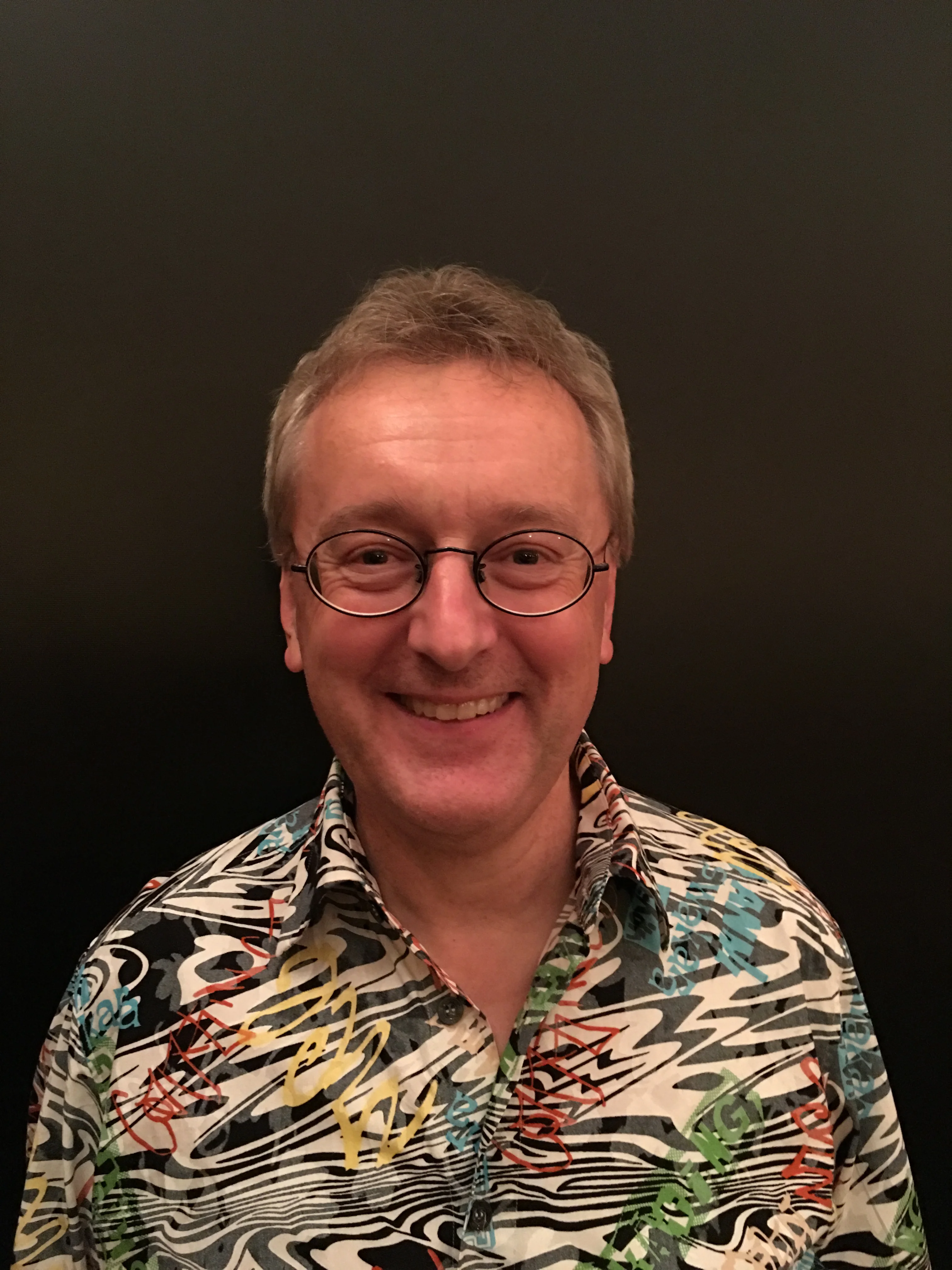
Image from Wikipedia
Image from Wikipedia
Helmut Haberkamm: The Franconian Dialect as Literature, Stage, and Musical Language
An author who transforms dialect into a resonant presence
Helmut Haberkamm, born on December 3, 1961, in Dachsbach in Middle Franconia, is one of the most prominent voices in Franconian literature. His work combines dialect poetry, theater, novels, essays, song translation, and cultural-political engagement into a distinctive artistic signature. Those who read Haberkamm or experience him on stage do not encounter a cliché of Heimat, but rather a precise, poetic, and often surprisingly modern engagement with language, origin, and regional identity. ([de.wikipedia.org](https://de.wikipedia.org/wiki/Helmut_Haberkamm))
His biography is closely tied to the Aischgrund and the East Franconian language landscape, yet his horizon extends far beyond the region. Haberkamm studied English, American Studies, and German Studies in Erlangen and Swansea; he completed his doctoral thesis on contemporary poetry in Great Britain in 1991. This academic foundation continues to shape his work today: literarily precise, language-conscious, and open to transcultural influences. ([de.wikipedia.org](https://de.wikipedia.org/wiki/Helmut_Haberkamm))
Biography: Origins, Studies, and the Path to Literature
Haberkamm grew up on his parents' farm in Dachsbach, which deeply roots him in the rural world of experience that many of his texts embody. For him, the dialect is not a decorative element but a literary instrument with social, historical, and emotional depth. His debut collection Frankn lichd nedd am Meer from 1992 marked a turning point: with this award-winning book, he entered the literary scene and was quickly recognized as one of the most linguistically powerful dialect authors of Franconia. ([de.wikipedia.org](https://de.wikipedia.org/wiki/Helmut_Haberkamm))
After his studies, Haberkamm worked as a teacher and has been employed at the Emil-von-Behring Gymnasium in Spardorf since 2001; in 2019, he returned to active teaching at the Christian-Ernst-Gymnasium Erlangen after a five-year break. This dual grounding in both school and writing gives his work a unique sense of place. The author observes not from a distanced stance but from close proximity to language, generations, and everyday experiences. ([de.wikipedia.org](https://de.wikipedia.org/wiki/Helmut_Haberkamm))
Artistic Development: From Dialect Poetry to a Multifaceted Oeuvre
Haberkamm's development showcases a rare literary arc: from the publication of poetry to plays, novels, and cultural-historical non-fiction. In his dialect collections, he works with rhythmic precision, a musical flow of language, and a sharp sensitivity to the tone of everyday life. His attitude is never merely nostalgic. Instead, he brushes against the familiar Heimat, revealing fractures, hardships, solitude, and contradictions of village life. ([arsvivendi.com](https://arsvivendi.com/Buch/FromList/9783869131801-Frankn-lichd-nedd-am-Meer))
Indeed, this is where his literary authority lies: Haberkamm transforms regional language culture into contemporary literature. His texts shed light on the social fabric of Franconia, on idioms, spaces of memory, and a musicality of language that is often lost in standard German. The critical acclaim from the press, describing him as a "word artist" and "language composer," accurately reflects this connection of meaning, sound, and precise formal craftsmanship. ([helmuthaberkamm.de](https://www.helmuthaberkamm.de/))
Theater, Stage, and Performance: When Language Becomes Physical
A significant part of Haberkamm's career unfolds on stage. Plays like No Woman, No Cry – Ka Weiber, ka Gschrei, We Are the Champions – Mir sinn die Größdn, or Glopf an die Himmelsdür demonstrate how adeptly he blends popular themes, theatrical forms, and dialect into an independent stage cosmos. The titles alone reveal his pleasure in sonic sharpness, irony, and a Franconian understatement that operates with great precision. ([helmuthaberkamm.de](https://www.helmuthaberkamm.de/))
Since 2000, he has also created puppet theater pieces in collaboration with Stefan Kügel, which are repeatedly performed at the Kuckucksheim Theater in Heppstädt. In doing so, Haberkamm expands his literary profile to include a performative dimension in which text, play, voice, and regional public intertwine. His stage work is not a sideline but a central part of his cultural presence in Franconia. ([de.wikipedia.org](https://de.wikipedia.org/wiki/Helmut_Haberkamm))
Song Translations and Musical Projects
Haberkamm is not only a writer but also a song translator and lyricist. He became particularly well-known for his long-standing engagement with Bob Dylan: for about 30 years, he has translated Dylan's lyrics into Franconian, giving them a new regional resonance. In 2021, Fier immer jung was released, featuring 77 Dylan songs in Franconian; this was supplemented by the CD Dylan auf Fränkisch with Johann Müller. This work is more than translation: it is musical re-interpretation, cultural mediation, and dialect preservation in one. ([de.wikipedia.org](https://de.wikipedia.org/wiki/Helmut_Haberkamm))
Additional recordings are also part of his work, including Fodd ieberm großn Wasser, a CD of translated song lyrics sung by Johann Müller, and Gidderbarri as a lyric project. This positions Haberkamm at the intersection of literature and music, where language becomes audible and dialect transforms into melody, arrangement, and stage presence. This connection makes him equally fascinating for music lovers and culture enthusiasts. ([helmuthaberkamm.de](https://www.helmuthaberkamm.de/Veroeffentlichungen.htm))
Discography and Publications: Key Milestones
The discographical and publishing chronology includes titles such as Frankn lichd nedd am Meer und mehr und mehr (1997), Komm süßer Tod (2001), Fodd ieberm großn Wasser (2005), and Dylan auf Fränkisch (2021). These publications demonstrate how consistently Haberkamm connects language with music and transforms the dialect from pure reading culture into an audible format. They also document his openness to religious, lyrical, and pop culture references. ([de.wikipedia.org](https://de.wikipedia.org/wiki/Helmut_Haberkamm))
Literarily, his oeuvre encompasses poetry collections, plays, novels, stories, essays, and illustrated books. Notable titles include Das Kaffeehaus im Aischgrund, Die warme Stube der Kindheit, and Kleine Sammlung fränkischer Dörfer, the latter co-authored with Annalena Weber and awarded as the most beautiful regional book in Germany in 2019. The variety of these publications underscores Haberkamm's standing as a versatile author with a high level of stylistic discipline. ([helmuthaberkamm.de](https://www.helmuthaberkamm.de/Veroeffentlichungen.htm))
Critical Reception, Awards, and Cultural Influence
The reception of Haberkamm's work is strikingly consistent: he receives praise for linguistic precision, his modern dialect poetry, and for the way he literarily condenses regional experience. Early descriptions of his work emphasize that he does not romanticize the seemingly idyllic village world but makes its cracks visible. This tension between love for one's homeland and analysis shapes all of his writing. ([arsvivendi.com](https://arsvivendi.com/Buch/FromList/9783869131801-Frankn-lichd-nedd-am-Meer))
His awards include the Bavarian Art Promotion Prize in 1993, the Cultural Promotion Prize of the Middle Franconia District in 1999, the Frankenwürfel in 2008, the Cultural Prize of the City of Erlangen, and the Franconia Medal in 2018, along with the Wolfram von Eschenbach Prize in 2022 and the Cultural Prize of the Frankenbund in 2024. Additionally, Kleine Sammlung fränkischer Dörfer was recognized as the most beautiful regional book in Germany in 2019. These awards not only attest to literary quality but also to lasting cultural relevance. ([de.wikipedia.org](https://de.wikipedia.org/wiki/Helmut_Haberkamm))
Current Projects: Presence, Continuity, and New Publications
Currently, the official website lists the poetry collections All Dooch wos annersch (2022) and Edzerdla hammers (2024). Moreover, Haberkamm's website announces the novel Der Baron im Blauen Haus to be published by ars vivendi in late July 2025. This continuity shows that Haberkamm continues to work dynamically and relevantly, rather than merely in a museum-like manner. ([helmuthaberkamm.de](https://www.helmuthaberkamm.de/))
His artistic center remains within the Franconian language space, yet the themes he explores are wide-ranging: memory, aging, identity, societal change, and the question of how regional culture can endure in a globalized present. This is where his particular strength as an author and cultural figure lies. He creates works that are locally rooted yet remain literarily open. ([helmuthaberkamm.de](https://www.helmuthaberkamm.de/))
Conclusion: Why Helmut Haberkamm Endures
Helmut Haberkamm is compelling because he does not treat dialect as folklore but as a vibrant art form. He combines literary accuracy, musical thinking, and cultural responsibility into a body of work that takes Franconia, language, and the present seriously. Those who experience him live encounter an author who makes words audible and shapes great literature from regional language. ([helmuthaberkamm.de](https://www.helmuthaberkamm.de/))
It is precisely this mix of poetic power, stage presence, and cultural depth that makes him one of the most important voices in contemporary Franconian literature. An appearance, reading, or musically framed program by Helmut Haberkamm is worthwhile for all those who want to not only read language but also experience it. ([helmuthaberkamm.de](https://www.helmuthaberkamm.de/Veroeffentlichungen.htm))
Official Channels of Helmut Haberkamm:
- Instagram: No official profile found
- Facebook: No official profile found
- YouTube: No official profile found
- Spotify: No official profile found
- TikTok: No official profile found
Sources:
Upcoming Events
USA 250 – Reading by Helmut Haberkamm: The Baron in the Blue House