
Hugo Harrer
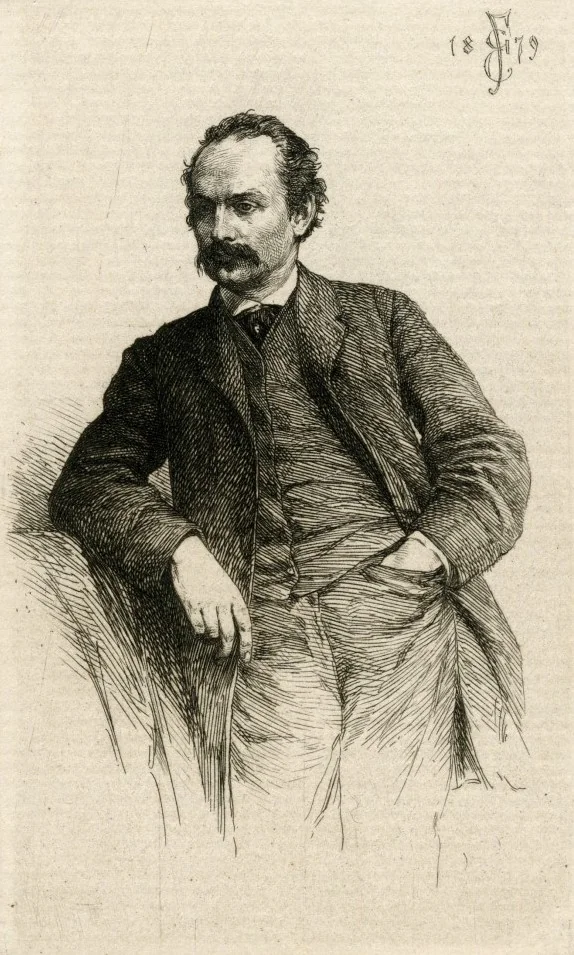
Image from Wikipedia
Image from Wikipedia
Hugo Harrer – the precise gaze of a realist from the Düsseldorf School
A painter between architecture and nature: Hugo Harrer's artistic profile
Hugo Paul Harrer was a German landscape and architecture painter of the 19th century whose work is closely associated with the Düsseldorf School. Born on February 6, 1836, he evolved into an artist who did not romanticize reality but captured it with a sober gaze, keen observation, and craftsmanship. His career exemplifies how an independent artistic profile could emerge from an interest in architecture, the study of nature, and individual artistic practice during the 19th century.
Although Harrer initially began an architectural education, he soon turned to painting and continued to educate himself as a self-taught artist. He privately studied in the studios of friends and sought his subjects through careful observation of nature. This combination of practical knowledge, design precision, and direct observation shaped his artistic development and makes him an intriguing figure in the realm of German Realism to this day.
Biographical beginnings and the path to painting
Harrer’s life path began in Eberswalde, though some biographical accounts mention a different birthplace. What is certain is that he belonged to a generation of artists who did not define themselves solely through academies but found their place through independent study and studio connections. The avoidance of a classical academic education was not a deficiency for him but part of a working method that relied on immediacy and precision.
The German Biography describes him as a painter who wanted to depict things "as he saw them." This attitude points to a modern realism that asserted itself against idealizing image strategies in the 19th century. Harrer's path illustrates how strongly the art of that time was shaped by a culture of observation, fidelity to nature, and an almost scientific approach to the visible subject.
Düsseldorf School, realism, and artistic attitude
Hugo Harrer is associated with the Düsseldorf School, an environment that significantly influenced European landscape and genre painting. In this artistic milieu, composition was combined with atmospheric density, while the precise elaboration of forms, perspectives, and light moods played a central role. Harrer's orientation towards reality fitted perfectly into this tradition, giving his works a factual yet sensitive presence.
As a landscape and architecture painter, he moved between the representation of nature and constructive order. It is precisely in this tension that the special quality of his approach lies: architecture required a secure sense of space, proportion, and line, while landscape painting depended on mood, observation, and painterly finesse. Harrer combined these poles into an imagery that leaned more towards accuracy than pathos.
Work process, style, and painterly characteristics
Harrer’s work was evidently marked by precise seeing. The recorded characterizations emphasize his careful observation of nature and his distance from purely academic formulas. This results in the image of an artist who did not elevate his subjects decoratively but took their structure, composition, and concrete appearance seriously. It is precisely this attitude that gives his work a quiet authority.
His painting can be understood as part of a realistic visual culture that emphasized credibility, compositional clarity, and craftsmanship. His interest in architecture means not only the choice of a subject but also a form of thinking: spaces are constructed, landscapes are structured, and visual impressions are translated into viable image orders. Harrer's style was thus more than mere reproduction; it was a disciplined form of artistic insight.
Career, recognition, and art historical classification
Little is known about a broad public career in the contemporary sense for Hugo Harrer, but his importance in art history remains significant. Biographical sources depict him as a painter who became a recognized representative of his direction without a permanent master workshop and without attending an academy. This independence strengthens his profile as an artist who worked with great observational skills and self-motivation.
His death on December 10, 1876, in Rome marks the end of a life dedicated to painting with seriousness and consequence. That he was buried in the Protestant Cemetery in Rome also refers to the European mobility of many German artists in the 19th century. Harrer represents a generation that sought its place between German artistic tradition, immediate Italian experience, and an evolving realistic visual perspective.
Work, transmission, and cultural significance
The preserved sources provide mainly core biographical data and art historical classifications, which is not unusual for artists of his time. Especially among painters outside of the major canonical figures, the importance of reconstruction through lexicons, biographical reference works, and art historical catalogs remains evident. Harrer's significance thus lies not only in the individual image but also in his representative position within the Düsseldorf School.
His name is associated with that phase of German art history in which realism, interest in landscapes, and architectural precision merged. Thus, he is part of a larger cultural context that significantly influenced the perception of nature and constructed space in the 19th century. Harrer embodies the artist as a precise observer who forms order from visibility and creates visual art from observation.
Conclusion: Why Hugo Harrer remains fascinating to this day
Hugo Harrer is not an artist of loud effects, but one of careful distance and precise vision. His biography tells of independence, practical skill, and a realistic attitude towards the world, which found its fitting framework in the Düsseldorf School. Those interested in German painting of the 19th century, landscape, and architecture painting, or the development of realism will discover in Harrer a quiet yet substantial artistic personality.
This concentration on observation, form, and compositional clarity makes him captivating. Harrer’s work invites us to appreciate the quality of precise seeing anew and to explore the diversity of the Düsseldorf School beyond the most well-known names. To engage with his art is to encounter a painter who did not seek to invent the world but rather made it visible with seriousness and sovereignty.
Official channels of Hugo Harrer:
- Instagram: no official profile found
- Facebook: no official profile found
- YouTube: no official profile found
- Spotify: no official profile found
- TikTok: no official profile found
Sources:
- Wikipedia – Hugo Harrer
- German Biography – Harrer, Hugo
- Wikipedia – Harrer (name page)
- artnet – Hugo Paul Harrer, auction results
- Wikipedia: image and text source