
LaBrassBanda
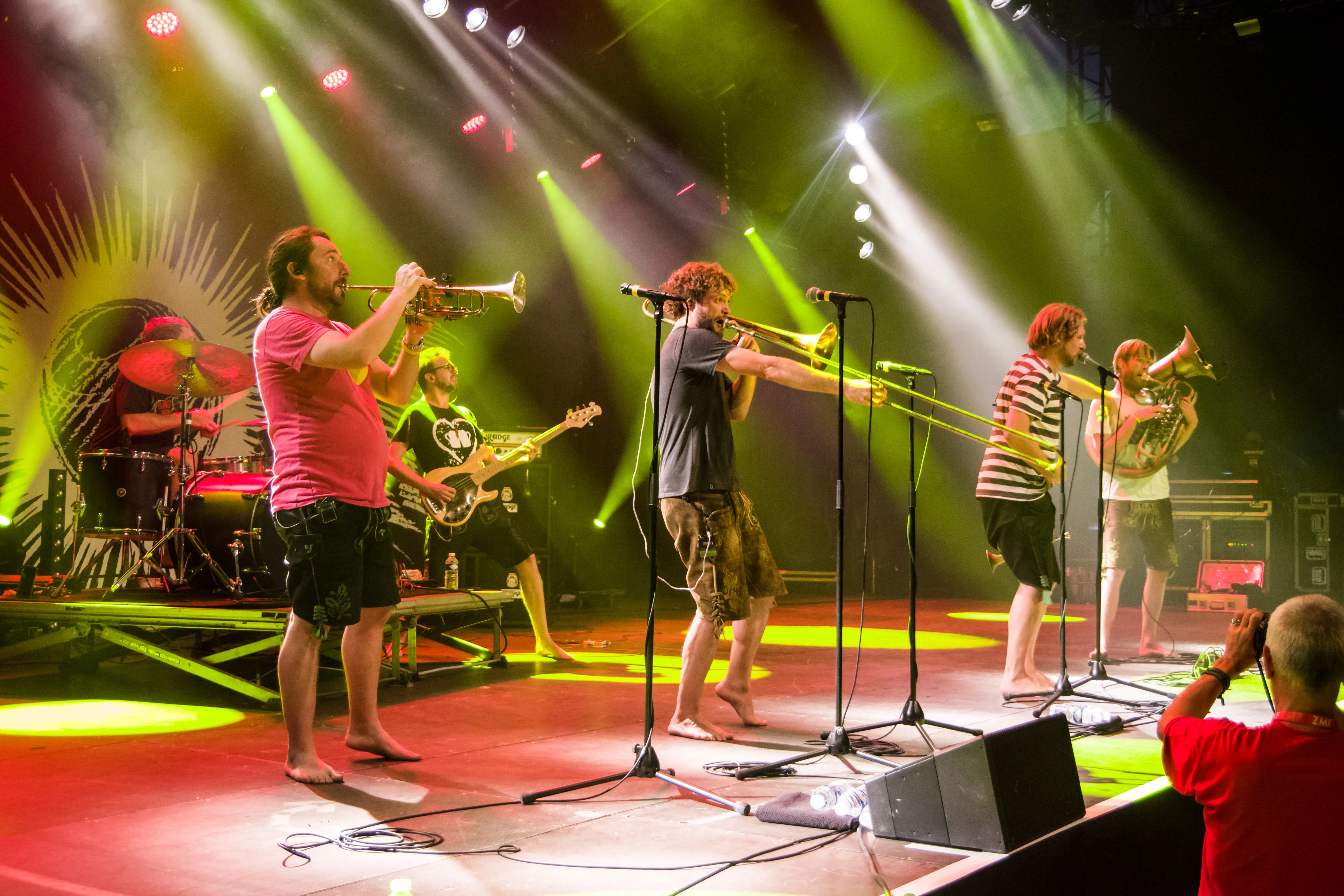
Image from Wikipedia
Image from Wikipedia
LaBrassBanda: The Bavarian Brass Revolution Between Lederhosen, Club Sound, and Festival Ecstasy
LaBrassBanda – Brass Music with Heartbeat, Attitude, and International Format
LaBrassBanda is one of the most distinctive formations in the German-speaking music scene. The band from Übersee am Chiemsee has radically opened up New Folk Music with brass, reggae, punk, ska, funk, techno, and jazz, transforming regional roots into a recognizable, supranational sound. From the very beginning, the focus was not on folklore in museum mode, but on a vibrant music career that plays equally in dance clubs, beer tents, concert halls, and festival stages. The combination of Bavarian dialect, virtuosic brass section, and explosive stage presence made LaBrassBanda a band that you don't just listen to, but physically experience. (en.wikipedia.org)
The Beginnings in Übersee: From Music Studies to a Band with Vision
LaBrassBanda was founded in 2007 by Stefan Dettl, Andreas Hofmeir, Manuel Winbeck, Oliver Wrage, and Manuel da Coll; all five knew each other from their music studies. The origins alone reveal much about the group's artistic development: here, academic precision, instrumental discipline, and a desire to push boundaries intersected. Stefan Dettl was inspired by the Youngblood Brass Band in New York, whose blend of brass, hip-hop, and R&B became a catalyst for him. The name of the band is a deliberate wordplay on the Italian "la banda" and the English "brass band" – both mean brass band in essence. (en.wikipedia.org)
The early band cosmos was already conceived as international. Their first concert took place in London, and during the UEFA Euro 2008, the group played on a trailer at fan zones, with an appearance at the final in Vienna being the highlight of this phase. By 2009, invitations started pouring in to cultural and festival formats in Novosibirsk, Omsk, Krasnoyarsk, Moscow, Harare, and the Roskilde Festival. These early stops show how quickly LaBrassBanda transformed a regional idea into a mobile, European, and globally connected project. (en.wikipedia.org)
The Breakthrough: Eurovision Stage, Clubs, and a New Lust for Brass Music
The decisive boost in popularity came in 2013 with their participation in the German preliminary round of the Eurovision Song Contest with "Nackert." Even though victory eluded them, the performance acted as a catalyst for the band's visibility. The album Europa climbed to No. 3 in the German charts as a result, and LaBrassBanda reached an audience far beyond the folk music, brass, and Bavarian pop culture scenes. Apple Music describes this phase as the moment the band truly became nationally visible. (music.apple.com)
At the same time, the band sharpened its profile as a live phenomenon. In the summer of 2013, they performed as the opening act for Die Ärzte, which further solidified their reputation as a passionate, loud, and audience-friendly concert band. Characteristically, they maintained a blend of musical precision and anarchic energy: lederhosen, t-shirts, and barefoot on stage became an aesthetic statement against conventions and for immediacy. This blend still constitutes a significant part of LaBrassBanda's authority today. (en.wikipedia.org)
Line-up Changes and Artistic Continuity
Like many long-lasting bands, LaBrassBanda has experienced changes in its lineup. Oliver Wrage left the group in 2013, followed by Andreas Hofmeir in 2014; later, Mario Schönhofer, Jörg Hartl, Korbinian Weber, Tobias Weber, and Stefan Huber joined. The official band website currently lists an eight-member formation with brass, guitar, bass, drums, and percussion, led by Stefan Dettl on vocals and trumpet. Despite these shifts, the core of the band remained stable: collective playing, a strong brass section, and a sound focused on energy rather than nostalgia. (en.wikipedia.org)
SWR Kultur describes LaBrassBanda as a group whose character has remained the same over 17 years, even though the lineup has changed multiple times. Notably, all members received classical training: trained musicians consciously sought out a different ensemble than a symphony orchestra after their studies. This expertise lies in the band's ability to translate academic instrumental artistry into an ecstatic, danceable, and popular context. (swr.de)
The Discography: From Debut to Chart Success and Stylistic Expansions
LaBrassBanda's discography shows a clear evolution from the debut phase to a mature signature sound. Habediehre was released in 2008 and reached number 85 in Germany, followed by Übersee in 2009, which climbed to number 39. The live album Live Olympiahalle München documented the power of their concerts in 2012, before Europa in 2013 marked the band's biggest chart success at number 3 in Germany. With Kiah Royal, another top-5 album followed in 2014, while Around the World in 2017 and Danzn in 2020 further expanded their international focus and rhythmic density. (en.wikipedia.org)
Side projects also form part of the band's history. In 2015, Europa – in Dub was released as the dub version of its predecessor, highlighting the group's experimental approach. This includes cinematic works such as the documentaries and concert films by Marcus H. Rosenmüller and Philip Lenner, as well as the soundtrack for Winterkartoffelknödel. These entries demonstrate that LaBrassBanda goes beyond merely releasing albums; they have created a multimedia artistic environment. (en.wikipedia.org)
Musical Development: New Folk Music as an Open Sound Space
The stylistic DNA of LaBrassBanda can best be described as an open sound space. Wikipedia classifies the band under New Folk Music, while they also work with brass, reggae, punk, gypsy, jazz, and techno; the band itself refers to it as Bavarian Gypsy Brass, Funk Brass, or Alpine Jazz Techno. This ambiguity is part of their quality: the music incorporates traditional brass culture but transcends it through groove, harmonization, arrangement, and a strong rhythmic foundation. The dialect does not become an obstacle but a characteristic feature. (en.wikipedia.org)
SWR Kultur emphasizes that the band has collected international polka variants for the new album and interpreted them in their unconventional style. This aligns with their recent work, which explores the balance between regional attachment and stylistic openness even more strongly. When LaBrassBanda translates polka-like traditions into today's club and festival contexts, a sound emerges that is simultaneously regional, contemporary, and transcultural. (swr.de)
Current Projects: Polka Party 2026 and New Live Energy
Current projects include the tour Polka Party 2026, which is listed on the official website with numerous dates in Germany, Austria, and Switzerland. Appearances are scheduled for May, June, July, August, September, October, and even December 2026; some shows are marked as sold out. Their presence on their own website shows that LaBrassBanda continues to define themselves strongly through live performances and consistently plays to their festival and club strengths. (labrassbanda.com)
The recent release phase was kicked off in 2024 with the single "Goaßnmaß" and the album Polka Party. Frontman Stefan Dettl spoke to SWR about the emotional experience of yoga concerts during the pandemic and the return to their well-established mix of ska, funk, classical, and jazz. In the summer of 2024, "Space Bäda" was also released in collaboration with Roger Reckless, once again intertwining Bavarian and hip-hop aesthetics. This showcases a band that understands its current music not as a regression but as a continued evolution. (swr.de)
Cultural Influence: Between Home, Pop Culture, and Stage Rituals
LaBrassBanda is far more than a successful band from Bavaria. The group has fundamentally changed the perception of brass music by not preserving tradition by conserving it, but by translating it into the present. Lederhosen and barefoot performances have become symbols of an attitude that neither sarcastically devalues Bavarian identity nor freezes it folkloristically. In doing so, the band has reached a generation of listeners who no longer see contradictions between dialect, club culture, and festival experiences. (en.wikipedia.org)
The media response also reflects the cultural significance of the formation. Press sources describe the band as one that has "created its own niche," while cultural and music media regularly reference their live strength, genre openness, and regional identity. As such, the band is not only part of New Folk Music but has also become a reference point for tracking the development of modern brass music in Germany. (swr.de)
Conclusion: LaBrassBanda combines musical virtuosity, cultural independence, and a radically vibrant live feeling into one of the most distinctive success stories in German-speaking pop and brass music culture. For those who want to know what modern folk music sounds like in the 21st century, here is a band with attitude, wit, energy, and immense stage presence. Especially live, this collective unleashes its full power – a concert by LaBrassBanda resonates not just in the ear but in the body. (en.wikipedia.org)
Official Channels of LaBrassBanda:
- Instagram: https://www.instagram.com/labrassbandaofficial
- Facebook: https://www.facebook.com/LaBrassBanda
- YouTube: https://www.youtube.com/labrassbanda
- Spotify: no official profile found
- TikTok: https://www.tiktok.com/@labrassbanda
Sources:
- LaBrassBanda – Official Website
- LaBrassBanda – Band / Official Website
- LaBrassBanda – Homepage / Official Website
- LaBrassBanda – Contact / Official Website
- Wikipedia – LaBrassBanda (German Wikipedia)
- Wikipedia – LaBrassBanda (English Wikipedia)
- Apple Music – Artist Profile LaBrassBanda
- SWR Kultur – Brass Music to Dance To
- FKP Scorpio – Press Release LaBrassBanda 2025
- Frontstage Magazine – “Space Bäda”
- Subway Magazine – March 2025
Upcoming Events
Sulzbergbrass with LaBrassBanda
Brass, bass, and festival tent feeling pure: LaBrassBanda makes Litzldorf tremble. On June 26, 2026, from 8 PM, Polka Party live awaits. #LaBrassBanda #Litzldorf #Live
Summer at the Kiez: LaBrassBanda + ScheinEilig
Augsburg gets a summer evening full of brass, tempo, and open-air feeling: LaBrassBanda live at Summer at the Kiez. 28.06.2026, 57.70 Euro. #LiveMusic #Augsburg
LaBrassBanda – Polka Party
LaBrassBanda brings exciting brass pop to Olympic Park Munich. Experience an unforgettable summer concert.
LaBrassBanda
Brass alarm in Munich's summer: LaBrassBanda brings the Tollwood Music Arena to life. Polka Party 2026 on July 4, 2026, at 7 PM. #LiveMusic
LaBrassBanda Concert in Regensburg
Join us when LaBrassBanda performs in Regensburg on July 16, 2026. A concert full of energy and Bavarian brass music awaits you.
LaBrassBanda live in Regensburg - Piazza 2026
Regensburg gets an evening full of brass, thump and summer mood: LaBrassBanda at the Piazza. Tickets from 61.95 euros. #Live
LaBrassBanda – Sold Out
The tent music festival in Freiburg presents LaBrassBanda. An unforgettable evening full of captivating brass-pop beats awaits you on July 19.
LaBrassBanda at the Kulturinsel Wöhrmühle
LaBrassBanda returns with their energetic open-air concert to the Kulturinsel Wöhrmühle in Erlangen. Don't miss it!
LaBrassBanda - Polka Party 2026
On July 25, 2026, LaBrassBanda will bring their energetic sounds to the Kulturinsel Wöhrmühle in Erlangen. A must for all music fans!