
Peter Selg
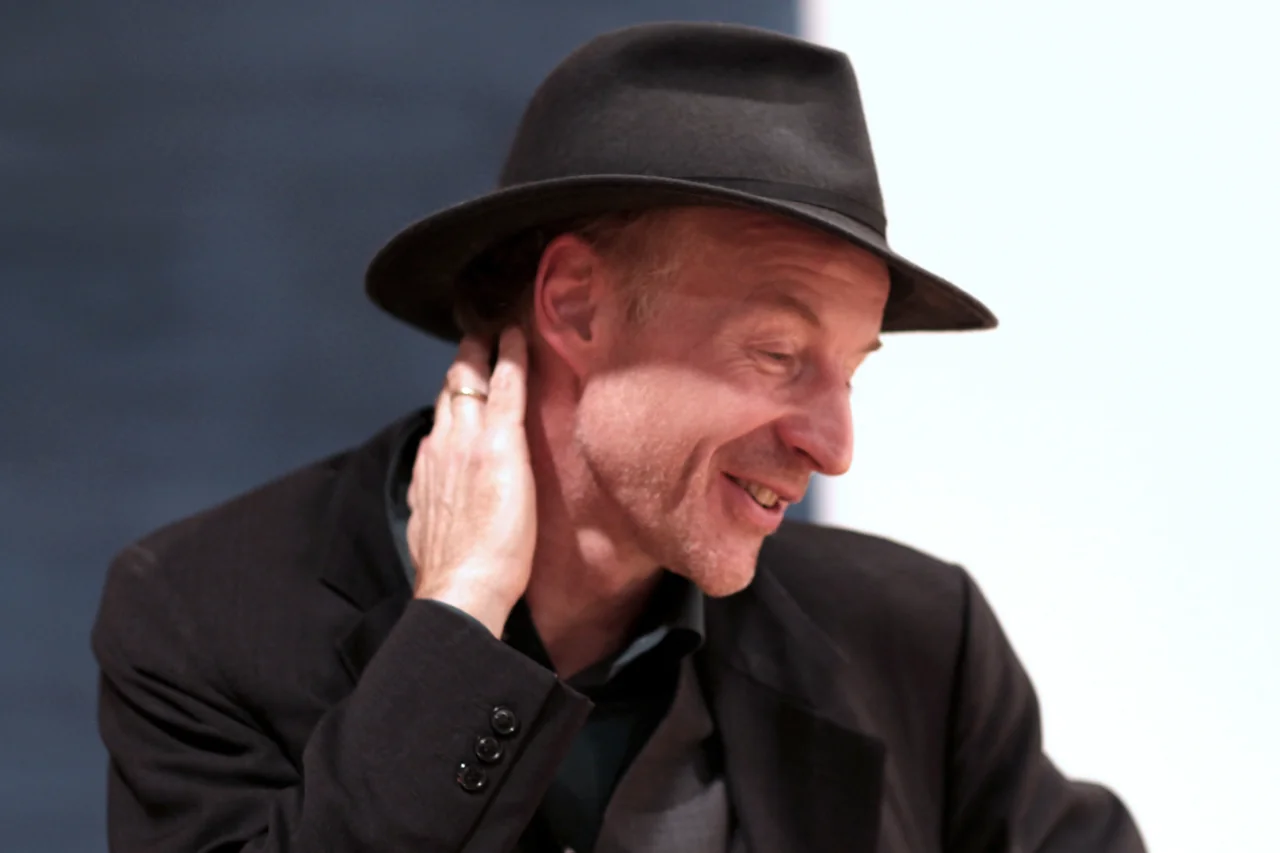
Image from Wikipedia
Image from Wikipedia
Peter Selg – Medical Anthropology, Anthroposophy, and a Work Between Research, Ethics, and Spiritual Presence
A Thinker at the Intersection of Medicine, Culture, and Anthroposophy
Peter Selg, born on August 5, 1963, in Stuttgart-Hedelfingen, is one of the defining voices of contemporary anthroposophical work in the German-speaking world. As a specialist in child and adolescent psychiatry and psychotherapy, university lecturer, institute director, and author, he has opened up a broad intellectual field that connects medical practice, historical research, and cultural-scientific orientation. His career reflects a researcher who not only publishes but also shapes institutions and influences debates.
To understand Peter Selg, one does not encounter a classical pop or stage artist, but rather a strongly characterized author and scholar with a clear signature. His work revolves around Rudolf Steiner, Ita Wegman, anthroposophy, medical ethics, and the history of anthroposophical movements. It is precisely this connection of clinical experience, academic teaching, and cultural-historical work that makes his position unique.
Biographical Foundations and Academic Path
After studying human medicine at the University of Witten/Herdecke, Selg completed his practical training at university hospitals in Berlin and Zurich. He then pursued specialist training in child and adolescent psychiatry and psychotherapy, as well as medical work at the Gemeinschaftskrankenhaus Herdecke. This early phase of his career already shows the dual orientation of his thinking: medical responsibility on one side, humanities-related questions on the other.
Since 2000, Selg has worked in research contexts, initially at the Institute for Applied Epistemology and Medical Methodology in Freiburg, later at the Medical Section at the Goetheanum. From 2002 to 2006, he served as senior physician at the Ita Wegman Clinic in Arlesheim, before co-founding and leading the Ita Wegman Institute for Anthroposophical Fundamental Research in 2006. Since 2007, he has been teaching as a professor of medical anthropology at the Alanus University of Arts and Social Sciences, and is also involved in the General Studies program and the accompanying field of anthroposophical medicine at the University of Witten/Herdecke.
From Physician to Author: A Career Marked by Publication
Peter Selg is particularly known as an author and editor of numerous books. His publications explore the life and work of Rudolf Steiner, the biography of Ita Wegman, the history of anthroposophical medicine, and the development of anthroposophical institutions. In his oeuvre, one encounters a consistent research effort that is based on source studies, historical contextualization, and interpretative depth. The result is not casual writing, but an extensive, systematically organized body of work.
Selg has especially made a mark with his comprehensive biography of Rudolf Steiner, as well as studies on Christian Morgenstern, Karl König, Eugen Kolisko, and Gerhard Kienle. Furthermore, he has produced works examining the anthroposophical medical profession during National Socialism, as well as studies on Ita Wegman and questions of Jewish humanism. These thematic fields demonstrate the breadth of Selg's interests: from personal history to medical history, and from the history of ideas to the moral dimensions of anthroposophical culture.
The Role at the Goetheanum and Institutional Responsibility
At the Goetheanum in Dornach, Selg has assumed a central role for many years. As the co-leader of the General Anthroposophical Section and as the head of the Ita Wegman Institute, he is situated at the core of those institutions that organizationally and spiritually carry anthroposophy. These functions are not merely administrative; they mark a position at the center of current self-understanding processes within the movement. His contributions to research questions, lectures, and publications regularly appear in the context of the Goetheanum.
Recent projects particularly reveal that Selg does not only comment on historical figures but also co-defines the present of anthroposophical practice. Current publications and events show that he is engaging with the future of the Free University of Spiritual Science, the role of Ita Wegman, and the challenges of an anthroposophical world community. His work thereby connects archive, teaching, and institutional self-reflection.
Current Projects, Books, and Research Focuses
During the years 2024 to 2026, Selg will remain productive and publicly visible. The Goetheanum refers to contributions and lectures on topics such as “The World of Ita Wegman,” “Studies on the Lessons of the First Class of the Free University of Spiritual Science,” or “The Anthroposophical World Society and its University.” In addition, studies and essays on Jewish humanism, the future of the anthroposophical society, and the history of anthroposophical medicine during National Socialism have been published or announced.
Particularly noteworthy is the multi-year research project on Anthroposophical Medicine and National Socialism, which has been documented in several volumes totaling around 2500 pages. The investigation of the anthroposophical medical profession and the pharmaceutical companies Weleda and Wala from 1933 to 1945 underscores Selg's readiness to systematically address complicated and historically burdened fields. This establishes him as an author who not only affirms but also differentiates and contextualizes.
Discography? A Body of Work Instead of a Stage
As Peter Selg is neither a musician nor a performer, there is no discography in the traditional sense. His artistic or cultural profile unfolds instead in an extensive bibliography, in lectures, dialog formats, and institutional texts. Those seeking his “collected works” in the broadest sense will find them in books, studies, essays, and commentative publications, not in albums or single releases.
His prominent themes include Rudolf Steiner’s understanding of medicine, Ita Wegman’s work, the history of anthroposophical schools and clinics, the role of women in Steiner’s circle, as well as the engagement with National Socialism and medical ethics. These focuses give his work a clear dramaturgy: Selg is writing a history that makes anthroposophy readable as a cultural, medical, and historical project.
Style, Method, and Academic Signature
Selg's style is characterized by rigor, meticulous historical detail, and strong internal logic. He works with biographical precision, evaluating lectures, letters, archival materials, and contexts of works. His texts rarely aim for quick conclusions; rather, they build argumentative spaces in which historical figures, medical ideas, and institutional developments interact.
This method shapes his stature as an author. He manages to use biography as a form of knowledge and to view individuals not in isolation, but in their historical impact. In his publications, medical anthropology, ethics, and cultural interpretation intertwine to form a profile that is immediately recognizable in its consistency. This engenders an authority that arises from continuity, research discipline, and thematic knowledge.
Critical Reception and Cultural Significance
Selg's works are often regarded within anthroposophical institutions as valuable contributions to research and important foundational studies. At the same time, there exists critical reception that accuses him of having an overly close relationship with his subject or an apologetic tendency. This very range is part of his public profile: he is an author who not only generates agreement but also provokes debates. For cultural-historical classification, this is significant, as his texts extend beyond mere documentation.
His cultural significance lies primarily in the systematic exploration of anthroposophical history. Selg places figures such as Ita Wegman, Rudolf Steiner, or Gerhard Kienle in larger contexts where medicine, pedagogy, social history, and the history of ideas intertwine. This makes his work interesting for readers who are not only interested in anthroposophy but also in the history of modern reform movements.
Why Peter Selg Remains Compelling
Peter Selg fascinates as a precise, diligent, and thematically exceptionally consistent author. His career combines medical practice, academic teaching, institutional responsibility, and extensive journalistic work. Those interested in anthroposophy, medical history, biography, and the cultural-historical development of alternative healing and educational approaches will find in him a central reference figure.
Selg remains particularly compelling because he does not shy away from the major questions of his movement: history, responsibility, institution, future. His work invites closer examination, to endure contradictions, and to take anthroposophy seriously as both a historical and contemporary field. Those wishing to engage more deeply with his thinking should follow his lectures, essays, and book publications and take the opportunity to participate in public events at the Goetheanum or at Alanus University.
Official Channels of Peter Selg:
- Instagram: No official profile found
- Facebook: No official profile found
- YouTube: No official profile found
- Spotify: No official profile found
- TikTok: No official profile found
Sources:
- Alanus University – Prof. Dr. med. Peter Selg ([alanus.edu](https://www.alanus.edu/en/menschen/prof-dr-med-peter-selg-2/?utm_source=openai))
- Goetheanum Medical Section – Anthroposophic Medicine and National Socialism ([medicalsection.goetheanum.ch](https://medicalsection.goetheanum.ch/news/anthroposophy-and-ns?utm_source=openai))
- Goetheanum – Studies on the lessons of the first class of the School of Spiritual Science ([goetheanum.ch](https://goetheanum.ch/en/news/studies-on-the-lessons-of-the-first-class-of-the-school-of-spiritual-science?utm_source=openai))
- Goetheanum – The Effectiveness of Anthroposophy ([goetheanum.ch](https://goetheanum.ch/en/news/the-effectiveness-of-anthroposophy?utm_source=openai))
- Goetheanum – Lived Commitment ([goetheanum.ch](https://goetheanum.ch/en/news/lived-commitment?utm_source=openai))
- Goetheanum – Exploited in building up the Nazi state ([goetheanum.ch](https://goetheanum.ch/en/news/exploited-in-building-up-the-nazi-state?utm_source=openai))
- General Section at the Goetheanum – Current News ([allgemeine-sektion.goetheanum.ch](https://allgemeine-sektion.goetheanum.ch/de/aktuelles?utm_source=openai))
- Wikipedia – Peter Selg ([de.wikipedia.org](https://de.wikipedia.org/wiki/Peter_Selg?utm_source=openai))