
Saša Matić
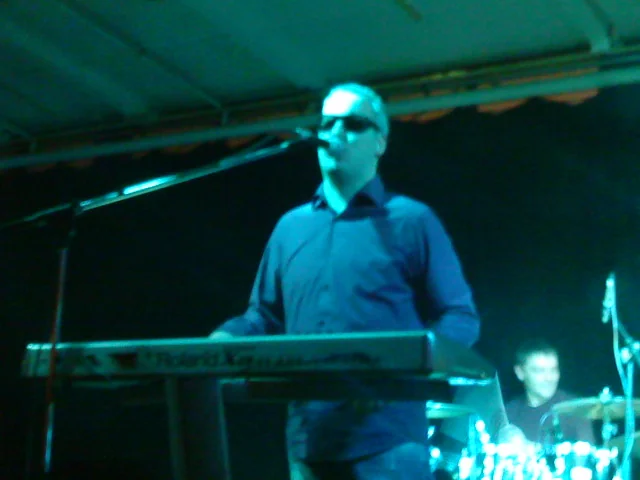
Image from Wikipedia
Image from Wikipedia
Saša Matić – the great voice of Balkan Pop-Folk
An artist between emotional depth, stage magic, and regional pop history
Saša Matić, whose real name is Aleksandar Matić, is one of the defining voices of Bosnian-Serbian Pop-Folk. Born on April 26, 1978, in Drvar and losing his sight at an early age, he developed into a singer with extraordinary stage presence and a career that extends far beyond national borders. His journey combines musical discipline, familial influence, and a clear sense of emotional song interpretation. ([en.wikipedia.org](https://en.wikipedia.org/wiki/Sa%C5%A1a_Mati%C4%87))
Biography: Early influence, loss, and musical perseverance
The biography of Saša Matić is closely intertwined with his childhood in the former Yugoslavia. He initially grew up in Drvar and relocated with his family to Belgrade during the Bosnian War, where he learned to play the piano and engaged deeply with music from an early age. The blindness that afflicted him and his twin brother Dejan shortly after birth never became a marginal theme in his biography but rather part of an artistic identity that relied on focus, hearing, and expression. ([en.wikipedia.org](https://en.wikipedia.org/wiki/Sa%C5%A1a_Mati%C4%87))
Even as a teenager, Matić sought out live music. He attended concerts by Riblja čorba, worked for three years in a club in Belgrade, and was discovered in 1994 when he was called on stage at a concert by Ratko Jovanović to sing Zajdi Zajdi. This early discovery was not a coincidence but the moment when talent, maturity, and vocal independence first crystallized publicly. ([de.wikipedia.org](https://de.wikipedia.org/wiki/Sa%C5%A1a_Mati%C4%87))
Career beginnings: From debut to a fixed presence in Pop-Folk
His official recording debut came in 2001 with Prokleta je violina under Grand Production. This marked the beginning of a studio career that steadily expanded to ten studio albums. Early on, Matić combined elements of traditional folk music with modern Pop-Folk production, making his songs suitable for festivals, radio play, and large concert halls. ([en.wikipedia.org](https://en.wikipedia.org/wiki/Sa%C5%A1a_Mati%C4%87))
His breakthrough as a prominent figure in the regional music market was solidified by competition successes and festival appearances. In 2003, he won at the Budva Festival with Moj grad, and in the same year, he took first place at the Ohrid Fest in the jury ratings with the same song. Such successes anchored him not only as a singer but also as an interpreter with a strong sense of melody, dramaturgy, and collective emotion. ([en.wikipedia.org](https://en.wikipedia.org/wiki/Sa%C5%A1a_Mati%C4%87))
Discography: Continuity, bestseller moments, and late maturity
Saša Matić's discography demonstrates an unusually stable development over two decades. Key albums include Otišao vratio se (2002), Zbogom ljubavi (2003), Anđeo čuvar (2005), Poklonite mi nju za rođendan (2007), Nezaboravne (2010), X zajedno (2011), Zabranjena ljubav (2015), Ne bih ništa menjao (2017), and Dva života (2021). This lineup clearly shows how consistently Matić has nurtured his artistic development without losing the emotional core signature of his music. ([en.wikipedia.org](https://en.wikipedia.org/wiki/Sa%C5%A1a_Mati%C4%87))
The live format also played a central role early on. In addition to the live album Live from 2004 and Live - Arena 2016, festival and single releases demonstrate that Matić delivers not only studio albums but also songs with lasting everyday relevance. Titles like Maskara, Kad Ljubav Zakasni, Ne smem da se zalijubim u tebe with Jelena Karleuša, Mešaj Mala with Rada Manojlović, and Ti i ja with Jelena Rozga are well-documented milestones in his musical career. ([de.wikipedia.org](https://de.wikipedia.org/wiki/Sa%C5%A1a_Mati%C4%87))
Style and Voice: Between Narodna Muzika, Pop, and emotional density
Saša Matić is described as a Bosnian-Serbian Pop-Folk singer whose style is deeply rooted in Narodna Muzika. His musical language thrives on long, sustained lines, controlled dynamics, and dramatic phrasing, which particularly resonates in ballads. Instrumentally, his biography is also revealing: he plays the piano and accordion, further explaining his melodic sensitivity and knack for arrangement. ([en.wikipedia.org](https://en.wikipedia.org/wiki/Sa%C5%A1a_Mati%C4%87))
Matić cites Croatian singer-songwriter Oliver Dragojević as an influence, and this reference reveals much about his aesthetic stance. In his interpretation, feeling, contour, and authenticity take center stage; the production often serves the song and leaves the emotional focus to the voice. This is where his strength lies: he does not sing against the melody but shapes it into a narrative unity. ([en.wikipedia.org](https://en.wikipedia.org/wiki/Sa%C5%A1a_Mati%C4%87))
Collaborations, Awards, and Regional Significance
Matić has collaborated with numerous luminaries of the regional pop and folk scene, including Ceca, Severina, Jelena Karleuša, Aca Lukas, Mile Kitić, Jelena Rozga, and Milica Pavlović. Such collaborations not only demonstrate his versatility but also his authority within a scene that thrives on duets, mutual references, and stylistic overlap. In 2023, he won at the Music Awards Ceremony, among others, in the category "Collaboration of the Year" for Ti i ja with Jelena Rozga, as well as an award for his contribution to regional music. ([en.wikipedia.org](https://en.wikipedia.org/wiki/Sa%C5%A1a_Mati%C4%87))
Matić has also established himself as a crowd-puller on stage. Since March 2016, he has completed several sold-out solo concerts in the Belgrade Arena, along with tours in the USA, Canada, and Australia. Reports in 2023 indicated that he was the most-visited live act in Croatia in 2022, with four concerts in Arena Zagreb and Spaladium Arena attended by a total of 80,000 people. This illustrates a rare blend of regional roots and international reach. ([en.wikipedia.org](https://en.wikipedia.org/wiki/Sa%C5%A1a_Mati%C4%87))
Current Projects and Releases: New energy in an established catalog
In 2024 and 2025, Saša Matić remains active. Music press reports announced new releases for 2025, including the album Noćas nam ne gine ljubav, which has been associated with strong streaming and trend responses. Additionally, new songs and duets have been released, such as Sneg with Breskvica in March 2025, highlighting his openness to younger collaborations. ([blic.rs](https://www.blic.rs/zabava/premijera-novog-albuma-sase-matica-zakazana-je-za-januar/f65vfhw?utm_source=openai))
At the same time, Matić continued his concert activity. Press reports mentioned major performances in Skopje, Belgrade, Novi Sad, and Zagreb, as well as further arena dates in December 2025. This continuity reflects an artist whose music career is not carried by nostalgia, but by ongoing audience engagement and new material. ([blic.rs](https://www.blic.rs/zabava/premijera-novog-albuma-sase-matica-zakazana-je-za-januar/f65vfhw?utm_source=openai))
Cultural Influence: Why Saša Matić transcends a single genre
Saša Matić is more than a successful Pop-Folk singer. He represents a generation of regional artists who have maintained a shared musical audience following the upheavals of the former Yugoslavia. His songs resonate in clubs, arenas, and weddings, but also in the streaming age, because they rely on direct emotion, recognizability, and melodic catchiness. ([en.wikipedia.org](https://en.wikipedia.org/wiki/Sa%C5%A1a_Mati%C4%87))
His cultural influence is also evident in the reception of his live performances and in his ability to appeal across generations. Press reports highlight that his concerts attract a young and diverse audience, while his studio work remains consistently relevant. Thus, Matić is among those artists who not only deliver hits but also shape a musical atmosphere that connects entire regions through emotional memory. ([novosti.rs](https://www.novosti.rs/scena/poznati/1403413/sasa-matic-rostiljijada-koncert-intervju-novosti-novosti-intervju?utm_source=openai))
Conclusion: A master of grand feelings with unbroken stage power
Saša Matić remains intriguing because he combines artistic consistency with emotional intensity. His voice carries pain, warmth, and sovereignty simultaneously, and his discography tells the story of a singer who not only serves Pop-Folk but shapes it. For those who experience him live, it’s not merely a concert date — it’s an event. ([en.wikipedia.org](https://en.wikipedia.org/wiki/Sa%C5%A1a_Mati%C4%87))
Official Channels of Saša Matić:
- Instagram: https://instagram.com/sasamatic_official
- Facebook: https://facebook.com/SasaMaticOfficial
- YouTube: No official profile found
- Spotify: No official profile found
- TikTok: No official profile found
Sources:
- Wikipedia - Saša Matić
- Wikipedia - Saša Matić (English)
- YuCafe Network - Saša Matić & Aleksandra Prijović: Ko si ti
- YuCafe Network - Saša Matić: Ne Gledaj Preko Ramena
- Novosti - Saša Matić: Uživam i u aplauzima i u tišini
- Blic - Pesme sa novog albuma Saše Matića u trendingu širom Balkana
- Blic - Saša Matić 15. novembra u Novom Sadu, dvorana Spens
- Novosti - Saša Matić spektakularnim koncertom otvorio Roštiljijadu
- Novosti - Saša Matić i Breskvica: Sneg
- 24sedam - Saša Matić snima novi album, pa ide koncert u Areni
- Wikipedia: Image and text source