
Walter Trout
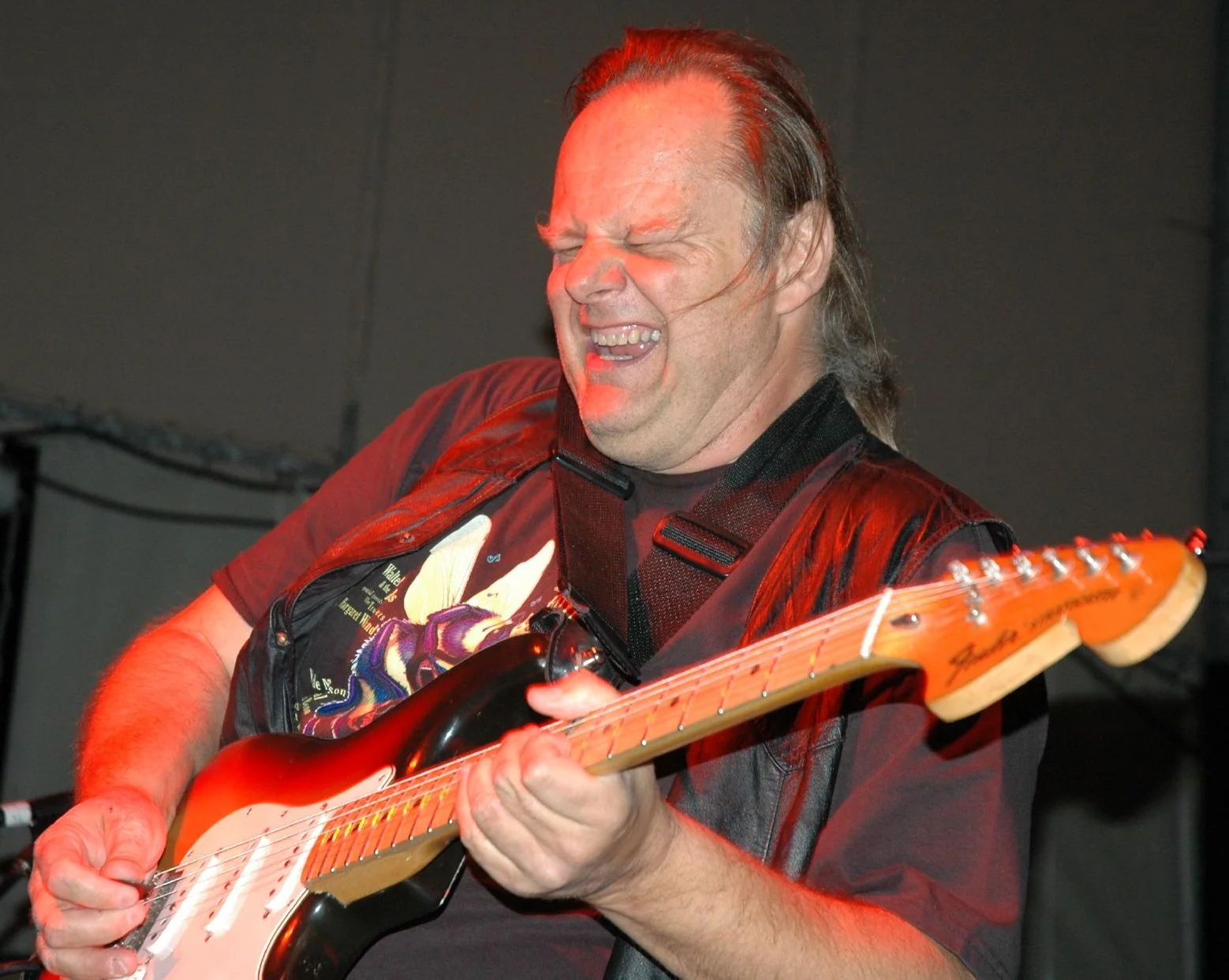
Image from Wikipedia
Image from Wikipedia
Walter Trout – Blues Rock with Scars, Truth, and Powerful Guitar Energy
An Exceptional Artist Between Road-Worn Authenticity and Modern Blues Rock Power
Walter Trout is one of the defining voices of contemporary blues rock: as a guitarist, singer, and songwriter, he combines raw stage energy with a deeply personal narrative style. Born on March 6, 1951, in Ocean City, New Jersey, he evolved from tough formative years as a lead guitarist in the US blues landscape to an internationally respected solo artist. His music represents a synthesis of blues and rock, characterized by a distinctive tonal quality, emotional directness, and a keen sense of song dramaturgy. ([waltertrout.com](https://www.waltertrout.com/aboutpage?utm_source=openai))
Early Influences: New Jersey, Escape Fantasies, and the Birth of a Musical Survivor
Walter Trout's biography is closely intertwined with the contradictions of his youth. The official artist text describes a difficult childhood in New Jersey and a tense family atmosphere that profoundly shaped his later art. In his own reflections on the album Ride, Trout speaks of emotional memories, thoughts of escape, and music as a way out of inner constriction. This intensity feeds the essence of his songs: not from posing, but from experience. ([waltertrout.com](https://www.waltertrout.com/abouteded?utm_source=openai))
From an early age, he was shaped by the great names of blues and rock. On the official website, Trout cites influences such as the Butterfield Blues Band, Mike Bloomfield, John Mayall, and the Beatles as well as Bob Dylan. This mix explains much of his later signature: the energy of electric blues, the narrative songwriting, and the ability to translate personal truths into catchy, often anthemic forms. His artistic development is thus also a story of stylistic integration. ([waltertrout.com](https://www.waltertrout.com/post/top-ten-blues-rock-guitarists-of-the-1990-s?utm_source=openai))
The Apprenticeship Years: John Lee Hooker, Big Mama Thornton, Canned Heat, and John Mayall
Before Walter Trout emerged as a solo artist, he went through that school which turns a good guitarist into a strong character in blues music: the constant playing, listening, and responding on stage. The official press text mentions early engagements with John Lee Hooker and Big Mama Thornton, as well as a turbulent phase with Canned Heat in the 1980s. During this time, Trout learned how much power lies in groove, dynamics, and live interaction. ([waltertrout.com](https://www.waltertrout.com/abouteded?utm_source=openai))
The pivotal career step came in 1985 with his entry into John Mayall's Bluesbreakers. This phase is still central to Trout's artistic profile because it placed him squarely in the direct line of British-American blues rock. The official press text emphasizes the lasting impact of this period on his career; later interviews also link his development to Mayall's school. Anyone who wants to understand Walter Trout must grasp these years as formative: Here, technique became personality, and virtuosity became attitude. ([waltertrout.com](https://www.waltertrout.com/abouteded?utm_source=openai))
The Solo Path: Album by Album to the Cult Figure of Blues Rock
In 1989, Trout began his solo career, and since then he has built a discography that ranks among the most reliable and enduring in modern blues rock. His early solo releases quickly established him in Europe, particularly in Scandinavia and the Netherlands, where his band reached major festival stages. The Wikipedia discography also indicates that his albums have regularly achieved high chart positions in the blues segment for years. Thus, Trout belongs to those artists whose work cannot be reduced to a single hit but must be understood in closed phases. ([en.wikipedia.org](https://en.wikipedia.org/wiki/Walter_Trout?utm_source=openai))
Notable milestones include Life in the Jungle, Breaking the Rules, Prisoner of a Dream, Battle Scars, Blues for the Modern Daze, Ordinary Madness, Survivor Blues, Ride, Broken, and Sign of the Times. These works mark not only a chronology but a creative condensation: comfort, friction, self-examination, social observation, and time and again, the powerful guitar solo as a language-like gesture. The fact that several of these albums topped the U.S. Billboard Blues charts underscores his status as a key figure in the genre. ([en.wikipedia.org](https://en.wikipedia.org/wiki/Walter_Trout_discography?utm_source=openai))
Current Projects: Broken, Sign of the Times, and New Urgency
Walter Trout is not a nostalgic figure managing his reputation. The album Broken was released in 2024 via Mascot/Provogue and has been described as a powerful, relevant release for a tension-filled age; a label text calls it "raucous, wild and poignant." The official website connects the album with the present day, highlighting politics, social divisions, and personal processing, while sources even report that the recording reached the top of the Billboard Blues Albums chart. ([mascotlabelgroup.com](https://www.mascotlabelgroup.com/products/walter-trout-broken-cd?utm_source=openai))
In 2025, Trout continued with Sign of the Times. The official artist site describes the album as a reflection of social unrest and a "primal scream" in a torn world; the lead single "Artificial" attacks the artificiality of modern media and technology. At the same time, the text notes the close creative collaboration with his wife Marie Trout, who provides central impulses as manager and co-writer. This current phase showcases an artist who is not only continuing his music career but honing it with increasing precision. ([waltertrout.com](https://www.waltertrout.com/aboutpage?utm_source=openai))
Style and Sound Language: Blues Rock as an Emotional Protocol of the Present
Walter Trout's style is fundamentally blues rock, but this label falls short. His playing combines classic blues phrasing with rock pressure, rich bending lines, melodic vibrato, and an expressive tonality that generates immediate recognition when performed live. Additionally, he possesses a voice that relies not on flawless elegance but on credible urgency. His music thus functions as a personal protocol: each phrase carries biography, and each arrangement has a narrative function. ([waltertrout.com](https://www.waltertrout.com/aboutpage?utm_source=openai))
In terms of composition, Trout also works with clear arcs of tension. The official press text for Sign of the Times describes a band lineup featuring Michael Leasure, John Avila, and Teddy "Zig Zag" Andreadis, as well as a self-produced, sharper sound aesthetic. The result is a sound oscillating between classic blues craftsmanship and modern rock arrangement. This combination of rawness and structure is what makes his discography so solid and his stage presence so impactful. ([waltertrout.com](https://www.waltertrout.com/aboutpage?utm_source=openai))
Critical Reception and Cultural Influence
The reception of Walter Trout has been remarkably consistent and positive over the years. The official website features press quotes like "The whole album is a pleaser from start to finish," "Bad times. Great album. 8/10," and "This stands as one of his very best. 9.5/10." Such quotes reflect the perception of an artist who not only impresses technically but also carries significant content and emotional weight. Especially in blues rock, Trout has long been regarded as a reference for authenticity without sentimentality. ([waltertrout.com](https://www.waltertrout.com/))
His cultural influence extends beyond mere genre fidelity. The official biography refers to him as the "beating heart of the modern blues rock scene," respected by the old guard and revered by younger musicians. That he continued to record and tour after a life-threatening liver disease and transplant in 2014 enhances the aura of a survivor without romanticizing it. In Trout's work, blues condenses into an analysis of the present: personal, societal, and uncompromising. ([waltertrout.com](https://www.waltertrout.com/abouteded?utm_source=openai))
Conclusion: An Artist with Impact, Authenticity, and Lasting Radiance
Walter Trout remains exciting because he does not see blues rock as museum caretaking, but as a living, breathing form. His songs connect biographical depth, political sharpness, and the unbroken energy of a man who perceives the stage as a place of truth. Following this music career means experiencing not routine but a continuous artistic development fraught with genuine risks and emotional gravity. Experiencing him live means experiencing blues rock in its most direct, human form. ([waltertrout.com](https://www.waltertrout.com/aboutpage?utm_source=openai))
Official Channels of Walter Trout:
- Instagram: No official profile found
- Facebook: https://www.facebook.com/waltertroutband/
- YouTube: No official profile found
- Spotify: No official profile found
- TikTok: No official profile found
Sources:
- Walter Trout – Official Website
- Walter Trout – About / Biography / Press Kit
- Walter Trout – Contact / Management / Label / Booking
- Walter Trout – Official Facebook Page
- Wikipedia: Walter Trout
- Wikipedia: Walter Trout discography
- Louder / Classic Rock – Walter Trout: Life after the disease that almost killed him
- Guitar World – Walter Trout’s life in three guitars
- Mascot Label Group – Walter Trout: Broken
- The Kurland Agency – Walter Trout Broken Press Release